
It is a rare literary journey that spans more than three decades from inception to publication. For award-winning author and Cherokee Nation citizen Anne Broyles, the upcoming release of her young adult historical novel, Words Spoken True (Scholastic, November 3, 2026), represents a lifetime of deep-seated dedication, rigorous archival research, and profound emotional investment. Represented by Jen Newens of Martin-Newens Literary Management, Broyles has crafted a narrative that transports contemporary readers back to one of the darkest chapters in American history: the 1838 Cherokee Trail of Tears.
Set against a backdrop of systemic displacement and unimaginable suffering, Words Spoken True follows 14-year-old Jane Bushyhead, a historical figure whose authentic letters provided the spark for a novel nearly 35 years in the making. As Jane is forced to endure a grueling 900-mile march, she navigates starvation, disease, and the harrowing hazards of forced removal, ultimately finding profound purpose in teaching, recording the stories of her people, and preserving hope for future generations.
This feature explores the extraordinary evolution of Broyles’s manuscript, examining the challenges of historical fiction writing, the shifting landscape of indigenous representation in publishing, and the lessons learned from a three-decade labor of love.
Read Also
Detailed Chronology: A Three-Decade Genesis
The story of Words Spoken True does not begin with a blank page or a modern word processor; it begins in the early 1990s within the aisles of specialized academic archives.
The Spark: Tahlequah and Northeastern State University
Long before she became an acclaimed children’s and young adult author, Anne Broyles maintained a fierce pride in her Cherokee Nation heritage. Early in her writing career, she recognized a glaring gap in the literary landscape: contemporary young readers were rarely offered authentic, ground-level perspectives on the Cherokee Trail of Tears. Driven by a desire to bridge this educational and emotional divide, Broyles traveled to the Cherokee Nation tribal headquarters in Tahlequah, Oklahoma, in the early 1990s.
Her destination was the Special Collections department at Northeastern State University. There, an encouraging librarian welcomed her quest, rolling out towering stacks of historical files, microfilms, and brittle source books. For hours on end, Broyles sat at a long wooden table, manually turning pages, searching for an authentic youthful voice that could carry the weight of a horrific historical trauma without losing its humanity.
Discovering Jane Bushyhead
The breakthrough occurred when Broyles encountered a historical artifact that changed the trajectory of her life: a letter written by a young Cherokee girl named Jane Bushyhead to a white school friend.
Jane was nearly 14 years old—the exact age of the novel’s target protagonist demographic—and possessed an astonishingly articulate grasp of the political forces dismantling her world. In her correspondence, Jane captured the impending dread of displacement with devastating clarity, writing phrases such as, "If we Cherokees are to be driven to the west by the cruel hand of oppression to seek a new home in the west," and observing that "it is thus all our rights are invaded."
For Broyles, Jane was no longer just a name on a faded page; she was a living, breathing presence. The pain of separation from her friend and the existential dread of losing her homeland became the foundational emotional pillars of the novel.
The Stop-and-Start Writing Process
Writing a book over a span of three decades is an unconventional and often agonizing path. Broyles readily admits that her process was far from linear:
- The Intermittent Years: Because Words Spoken True was an immensely demanding research project, Broyles frequently found herself setting the manuscript aside for months—and sometimes years—at a time to focus on other professional endeavors.
- Prolific Interludes: During the decades she spent chipping away at Jane’s story, Broyles successfully published numerous other works, including her Oregon Book Award-winning title I’m Gonna Paint: Ralph Fasanella, Artist of the People, nonfiction titles like Eating to Save the Planet: How Veganism Helps Fight Climate Change, and historical picture books such as Priscilla and the Hollyhocks, Arturo and the Bienvenido Feast, Arturo and the Navidad Birds, and Shy Mama’s Halloween.
- Technological Evolution: When Broyles began her research in the pre-digital 1990s, smartphones did not exist, and campus copy machines were rare. She frequently had to type entire historical articles onto a primitive laptop computer before printing out hard copies at home. By the time she returned to finalize the manuscript in the digital era, online archives and searchable databases allowed her to cross-reference and corroborate notes she had taken decades prior.
Structural and Narrative Transformation
Over its prolonged gestation period, the book underwent significant structural shifts:
- Perspective Shift: Initially, Broyles conceived the story as a third-person, middle-grade novel. As she matured as a writer and spent more time in Jane’s internal world, the manuscript organically evolved into an intimate, first-person young adult novel.
- Thematic Deepening: Early drafts suffered from a common pitfall of historical fiction: heavy-handed research threatened to overwhelm the protagonist’s personal arc. To solve this, Broyles integrated a powerful fictionalized conflict. While historical records show that Jane’s father—the influential and articulate preacher and tribal leader Rev. Jesse Bushyhead—was a slaveholder, Broyles introduced a fictional tension where young Jane begins to grapple morally with her family’s participation in the institution of slavery. This internal rebellion provided contemporary young readers with a vital thematic bridge, questioning whether any human being truly has the right to own another.
Supporting Context & Metrics: The Historical Weight of the Trail of Tears
To understand the gravity of Words Spoken True, one must examine the devastating historical realities that frame Jane Bushyhead’s fictionalized journey.
The 1838 Indian Removal
Following the passage of the Indian Removal Act of 1830 by President Andrew Jackson, the federal government exerted relentless pressure on southeastern Native American tribes to cede their ancestral lands and relocate west of the Mississippi River. Despite a landmark Supreme Court ruling (Worcester v. Georgia, 1832) affirming Cherokee sovereignty, the state of Georgia and the federal administration ignored judicial precedent.
In 1838, under the orders of President Martin Van Buren, the U.S. military forcibly rounded up approximately 16,000 Cherokee men, women, and children, confining them initially to stockades under brutal military guard.
The 900-Mile March
The forced migration took place across late 1838 and into 1839. Divided into various detachments traveling by land and water routes, the Cherokee people walked up to 900 miles through punishing terrain, severe summer heat, and eventually freezing winter conditions.
- The Human Toll: Historians estimate that between 4,000 and 5,000 Cherokee people perished during the removal process. The leading causes of death were exposure, malnutrition, exhaustion, and epidemic diseases such as whooping cough, measles, dysentery, and cholera.
- Resilience and Continuity: Despite catastrophic population losses, the Cherokee Nation reestablished its government, educational systems, and communities in Indian Territory (modern-day northeastern Oklahoma). Today, the Cherokee Nation stands as the largest federally recognized tribe in the United States, with hundreds of thousands of citizens living globally, preserving their heritage, language, and cultural sovereignty.
Official Statements & Authorial Insights
In interviews regarding the release of Words Spoken True, Anne Broyles has offered candid insights into the emotional core of her work, the evolution of the publishing industry, and her advice for aspiring writers.
On the Evolution of Publishing and Indigenous Representation
Reflecting on the decades it took to bring her book to the market, Broyles highlighted a massive, long-overdue cultural shift within the literary world:
"When I submitted the manuscript in the early years, I heard comments like, ‘No one wants to read a book about Indians.’ Over the past decades, however, the industry has realized that everyone deserves to see themselves in books and we are all richer when we read about people who are not just like us. It is exciting to see so many wonderful books by Native writers available now—historical, contemporary, fiction, nonfiction, serious, and funny. I’m grateful that Words Spoken True joins an amazing assortment of books written from a wide variety of tribal affiliations and experiences."
On the Core Message to Readers
Broyles hopes that young adult readers walk away from Jane Bushyhead’s harrowing journey with a deep sense of historical empathy and an understanding of indigenous endurance:
"I hope readers will appreciate the courage and resilience it took for the Cherokee people to endure and survive the forced march we call the Trail of Tears. The descendants of those ancestors live and thrive today both in northeastern Oklahoma where our tribal headquarters are and around the world. Most North American indigenous nations endured hardships and forced removal and yet are today strong and relevant in contemporary society and culture."
Authorial Persistence and Craft Advice
For writers facing long gestation periods or wrestling with difficult manuscripts, Broyles offers unwavering encouragement rooted in personal experience:
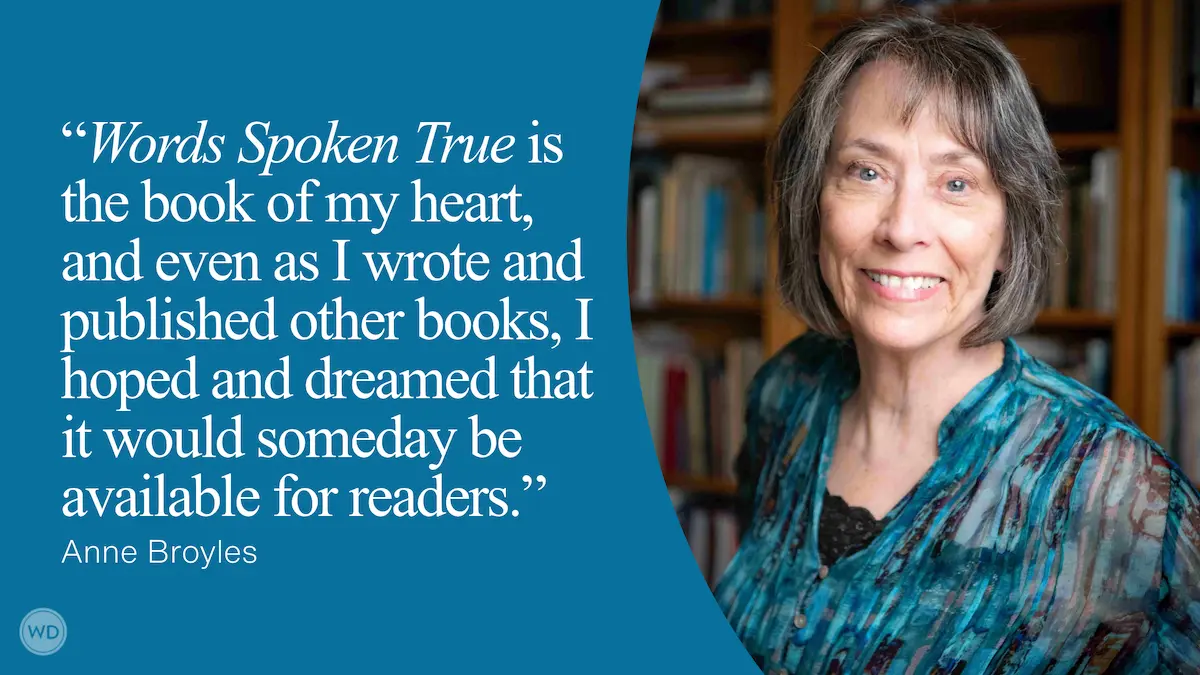
"Don’t give up. I put this manuscript away, at times for years, and then returned to it off and on for more than 30 years because I believed in this book. I’m sure that long-time friends heard me speak of it over such a long span of time, they never thought it would be published. Words Spoken True is the book of my heart, and even as I wrote and published other books, I hoped and dreamed that it would someday be available for readers."
Furthermore, Broyles strongly recommends community engagement for creators navigating the children’s and young adult literary spheres:
"For those writing for children and youth readers I would also encourage you to join the Society of Children’s Book Writers and Illustrators (SCBWI). This global community offers amazing resources, educational opportunities and networking that support both pre-published and published writers."
Future Outlook: The Anticipated Impact of Words Spoken True
As the publishing date of November 3, 2026, approaches under the Scholastic imprint, Words Spoken True is poised to become a significant milestone in young adult historical fiction.
Educational Integration and Curriculum Potential
Given its deep historical grounding and authentic Cherokee perspective, educators across North America are expected to embrace the novel as a vital classroom resource. By moving beyond dry textbook summaries of the Trail of Tears and filtering the tragedy through the vibrant consciousness of a 14-year-old girl, the novel provides a human face to history. It encourages modern teens to examine themes of institutional injustice, civil rights, moral awakening, and personal resilience.
A Legacy Realized
For Anne Broyles—who balances her writing life in Portland, Oregon, within a multi-generational household alongside her human family and beloved pets—the publication of Words Spoken True represents the realization of a decades-long creative promise. Jane Bushyhead, once confined to archival letters in a university basement in Tahlequah, will finally take her place on bookstore shelves worldwide, teaching a new generation of readers the true meaning of courage, survival, and the power of words spoken true.



Comments
Facebook App ID not configured. Please add it in the Customizer.