
Executive Overview
In her striking debut novel The New People, author Andrea Uptmor crafts a claustrophobic, high-stakes exploration of domestic precarity, systemic economic fragility, and the contested nature of homeownership in 2008 America. The narrative pivots on a simple yet deeply unsettling premise: newlywed queer couple Emma and Rachel purchase a recently foreclosed home in a Midwestern college town, entirely unaware that the evicted former owners—an older conservative couple named Charlotte and Dirk—have secretly taken up residence in the attic. This covert, unlawful cohabitation—a phenomenon known as "phrogging"—transforms the domestic sanctuary into a site of psychological warfare and structural sabotage.
Set against the dual backdrops of the 2008 subprime mortgage crisis and the fraught legal landscape for LGBTQ+ couples prior to the landmark 2015 Obergefell v. Hodges ruling, The New People operates simultaneously as a psychological thriller and a poignant sociological commentary. By thrusting two vastly different couples into a shared, compromised space, Uptmor interrogates how macro-level social and financial collapses collapse inward upon intimate human relationships.
In an in-depth conversation with literary critic Jules Fitz Gerald, Uptmor unpacked the real-life inspirations behind the novel, the mechanics of structural sabotage, and the ways in which the physical house serves as a microcosm for the broader institutional failures of modern America.
Read Also
Detailed Chronology
The Real-World Genesis: Minneapolis, Squatters, and "Phrogging"
The conceptual foundation of The New People originated not from pure fiction, but from Uptmor’s direct observation of neighborhood destabilization during the aftermath of the 2008 housing collapse.
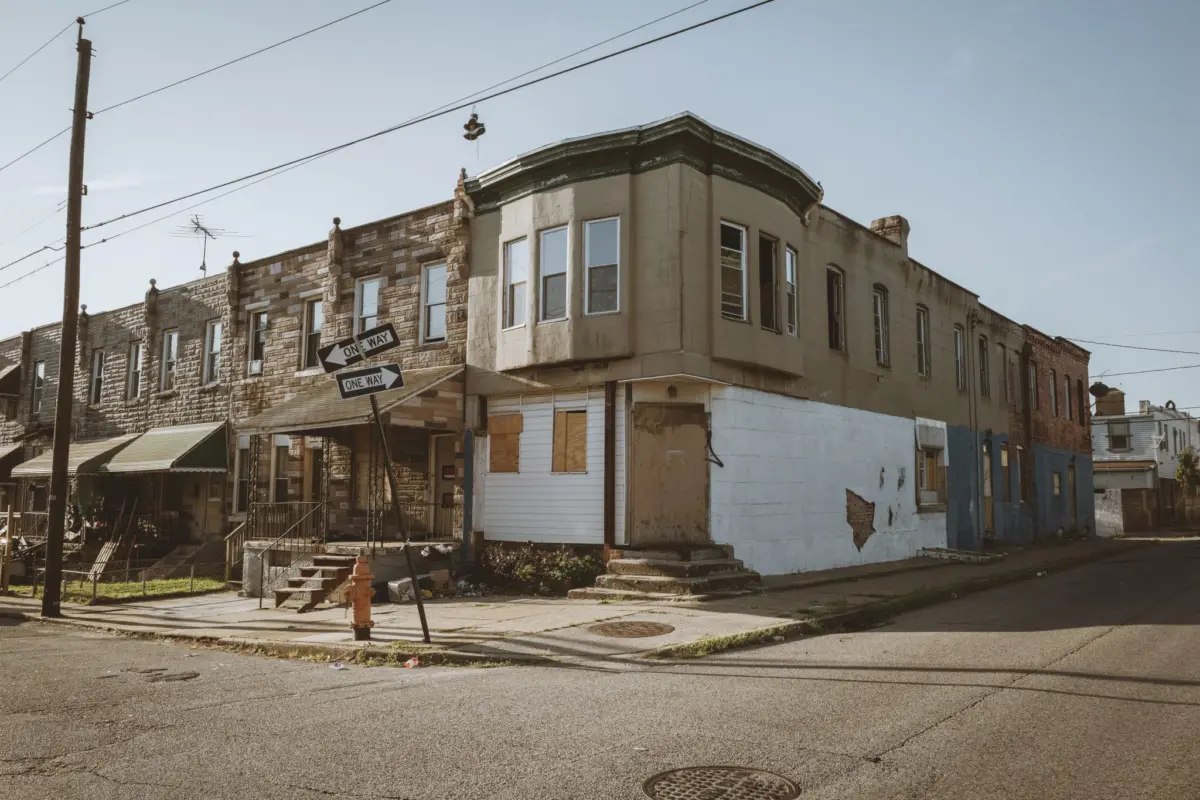
In 2013, after purchasing her first home in South Minneapolis, Uptmor witnessed the immediate eviction of her neighbor due to foreclosure. Within twenty-four hours of his removal, a group of squatters occupied the vacant property, triggering months of police standoffs, broken windows, and armed interventions. The stark contrast between legal ownership—dictated by bank mortgages—and practical ownership—asserted through physical occupation—profoundly reshaped Uptmor’s understanding of space and property.
[2008 Financial Meltdown] ──> [Subprime Foreclosures] ──> [Squatters/Phrogging Concept]
                                                                    │
[2013 Minneapolis Eviction] ────────────────────────────────────────┴──> ["The New People" Narrative Frame]
When Uptmor subsequently encountered the concept of "phrogging"—the act of secretly living inside an occupied home without the primary residents’ knowledge—the narrative architecture for The New People fell into place. It provided an immediate, organic engine of tension: a literal living haunting where legal entitlement and physical presence clash in secret.
Constructing the 2008 Temporal Framework
Uptmor deliberately situated the story in 2008, a year defined by acute socio-economic dissonance. While history often views 2008 through a lens of political hope marked by the election of Barack Obama, the lived reality of that year was characterized by extreme instability:
- Economic Devastation: Nearly 2.5 million families lost their homes to foreclosure, unemployment soared, and retirement funds vanished overnight.
- Queer Legal Volatility: In California, the temporary legalization of same-sex marriage was abruptly overturned by the passage of Proposition 8, underscoring the extreme fragility of civil rights for LGBTQ+ citizens.
- Structural Decay: The rapid proliferation of cheap home flips created residential spaces that were structurally unsound—a physical reflection of the hollow financial instruments that financed them.
Evolution of the Dual Narrators
In early drafts, Uptmor envisioned Charlotte (the former owner in the attic) and Emma (the new buyer downstairs) as static ideological foils—a caricature of conservative traditionalism versus progressive queer identity. However, through extensive revision, Charlotte evolved into a secondary protagonist with her own driving agency.
Rather than remaining a passive victim of circumstances, Charlotte becomes an active, albeit deeply flawed, instigator who sabotages the home’s infrastructure to drive "the new people" out. Meanwhile, Emma’s narrative tracks her escalating psychological unraveling as she navigates both the physical decay of her new home and the silent anxieties of her marriage.
Supporting Context & Metrics
To fully comprehend the thematic weight of The New People, the story must be evaluated against the socio-economic metrics of the 2008 financial crisis and the historical legal landscape for queer couples in the American Midwest.
Socio-Economic Dynamics of the 2008 Financial Crisis
| Economic Metric / Factor | National Impact (2008–2009) | Narrative Reflection in The New People |
|---|---|---|
| Foreclosure Filings | Exceeded 2.3 million in 2008 alone (US Census/RealtyTrac). | Charlotte and Dirk lose their long-term home to bank foreclosure after financial ruin. |
| Subprime Flips | Widespread predatory house flipping using substandard materials. | Emma and Rachel purchase a "flipped" home plagued by hidden, dangerous structural flaws. |
| Retirement & Wealth Loss | Trillions in equity wiped from middle-class households. | Post-retirement couple (Charlotte & Dirk) reduced to secret occupation of their former attic. |
| LGBTQ+ Legal Status | Pre-Obergefell era; piecemeal state-level rights; Proposition 8 passage. | Emma and Rachel navigate hyper-vigilance and social ambiguity in conservative Indiana. |
The Psychological Geography of the Conservative Midwest
Setting the novel in Indiana allowed Uptmor to capture the pervasive atmosphere of uncertainty experienced by queer individuals living in politically conservative environments.
Drawing from her own experiences living in Iowa, Uptmor highlights the quiet burden of micro-vigilance: the ongoing internal calculation required when interacting with service workers, neighbors, or officials in regions where legal protection is absent or tenuous. In The New People, this social hostility is not always overt; rather, it manifests as a constant cloud of ambiguity, forcing Emma to constantly evaluate whether hostility is real or a product of internalized self-defense mechanisms.
               [Macro-Level Systems]
     ( predatory lending / shifting civil rights )
                        │
                        ▼
            [Micro-Level Space: The House]
   ( cheap flip / physical rot / hidden attic dwellers )
                        │
                        ▼
         [Intimate Domestic Relationships]
  ( Emma & Rachel's marriage / Charlotte & Dirk's collapse )
Official Statements & Authorial Dialogue
During her Zoom dialogue with Jules Fitz Gerald, Andrea Uptmor detailed the creative, psychological, and structural choices that shaped The New People.
On the Real-Life Inspiration of "Phrogging"
Reflecting on the initial spark for the novel, Uptmor noted how the definition of ownership changes radically depending on one’s position within the economic machine:

"When my wife and I bought our first house in 2013 in South Minneapolis… a group of squatters moved in and occupied the house next door right after the neighbor was evicted. Law enforcement was there all the time with their guns drawn… It was so fascinating to me, this idea that, for me, home ownership was about a mortgage, and for the people next door, it was about occupying a space. It wasn’t until I learned about phrogging… that I thought, oh, that’s the story."
On Revisiting the Fragility of 2008
Uptmor challenged the rosy, nostalgia-tinged recollections of the late 2000s, pointing out the underlying dread that defined the era for ordinary working families and queer couples alike:
"We look back on 2008 with this sense of nostalgia and hope now, but when you were living it in the moment, people were losing their jobs, their money, their marriages, their rights to marry. It felt like the domestic infrastructure of people’s lives was disappearing… The house becomes this microcosm of what’s happening in the country."
On Character Agency and Tortured Protagonists
Addressing the decision to focus the narrative voice on Charlotte and Emma, Uptmor highlighted her preference for characters caught in active psychological distress:
"If we’re going to pull one spouse from each pair, they are the two most tortured. And if I’m going to read a book or write a character, I’m really interested in the tortured ones, the ones who are suffering and who are contemplating what to do about it."
On Creative Labor and the Metaphor of Failure
In the novel, Emma is a struggling literary fiction writer working in the shadow of her wife Rachel’s sudden commercial success with a sci-fi novel. Uptmor reflected on how this subplot channels the authentic anxiety of artistic production:
"Emma’s dealing with something that a lot of creatives deal with, which is failure—this idea that when you’re creating a piece of art or a novel, most of the time, nobody has asked for it… Everybody’s got some kind of invisible hope that’s dangling in front of them that keeps them going… and for a lot of creatives, the work is that."
On Literary Lineage and Spatial Metaphors
When asked about authorial influences, Uptmor cited British novelist Tessa Hadley and Indian author Megha Majumdar (A Burning):
"Tessa Hadley has the ability to layer psychology on the physical world, to blur the mental landscape with the physical landscape… And Megha Majumdar writes these big stories where society is looming and impacting what’s happening on a level between two people."
Rejecting overly prescriptive academic analyses of her work, Uptmor concluded with a reflection on the relationship between writer, reader, and text:
"The writer’s job is to build the house, and then move out, just get the hell out, and the reader comes in and the reader changes the lighting and moves in furniture, and that’s the most beautiful part of this whole process."
Future Outlook & Critical Impact
The New People arrives at a moment when questions surrounding housing affordability, legal rights, and domestic security are once again deeply unstable. As current economic pressures push homeownership further out of reach for younger generations, and as legal protections for marginalized communities face renewed challenges, Uptmor’s historical reflection on 2008 feels urgently contemporary.
Critical Resonances
- The Re-evaluation of Domestic Fiction: By merging the conventions of the domestic novel with elements of psychological horror and economic critique, The New People pushes back against the notion that domestic fiction is inherently small or insular.
- Re-examining Housing Precarity: The book provides a human face to the mechanics of real estate collapse, highlighting how predatory systems pit vulnerable groups against one another over basic shelter.
- Queer Narrative Expansion: Moving past straightforward coming-out narratives, the novel explores the nuanced realities of queer adult life—examining the ordinary tensions of marriage, creative jealousy, and spatial vulnerability in communities where acceptance is conditional.
Ultimately, Andrea Uptmor’s debut marks the arrival of a literary voice adept at translating complex systemic failures into intimate human stories. The New People serves as both a compelling psychological narrative and a sharp warning: when the foundation of a home—or a society—is built on shortcuts and exclusion, those living inside will inevitably feel the walls give way.




Comments
Facebook App ID not configured. Please add it in the Customizer.