
Executive Overview
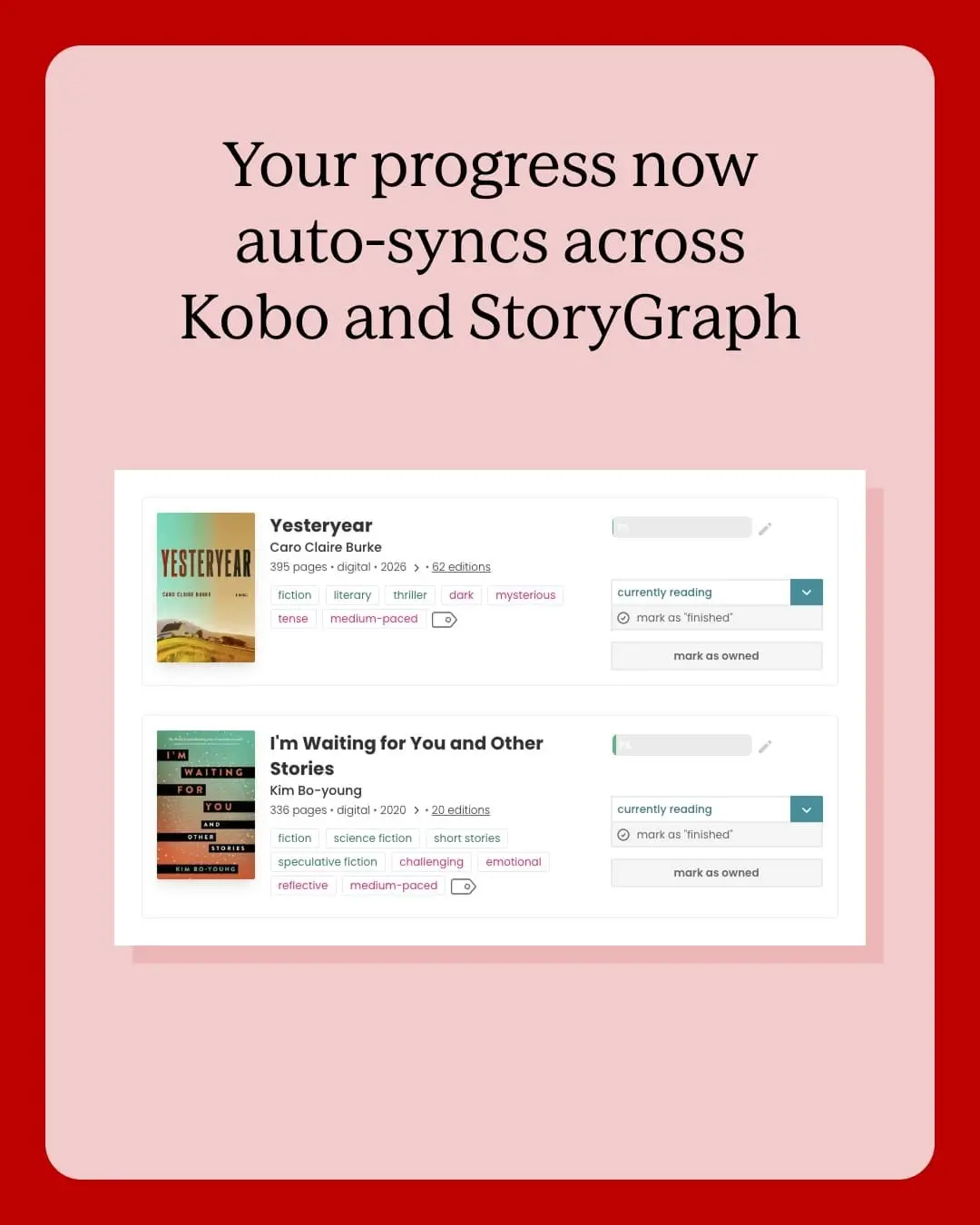
The landscape of digital reading underwent a subtle yet seismic shift when Rakuten Kobo officially rolled out its native integration with StoryGraph on June 29, 2026. For over a decade, the e-reader market has labored under a de facto proprietary duopoly, most notably characterized by Amazon’s rigid lock-in of its Kindle devices with Goodreads—a platform it acquired in 2013. While Kindle users have long been tethered exclusively to the Goodreads ecosystem for social tracking and reading logs, Kobo’s recent move shatters this monolithic standard.
By integrating StoryGraph—an independent, data-rich reading tracker and recommendation engine boasting over five million users globally—into its ecosystem at no additional cost, Kobo has scored a monumental strategic victory. The feature promises automated, seamless syncing of digital libraries and reading progress across devices for Kobo store purchases, Kobo Plus subscriptions, and even library books borrowed via Libby through OverDrive.
However, as the dust settles on the initial rollout, a more nuanced picture emerges. While the integration has been celebrated as a major win for user choice and open ecosystems, it is not without friction points. Prominent limitations—such as the exclusion of sideloaded books managed via Calibre, a lack of two-way synchronization, and unsupported PDF or third-party EPUB files—have sparked intense debate across the e-reader community.
Read Also
This deep-dive investigative report examines the timeline of the integration, the architecture of StoryGraph, the community’s enthusiastic yet critical reception, and what this technological bridge means for the future of digital reading hardware.
Detailed Chronology: From Concept to Rollout
The path toward the Kobo-StoryGraph integration represents a triumph of user demand meeting platform flexibility, culminating in a release window that caught the e-reader community by surprise.
Early 2026: The Rumor Mill and Preparations
While Kobo has historically maintained a reputation for being more open than Amazon—allowing sideloading of various formats and support for Adobe Digital Editions—its software lacked deep, native ties to modern reading analytics communities like StoryGraph. For years, independent readers who preferred Kobo hardware over Kindles were forced to manually log their reading statistics into StoryGraph via web browsers or mobile apps, or rely on clunky third-party scripts.
Behind the scenes, developers at Rakuten Kobo recognized a golden opportunity. As StoryGraph’s popularity exploded—culminating in a prestigious Apple App Store Award in 2025—its user base transformed from a niche community of data-driven book lovers into a mainstream powerhouse. Negotiations and technical preparations began quietly, aimed at building an API bridge that could securely transmit reading telemetry from Kobo devices directly to user accounts on StoryGraph without compromising user privacy or device performance.
June 2026: The Official Announcement and Launch
On June 29, 2026, Rakuten Kobo officially flipped the switch. The announcement sent ripples through digital book forums like Reddit’s r/kobo and r/books, as well as BookTok and Bookstagram communities.
The integration was designed for simplicity: users could link their Kobo accounts to their StoryGraph profiles within their device settings. Once connected, turning pages on a Kobo e-reader would automatically update reading percentages on StoryGraph in the background. Crucially, Kobo ensured that this feature extended beyond books bought directly from the Kobo Store. Digital books acquired via Kobo Plus (the company’s all-you-can-read subscription service) and public library books checked out via Libby (OverDrive) were fully compatible with the automated sync system.
The timing of the release positioned Kobo brilliantly for the summer reading season, drawing sharp contrasts with Amazon’s historically insular ecosystem.
Supporting Context & Metrics: The Rise of StoryGraph and the E-Reader Wars
To understand the weight of Kobo’s integration, one must examine the entities involved and the broader geopolitical landscape of the digital reading market.
What is StoryGraph?
Founded in 2019 by Nadia Odunayo, StoryGraph was conceived as an antidote to Goodreads, which many readers felt had stagnated under Amazon’s ownership, featuring outdated interfaces, a lack of aggressive moderation against review bombing, and minimal algorithmic innovation.

StoryGraph quickly carved out a dedicated following by offering:
- Deep Reading Analytics: Comprehensive graphs detailing pacing (fast, medium, slow), mood breakdowns (adventurous, reflective, dark, humorous), character-driven versus plot-driven metrics, and page-count distributions.
- Customized Recommendations: A sophisticated recommendation engine that suggests books based on granular user preferences, moods, and thematic tags rather than generic bestseller lists.
- Community Features: Active buddy reads, bespoke book clubs, reading challenges, and user-generated giveaways—all maintained within an ad-free interface.
By 2026, StoryGraph had scaled globally to over 5 million active users, securing a massive win with its 2025 Apple App Store Award. Its audience leans heavily toward data-minded, intentional readers who track every minute and page of their literary journeys.
The Hardware Battleground: Kobo vs. Kindle
For over a decade, Amazon’s Kindle dominated the dedicated e-reader market through sheer market penetration and ecosystem lock-in. Kindle devices have long featured native integration with Goodreads, allowing users to share what they are reading, rate books, and update progress directly from their e-readers. However, this integration is a one-way street tightly controlled by Amazon. Kindle users cannot natively track books from external libraries or competing stores with the same seamless telemetry unless they are part of the Amazon ecosystem.
By partnering with StoryGraph, Rakuten Kobo achieved a strategic masterstroke. Instead of building its own closed-loop social network—which would require massive capital and likely fail to capture enthusiast interest—Kobo outsourced its reading community infrastructure to a beloved, independent darling. This move signaled to power users, indie book lovers, and privacy-conscious consumers that Kobo respects choice.
Official Statements and Community Reception
The reception to the June 2026 launch has been characterized by profound enthusiasm tempered by pragmatic frustration regarding current system boundaries.
The Triumphs: What Users Love
Industry analysts and everyday readers alike have praised the partnership for validating independent platforms.
- Ecosystem Freedom: Users no longer have to choose between owning superior hardware (such as the Kobo Clara Colour or Kobo Libra Colour) and maintaining their preferred tracking software.
- The Libby Factor: Because public library borrowing via Libby/OverDrive accounts for a massive percentage of modern e-reader usage, the inclusion of library loans in the automated sync was hailed as a game-changer. Readers no longer have to remember to manually mark a library book as "currently reading" or update chapters upon completion.
- Zero Cost: The service operates seamlessly in the background without requiring premium tiers or supplementary subscriptions from either Kobo or StoryGraph.
The Pain Points: The Community’s Wishlist
Despite the overwhelming positivity, community forums immediately highlighted several critical limitations that prevent the integration from being fully realized:
- The Calibre Blindspot (Sideloaded Books): By far the most vocal complaint from the e-reader community is the complete lack of support for sideloaded books—specifically those managed and transferred via Calibre, the gold-standard open-source e-book management software. Millions of e-reader enthusiasts sideload public domain works, DRM-free indie books, personal documents, and custom-formatted EPUBs. Because these files do not originate from the Kobo Store or recognized cloud lockers tied to the user’s active Kobo account ID, they do not trigger the StoryGraph sync API.
- One-Way Traffic (Kobo to StoryGraph Only): Progress synchronization is strictly unidirectional. While reading on a Kobo updates StoryGraph, changing progress or logging a book directly inside the StoryGraph mobile app or web browser does not push updates back down to the Kobo device.
- Format Restrictions: PDFs and third-party sideloaded EPUB files remain entirely invisible to the syncing protocol, leaving academic researchers, advanced students, and heavy PDF readers out in the cold.
Future Outlook: Where Do We Go From Here?
As the initial excitement of the Kobo-StoryGraph integration matures into daily usage, the e-reader market stands at a fascinating crossroads.
Will Kobo Expand API Support?
The ball is now firmly in Rakuten Kobo’s court. Industry watchers note that Kobo has historically been responsive to community feedback—frequently rolling out software updates that incorporate user-requested features. Addressing the Calibre and sideloading gap represents the single most impactful step Kobo could take to cement its reputation as the ultimate "power-user e-reader." However, technical hurdles involving digital rights management (DRM), metadata matching, and unique book identifiers (ISBNs) make sideloaded file tracking inherently complex.
Pressure on Amazon
The successful rollout of the Kobo-StoryGraph partnership applies subtle, long-term pressure on Amazon. While Goodreads remains a corporate giant, its brand perception among younger, highly engaged readers has steadily eroded. If Kobo continues to prove that open, third-party integrations can coexist peacefully with proprietary hardware, consumers may begin demanding similar openness from Amazon—though structural incentives at the tech behemoth make a Kindle-StoryGraph integration highly improbable in the near term.
Conclusion: Do Kobo Owners Actually Use StoryGraph?
Data collected in the wake of the June 2026 launch indicates a resounding yes. While power users continue to advocate for expanded sideloading compatibility, the core demographic of digital book consumers—purchasers of Kobo Store titles, Kobo Plus subscribers, and Libby library patrons—have overwhelmingly adopted the feature. It has streamlined workflows, eliminated manual logging fatigue, and proven that hardware manufacturers do not need to build walled gardens to keep their customers happy.
As digital reading continues to evolve, the Kobo-StoryGraph alliance serves as a blueprint for future collaborations between hardware creators and software innovators: putting the user’s reading life front and center, friction-free.

Comments
Facebook App ID not configured. Please add it in the Customizer.