
Executive Overview
As the leadership teams of the world’s most advanced artificial intelligence enterprises converged in Washington to issue stark warnings regarding the existential threats of runaway technological growth, a counter-narrative rapidly took root. For a fleeting moment, policymakers on Capitol Hill appeared galvanized, signaling a rare bipartisan appetite for robust federal intervention. Yet, this momentum stalled abruptly, thwarted not by traditional legislative gridlock, but by the influence of a single, highly connected technology investor: David Sacks.
A prominent venture capitalist, member of the informal "PayPal Mafia," and former White House technology czar, Sacks has emerged as the principal architect of the Trump administration’s laissez-faire stance on artificial intelligence. Through his broad media footprint, his widely consumed All-In podcast, and direct private counsel to President Donald Trump—who has since dismissed AI doomsday scenarios as a "hoax"—Sacks has successfully championed a deregulation-first agenda.
This deep dive examines how Sacks’s idiosyncratic worldview, commercial alliances, and aggressive political maneuvering have transformed him into the most influential shadow policymaker in the tech sector. By pitting decentralized open-source advocates against centralized frontier laboratories like OpenAI and Anthropic, Sacks has redefined the geopolitical stakes of the global AI race, sidelining national security hawks and establishing a paradigm where Silicon Valley infighting dictates federal governance.
Read Also
Detailed Chronology: The Road to White House Dominance
The trajectory of David Sacks’s influence over federal policy is inextricably tied to the 2024 political cycle, culminating in his integration into the inner sanctum of the Trump administration.
- June 2024: Sacks hosted a high-profile, $20 million fundraising event for Donald Trump at his San Francisco mansion. Praised by Trump for his opulent residence, Sacks cemented his status as a premier bridge between Silicon Valley capital and the populist right.
- Late 2024 – Early 2025: Following Trump’s return to the presidency, Sacks was appointed as the White House’s "artificial intelligence and crypto czar." In this role, he systematically steered federal technology policy away from restrictive oversight, advocating instead for a "let them cook" ethos designed to accelerate domestic innovation free from bureaucratic friction.
- March 2025: Sacks officially stepped down from his formal White House post, transitioning to co-chairmanship of the President’s Council of Advisors on Science and Technology (PCAST). Despite relinquishing his day-to-day administrative title, his informal proximity to the Oval Office only intensified.
- July 2025: Amid fierce debate over export controls, Sacks successfully lobbied the administration to approve the sale of advanced Nvidia semiconductors to foreign markets, including the Middle East and select Chinese entities, positioning himself as the chief champion for semiconductor titan Jensen Huang.
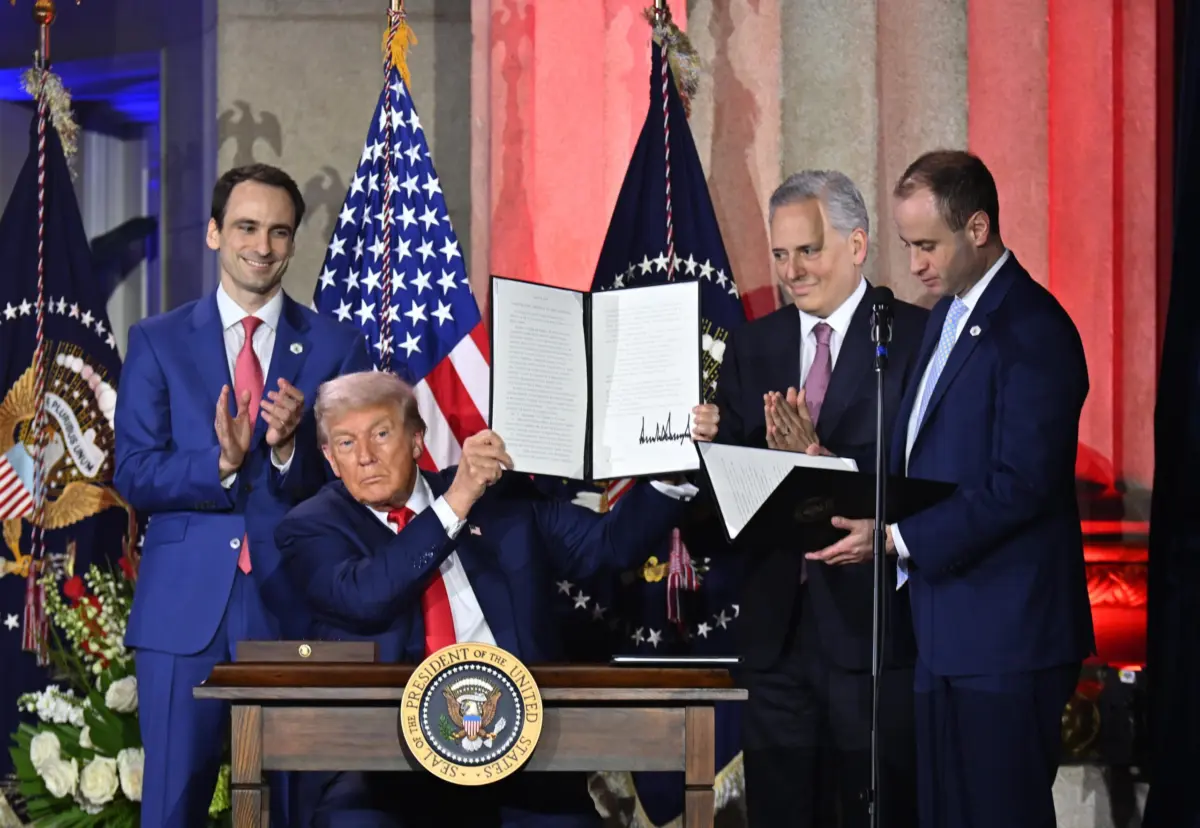
- May 2026: Demonstrating his unparalleled reach, a last-minute phone call from Sacks to President Trump temporarily derailed the planned signing of a major executive order aimed at establishing federal AI safety frameworks, according to reporting by The Washington Post.
- September 2026: As tech CEOs rallied in Washington to warn of catastrophic risks, President Trump echoed Sacks’s rhetoric verbatim on Truth Social, dismissing extinction-level fears as a "hoax" and labeling AI "the Greatest Economic Development Engine in History." The week culminated in a live All-In podcast event where Trump dialed in via speakerphone to praise Sacks’s ongoing contributions to the administration.
The Battle of Business Models: Sacks vs. the Frontier Labs
To comprehend Sacks’s fierce opposition to federal regulation, one must examine the fundamental schism dividing Silicon Valley. At its core, this is not merely a philosophical debate over safety versus speed; it is an economic war over which business model will control the future of computing.
The Open-Weight Coalition
Sacks is deeply aligned with a powerful faction of tech executives that includes Nvidia CEO Jensen Huang and Meta CEO Mark Zuckerberg. This group advocates for the proliferation of "open-weight" and "open-source" models—artificial intelligence architectures whose underlying parameters are made publicly available for developers to download, modify, and customize.

Proponents argue that decentralized innovation prevents a dystopian future where artificial general intelligence (AGI) is monopolized by a privileged duopoly. As Zuckerberg articulated in a recent policy memo, the central question of the era is whether superintelligence will be restricted to a handful of institutional gatekeepers or distributed as a democratized tool that empowers the broader market. Furthermore, software startup founders and venture capitalists—such as Sacks, co-founder of Craft Ventures—benefit immensely from accessible, inexpensive open-weight models that bypass the costly proprietary APIs sold by industry giants.
The Proprietary Giants and Safety Advocates
Conversely, Sacks is locked in an antagonistic rivalry with the industry’s two dominant frontier laboratories: OpenAI and Anthropic. These firms construct massive, proprietary models backed by billions of dollars in infrastructure. Because their systems represent the absolute bleeding edge of capability, their leadership teams—alongside prominent safety advocates—have lobbied Washington for guardrails, mandatory audits, and licensing requirements to mitigate catastrophic risks, including cyberwarfare and the automated synthesis of biological weapons.
Sacks, however, has consistently dismissed these warnings as "doomer histrionics" and a sophisticated regulatory capture strategy. He argues that onerous safety compliance acts as a Trojan horse designed by OpenAI and Anthropic to "kneecap open source," entrench their market dominance, and price smaller competitors out of the market. Rather than preventative bureaucratic oversight, Sacks contends that existing civil and criminal liability laws provide more than enough deterrent against the deployment of dangerous software.
Supporting Context & Geopolitical Paradoxes
The influence of Sacks’s worldview creates complex contradictions within the Trump administration’s foreign policy, particularly concerning the strategic race for global technological supremacy.
The Semiconductor Export Conundrum
A central paradox of the administration’s current posture centers on its stance toward China. While President Trump frequently frames the AI race as a high-stakes geopolitical conflict with Beijing that the United States must decisively win, administration policies have frequently accommodated the commercial interests of chip manufacturers seeking foreign sales.
National security hawks within the White House—including Treasury Secretary Scott Bessent and Chief of Staff Susie Wiles—have argued for stringent restrictions on the export of high-end Nvidia semiconductors to prevent foreign adversaries from narrowing the technological gap. However, Sacks championed Jensen Huang’s efforts to maintain international market access, arguing that unilateral U.S. blockades would merely cede foreign markets to domestic Chinese alternatives like Huawei, ultimately weakening the long-term global competitiveness of the American tech stack.

The Rise of Chinese Open-Weight Models
This philosophical friction extends to the influx of foreign open-weight models, such as those developed by Chinese firms DeepSeek and Moonshot. While frontier labs like Anthropic and OpenAI assert that these models pose profound national security threats—alleging they rely heavily on "distilling" or copying Western architectures—the Trump administration has resisted sweeping bans. Sacks maintains that restricting access to these open models would disproportionately penalize American software startups and cement the very domestic duopoly he seeks to dismantle.
Official Statements and Industry Reactions
The polarizing nature of Sacks’s influence has generated sharp friction between Silicon Valley elites, national security experts, and political figures across the ideological spectrum.
- Chris McGuire, Council on Foreign Relations: Noting the libertarian underpinnings of the administration’s strategy, McGuire remarked, "It’s this very libertarian approach to America winning in AI… But when we start from the premise that the American AI stack—models, cloud, and chips—should be dominant globally, then selling China the technology to advance its own capability obviously undercuts that."
- Brad Carson, Americans for Responsible Innovation: Highly critical of the administration’s administrative paralysis, Carson stated, "When it comes to AI policy the Trump administration has, through their unwillingness to even talk about reasonable guardrails, brought things to such a crisis point that the industry is in jeopardy. In many ways, David Sacks is the author of that ill-fated intransigence."
- David Sacks (via social media and public appearances): Defending his deregulatory stance against critics who point to corporate influence, Sacks maintained that safety advocacy groups are weaponized lobbying arms. Pointing to substantial financial backing from firms like Anthropic—which notably donated $40 million to public advocacy initiatives—Sacks dismissed industry-led panic as "a sophisticated regulatory capture strategy based on fear-mongering."
Future Outlook
As the federal government grapples with the accelerating trajectory of artificial intelligence, the policy architecture shaped by David Sacks faces mounting pressure from both domestic market realities and geopolitical imperatives.
The tension between decentralization and national security remains unresolved. While the White House continues to prioritize economic expansion, rapid capital formation, and the dismantling of regulatory hurdles, the emergence of increasingly autonomous systems will continue to test the limits of a purely reactive legal framework. Whether existing liability laws can adequately police frontier capabilities without preemptive federal oversight remains the defining unanswered question of the current technological epoch.
Ultimately, the Sacks doctrine has permanently altered how technological revolutions are governed in the United States. By wedding populist skepticism of institutional authority with the commercial ambitions of open-weight advocates, Sacks has ensured that the future of artificial intelligence will be dictated not by cautious consensus, but by the relentless, high-stakes velocity of the free market.





Comments
Facebook App ID not configured. Please add it in the Customizer.