
Executive Overview
As autumn settles across the Northern Hemisphere, the global pop culture ecosystem is experiencing a rare convergence of major live events, long-awaited publishing milestones, and a surprisingly crowded slate of television premieres. From the bustling convention halls of the Jacob K. Javits Center in New York City to the quiet, archival libraries bringing mid-century European illustration to American shores, the cultural landscape is shifting rapidly.
This week’s briefing offers a comprehensive look at the intersection of fandom culture, historical publishing coups, and critical reassessments of contemporary media. We examine the logistical realities of attending New York Comic Con (NYCC)—including time-tested survival strategies for avoiding endemic convention illnesses—before diving into a historic literary release: William Morrow’s long-delayed U.S. publication of Tove Jansson’s iconic illustrations for J.R.R. Tolkien’s The Hobbit.
Furthermore, this report provides an investigative lens on the current television landscape, questioning why major historical epics like MGM+’s Treasure Island manage to evade mainstream cultural discourse despite high-profile casts, while simultaneously reassessing overlooked masterworks such as Starz’s Black Sails. Finally, we explore critical literary criticism through Franny Choi’s newly released essay collection, We Radiant Things, and evaluate Netflix’s latest speculative thriller, the Newfoundland-set sea-monster drama Below, starring Josh Hartnett and Mackenzie Davis.
Read Also
Detailed Chronology
The New York Comic Con Migration and the Economics of Fandom
As the annual migration to New York Comic Con reaches its peak, attendees flooding the West Side of Manhattan are met with the familiar sensory overload of cosplay, exclusive merchandise drops, and panel lines that stretch for miles. For veterans of the convention circuit, the event is as much an endurance test as it is a celebration of speculative fiction.
Logistically, NYCC remains one of North America’s premier pop culture barometers, setting the tone for holiday-season merchandise sales and winter studio marketing campaigns. However, the operational reality of packing hundreds of thousands of fans into a confined exhibition space presents annual public health challenges colloquially known across fandoms as "con crud."
[October Start]
       │
       ├──> New York Comic Con: Jacob K. Javits Center (Crowd Density & Public Health Protocols)
       ├──> Literary Release: William Morrow Publishes Tove Jansson's "The Hobbit" (U.S. Debut)
       ├──> Television Premieres: MGM+ Drops "Treasure Island" (Oct. 11th)
       └──> Streaming Releases: Netflix Debuts Newfoundland Monster Thriller "Below"
Veteran convention-goers and public health advocates alike emphasize fundamental hygiene protocols to mitigate viral transmission during mass indoor gatherings. Simple behavioral adjustments—such as strict hand sanitation before food consumption and avoiding tactile contact with communal merchandise displays prior to eating—remain the primary lines of defense against post-convention illness vectors.
A Literary Milestone: Tove Jansson’s The Hobbit Debuts in the U.S.
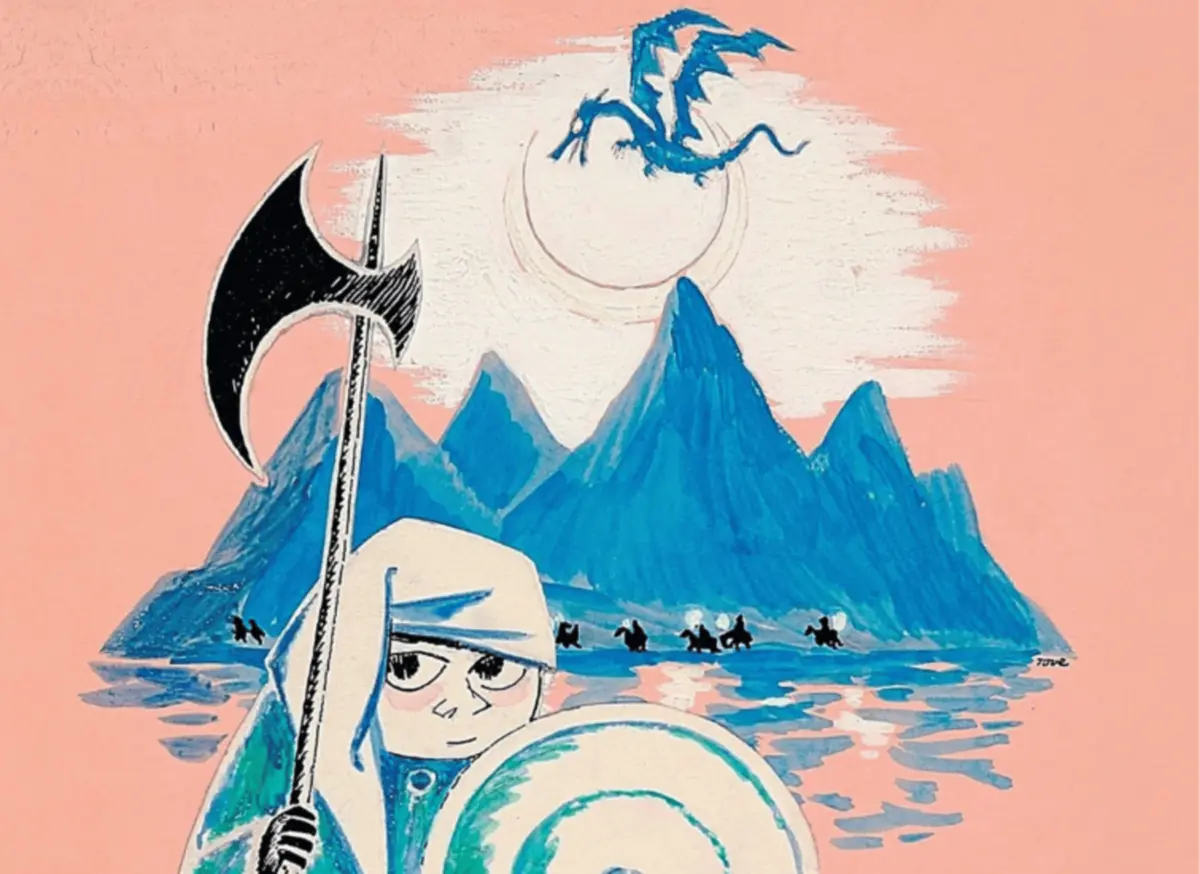
The week’s most significant publishing event occurred quietly in bookstores across the United States, correcting a transatlantic artistic omission that has persisted for decades. HarperCollins imprint William Morrow officially released The Hobbit: Illustrated by Tove Jansson, marking the first time the celebrated Finnish-Swedish author and artist’s distinctive interpretations of Middle-earth have been legally and widely available to American readers.
While Finnish and Swedish audiences have enjoyed Jansson’s whimsical yet haunting black-and-white interpretations of Bilbo Baggins, Smaug, and Thorin Oakenshield since the 1960s, U.S. fans have long been restricted to Pauline Baynes’ traditional illustrations or Tolkien’s own original sketches.
The publication history of Jansson’s Hobbit art is deeply intertwined with mid-century Scandinavian publishing giants. Historical records from the Tove Jansson estate reveal that the commission originated from Astrid Lindgren—the legendary creator of Pippi Longstocking, who was then working as an editor at the Swedish publishing house Rabén & Sjögren. Recognizing the enduring cultural weight of Tolkien’s manuscript, Lindgren famously wrote to Jansson, predicting that The Hobbit would become "the children’s book of the century, and will live long after we are dead and buried."
Jansson’s artistic approach to Tolkien’s text rejects the hyper-naturalism and high-fantasy grandeur later popularized by cinematic adaptations. Instead, her illustrations share the existential, starkly atmospheric DNA of her famous Moomin series, offering a distinctly European, folkloric lens on the Shire and the Lonely Mountain.
Prestige Television Crossroads: Treasure Island and the Shadow of Black Sails
On the television front, the media landscape is currently defined by paradoxes of visibility and marketing. MGM+’s upcoming premiere of Treasure Island on October 11th—starring seasoned prestige actors David Oyelowo and Hayley Atwell—has inexplicably flown beneath the cultural radar, raising questions about discoverability in an oversaturated streaming ecosystem.
The release of MGM+’s adaptation coincides with a broader critical reassessment of pirate-themed media, highlighted by Ridley Scott’s upcoming 2027 cinematic take on Robert Louis Stevenson’s source material. Yet, industry analysts note that any contemporary adaptation of Treasure Island must inevitably contend with the towering, underappreciated legacy of Starz’s four-season masterwork Black Sails.
Despite running from 2014 to 2017 and developing a fiercely loyal cult following, Black Sails remains a textbook example of prestige television that was commercially overlooked during its initial broadcast. Its intricate political plotting, complex characterizations of historical and literary figures (such as Eleanor Guthrie, played by Hannah New, and Max, played by Jessica Parker Kennedy), and thematic sophistication continue to set a high watermark for serialized historical fiction. The recurring industry discourse surrounding the series often returns to a central lament: why stellar ensemble casts do not universally transition into mainstream Hollywood superstardom following the conclusion of critically acclaimed runs.
Critical Theory and Speculative Media: We Radiant Things
In the realm of cultural criticism, poet and essayist Franny Choi has returned with We Radiant Things: Notes on Being Alien and Becoming Cyborg (published via Macmillan/Open Letter equivalents). Following her critically lauded 2019 poetry collection Soft Science, Choi’s essay debut bridges the gap between academic media theory and personal, visceral essayistic prose.
The opening chapters of We Radiant Things establish a template for modern cultural critique, dissecting cinematic touchstones like Alex Garland’s Ex Machina and Mamoru Oshii’s seminal anime Ghost in the Shell. Rather than offering dispassionate textual analysis, Choi approaches criticism as an embodied act. As they write in the collection, "This is the only way I want to do what someone might call criticism: tenderly, from stabbing range."
By weaving together analyses of artificial intelligence, systemic racism, generational anger, and bodily autonomy, Choi positions speculative media as a mirror for the alienation experienced by marginalized communities in the digital age.
Netflix’s Below: Atmospheric Thriller or Narrative Misfire?
Rounding out the week’s streaming debuts is Netflix’s Below, a high-concept psychological thriller set against the desolate, damp backdrop of a Newfoundland coastal community. Starring Josh Hartnett and Mackenzie Davis, the series has generated a polarized critical response, with reviews ranging from Variety’s classification of the show as "exhilarating" to more measured assessments labeling it an eccentric genre exercise involving biological anomalies colloquially dubbed by early reviewers as a "killer snot-berg."
The production’s casting choices have sparked lively debate among television critics. While Hartnett and Davis deliver grounded performances that anchor the surreal maritime horror elements, the inclusion of Charlie Heaton as Hartnett’s on-screen son has drawn logistical bewilderment from viewers tracking actor age demographics. Nevertheless, Below represents a growing appetite on streaming platforms for mid-budget, atmospheric genre fiction that evokes the structural DNA of classic The X-Files monster-of-the-week episodes.
Supporting Context & Metrics
To contextualize the current pop culture economy, industry analysts point to several key metrics governing publishing, streaming, and convention logistics:
- Convention Demographics: New York Comic Con routinely draws upward of 200,000 unique attendees across its four-day run at the Javits Center, injecting millions of dollars into the Manhattan hospitality and tourism sectors.
- Literary Longevity: Tove Jansson’s literary and artistic estate represents one of the most commercially resilient intellectual properties in Nordic publishing, with Moomin merchandise and translated works generating global revenues exceeding tens of millions annually.
- Streaming Discoverability Indices: Industry studies indicate that linear-to-streaming hybrid networks like MGM+ face a 40% deficit in organic social media engagement compared to native streaming monoliths like Netflix and Max, explaining why high-profile series featuring actors like David Oyelowo and Hayley Atwell can occasionally struggle to capture mainstream trending momentum.
Official Statements
Publishing houses and literary estates have issued statements celebrating the long-awaited American release of Tove Jansson’s artistic interpretations of Tolkien.
Representatives for the Tove Jansson Estate noted via the official archives:
"Astrid Lindgren understood instantly what Tove’s pen could achieve when applied to the vast, melancholic mythology of Middle-earth. These illustrations are not mere decorative additions to a text; they are distinct narrative interpretations created by an artist who understood isolation, adventure, and the uncanny magic of landscapes."
Publisher William Morrow remarked on the archival recovery project:
"Bringing The Hobbit: Illustrated by Tove Jansson to U.S. readers corrects a historic geographic imbalance in Tolkien scholarship and illustration history. We are thrilled to introduce American generations to a vision of Bilbo Baggins that has enchanted Scandinavian readers for over half a century."
Future Outlook
Looking toward the remainder of the fourth quarter, the entertainment and publishing sectors are poised for a series of high-stakes releases that will test consumer appetite for both nostalgic intellectual property and challenging original content.
In the immediate term, the premiere of MGM+’s Treasure Island on October 11th will serve as a bellwether for whether prestige literary adaptations can break through network visibility barriers in an era dominated by algorithm-driven recommendation engines. Concurrently, literary critics will be closely monitoring the broader cultural impact of Franny Choi’s We Radiant Things, which signals a growing appetite for poetry-infused, politically engaged media criticism.
As convention season winds down and studios pivot toward winter awards campaigns and holiday box office releases, audiences continue to navigate an eclectic cultural menu—one where century-old fantasy illustrations sit comfortably alongside contemporary explorations of artificial intelligence, maritime horror, and maritime mutinies.

Comments
Facebook App ID not configured. Please add it in the Customizer.