In the bustling urban corridors of Beijing, Shanghai, and Shenzhen, a culinary revolution is quietly taking place. Once viewed merely as a novelty import from the West, the humble hamburger has officially conquered the Chinese palate. Driven by shifting consumer demographics, a burgeoning class of budget-conscious diners, and an unprecedented pivot toward convenience, the burger has emerged as the hottest battleground in China’s fast-food landscape.
According to data provider iiMedia Research, China’s broader Western fast-food market was valued at an impressive 499.65 billion yuan ($74.1 billion) in 2025 and is projected to skyrocket to 587.09 billion yuan ($87 billion) by 2027. Within this expanding ecosystem, the burger segment is capturing a disproportionate share of consumer enthusiasm. Emergen Research notes that the burger category alone was valued at $18.4 billion in 2025 and is projected to expand at an annual growth rate of 8.7% through 2035, with recent surveys showing that 55% of Chinese fast-food consumers rank burgers as their top meal preference.
This remarkable surge is not merely a testament to changing tastes; it is a direct response to macroeconomic and demographic transformations. As economic uncertainties prompt consumers to tighten their purse strings, and as the nation experiences a structural shift toward smaller households and one-person living arrangements, diners are actively seeking affordable, highly portable, and nutritionally balanced meals. Consequently, traditional fast-food giants, domestic upstarts, hotpot titans, and even artisanal coffee chains are rushing to claim a slice of the pie, turning a Western staple into an indispensable fixture of modern Chinese urban life.
The transformation of the Chinese burger market from a niche foreign luxury into a ubiquitous fast-food staple has accelerated dramatically over the last few years, marked by strategic menu innovations, high-profile domestic expansions, and aggressive international entries.
The Genesis of the Pivot (2024–2025)
Long dominated by global juggernauts like McDonald’s, KFC (operated by Yum China), and Burger King, the Chinese fast-food arena experienced a significant inflection point in 2024. Facing intensifying competition and a more price-sensitive consumer base, major players began rethinking their formats. Yum China took a pioneering step by introducing a dedicated "Burger Bar" format to its popular Pizza Hut restaurant network. By pairing a streamlined, high-speed burger counter alongside traditional dining operations, the company tapped into an entirely new demographic of lunch-hour workers and delivery-app users.
By the end of 2025, burgers had successfully carved out a mid-single-digit percentage of total Pizza Hut sales. This laid the groundwork for an aggressive retail expansion strategy that would challenge the supremacy of traditional burger joints.
The Domestic Diversification and Retail Rush (Early to Mid-2026)
By 2026, the burger boom was no longer confined to traditional Western fast-food brands. Non-traditional players across the Chinese hospitality sector recognized the immense profitability and high consumer demand of the category, leading to cross-industry incursions:
Haidilao’s Bold Move: In mid-2026, China’s legendary hotpot giant Haidilao made headlines by launching Huanxianbao (translating to "Fresh Burger"), a specialized fast-food chain focused on burgers, pizza, pasta, and fried chicken, diversifying its portfolio to capture younger, fast-paced diners.
Coffee Chains Join the Fray: Trendy domestic coffee chains like M Stand began opening burger-focused hybrid outlets in major metropolitan areas, leveraging their hip urban aesthetics to market gourmet-style burgers alongside artisanal coffee.
Yum China’s Hyper-Expansion: In July 2026, Yum China announced that its Pizza Hut Burger Bar format had eclipsed 200 operational outlets in a mere six-month window, setting an aggressive target of 500 to 600 locations by the close of 2026—representing roughly 10% of its total Pizza Hut footprint.
International Heavyweights Place Their Bets (August 2026)
The late-summer of 2026 has witnessed a renewed wave of international brands staking their claims in China’s lucrative urban centers:
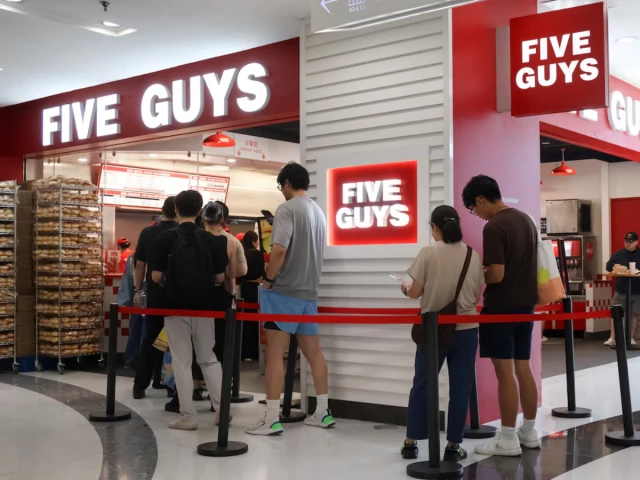
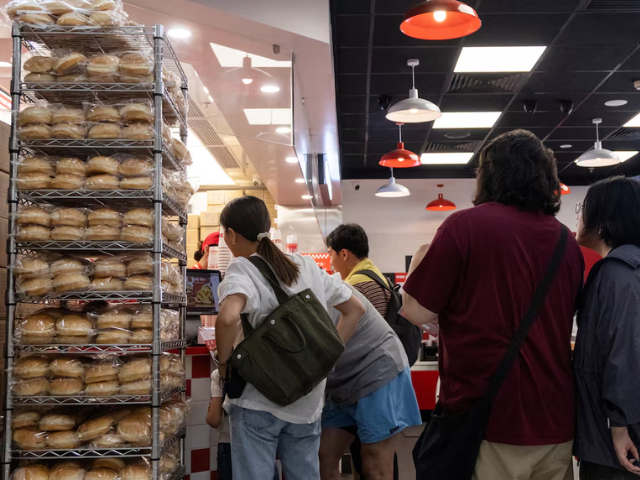
Five Guys in Beijing: In mid-August 2026, the cult-favorite U.S. burger chain Five Guys opened its first two flagship locations in Beijing. The launch triggered massive media attention and consumer frenzies, with eager diners enduring wait times exceeding two hours just to sample a custom-built American burger.
Wendy’s Ten-Year Roadmap: Complementing the physical arrivals, corporate announcements have signaled long-term confidence in the market. In May 2026, Wendy’s unveiled a sweeping expansion strategy to enter the Chinese market through massive franchising efforts, targeting up to 1,000 new restaurants over the coming decade.
Supporting Context & Metrics: Decoding the Consumer Shift
To fully understand why the burger has become the undisputed king of modern Chinese convenience food, one must examine the intersection of economics, changing demographics, and hyper-efficient digital infrastructure.
The Economics of Value
In an economic climate where consumer spending remains measured and cautious, discretionary spending on lavish, multi-course restaurant meals has slowed. However, the appetite for dining out or ordering delivery remains resilient. Burgers have positioned themselves directly in the "sweet spot" of consumer economics.
According to Zhu Danpeng, a prominent China food industry analyst, burgers offer an unbeatable value proposition. They serve as a substantial, complete meal option while functioning as a lower-cost alternative to full-service dining. For students, office workers, and busy families, the burger delivers an efficient calorie-to-cost ratio.
Demographic Realities: The Rise of Smaller Households
China’s demographic landscape is undergoing a fundamental transformation. Rapid urbanization, delayed marriages, and declining birth rates have catalyzed a massive rise in single-person households and small nuclear families. Traditional Chinese dining culture—historically centered around large, shared family-style banquets featuring numerous dishes—is increasingly misaligned with the lifestyle of a single urban professional or a couple rushing between evening obligations.
The burger, by design, is an individualized, self-contained meal. It requires no sharing, generates minimal tableware cleanup, and can be consumed rapidly on the move. This structural shift has created a permanent, organic demand for individual-portion fast food that legacy Chinese culinary formats often struggle to efficiently replicate at scale.
Digital Delivery Dominance
Compounding these demographic trends is China’s ultra-advanced delivery ecosystem. According to data from Euromonitor, an astounding 43% of Chinese consumers order food delivery at least once a week, nearly double the global average of 23%.
Burgers possess superior logistical attributes for third-party delivery apps compared to delicate noodle dishes or fried foods that lose their crispiness rapidly. Modern packaging innovations implemented by chains like McDonald’s, KFC, and Yum China ensure that buns remain intact, patties stay warm, and sauces do not destabilize the structural integrity of the meal during transit. This delivery-friendliness has turned every urban apartment and corporate office building into a potential dining room.
Official Statements & Industry Perspectives
Industry leaders, financial analysts, and everyday consumers alike recognize that this phenomenon is far more than a passing culinary fad; it is a structural evolution in how a nation eats.
Corporate Insights: Chasing the Billion-Yuan Milestone
Yum China executives have been vocal about the transformative power of their menu diversification. In recent investor briefings, corporate leadership highlighted that burgers are no longer viewed merely as an experimental menu addition, but as a primary revenue driver.
With burgers accounting for a mid-single-digit percentage of Pizza Hut’s overall sales, Yum China projects that the category will generate well over 1 billion yuan in revenue this year alone, accounting for 5% to 6% of the brand’s total annual earnings. The company attributes this success directly to the synergy between high delivery penetration rates and the innate portability of the burger format.
Analyst Perspectives: The Value Equation
Food industry analyst Zhu Danpeng emphasizes that the current economic landscape requires brands to offer uncompromising quality at accessible price points.
"It’s a good value-for-money choice," Zhu Danpeng explains. "As consumer spending remains cautious, burgers offer a lower-cost alternative to full-service restaurant meals while still serving as a substantial meal option."
This sentiment is echoed by everyday consumers navigating the fast-paced realities of China’s megacities. Wang Fang, a university student in Beijing, notes that burgers have become an indispensable part of her weekly routine.
"Burgers have become a go-to lunch option for me and my classmates because they are cheaper than ordering multiple dishes at a restaurant," Wang Fang shared. "With meat, vegetables, and butter, it makes a very affordable balanced meal."
The Human Element: Navigating Busy Schedules
Beyond students and budget-conscious millennials, urban parents are finding that Western fast-food staples provide practical solutions to hyper-scheduled daily lives. Liu Tao, a 48-year-old musician living in Beijing, regularly navigates tight afternoon windows between his son’s academic tutoring sessions.
"We only have an hour, and we’re rushing from one place to the next," Liu Tao notes, describing his routine Sunday visits to McDonald’s. "When you want food that’s clean, quick, and something children don’t get bored of, nothing is better than a burger. My son eats it in the car as we head to his English class."
Future Outlook: Navigating the Road to 2027
As China’s Western fast-food market marches toward its projected $87 billion valuation by 2027, the burger landscape is poised for intense hyper-competition, rapid technological integration, and structural evolution.
Domestic Challengers vs. Global Icons
The coming years will likely witness a fierce turf war between established international giants and agile domestic disruptors. Brands like Tasiting—a homegrown Chinese burger chain that incorporates local flavor profiles and traditional baking techniques into its buns—have already proven that domestic competitors can command massive market share in lower-tier cities. Meanwhile, legacy Western brands are doubling down on localized menu items, digital app integration, and AI-driven drive-thrus to retain consumer loyalty.
The Battle for Tier-2 and Tier-3 Cities
While first-tier megacities like Beijing, Shanghai, and Guangzhou remain the primary showcases for high-profile international launches (such as the recent Five Guys opening), future growth will increasingly emanate from China’s rapidly developing Tier-2 and Tier-3 cities. Rising disposable incomes, aggressive commercial real estate development, and the expansion of national logistics networks make these interior markets fertile ground for fast-food expansion.
Sustainability and Health Innovations
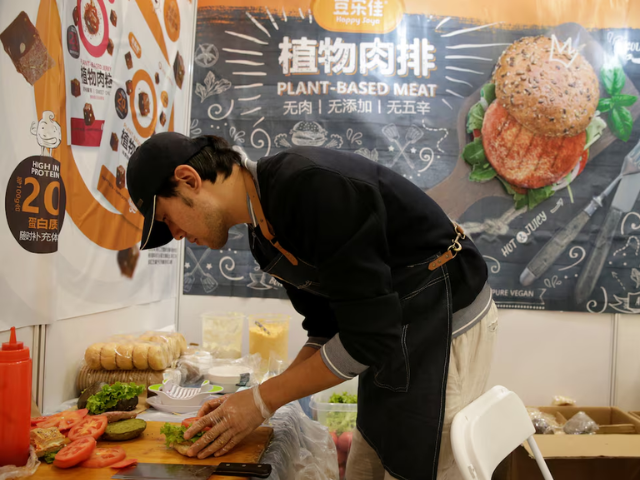
As urban Chinese consumers become increasingly health-conscious, the fast-food industry is adapting. The rising popularity of plant-based burger patties, whole-grain buns, and calorie-transparent digital menus indicates that future market success will belong to brands that can successfully marry the inherent convenience and affordability of the burger with modern nutritional wellness trends.
Ultimately, the humble burger has shed its identity as a mere Western novelty in China. Through a potent combination of economic adaptability, demographic alignment, and operational innovation, it has cemented its place as a permanent pillar of modern Chinese food culture—setting the stage for a multi-billion-dollar golden era of fast-food retail.






Comments
Facebook App ID not configured. Please add it in the Customizer.