
Executive Overview
As the traditional boundaries of the American academic calendar continue to dissolve under the relentless pressure of early August start dates, the perennial debate over the rhythm of childhood, education, and cultural formation is once again brought to the fore. In this installment of his syndicated column, "The Catholic Difference," noted author and public intellectual George Weigel reflects on a bygone era when the boundary between summer and the school year was as immutable as the law of gravity.
Using his own formative experiences in 1959 at the Cathedral School in downtown Baltimore as a narrative anchor, Weigel examines the profound impact of traditional religious education—personified by the stern yet compassionate School Sisters of Notre Dame—on individual development and intellectual awakening.
However, what begins as a nostalgic reminiscence of the mid-20th-century Catholic school experience quickly pivots to a pressing contemporary concern: the philosophical and structural health of modern Catholic primary and secondary education. Against the backdrop of the newly released Front Royal Statement—a reform manifesto reaffirming seven classic principles of Catholic education—Weigel argues for an unapologetic return to authentic Catholic identity, traditional instructional rigor, and the transmission of the great Western civilizational tradition.
Read Also
This analysis explores the historical evolution of the American parish school system, the enduring lessons of classical pedagogy, the current challenges facing modern Catholic institutions, and the strategic vision outlined in the Front Royal Statement for the cultural renewal of the United States.
Detailed Chronology: From Baltimore’s Pavements to the Classroom
The Immutable Rhythms of Mid-Century Summers
For generations of American schoolchildren, the transition from summer vacation to the academic year was a carefully choreographed ritual. Writing of his boyhood in Baltimore, Maryland, George Weigel recalls a time when the very idea of an elementary school opening its doors before Labor Day was as unthinkable as rooting for the New York Yankees.
Labor Day was not merely a long weekend; it was the definitive cultural and seasonal punctuation mark. It signaled the finality of summer:
- Ocean City, Maryland, would empty out of vacationers days prior.
- Mothers would shepherd their sons to downtown department stores, such as Stewart’s, to be outfitted in new school uniforms—complete with trousers destined to have their knees worn through by October.
- Visits to the local five-and-dime, McCrory’s, allowed children the high-stakes decision of selecting a new lunch box emblazoned with cultural icons of the era, from Roy Rogers to Superman.
- Most significantly, students awaited the announcement of which School Sister of Notre Dame (SSND) would govern their classroom environment until the arrival of June.
These rites of passage felt as permanent and reliable as the laws of physics. Yet, as contemporary school calendars creep further into July and early August, that distinct demarcation between the carefree days of youth and the rigors of intellectual discipline has largely been erased.
September 1959: The Crucible of Third Grade
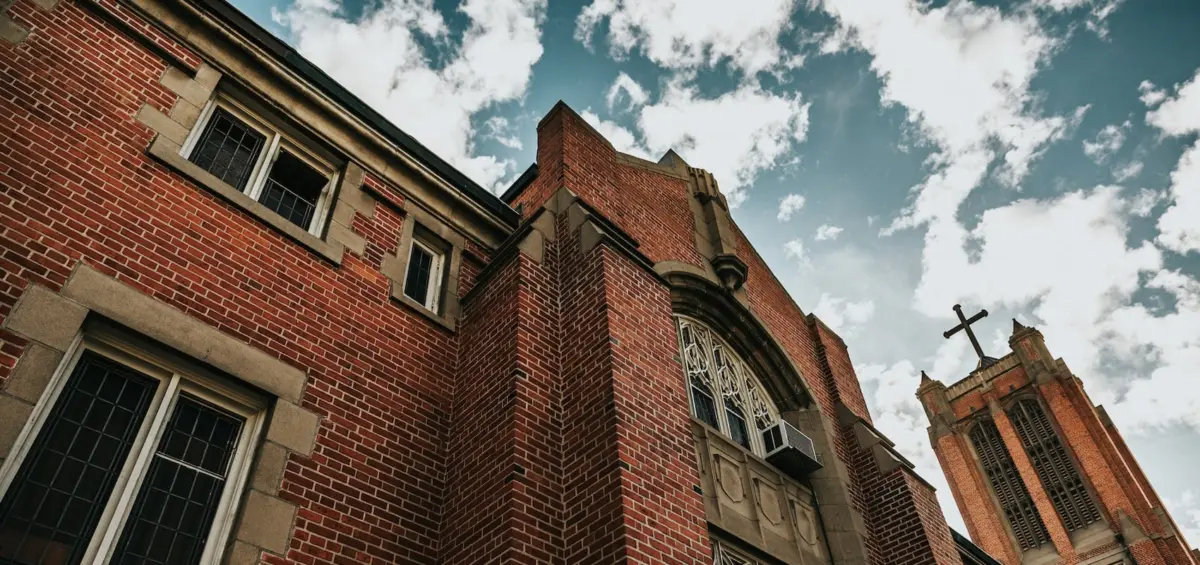
To understand the transformative power of traditional Catholic education, one must look closely at the micro-level of the classroom. In September 1959, a young Weigel entered the third grade at the Cathedral School, then situated at 7 West Mulberry Street. The location itself was historically resonant, positioned a mere stone’s throw from America’s premier historic Catholic edifice, the Basilica of the Assumption of the Blessed Virgin Mary.
The academic year did not begin without friction. While the second-grade preparation for first confession and first Holy Communion had been guided by the steady, kind hand of Sr. Mary Francis Borgia, SSND, the third-grade transition proved tumultuous.
- The Novice’s Trial: The elderly sister originally slated to teach the class fell ill and was replaced by a novice, Sister Barbara. Unprepared for the rowdy energy of third-grade boys, the young teacher lasted a mere two weeks.
- The Arrival of Sr. Florence: Order was restored through the deployment of a postulant, Sister Florence—formerly Florence Sweeney—who later professed final vows as Sister Miriam Jude, SSND.
With years of experience teaching in the public schools of Philadelphia—colloquially known as the "City of Brotherly Shove"—Sister Florence was uniquely equipped to manage a room of young ruffians. Her approach was defined by uncompromising discipline and what Weigel characterizes as "tough love." She did not rely on screaming; rather, her authoritative tone made her absolute command of the classroom undeniable. Under her watch, students were subjected to rigorous multiplication drills via endless recitation and were taught to articulate the Lord’s Prayer with precision—including a distinct, emphatic accent on the first syllable of trespass, a habit retained by her students decades later.
Intellectual Awakening and Discovery
Sister Florence’s pedagogical impact extended far beyond classroom management; she acted as a catalyst for intellectual discovery and personal health:
- The Discovery of Myopia: It was Sister Florence who caught a young Weigel sneaking up the side aisle because he could not read the chalkboard from the back row, thereby identifying the myopia that led to his first pair of glasses.
- Fostering Historical Curiosity: Recognizing his early interest in history, she surreptitiously secured a copy of the eighth-grade World War II examination, allowing him to test his knowledge against older students, all while surrounded by the distinct, sweet scent of wet ink from the era’s Ditto machines.
- The World Book Encyclopedia: Drawing on her prior summer job as an encyclopedia saleswoman, Sister Florence convinced Weigel’s parents to purchase a 19-volume set of the World Book Encyclopedia. This collection became a portal for years of intellectual exploration, remaining a treasured possession long after his parents passed away.
Decades later, Weigel and his wife encountered Sister Miriam Jude at an alumna reunion at the College of Notre Dame of Maryland, sharing a summer evening over steamed crabs and memories. Though she has since passed, her legacy—and the educational philosophy she embodied—serves as the benchmark for Weigel’s critique of contemporary schooling.
Supporting Context & Metrics: The Evolution of Catholic Education
The personal nostalgia of a 1950s Baltimore classroom highlights a broader, systemic shift within American Catholic education. To evaluate the significance of current reform movements like the Front Royal Statement, it is essential to examine the historical trajectory and structural transformation of the Catholic school system in the United States.
[1884: Baltimore Plenary Council]
       │ (Mandated a Catholic school in every U.S. parish)
       ▼
[Mid-20th Century Peak]
       │ (Staffed heavily by religious orders; massive enrollment)
       ▼
[Late 20th to Early 21st Century]
       │ (Decline in religious vocations; rising operational costs; closures)
       ▼
[Contemporary Era: The Renewal Movement]
       (Shift toward classical models, unapologetic Catholic identity, and structural reform)
The 1884 Baltimore Mandate
The foundational vision for American parochial education was codified during the Third Plenary Council of Baltimore in 1884. Meeting at Baltimore’s Old Cathedral—the very basilica central to Weigel’s childhood memories—the U.S. hierarchy issued a bold directive: every Catholic parish in the United States was mandated to establish and maintain a parish school.
The rationale was clear-cut: to shield immigrant Catholic children from secularization, assimilate them into American civic life while preserving their faith, and build an intellectual and moral infrastructure capable of sustaining the Church across generations. For nearly a century, this vision materialized through a vast network of neighborhood schools staffed largely by religious orders of women and men, whose sacrificial labor kept tuition accessible and educational quality high.
The Modern Dilemma: Secularization and Contraction
Today, replicating the 1884 model in its exact historical form is recognized as an impossibility. Decades of demographic shifts, suburban flight, the precipitous decline in religious vocations (and the subsequent retirement of the vowed religious who once formed the backbone of school faculties), and escalating operational costs have led to the closure of thousands of parish schools nationwide.
Furthermore, as Catholic education adapted to late 20th-century secular pedagogical trends, critics argue that many institutions lost their distinctiveness. In an effort to mirror secular private and public schools, some Catholic academies watered down their religious instruction, substituted classical humanities with utilitarian career training, and drifted away from the robust intellectual tradition of the Church.
The contemporary challenge, therefore, is not merely financial preservation, but identity recovery. If Catholic schools do not offer an educational experience that is structurally, philosophically, and spiritually distinct from their secular counterparts, their long-term viability—and their raison d’être—comes into question.
Official Statements: The Front Royal Statement
It is within this context of institutional introspection that the Front Royal Statement emerges as a critical intervention. Released as a reaffirmation of the core tenets of Catholic schooling, the document serves as a manifesto for educational reform that aligns closely with the principles demonstrated by educators like Sister Miriam Jude.
Core Principles of the Reform Manifesto
The Front Royal Statement articulates seven classic principles of Catholic primary and secondary education. While addressing modern administrative and cultural realities, the statement looks backward to classical models of learning to chart a forward path. Its primary assertions include:
- Unapologetic Catholic Identity: Schools must not merely be private institutions with a crucifix on the wall; they must be fully integrated into the life of the Church, viewing all academic disciplines through the lens of the Catholic faith.
- Transmission of the Deposit of Faith: Religious instruction cannot be treated as an elective or an afterthought. It requires rigorous catechesis that forms both the intellect and the moral character of the student.
- Revitalization of the Western Civilizational Tradition: Education must re-anchor itself in the great books, historical consciousness, fine arts, and philosophical inquiries that form the bedrock of Western civilization and Christian humanism.
- Integration of Faith and Reason: Following the intellectual tradition exemplified by figures such as St. Thomas Aquinas, schools must teach that faith and reason are complementary pathways to truth, rejecting both anti-intellectual fideism and radical secular scientism.
- Moral Formation and Virtue: Discipline, personal responsibility, and the cultivation of classical and theological virtues must take precedence over therapeutic models of self-esteem.
Alignment with Historical Precedent
George Weigel draws a direct line between the vision of the 1884 Baltimore bishops and the demands of the Front Royal Statement. The bishops of the 19th century understood that survival in a pluralistic, often hostile cultural landscape required forming young minds capable of defending and living out the faith intelligently.
The Front Royal Statement operates on the same premise. It posits that the renewal of American Catholic culture is fundamentally dependent upon the intellectual and spiritual formation of youth. For school pastors, principals, and diocesan leaders navigating the complexities of the 21st century, the document offers a diagnostic tool and a blueprint for revitalization.
Future Outlook: Reclaiming the Mission of Catholic Schools
As a new academic year commences—regardless of whether it begins before Labor Day or after—the future of Catholic education hangs in the balance. The path forward requires a clear-eyed assessment of both systemic challenges and spiritual imperatives.
Recommendations for Educational Leaders
To ensure that contemporary Catholic schools fulfill their mandate to young souls and the broader culture, educational stakeholders must consider several strategic imperatives:
- Embrace Classical and Traditional Pedagogy: Schools should increasingly look to classical education models that emphasize Latin, logic, rhetoric, and the primary texts of Western civilization, moving away from ephemeral educational trends.
- Prioritize Orthodox Catechesis: Pastors and boards must ensure that theology curricula are thoroughly orthodox, comprehensive, and intellectually challenging, preparing students to articulate and defend their faith in a secularized world.
- Foster Faculty Formation: Just as Sister Florence was formed in a tradition of rigorous discipline and deep faith, modern Catholic schools must recruit and form teachers who not only possess pedagogical skill but are also practicing, articulate Catholics committed to the mission of the Church.
- Disseminate Reform Documents: As Weigel suggests, getting the school year off to a proper start involves sharing foundational texts like the Front Royal Statement with every pastor, principal, and school board member within one’s sphere of influence to stimulate dialogue and intentional reform.
Conclusion
The journey from the chalk dust of 7 West Mulberry Street to the modern digital classroom is vast, yet the fundamental mission of Catholic education remains unaltered. It is a mission dedicated to the salvation of souls, the cultivation of the intellect, and the transmission of a rich civilizational heritage.
If contemporary Catholic schools can recapture the uncompromising dedication, intellectual rigor, and tough love embodied by figures like Sister Miriam Jude—and codified in reform manifestos like the Front Royal Statement—they will not only survive the cultural shifts of the 21st century but will serve as vital engines for the spiritual and intellectual renewal of the United States.





Comments
Facebook App ID not configured. Please add it in the Customizer.