
Executive Overview
For decades, the physical infrastructure of the digital age—the server farms, fiber-optic hubs, and cooling plants that power the internet—existed largely out of sight and out of mind. Tucked away in rural industrial parks or discreet suburban corridors, these monolithic facilities hummed quietly, processing the world’s emails, search queries, and cloud storage requests without drawing the ire of the electorate.
Today, however, the humble data center has emerged as public enemy number one in American politics.
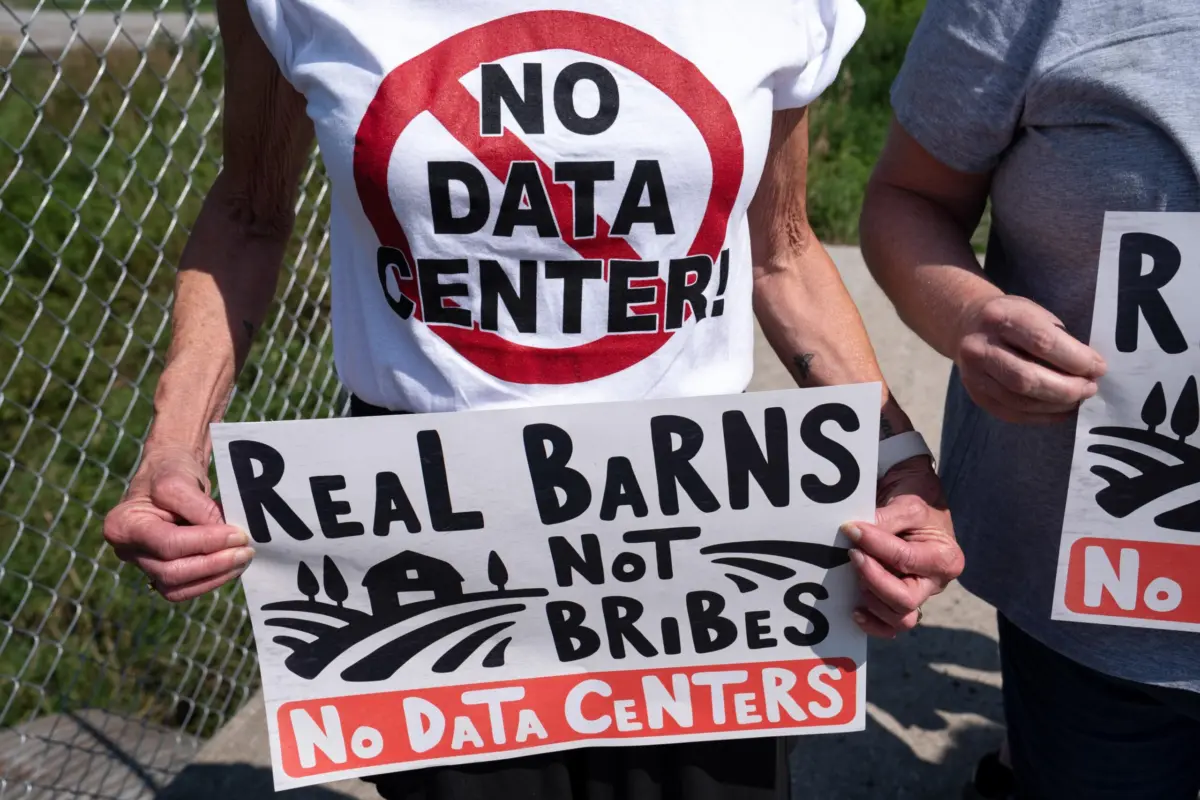
In a stunning political turnaround that has caught both parties flat-footed, the phrase "data center" has transformed from an obscure technical term into a potent populist rallying cry. What began as localized pushback from residents worried about soaring utility bills and buzzing cooling fans has metastasized into a nationwide political firestorm. From the gubernatorial races of Texas and Pennsylvania to fiercely contested Senate battles in Michigan and Ohio, politicians of every ideological stripe are scrambling to prove to voters that they loathe Big Tech’s infrastructure just as much as the communities living in its shadow.
Read Also
This sudden pivot is not merely about zoning disputes or real estate development. It is the physical manifestation of a broader, deeper cultural and economic anxiety. As the artificial intelligence (AI) boom accelerates, requiring unprecedented amounts of electricity and water, Americans are grappling with the tangible toll of the digital revolution. Unable to directly ballot-box generative AI algorithms or regulate the secretive laboratories of Silicon Valley, voters have found a tangible proxy for their fears: the brick-and-mortar server farm. And where the electorate leads, poll-tested politicians are racing to follow.
Detailed Chronology: How the Infrastructure Backlash Broke Containment
The transformation of data centers from mundane commercial investments into toxic political liabilities did not happen overnight. It is the culmination of a multi-year collision between unchecked technological expansion and a fracturing energy grid.
Phase 1: The Quiet Expansion and Early Friction (2020–2023)
As pandemic-era lockdowns accelerated the shift to remote work, cloud computing, and streaming entertainment, tech giants embarked on an unprecedented building spree. Thousands of acres of agricultural and industrial land across Northern Virginia, central Ohio, Texas, and the Pacific Northwest were quietly rezoned and converted into massive windowless warehouses packed with servers.
Initially, local opposition was muted, typically confined to zoning boards and environmental impact hearings. Residents complained about the relentless low-frequency hum of industrial cooling fans, the conversion of green spaces, and the heavy burden these facilities placed on local water supplies. However, Big Tech routinely smoothed over these objections with promises of high-paying jobs, generous local tax revenues, and corporate community investments.
Phase 2: The Grid Breaking Point and the AI Surge (2024–2025)
The tipping point arrived with the generative AI explosion following the widespread adoption of large language models like ChatGPT. Training and running advanced AI models requires staggering quantities of computational power. Consequently, the energy demands of data centers skyrocketed, straining local electrical grids to their absolute limits.
Communities near proposed data center hubs began experiencing something entirely new: the very real threat of rolling blackouts, alongside soaring residential utility bills as tech companies absorbed vast shares of regional power capacity. Data centers that once promised economic prosperity were now widely viewed as energy vampires that threatened the stability of local power grids while offering relatively few permanent jobs once construction was completed. Statistics reveal that the percentage of Americans who "strongly oppose" a data center being constructed in their neighborhood has more than doubled in a single year, signaling a dramatic shift in public sentiment.
Phase 3: The 2026 Political Eruption
By mid-2026, the data center backlash officially broke containment, transitioning from local municipal skirmishes into a defining wedge issue for high-stakes federal and state elections. The sheer ubiquity of the issue redefined campaign playbooks across the political spectrum:
- The Texas Gubernatorial Battlefield: In the race for the Texas governor’s mansion, Democrat Gina Hinojosa launched a hard-hitting campaign ad targeting Republican Governor Greg Abbott over his administration’s cozy relationship with tech developers, culminating in the sharp populist punchline: "Greg Abbott is selling you out."
- The Battle for Control of the House: In a critical toss-up congressional race in Ohio, Democratic Representative Marcy Kaptur launched an aggressive attack against her Republican challenger, pinning him down on his past support for unchecked data center expansion.
- Pennsylvania’s Executive Pivot: Pennsylvania Governor Josh Shapiro—widely viewed as a leading contender for the 2028 Democratic presidential nomination—had previously championed tech investments to boost his state’s economy. Recognizing the shifting political winds, Shapiro dramatically reversed course, signing a strict executive order to limit new data center construction. He subsequently attacked his Republican opponent over the issue in a new campaign ad, weaponizing a vulnerability that his rival had initially attempted to use against him.
- The GOP Panic in the Rust Belt: In Ohio, national Republicans grew so alarmed that the issue would sink Senate candidate Jon Husted’s reelection prospects that party strategists circulated an urgent memo warning top AI and tech executives of the severe electoral danger. Meanwhile, in Michigan, Republican Senate candidate Mike Rogers took the extraordinary step of endorsing an outright moratorium on new data center construction to appease anxious voters.
Supporting Context & Metrics: Why Americans are Revolting Against Big Tech
To understand why politicians are falling over themselves to condemn data centers, one must examine the unique convergence of economic, environmental, and psychological pressures driving the backlash.
The Resource Drain: Power and Water
Modern hyper-scale data centers are resource leviathans. A single facility can consume as much electricity as a medium-sized city—often drawing between 100 to over 1,000 megawatts of power. Furthermore, because computer servers generate immense heat, these facilities require millions of gallons of water daily for evaporative cooling systems, placing severe stress on municipal water tables, particularly in drought-prone regions like the American Southwest and parts of Texas.
When local residents see their monthly utility bills spike while massive data centers enjoy state tax breaks and preferential industrial power rates, the populist anger is palpable.
The AI Proxy War
As media scholar and journalist Molly Taft documented in a recent feature for Wired, the data center backlash cannot be disentangled from widespread societal anxieties regarding artificial intelligence. Polling data reveals a fascinating correlation: individuals who oppose data center construction in their areas—even when they live miles away from any proposed site—are overwhelmingly more likely to harbor deep skepticism toward AI itself.
As Vox culture writer Marina Bolotnikova astutely observed earlier this summer, everyday Americans feel profoundly powerless in the face of rapid, unregulated technological disruption driven by Silicon Valley. They cannot vote on algorithmic bias, automation, or the ethical implications of generative AI. But they can organize against a physical, concrete building proposed down the street. Americans do not know how to fight AI; so they are fighting data centers instead.
Official Statements and Political Maneuvering
The cross-partisan nature of the backlash has created strange political bedfellows and forced establishment figures into defensive postures.
- The Bipartisan Consensus of Opposition: In battleground states like Michigan, candidates from opposing parties have found themselves speaking the exact same language regarding tech infrastructure. Whether framing the issue through a populist economic lens or an environmental conservation framework, the political messaging is uniform: local communities must be protected from exploitative corporate entities.
- The Tech Industry’s Defensive Stance: In response to the August 2026 memo from national Republican strategists warning of looming electoral defeats, representatives for major cloud providers and AI infrastructure firms have scrambled to pivot their public relations strategies. Tech lobbyists are hastily pushing narratives centered around "green data centers," promising to power future facilities exclusively with newly developed nuclear or renewable energy microgrids—though skeptics note these projects remain years away from realization.
- State-Level Legislative Pushback: Across more than a dozen states, legislators have introduced bills modeled after Governor Shapiro’s executive order, seeking mandatory moratoria, stricter noise pollution ordinances, and water-use caps specifically targeting server farms.
Future Outlook: Where Do We Go From Here?
The weaponization of data center politics marks a permanent turning point in how society interacts with digital infrastructure. The era of frictionless, invisible tech expansion is officially over.
1. Increased Regulatory Hurdles
Moving forward, tech giants will no longer be able to rely on quiet municipal zoning approvals and generous tax packages. Every new server farm will face intense public scrutiny, prolonged environmental impact reviews, and aggressive legal challenges from empowered local coalitions. The cost of building digital infrastructure in the United States is poised to skyrocket as developers are forced to fund their own dedicated power generation sources—such as small modular nuclear reactors or off-grid solar farms—to appease local grids.
2. The 2028 Electoral Landscape
As the road to the 2028 presidential election takes shape, the data center debate will serve as a major testing ground for populist economic nationalism within both the Democratic and Republican parties. Candidates who successfully position themselves as defenders of local communities against the unchecked encroachment of Big Tech will hold a distinct advantage with working-class voters in the Rust Belt and the Sun Belt alike.
3. A Broader Reckoning with AI
Ultimately, the data center wars are just the opening skirmish in a much larger societal reckoning with artificial intelligence. Until lawmakers establish a comprehensive federal framework to govern AI safety, labor displacement, and energy consumption, the physical buildings housing these systems will continue to serve as lightning rods for public frustration.
For politicians, the lesson of 2026 is clear: ignore the hum of the servers at your own electoral peril.





Comments
Facebook App ID not configured. Please add it in the Customizer.