
Executive Overview
For over half a century, the American Catholic Church has operated under the heavy shadow of a profound ideological schism. Divided sharply along the fault lines of "conservative" and "liberal" identities, the faithful have long navigated a landscape marked by polemics, mutual suspicion, and cultural fracturing. Matters of liturgical preference, political alignment, and theological emphasis have historically dictated not only how Catholics practice their faith, but where they choose to sit on a Sunday morning—and, increasingly, whether they choose to stay at all.
However, a significant pivot is underway. On a recent episode of the widely discussed podcast Secret Third Thing, hosts Virginia and Germán welcomed prominent author and Jesuit priest Fr. James Martin to dissect the realities of growing up and living out the Catholic faith in an intensely polarized digital and cultural ecosystem. Central to their discussion was an unexpected agent of healing: Pope Leo XIV.
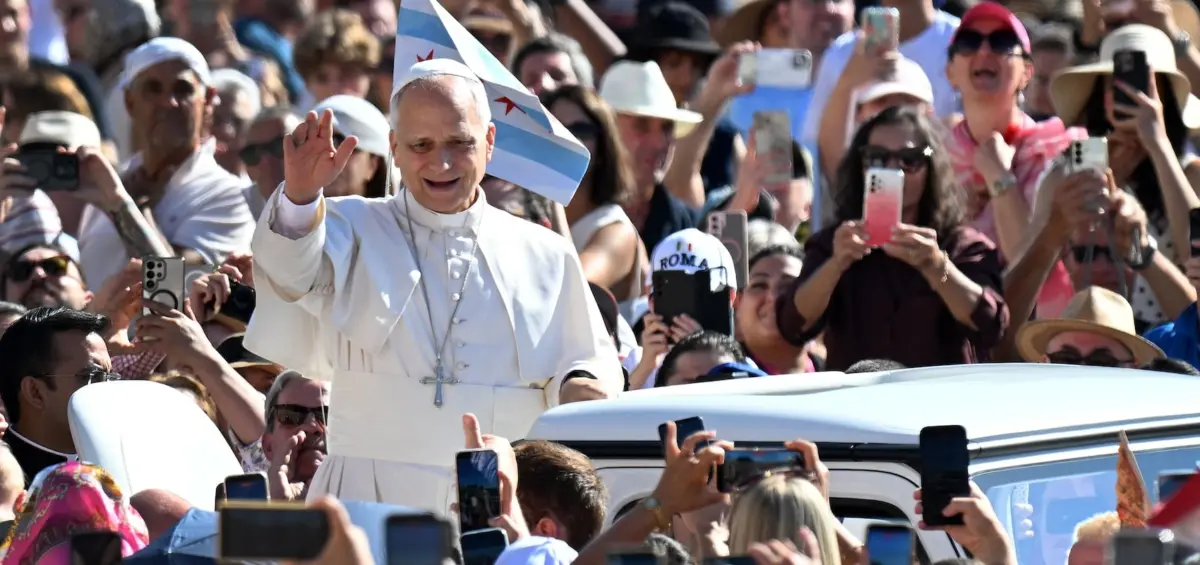
Through a deft refusal to be categorized by the tired binaries of the post-Vatican II era, Pope Leo XIV has spent the first year of his papacy dismantling long-held factional barriers. By rising above partisan theological warfare, the American pontiff is offering a masterclass in pastoral leadership, signaling an end to sixty years of entrenched American Catholic sectarianism, and offering a much-needed sanctuary for a younger generation exhausted by church politics.
Read Also
Detailed Chronology: Sixty Years of Polarization and the Turn Toward Unity
To understand the magnitude of Pope Leo XIV’s unifying impact, it is necessary to examine the historical trajectory that brought American Catholicism to its current crossroads. The polarization currently affecting parishes, seminaries, and Catholic media outlets did not materialize overnight; rather, it is the cumulative result of decades of socio-religious evolution following the Second Vatican Council.
The Post-Vatican II Divergence (1965–1990s)
In the wake of Vatican II (1962–1965), the Catholic Church sought to renew its engagement with the modern world. While the Council intended to foster renewal, unity, and a deeper engagement with sacred tradition and contemporary society alike, its implementation in the United States quickly became a battleground. Two distinct camps emerged:
- The Progressive/Liberal Wing: Focused heavily on the spirit of renewal, liturgical inculturation, social justice initiatives, and structural reforms, including discussions surrounding governance and lay participation.
- The Traditionalist/Conservative Wing: Focused on safeguarding continuity, emphasizing the immutability of doctrine, preserving traditional liturgy, and resisting what they perceived as secularizing compromises within the Church.
By the 1980s and 1990s, these divisions hardened into institutional realities. Catholic universities, publishing houses, and advocacy groups began to align themselves explicitly with one side of the ideological divide. Disagreements over liturgical style—such as the Latin Mass versus the Novus Ordo—transformed from matters of preference into litmus tests of orthodox loyalty.
The Digital Age and Hyper-Polarization (2000s–2020s)
As Fr. James Martin noted during his appearance on Secret Third Thing, growing up online as a Catholic meant navigating a minefield of digital polemics. The advent of Catholic blogs, social media platforms, and hyper-partisan commentary channels accelerated the fracturing process.
Name-calling, public accusations of schism, and moral grandstanding became standard operating procedures for internet apologists on both ends of the spectrum. The foundational presumption of much online Catholic discourse shifted to one of bad faith: interlocutors routinely assumed that anyone holding an opposing view was not merely mistaken, but actively working against the interests of the Church. This toxic environment bled directly into physical parishes, creating localized enclaves where the faith was filtered entirely through a political lens.
The Papal Intervention (The Present Era)
Into this deeply entrenched environment stepped Pope Leo XIV. Inheriting a Church fractured by decades of ideological warfare and magnified by digital tribalism, the pope adopted a strategy that caught both critics and supporters off guard: he refused to play the game.
By declining to be neatly slotted into either the "conservative" or "liberal" pigeonholes that have come to define modern ecclesial reporting, Leo XIV has introduced a refreshing ambiguity that forces the faithful to look past partisan labels and return to the core tenets of the Gospel. His first year in office has demonstrated that pastoral charity and doctrinal fidelity are not mutually exclusive—a realization that is steadily defusing decades of tension.
Supporting Context & Metrics: The State of the American Church
The urgency of Pope Leo XIV’s unifying pontificate is underscored by stark demographic and sociological data regarding the health and retention of the American Catholic population.
The Exodus of the Younger Generations
Sociological data compiled over the past decade reveals a growing disconnect between institutional Catholicism and younger demographics, particularly Millennials and Generation Z. According to studies from the Pew Research Center and the Center for Applied Research in the Apostolate (CARA):
- Disillusionment with Polarization: A significant percentage of young Catholics cite the toxic, hyper-partisan nature of intra-church debates as a primary reason for disengagement or outright departure from the faith.
- The "None" Phenomenon: Young people entering adulthood are increasingly identifying as religiously unaffiliated, driven in part by a weariness of witnessing religious institutions mirror the bitter partisanship of secular politics.
- A Cry for Authenticity: Despite leaving institutional structures, younger demographics consistently express a deep hunger for authentic spirituality, community, and moral clarity—qualities that transcend the liberal-conservative binary.
The Parish Divide Metrics
Internal church metrics and independent surveys highlight how ideological sorting has impacted local communities:
- Parish Homogeneity: Over 65% of active church-goers report that their parishes lean heavily in one ideological direction, creating echo chambers rather than universal communities.
- Media Consumption: Regular attendees who consume partisan Catholic media are nearly three times more likely to view fellow parishioners of differing viewpoints with suspicion.
These figures illustrate the profound cultural deficit that Pope Leo XIV is actively working to repair. By bridging the gap, the papacy is not merely engaging in diplomatic maneuvering; it is fighting for the spiritual survival of the next generation of believers.
Official Statements and Expert Perspectives
The dialogue surrounding Pope Leo XIV’s unifying approach has garnered significant attention from theologians, commentators, and public intellectuals alike.
Insights from Fr. James Martin
During his conversation with hosts Virginia and Germán on Secret Third Thing, Fr. James Martin offered a candid assessment of the psychological and spiritual toll exacted by decades of internal division:
"As a Catholic, growing up online meant that the dividing line between ‘conservative’ and ‘liberal’ Catholics was an ever-present reality. Name-calling, accusations of schism, and moral grandstanding were—and still are—common. The general presumption was that the opposite side was arguing in bad faith… The factions seemed to be embedded in Catholic culture, dividing themselves among parishes and religious groups. Matters of disagreement determined where, and how, you lived your faith."
Martin’s reflections capture the lived experience of millions of believers who found themselves spiritually homeless in a church that frequently prioritized ideological purity tests over evangelical charity.
The Shift in Papal Rhetoric
Vatican observers have noted that Pope Leo XIV’s communication strategy is deliberately designed to disarm partisan combatants. Rather than issuing broadside condemnations against specific factions, the pontiff has consistently emphasized synodality, listening, and the primacy of mercy.
In recent addresses, Vatican spokespersons have reiterated that the Holy See views polarization not merely as an administrative challenge, but as a spiritual wound. By refusing to validate the framing imposed by secular media and hyper-partisan commentators, Pope Leo XIV has effectively starved the factions of the conflict they rely upon to sustain themselves.
Future Outlook: A Unified Horizon for American Catholicism
As Pope Leo XIV enters the subsequent phases of his pontificate, the long-term implications for the American Church are profound. While entrenched interests on both ideological extremes will undoubtedly continue to resist efforts at reconciliation, the momentum is undeniably shifting toward the center-ground of authentic Catholic tradition and pastoral responsiveness.
Restoring Parish Life
The healing initiated at the highest levels of the Church must eventually cascade down to the pews. Future pastoral initiatives are expected to focus heavily on grassroots dialogue, encouraging dioceses and parish councils to foster spaces where Catholics of differing political persuasions can worship together without ideological litmus tests. The goal is a return to a truly catholic (universal) identity, where the Eucharist—not political affiliation—unites the community.
Engaging the Digital Continent
A critical test for the future of the Church will be the taming of its digital ecosystem. Catholic media platforms, podcasters, and online influencers face a reckoning. As younger generations reject the monetization of outrage and division, digital apostolates will either need to adapt to a more constructive, charitable tone or risk sliding into irrelevance. Podcasts like Secret Third Thing—by providing spaces for nuanced, honest, and charitable conversations—point the way forward for digital-age evangelization.
Conclusion
The narrative of American Catholicism for the past sixty years has been one of division, suspicion, and cultural fragmentation. Yet, as Fr. James Martin and his co-hosts explored, history is not destiny. Through a combination of clever pastoral independence and a steadfast refusal to yield to partisan classification, Pope Leo XIV is successfully charting a course toward unity. For a younger generation tired of church politics and yearning for the transcendent, this new chapter offers a renewed sense of hope: a church united not by political alignment, but by a shared encounter with the living Christ.
For long-term convenience and to stay updated on further discussions regarding the state of faith and culture, subscribe to Secret Third Thing via Apple Podcasts or Spotify.
Image credit: Sipa USA via AP.




Comments
Facebook App ID not configured. Please add it in the Customizer.