
Executive Overview
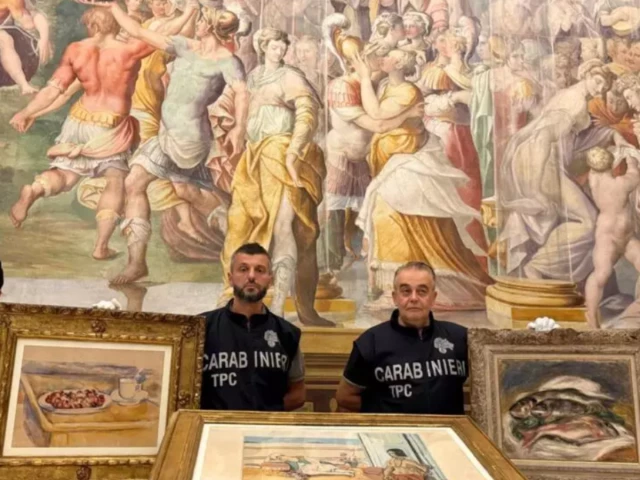
In a swift and decisive breakthrough, Italian law enforcement authorities have successfully recovered a trio of priceless modernist masterpieces—by legendary painters Pierre-Auguste Renoir, Paul Cézanne, and Henri Matisse—with an estimated combined market value exceeding $10.4 million (€9.02 million). The artworks, which were brazenly ripped from the walls of the prestigious Magnani-Rocca Foundation villa near Parma in northern Italy during a meticulously planned operation in March, were recovered during a series of targeted police raids.
The high-stakes investigation, spearheaded by Parma’s chief of police, Andrea Pagliaro, has dismantled a sophisticated transnational criminal syndicate. Authorities have implicated a gang of nine Moldavian nationals, five of whom are directly accused of executing the physical break-in and theft. According to official police briefings, the operation underscores a deeply troubling, escalating trend of targeted heists aimed at European cultural institutions, a vulnerability starkly highlighted by recent high-profile breaches across the continent.
While the recovery of the canvases Fish by Renoir, Still Life with Cherries by Cézanne, and Odalisque on the Terrace by Matisse marks a monumental victory for art preservation and international policing, the incident has sent shockwaves through the museum curation community. It has forced directors and security consultants worldwide to re-evaluate the vulnerabilities facing regional galleries housing world-class collections. This comprehensive report details the chronology of the crime, the investigative breakthroughs, the financial and historical significance of the recovered art, and the broader security crisis facing modern European museums.
Read Also
Detailed Chronology
The Prelude to the Heist: Surveillance and Planning
Long before the first glass pane was shattered on that fateful night in March, the criminal network had engaged in extensive reconnaissance. The Magnani-Rocca Foundation, nestled in the tranquil countryside of Mamiano di Traversetolo, roughly 20 kilometers (12 miles) south of Parma, presented an inviting target for organized art thieves. While major national museums in Rome, Florence, or Milan are typically fortified with state-of-the-art multi-layered security infrastructure, regional foundations often balance the delicate paradox of maintaining public accessibility with maintaining the serene, intimate atmosphere characteristic of private estate museums.
Investigators believe the nine-person Moldavian gang conducted multiple site visits disguised as ordinary tourists. During these visits, the perpetrators mapped out the villa’s layout, pinpointed blind spots in the closed-circuit television (CCTV) coverage, measured the exact dimensions of the target corridors, and established a rapid egress route. The gang capitalized on the relative isolation of the neoclassical villa, which is surrounded by expansive, wooded parklands—providing ample cover for a stealthy approach and a rapid getaway.
The Three-Minute Incursion: Inside the Villa
Surveillance footage subsequently released by the Arma dei Carabinieri and the Parma police department provides a chilling, cinematic window into the precision with which the crime was executed. The operation lasted less than three minutes from the moment the perpetrators breached the building to their final escape into the shadows.
- The Breach (0:00 – 0:45): Two masked perpetrators, outfitted with headlamps to navigate the darkened historic halls without tripping motion-activated emergency lighting systems, approached a ground-floor window of the villa. Using specialized glass-cutting tools and heavy-duty suction cups, they systematically bypassed the double-glazed historic window, creating an opening large enough to squeeze through without triggering acoustic shatter alarms.
- The Extraction (0:45 – 2:15): Moving with practiced speed and utter familiarity, the two thieves bypassed lesser rooms and secondary works, marching directly into the specific gallery housing the foundational pillars of the museum’s modern art wing. Ignoring adjacent masterpieces, they targeted their pre-assigned objectives. With surgical precision, they unhooked the paintings from their secure mounting brackets, carefully laying them on protective foam padding brought specifically for the job.
- The Hand-Off and Egress (2:15 – 2:55): Rather than carrying the bulky, fragile canvases back through the sprawling complex, the primary operatives returned to the entry window. They carefully passed Fish, Still Life with Cherries, and Odalisque on the Terrace through the frame to a third accomplice waiting outside in the damp night air. The thieves then vaulted out of the building, rendezvoused with a getaway driver idling in a nearby rural lane, and vanished into the fog before local private security firms or automated law enforcement dispatches could register the breach.
The Investigation and Raid
Following the heist, Italian authorities mobilized an elite task force specializing in the recovery of stolen cultural property (Carabinieri TPC), collaborating closely with local Parma investigators. The breakthrough came not from an anonymous tip, but through rigorous digital forensics, tracking vehicle license plate recognition systems, analyzing regional cellular network pings, and cross-referencing known transnational theft rings operating across Eastern and Western Europe.
By late spring, the net had tightened around the nine Moldavian suspects. Parma police chief Andrea Pagliaro confirmed that search warrants were executed simultaneously across several safe houses and residential addresses linked to the suspects. The critical prize—the three missing masterpieces—was discovered safely stashed inside the residential property of one of the prime suspects. The canvases were found remarkably intact, wrapped in protective sheeting, hidden away in a makeshift makeshift storage space awaiting an illicit buyer on the black market.
Supporting Context & Metrics
The Stolen Masterpieces: Art-Historical and Financial Valuations
The financial scale of the Parma heist is staggering, but the cultural and art-historical loss would have been immeasurable. The three works represent pivotal moments in the evolution of late 19th- and early 20th-century European modernism:
- Paul Cézanne – Still Life with Cherries (Natura morta con ciliege): By far the most valuable piece in the stolen triad, this quintessential Cézanne work was valued by police and insurance experts at approximately €6 million ($6.5 million). Characterized by the artist’s pioneering structural brushwork and his revolutionary exploration of perspective and geometric form, the painting serves as a vital conceptual bridge between Impressionism and Cubism.
- Auguste Renoir – Fish (Poissons): Estimated at €3 million ($3.5 million), this vibrant Impressionist canvas showcases Renoir’s masterful manipulation of light, color harmony, and fluid brushstrokes. The painting captures the shimmering textures of marine life with an organic immediacy that epitomizes the joyful, sensory-focused ethos of classic French Impressionism.
- Henri Matisse – Odalisque on the Terrace (Odalisque sur la terrasse): Though valued more modestly by investigators at approximately €20,000, this Matisse piece carries immense historical significance. Representing the artist’s famed Orientalist and decorative phases, the work embodies Matisse’s lifelong obsession with rich color saturation, complex patterns, and the interplay of indoor and outdoor light.
The Magnani-Rocca Foundation: A Legacy of Patronage
To fully understand the gravity of the Parma theft, one must examine the unique nature of the institution targeted. The Magnani-Rocca Foundation is not merely a commercial gallery; it is the spiritual and physical repository of the life’s work of Luigi Magnani (1906–1984), a towering figure in Italian art history, musicology, and literature.
Magnani spent decades transforming his ancestral country estate in Mamiano into a world-class temple of art. His personal collection reads like a definitive anthology of Western art history, encompassing not only the modern French masters targeted in March, but also priceless historical masterworks by Albrecht Dürer, Peter Paul Rubens, Anthony van Dyck, Francisco Goya, and Claude Monet. The foundation operates under a strict mandate to share Magnani’s vision with the public while preserving the intimate domestic ambiance in which the collector originally lived with his art. This very openness, however, makes regional foundations uniquely vulnerable when compared to heavily fortified national mega-museums.
Official Statements
The successful recovery of the artworks prompted a wave of relief and triumph across Italian cultural and law enforcement sectors, coupled with stern warnings regarding the persistent vulnerabilities of European heritage sites.
In a press conference held at police headquarters in Parma, Chief of Police Andrea Pagliaro detailed the exhaustive multi-agency effort that led to the recovery:
"This was an operation characterized by extraordinary complexity and international dimension. The theft was executed with chilling efficiency by individuals who clearly knew the value of what they were taking and had likely secured preliminary buyer interest on the illicit international art market. However, the relentless dedication of our investigators, utilizing cutting-edge digital tracking and traditional police work, closed the net before these treasures could be smuggled out of the country or damaged. Protecting Italy’s cultural patrimony is a sacred duty, and today we have proven that no criminal syndicate is beyond the reach of the law."
Representatives of the Magnani-Rocca Foundation released a joint statement expressing profound gratitude to the Carabinieri and the Parma police force:
"We are weeping tears of joy today. The return of these vital works—these irreplaceable windows into the minds of Cézanne, Renoir, and Matisse—restores the soul of our foundation. Luigi Magnani dedicated his entire existence to gathering these masterpieces so that humanity could experience their transcendent beauty. While this ordeal has exposed frightening security challenges that museums across the continent must urgently address, the swiftness and professionalism of Italian law enforcement have averted a permanent cultural tragedy."
Future Outlook: A Continent-Wide Security Crisis
While the immediate crisis in Parma has concluded with the recovery of the canvases and the dismantling of the Moldavian cell, the broader implications of the March heist point to a systemic vulnerability plaguing the European cultural landscape.
The Parma break-in is merely the latest in an alarming escalation of brazen, highly organized museum thefts across Europe. Most notably, just months prior in October, a jaw-dropping daylight raid struck the Louvre in Paris. In that incident, thieves executed a military-precision heist in broad daylight, slipping out of the world’s most famous museum in under eight minutes with an astronomical cache of crown-jewel artifacts and royal jewellery valued at a staggering $102 million.
Art crime experts, security consultants, and insurance underwriters are now sounding the alarm. Organized crime syndicates are increasingly viewing regional museums and foundation estates as "soft targets" compared to major metropolitan flagships. While national institutions have ramped up physical security, facial recognition, and biometric access controls, regional facilities—often operating on tighter philanthropic budgets—struggle to bridge the financial gap required to maintain comprehensive, modern defense systems.
Recommendations for Future Museum Security
In the wake of the Parma investigation, security panels across the European Union are urging member states to adopt a standardized framework for heritage protection:
- Integrated AI-Driven Surveillance: Transitioning from passive CCTV monitoring to proactive, artificial intelligence-powered motion and behavioral analysis that can detect intrusion attempts before a window is even breached.
- Layered Physical Hardening: Upgrading historic glass panes to shatter-resistant, bullet-grade laminated security glass that maintains architectural aesthetic standards while defeating mechanical cutting tools.
- Public-Private Intelligence Sharing: Establishing dedicated European art-crime intelligence clearinghouses to track known transnational smuggling rings before operations can be launched.
- Subsidized Heritage Defense Grants: Enabling smaller foundations like Magnani-Rocca to access state and EU subsidies dedicated exclusively to upgrading physical security infrastructure.
Ultimately, the successful recovery of the Parma masterpieces serves as both a triumphant testament to modern police capabilities and a sobering wake-up call. As long as the illicit market for stolen art remains lucrative, criminal syndicates will continue to probe the defenses of Europe’s cultural sanctuaries. Ensuring the safety of humanity’s shared heritage will require unprecedented cooperation, vigilance, and investment in the years to come.




Comments
Facebook App ID not configured. Please add it in the Customizer.