
Executive Overview
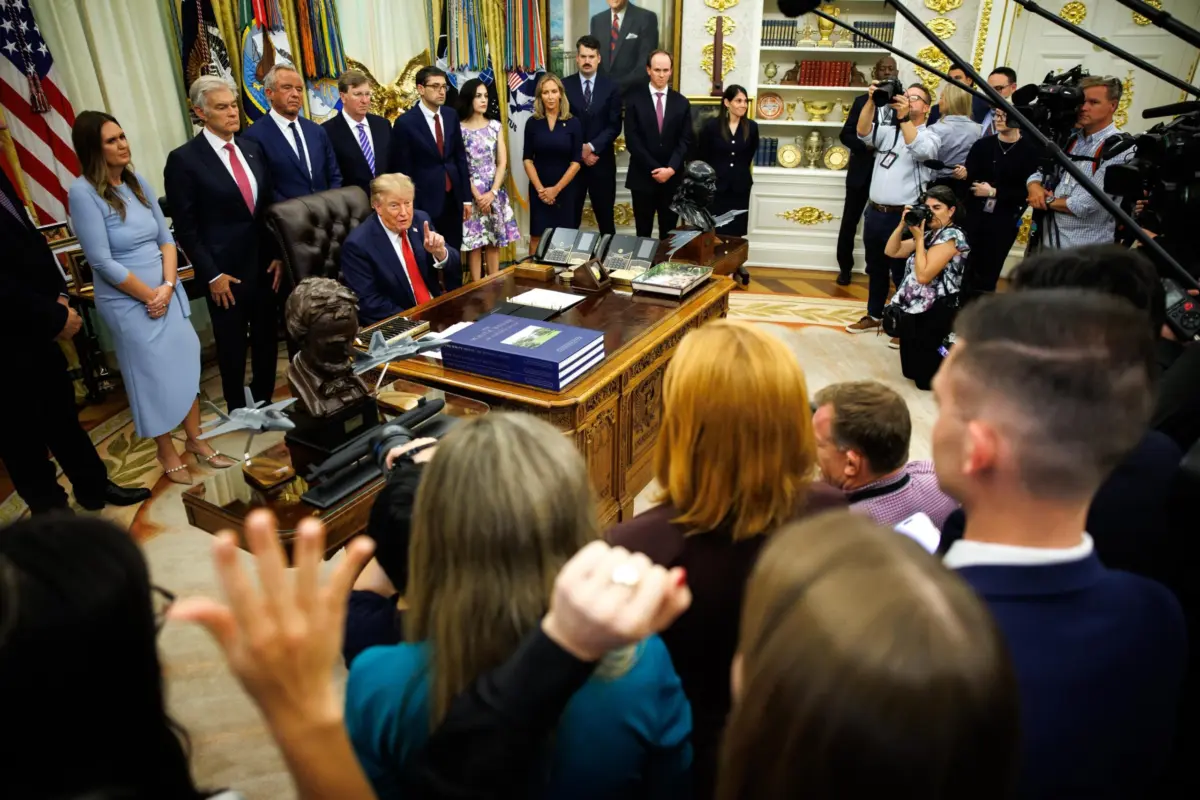
The legal battle over the Trump administration’s sweeping restrictions on the White House press corps has reached a critical juncture, highlighting an escalating friction between the executive branch and the pillars of American journalism. A high-stakes federal court hearing concluded without an immediate ruling from Trump-appointed U.S. District Judge Timothy Kelly, leaving a contentious ban on reporters from CNN, MS NOW, and Politico temporarily intact.
While the outcome of Wednesday’s courtroom exchange was technically anticlimactic, legal analysts and Washington insiders agree that a decisive ruling is imminent. Judge Kelly expressed overt skepticism toward the Justice Department’s justifications for stripping the outlets of their White House ground access, signaling potential vulnerability in the administration’s legal defense.
The controversy—born out of a broader campaign by the Trump administration to reshape media access during its second term—extends far beyond standard political friction. By weaponizing neutral bureaucratic rules, executive-controlled press pools, and federal regulatory agencies, the administration has introduced a chilling effect across American media. Observers note that the tactics bear striking similarities to those employed by foreign authoritarian regimes, raising urgent questions about the future of the First Amendment, government accountability, and the protective boundaries of the U.S. judicial system.
Read Also
Detailed Chronology: From Press Pool Takeover to Federal Courtroom
The events leading up to Judge Kelly’s courtroom represent a systematic tightening of control over the executive branch’s information pipeline. The timeline of this press freedom crisis highlights a calculated shift in how the White House interacts with independent journalism.
Early 2025: The Press Pool Seizure
The structural transformation of White House media access began in the opening months of 2025. Abandoning decades-old precedents wherein the independent White House Correspondents’ Association (WHCA) managed the rotating pool of reporters accompanying the president, the Trump administration executed a hostile takeover of the press pool system. By centralizing control over who could travel with the president and enter the White House grounds, administration officials established a mechanism to gatekeep journalistic access.
February 2025: The First Exclusions
It did not take long for the administration to weaponize its newfound control. By mid-February 2025, the White House began implementing targeted exclusions. Prominent outlets—including the Associated Press—found themselves barred from vital access points such as Air Force One and the Oval Office. These moves served as an early testing ground for broader punitive actions against organizations whose reporting displeased the executive branch.
Mid-September 2026: The Ban on CNN, MS NOW, and Politico
The conflict reached a boiling point in late September 2026 when the administration escalated its strategy by outright banning CNN, MS NOW, and Politico from the White House grounds. The Justice Department subsequently attempted to defend the ban in court by arguing that the targeted outlets’ reporting posed risks to national security. However, President Donald Trump undercut his own legal team’s national security argument in public statements, explicitly stating that the organizations had been singled out over coverage he characterized as inaccurate and unfairly negative.
September 23, 2026: The Broad Media Boycott
The administration’s aggressive posture miscalculated the solidarity of the broader press corps. In an extraordinary display of pushback, traditionally conservative and sympathetic outlets joined the protest. Fox News led a coalition of media organizations that boycotted White House events in late September, refusing to participate in pooled coverage in active solidarity with their barred competitors.
September 21–23, 2026: Pre-Hearing Maneuvers
As the legal showdown loomed, President Trump took to social media to signal his anticipation of an adverse ruling. In a post on Truth Social, he declared that he would "almost without question" appeal any legal defeat handed down by the federal court.
Wednesday’s Court Hearing
The legal arguments culminated in a tense federal hearing before Judge Timothy Kelly. During the proceedings, the Justice Department defended the exclusion based on executive discretion and national security concerns. However, Judge Kelly’s pointed questioning laid bare the thin veneer of the administration’s legal reasoning, leaving court observers anticipating an imminent injunction or ruling against the White House.

Supporting Context & Metrics: Regulatory Pressure and the Chilling Effect
The courtroom battle over physical press credentials is only one front in a multifaceted campaign against independent media. The Trump administration has increasingly relied on administrative and regulatory pressure points to influence editorial content across the broadcast and entertainment industries.
The Weaponization of the FCC
Beyond the physical gates of 1600 Pennsylvania Avenue, the administration has mobilized the Federal Communications Commission (FCC) to scrutinize broadcasters perceived as hostile. Rather than relying solely on direct censorship, the administration has leveraged the existential threat of license revocations and sudden compliance reviews.
- Targeted Reviews: The FCC has instituted a pattern of pulling television station licenses for unscheduled, mysterious reviews, specifically targeting networks that air political commentary critical of the administration. While formal license suspensions have thus far been avoided, the threat alone has altered the operational calculus of major media conglomerates.
- The ABC-Disney Litigation: The heavy-handed approach of the regulatory body has already sparked landmark litigation. ABC and its parent company, Disney, filed a high-profile lawsuit against the FCC, alleging direct violations of First Amendment protections designed to shield broadcasters from government coercion.
- The Jimmy Kimmel Precedent: The chilling effect of this regulatory environment materialized in the entertainment sector when late-night host Jimmy Kimmel announced that his program would cancel a scheduled interview with Texas Senate candidate James Talarico. The cancellation was directly attributed to heightened FCC scrutiny over political content, illustrating how regulatory threats force self-censorship without requiring explicit government orders.
Parallels to International Authoritarianism
Civil liberties experts warn that these domestic tactics mirror the playbooks of foreign strongmen. Nico Perrino, executive vice president of the Foundation for Individual Rights and Expression (FIRE), condemned the administration’s strategy during a media briefing.
"These are things that are done by regimes that we do not want to emulate," Perrino stated, drawing explicit parallels between the White House credential bans and the press-control tactics historically deployed by Russian President Vladimir Putin.
Similarly, media scholars have noted structural resemblances to the governance model of former Hungarian Prime Minister Viktor Orbán. Orbán successfully weaponized broadcast licensing rules, tax audits, and bureaucratic technicalities to systematically starve independent media outlets of resources and force them into submission, providing a blueprint that modern populists study closely.
Official Statements & Legal Arguments
The divergence between the administration’s public rhetoric and its legal filings formed the core of Wednesday’s courtroom debate.
- The Justice Department’s Stance: In federal court, government attorneys argued that access to the White House complex is a matter of absolute executive discretion. They attempted to frame the restrictions on CNN, MS NOW, and Politico around national security imperatives, asserting that the administration retains the inherent right to secure the premises and manage who is granted day-to-day proximity to the president.
- The Plaintiffs’ Counter-Arguments: Lawyers representing the targeted media organizations countered that the White House functions as a public forum for news dissemination. They argued that revoking press credentials purely as a retaliatory measure against critical journalism is an unconstitutional violation of the First Amendment, designed to punish protected speech and suppress dissenting viewpoints.
- The Executive’s Rhetoric: Undermining his own legal representation, President Trump defended the ban on his social media platform, framing the restrictions as a justified response to "fake news" and hostile reporting. Legal scholars noted that these public admissions made it exceedingly difficult for government lawyers to sustain the pretense that national security—rather than political animus—motivated the ban.
- Industry Reactions: The unprecedented solidarity demonstrated by networks like Fox News underscored a shared realization across the media landscape. Even outlets frequently favored by the administration recognized that validating the exclusion of competing reporters sets a dangerous precedent that ultimately threatens the constitutional rights of the entire press corps.
Future Outlook: The Judiciary as the Ultimate Backstop
As Washington waits for Judge Kelly to issue his formal ruling, the immediate future of the White House press ban hangs in the balance. An adverse ruling against the administration is widely expected, given the judge’s expressed skepticism during the hearing.
However, the conclusion of this district court proceeding marks the beginning, rather than the end, of the legal battle. President Trump’s explicit promise to appeal any unfavorable decision ensures that the dispute will inevitably climb to higher appellate courts, potentially setting a monumental legal precedent regarding the limits of executive power over press access.
While comparisons to Hungary and Russia highlight the gravity of the tactics deployed against American journalists, legal experts emphasize a fundamental distinction: the resilience of the United States’ institutional checks and balances. Unlike nations with captured judiciaries or dismantled democratic norms, the American system retains an independent court system capable of acting as a constitutional backstop.
Whether the federal judiciary will forcefully reaffirm the protections of the First Amendment against modern executive overreach remains to be seen. What is certain, however, is that the outcome of this case will define the parameters of press freedom, government transparency, and executive accountability for years to come.


Comments
Facebook App ID not configured. Please add it in the Customizer.