
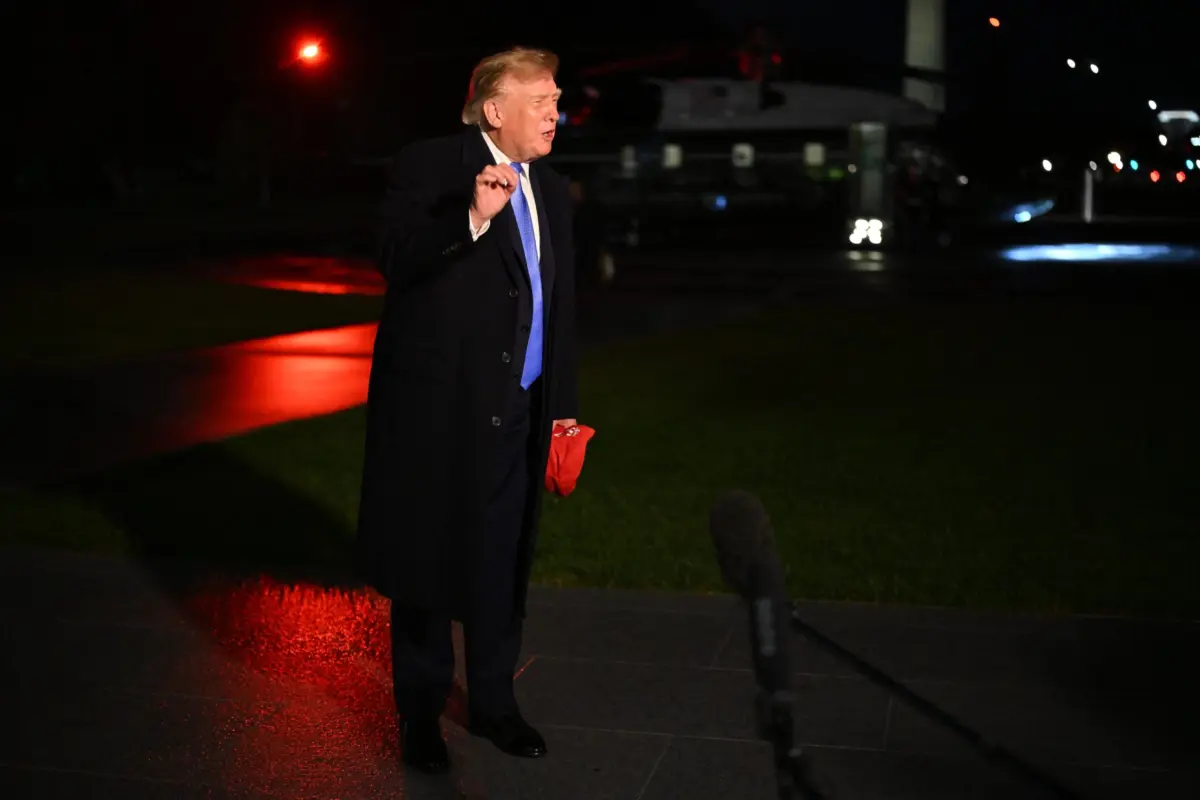
WASHINGTON — A growing firestorm has erupted over the use of federal resources after the Trump administration broadcast a series of high-profile, campaign-style television commercials financed entirely by taxpayers. The latest 30-second spot, which debuted during prime-time slots over the weekend—including high-viewership broadcasts like Saturday Night Live, Fox News Sunday, and major collegiate and professional football games—features stark, black-and-white imagery of President Donald Trump walking down a federal corridor.
Accompanied by a grave voiceover, the president vows to “demolish the deep state,” “expel the warmongers from our government,” and “cast out the communists, Marxists, and fascists.” For the final ten seconds of the broadcast, a stark white line of text appears across the screen: "Paid for by the U.S. Government."
Ethics watchdogs, legal scholars, and government accountability groups have roundly condemned the spots as a flagrant misuse of public funds for partisan political messaging. Yet, the White House has stood firm, categorizing the broadcasts as standard public service announcements (PSAs) designed to inform the populace, noting that the president is not currently running for electoral office.
Read Also
This unfolding controversy highlights a deepening debate over the boundaries separating official government communications from political self-aggrandizement, raising critical questions about transparency, federal spending, and executive overreach in the run-up to the midterm elections.
Executive Overview
The revelation that federal coffers are funding television spots centered on the president’s personal political rhetoric marks a significant escalation in ongoing debates over administrative power and transparency. Over the past week, three distinct Trump-centric advertisements have hit major television networks, collectively drawing hundreds of thousands of dollars from the federal treasury.
The most recent spot is not an isolated incident; rather, it represents the third and most prominent installment in a coordinated media blitz. Investigative reports from outlets such as The New York Times and The Associated Press have tracked hundreds of thousands of taxpayer dollars flowing into these broadcasts. Legal experts suggest that the advertisements violate long-standing prohibitions against using public money for partisan campaigns or self-promotion.
Despite the mounting criticism, the administration maintains that the messages serve a vital public purpose. However, a side-by-side comparison reveals that at least one of the television spots is a near-exact replica of a commercial used during Trump’s 2024 presidential campaign. Furthermore, the timing of the campaign—coinciding with the approach of the midterm elections and arriving on the heels of the president publicly urging voters to "pretend I’m on the ticket"—has amplified skepticism regarding the administration’s stated motives.
Detailed Chronology: A Weekend of Prime-Time Broadcasts
The rollout of the federally funded advertisements accelerated dramatically over the weekend, securing prime-time placement across major broadcast and cable networks.
The Weekend Lineup
The latest 30-second spot made its debut during some of the most coveted television real estate of the week. By securing ad space during Saturday Night Live on NBC and Fox News Sunday, the administration ensured maximum reach across both mainstream entertainment and dedicated news audiences. Additionally, the spot aired repeatedly during high-stakes college football matchups on Saturday and professional NFL games on Sunday.
The commercial opens with somber, high-contrast black-and-white footage of President Trump striding purposefully down a marbled hallway. The visual tone is dramatic and uncompromising. As the footage rolls, the audio delivers an aggressive populist message:
"We are going to demolish the deep state, expel the warmongers from our government, and cast out the communists, Marxists, and fascists."
With no introductory context or specific legislative call to action, the spot continues for 20 seconds before cutting to a stark black screen. For the final 10 seconds, a minimalist white caption materializes in the center of the frame, reading simply: "Paid for by the U.S. Government."
Preceding Spots
This weekend escalation follows two earlier ad buys that first raised alarms among ethics monitors earlier in the week:
- The Summer Speech Spot: The first advertisement featured curated clips from a major policy address delivered by the president over the summer, emphasizing themes of national security and economic nationalism.
- The "Love Me" Commercial: The second spot featured flashing photographs of the president accompanied by the nostalgic soundtrack of the song "Love Me," overlaid with the bold declaration that "America will never be a communist country."
According to network tracking data, these three spots represent an unprecedented deployment of executive-branch media buying power for content that mirrors campaign-trail rhetoric rather than practical public health, safety, or regulatory announcements.
Supporting Context and Financial Metrics
The financial footprint of these advertisements is substantial, drawing immediate scrutiny from fiscal watchdogs who monitor federal agency expenditures. While the exact total remains a moving target as new regional and national buys are processed, public records and reporting from The Associated Press have provided a clearer picture of the taxpayer dollars involved.
Breakdown of Expenditures
- The Deep State / Hallway Spot: The most recent weekend ad has accumulated at least $319,000 in designated media-buying funds, according to AP analyses of federal ad tracking databases.
- The "Love Me" Commercial: As of late last week, the music-backed spot featuring flashing photographs of the president had cost taxpayers at least $443,000.
When factoring in production costs, secondary market placements, and the earlier summer-speech broadcast, the total expenditure easily clears the three-quarter-million-dollar threshold, with some estimates suggesting the cumulative campaign could approach or exceed one million dollars.
+-----------------------------------+---------------------+
| Advertisement Type                | Estimated Cost      |
+-----------------------------------+---------------------+
| "Love Me" Photo Montage Spot      | At least $443,000   |
| "Deep State" Hallway Spot         | At least $319,000   |
| Summer Speech Excerpts            | Undisclosed / TBD   |
+-----------------------------------+---------------------+
| Total Minimum Tracked Expenditure | $762,000+           |
+-----------------------------------+---------------------+
The Legal and Ethical Debate
Legal scholars specializing in administrative law and government ethics have expressed profound concern over the allocation of these funds. Federal statutes strictly prohibit federal agencies from expending appropriated funds for publicity or propaganda purposes designed to support or defeat legislation, candidates, or executive self-promotion.
Several ethics experts who spoke with The New York Times noted that these advertisements bear all the hallmarks of campaign material. Under normal circumstances, federal communications are strictly vetted to ensure they provide objective, non-partisan information to the citizenry. The pivot toward broadcasting personal political grievances and populist slogans using treasury funds represents, according to critics, a dangerous blurring of the lines between state and party.
Official Statements and Administration Defense
Faced with mounting bipartisan criticism and inquiries from congressional oversight committees, the White House has pushed back aggressively against allegations of illegal propaganda or partisan campaigning.
The White House Defense
Administration officials have officially defended the ad buys by classifying them as legitimate public service announcements. When pressed on the overtly political nature of the content—such as the vows to eliminate "communists, Marxists, and fascists" and dismantle the "deep state"—White House spokespersons emphasized a technicality: President Donald Trump is not currently a declared candidate on any active electoral ballot.
Because the president is not running for re-election in an active cycle, the administration argues, the strict campaign finance laws governing political candidate advertisements do not apply. Officials maintain that the spots serve to inform the public regarding ongoing executive initiatives aimed at bureaucratic reform and national security awareness.
Contradictions on the Ground
However, the administration’s defense has been complicated by the unmistakable lineage of the commercials. Investigative journalists quickly noted that the black-and-white hallway spot is a nearly 1:1 duplicate of a promotional video originally published on the president’s personal social media account on Truth Social during the 2024 campaign cycle.
Furthermore, the administration’s claims of strict non-partisanship stand in stark contrast to the president’s own public statements. In the months leading up to the 2026 midterm elections, Trump has openly encouraged crowds at political rallies to "pretend I’m on the ticket," urging his base to treat the legislative midterms as a referendum on his administration. Critics argue that using taxpayer funds to broadcast these ads is simply a back-channel method of keeping the president’s political brand front and center during an active electoral season.
Future Outlook: Accountability and Oversight
As the fallout from the ad campaign continues to reverberate through Washington, attention is turning toward potential legislative and legal responses.
Congressional Scrutiny
Members of the congressional opposition are reportedly drafting formal inquiries demanding that the Government Accountability Office (GAO) launch an immediate investigation into the allocation of agency funds used for the broadcasts. Lawmakers are seeking to determine which specific federal departments or agencies authorized the disbursements and whether appropriated funds were diverted from essential operational budgets to pay for prime-time media space.
Legal Challenges
Civil liberties organizations and government watchdog groups are exploring potential legal avenues to challenge the legality of the ad buys. Potential lawsuits could focus on violations of the Antideficiency Act and restrictions on government-funded propaganda. If courts or accountability offices determine that the funds were misused, the administration could face mandatory repayments or strict injunctions halting any future federally funded broadcasts of a similar nature.
Ultimately, this controversy sets a contentious precedent for executive communications. As the debate over the boundaries of public funding intensifies, the outcome of these investigations will likely shape how future administrations utilize federal media resources—and whether rigorous safeguards can successfully prevent the blending of state apparatus and political campaign messaging.



Comments
Facebook App ID not configured. Please add it in the Customizer.