
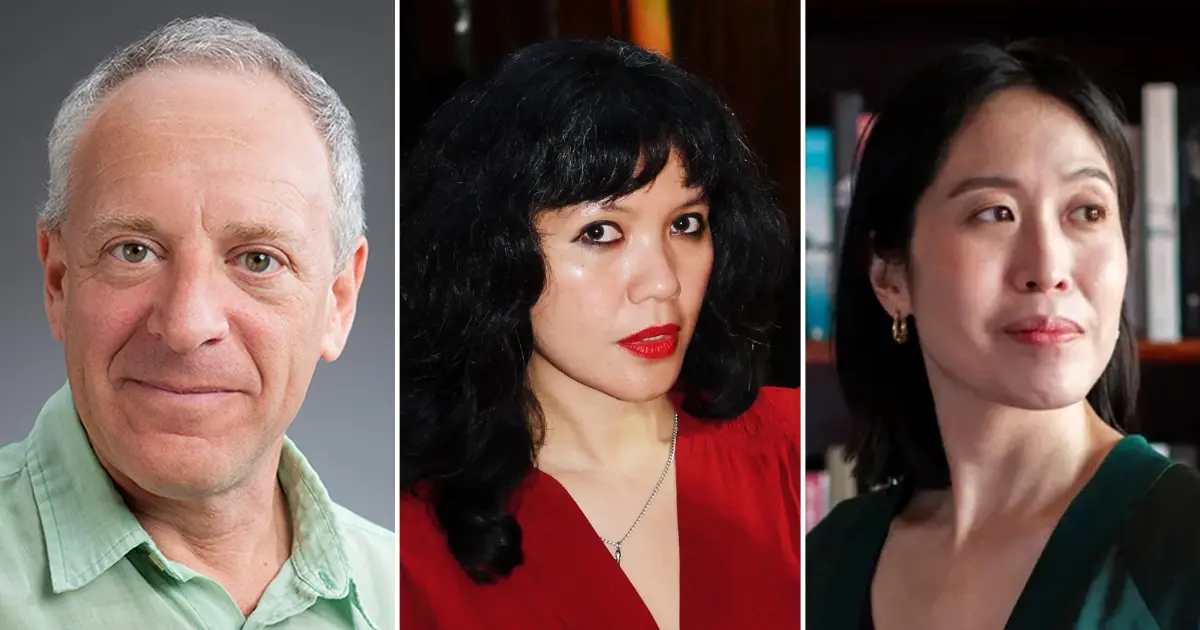
As the literary world turns its collective gaze toward the autumn awards season, the prestigious National Poetry Competition (NPC) has found its spotlight intersecting with one of the year’s major fiction triumphs. Luke Kennard, an esteemed figure on the panel of judges for the 2026 National Poetry Competition, has recently captured critical and commercial headlines as his darkly comedic, sharply observed novel, Black Bag, secured a coveted spot on the Booker Prize shortlist.
This rare dual visibility—navigating the intense scrutiny of a major Booker nomination while simultaneously preparing to evaluate the vanguard of contemporary verse—places Kennard at a fascinating intersection of modern literary forms. For aspiring poets and seasoned writers alike, his current trajectory offers a masterclass in cross-genre fertilization.
With the entry window for the 2026 National Poetry Competition rapidly drawing to a close at midnight on Saturday, October 31, the stakes have never been higher. Poets worldwide are racing to finalize manuscripts that can withstand the exacting standards of a judge who values emotional precision, formal agility, and high-stakes linguistic play above all else. This report examines Kennard’s dual career as a poet and novelist, explores his insights into the mechanics of creative writing, details what he looks for in a winning submission, and provides essential, up-to-date guidance for prospective entrants looking to make their mark on one of the English language’s most storied poetry accolades.
Read Also
Detailed Chronology and Literary Milestones
To understand the weight of Luke Kennard’s perspective as an NPC judge, one must trace a career defined by restless experimentation and critical acclaim. Hailing from the West Midlands, Kennard has spent decades carving out a distinctive space within British letters, seamlessly bridging the often-sundered worlds of verse and prose.
The Evolution of a Multi-Genre Voice
Kennard’s literary footprint expanded dramatically in 2014, when the Poetry Book Society named him to its landmark “Next Generation Poets” list—a prestigious, once-per-decade curation designed to highlight the most vital voices shaping the future of British poetry. Rather than resting on these accolades, Kennard continued to push the structural boundaries of his writing, culminating in his sixth poetry collection, Notes on the Sonnets (2021). The collection, which brilliantly melded contemporary anxieties with canonical poetic forms, earned him the Forward Prize for Best Collection, cementing his status as a heavyweight in contemporary verse.
Simultaneously, Kennard maintained a robust academic career, eventually taking up a professorship in literature and creative writing at the University of Birmingham. It is from this vantage point—simultaneously teaching the mechanics of narrative and verse, writing critically, and producing original fiction—that he approached his latest creative endeavor: the novel Black Bag.
The Booker Shortlist Phenomenon
The recent announcement that Black Bag had been shortlisted for the Booker Prize marked a watershed moment in Kennard’s career, translating his reputation as a formidable poet into the upper echelons of global fiction. Described by critics as hilarious, deeply idiosyncratic, and structurally audacious, the novel demonstrates how the formal disciplines honed in poetry can successfully bleed into long-form narrative fiction.
For the National Poetry Competition committee, having a sitting judge fresh off a Booker shortlist adds an electric layer of anticipation. Entrants know their work will be reviewed by an arbiter who is currently operating at the absolute peak of his creative powers, hyper-aware of narrative momentum, tonal shifts, and linguistic economy.
Supporting Context and Mechanics: Poetry vs. Prose
In an exclusive interview surrounding his judging duties, Kennard offered rare insights into the creative friction and permeability between developing a craft as a poet versus a novelist.
Channeling Poetic Energy into Long-Form Fiction
When asked about the permeability between his poetic and novelistic practices, Kennard revealed that Black Bag represented a breakthrough in how he managed his creative energy.
"This was the first novel I’ve written where I felt like I could channel some of the energy I have when I’m writing poetry: first-person, ill-tempered, self-sabotaging… and then trying to play a tune on the weird instrument I’ve cobbled together," Kennard reflected.
Because his poetry naturally gravitates toward narrative structures, the transition was less about changing his fundamental voice and more about scaling up his demand for emotional precision. "The more idiosyncratic the better," he noted, a philosophy that feels equally applicable whether he is drafting a twelve-line stanza or a multi-chapter narrative arc.
The Compulsions of the Page: Tangents vs. Transcendence
Yet, the two mediums demand vastly different psychological endurance. Asked what he wishes he could do while writing a novel that only truly works within the confines of a poem, Kennard confessed to a common affliction among multi-genre writers: impatience.
"I get bored easily, so staying consistent in a novel and remembering you can’t just go haring down every tangent (every hare-hole?) is challenging for me," he admitted.

However, rather than suppressing this restlessness, Kennard has learned to weaponize it.
"I have this excess energy and I go completely spare if I’m not writing. Eventually, you find a way of using your compulsions. I like that a poem can just pick you up and set you down somewhere else. And I like the way poems can deal with something subtle like ‘ambivalence’ and make it really sing."
To illustrate this mastery of subtle emotional terrain, Kennard pointed to his recent classroom teaching—specifically, exploring Carl Phillips’ poem “Holy Places,” a work that lingers on the quiet, unsettled spaces of human experience. It is precisely this capacity to make complex emotional states sing that he will be listening for as he wades through the NPC submissions.
Official Statements and Judging Criteria
For the thousands of poets preparing to submit their work before the autumn deadline, the core question remains: What makes Luke Kennard stop, read, and linger over a manuscript?
Decoding the Judge’s Aesthetic
Kennard’s approach to judging is refreshingly democratic yet fiercely rigorous. Eschewing rigid dogmas or stylistic gatekeeping, he describes his tastes as avowedly catholic—broad, eclectic, and wonderfully contradictory.
When reviewing the avalanche of entries that flood the National Poetry Competition each year, he is not looking for technical perfection in a vacuum. Instead, he looks for a visceral signature of intent:
- A Clear Love of Language and Phrasing: An unmistakable ear for the music of words, where syntax and sound work in tandem to create a living texture.
- Striking Imagery: Metaphors and sensory details that bypass intellectual abstraction to lodge themselves immediately in the reader’s imagination.
- A Sense of Stakes: Above all, Kennard searches for the palpable feeling that "something’s at stake for the writer (and therefore the reader)." Whether the poem tackles vast geopolitical shifts or microscopic domestic observations, it must carry urgent emotional or intellectual gravity.
The Integrity of the Anonymised Process
One of the defining features of the National Poetry Competition—and a key reason why respected writers like Kennard relish the judging process—is its strictly anonymised submission protocol.
"I always look forward to reading the choices, and I think it’s been a great decade," Kennard remarked, praising the history of the competition. "I love the fact that the National Poetry Competition is anonymised and it’s literally just you and the poems and a dozen cups of tea per session."
This blind-judging mechanism ensures that debut writers stand on precisely the same footing as established laureates; a poem is judged entirely on the sovereign strength of its lines, unburdened by the author’s biography, previous publications, or institutional affiliations.
Reflecting on past triumphs of the competition, Kennard pointed to previous winners as stellar benchmarks of what the NPC honors. He specifically highlighted Eric Yip’s evocative work “Fricatives” and Fiona Larkin’s haunting “Absence Has a Grammar” (available through the Poetry Society archives) as masterclasses in contemporary competition verse.
Future Outlook: Deadlines, Resources, and How to Enter
With Luke Kennard seated on the judging panel alongside his fellow literary luminaries, the 2026 National Poetry Competition is shaping up to be one of the most competitive and intellectually vibrant iterations in the event’s illustrious history.
Key Administrative Details
- Closing Date: Midnight (GMT) on Saturday, October 31, 2026.
- Submission Format: Fully anonymised entries accepted via the official competition portal.
- Where to Enter: Detailed guidelines, terms, and the submission portal can be accessed directly at the official National Poetry Competition website.
Resources for Aspiring Entrants
For writers putting the finishing touches on their entries in the final hours before the deadline, the Poetry Society has curated an extensive suite of support materials. Poets are encouraged to explore the Competition Resources Page for essayistic advice, writing prompts, and structural breakdowns of past winning entries.
Additionally, anyone with technical queries or procedural questions not addressed in the comprehensive NPC FAQs can reach out directly to the organizers via email.
As the clock ticks down to the October 31 deadline, the advice from a Booker-shortlisted novelist and Forward Prize-winning poet is simple, demanding, and utterly liberating: find your compulsion, make your ambivalence sing, and ensure that when the judge sits down with his twelfth cup of tea, your poem is the one that makes him stop, linger, and look at the world anew.

Comments
Facebook App ID not configured. Please add it in the Customizer.