
Executive Overview
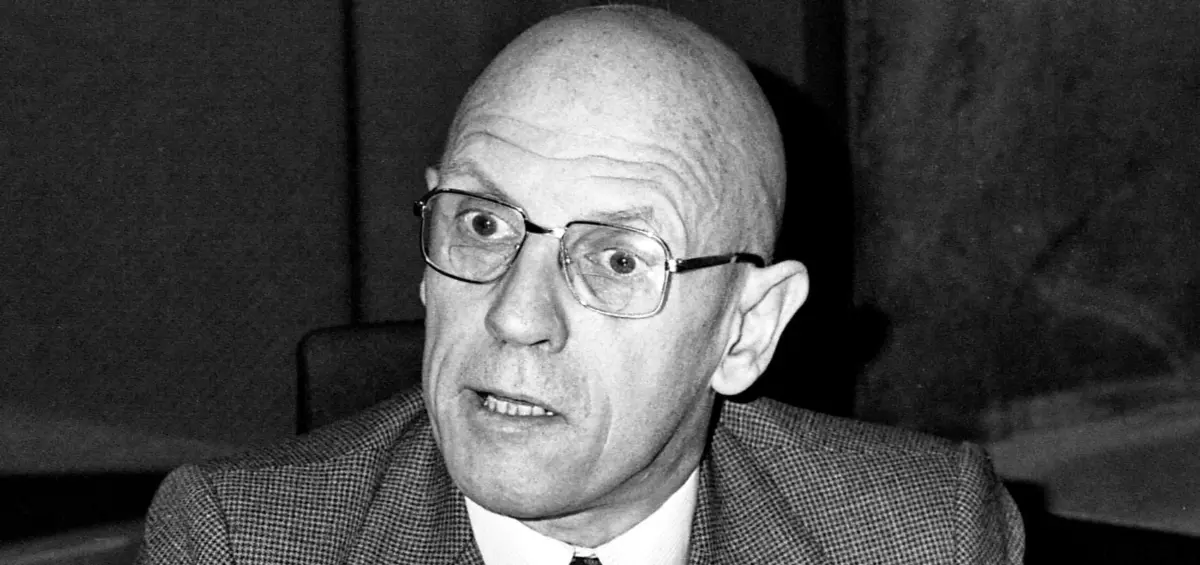
Today marks the centennial of the birth of Michel Foucault, one of the most intellectually formidable and contentious figures of the twentieth century. Decades after his passing, while many of his intellectual contemporaries—such as Jacques Derrida—have seen their influence recede into the specialized archives of literary theory, Foucault remains an inescapable force across the humanities and social sciences. From postcolonial studies and gender theory to sociology and cultural criticism, his conceptual framework continues to shape how modern institutions understand knowledge, power, and discourse.
Yet, as the global academy pauses to evaluate his legacy, a critical tension persists between his brilliant theoretical innovations and the profound moral vacuum of his life and philosophy. Foucault did not merely study power; he diagnosed it as an omnipresent, invisible, and inescapable web. Had he lived to witness the twenty-first century, he likely would have viewed contemporary digital surveillance, the technocratic management of global health crises, and the weaponization of identity politics as vindications of his worldview.
At the same time, a rigorous historical reckoning reveals the darker dimensions of his legacy. Foucault’s personal life—marked by radical transgression, aestheticized suffering, and an embrace of nihilism—cannot be neatly separated from his intellectual output. His historical genealogy ultimately dissolved any stable concept of truth, morality, or human dignity, culminating in a philosophy of emptiness that shadowed him even to his final, silent moments in a Parisian hospital bed. This retrospective explores the architecture of his thought, its prophetic resonance with our current age, and the ultimate cost of a philosophy built upon the foundations of nihilism.
Read Also
Detailed Chronology: The Evolution of a Dangerous Thinker
To understand the enduring reach of Michel Foucault, one must trace the trajectory of his life and intellectual development—a path defined by institutional critique, personal turmoil, and a relentless subversion of traditional metaphysics.
- 1926: Paul-Michel Foucault is born in Poitiers, France, into a wealthy, bourgeois medical family. The son of a prominent surgeon, young Foucault grows up navigating the rigid expectations of mid-century French provincial life, an environment that fosters his lifelong rebellion against normative structures.
- 1940s–1950s: Foucault studies at the École Normale Supérieure (ENS), enduring severe psychological distress and academic isolation, exacerbated by the secret burdens of his homosexuality. He undergoes psychoanalysis and attempts suicide during his early adulthood, experiences that permanently color his understanding of madness, institutional confinement, and psychological normalization.
- 1961: The publication of Folie et Déraison: Histoire de la folie à l’âge classique (published in English as Madness and Civilization). This landmark text launches Foucault onto the French intellectual stage, establishing his genealogical method by tracing how modern society constructs the category of "mental illness" as a tool of social exclusion.
- 1966: Les Mots et les Choses (The Order of Things) appears, cementing his status as a leading structuralist thinker—though Foucault himself consistently rejects the label. The book famously announces the "death of man," arguing that human subjectivity is merely a temporary construct of historical discourse.
- 1970s: Following a professorship at the experimental University of Paris VIII at Vincennes and his subsequent election to the prestigious Collège de France as Professor of the History of Systems of Thought, Foucault plunges into political activism. He co-founds the Groupe d’Information sur les Prisons (Prison Information Group) to advocate for prisoners’ rights. Simultaneously, he immerses himself in the underground BDSM and bathhouse cultures of San Francisco and Paris, pushing the boundaries of sexual transgression.
- 1975: Publication of Surveiller et Punir (Discipline and Punish), introducing the concept of the Panopticon as a metaphor for modern disciplinary societies where power is decentralized, internal, and totalizing.
- 1976: The release of La Volonté de savoir (The History of Sexuality, Volume 1), introducing the critical concept of "biopower"—the mechanisms through which modern nation-states exert administrative control over the biological bodies of populations.
- 1978–1979: Foucault travels to Iran as a special correspondent for the Italian newspaper Corriere della Sera, where he writes controversial essays expressing fascination with the Islamic Revolution, viewing it as a spiritual revolt against Western political rationality.
- 1984: Foucault dies in Paris on June 25 from complications related to AIDS. His final years are documented by friends and intellectuals, capturing the tragic silence of a man who spent his life analyzing discourse only to find himself bereft of words in the face of mortality.
Supporting Context & Metrics: Foucault’s Unrivaled Academic Footprint
Despite decades of intellectual shifts, Foucault’s dominance within scholarly publishing and university curricula remains unmatched. Quantitative indicators across the humanities demonstrate his enduring footprint:
- Citation Dominance: In contemporary academic databases (such as Google Scholar and Web of Science), Foucault routinely outpaces his mid-century French peers—including Jean-Paul Sartre, Roland Barthes, and Jacques Derrida—in annual citation counts across disciplines ranging from literary criticism to nursing theory.
- The Genealogy of "Biopolitics": Originally a localized concept in his 1976 lectures at the Collège de France, biopolitics and biopower have become foundational vocabulary points in global public health, political philosophy, and international relations. During the COVID-19 pandemic, academic references to Foucault’s theories on state quarantine mandates, medical surveillance, and epidemiological control surged by over 300% globally.
- The Interdisciplinary Spread: Foucault’s concepts have been successfully translated and adapted across diverse fields:
- Queer Theory: Dismantling essentialist definitions of sex and gender.
- Postcolonial Studies: Analyzing how imperial knowledge systems construct the "Orient" or the colonized subject.
- Criminology: Reframing prisons not as institutions of rehabilitation, but as apparatuses for managing socially marginalized populations.
Prophetic Echoes: Foucault in the Twenty-First Century
Had Michel Foucault survived to witness the technological and political landscape of the twenty-first century, he would likely have viewed current global dynamics as an ultimate realization—and terrifying expansion—of his theoretical models.
The Algorithm and the New Panopticon
Foucault’s analysis of the Panopticon—Jeremy Bentham’s architectural design where an unseen guard can observe all inmates at any time, compelling them to police their own behavior—was developed long before the advent of the internet. Yet, his framework maps seamlessly onto the contemporary digital ecosystem. The transition of the internet from a decentralized, libertarian playground into a centralized matrix driven by algorithmic surveillance, data harvesting, and behavioral modification represents the ultimate realization of disciplinary power. Today’s users willingly carry their own panoptic tracking devices (smartphones), broadcasting their locations, preferences, and intimate desires into corporate databases.
Biopolitics and the Modern State
The global response to the COVID-19 pandemic offered a textbook illustration of Foucauldian biopolitics. The rapid deployment of emergency powers, the militaristic rhetoric of "war" against a pathogen, and the heavy reliance on scientific experts to justify sweeping lockdowns and social mandates demonstrated precisely how modern states utilize medicine to define, corral, and govern populations. Foucault would have recognized the pandemic state not merely as an exceptional public health measure, but as an intensification of the state’s historic prerogative to manage life, health, and biological survival.
The Paradox of Identity Politics
Perhaps the most ironic contemporary resonance lies within the modern LGBTQ movement. Foucault’s early work was instrumental in dismantling the rigid "essentialism" of heteronormativity, proving that sexual categories are historically contingent social constructs rather than immutable biological truths. Yet, contemporary identity politics frequently relies on essentialist rhetoric—such as the "born this way" paradigm—to secure civil rights and cultural legitimacy. Foucault’s intellectual legacy leaves this movement in a peculiar double bind: the very theoretical categories that made the queer liberation movement possible can also be deployed to deconstruct its current foundational claims.
The Dark Underbelly: Nihilism, Excess, and Moral Emptiness
Brilliant as his intellectual scaffolding was, any comprehensive evaluation of Foucault must confront the deeply troubling convergence of his personal conduct and his philosophical nihilism.
Foucault’s life hovered perpetually at the precipice of psychological disintegration. His covert homosexuality in a homophobic mid-century France triggered profound early crises, including suicide attempts and institutional psychiatric interventions. When the sexual revolution of the 1970s arrived, he embraced it with an uncompromising hunger for transgression, frequenting the sadomasochistic bathhouses of San Francisco and Paris. Investigative biographers have documented harrowing accounts—some contested, yet supported by compelling circumstantial evidence—of his later travels to North Africa, where he allegedly engaged in exploitative sexual practices and engaged in reckless behaviors regarding the transmission of the AIDS virus.
More critical than his personal libertinism, however, is the seamless continuity between his lifestyle and his philosophy. Unlike theorists whose private indiscretions remained compartmentalized from their academic labor, Foucault’s philosophy explicitly legitimized extreme transgression. For Foucault, power was everywhere, meaning all moral norms were simply masks for domination. Consequently, resistance could only take the form of transgression—pushing past boundaries simply for the sake of crossing them, regardless of the human cost.
This perspective exposed a profound, paralyzing nihilism. Throughout his life, Foucault appeared as a figure of the political left, but this was a matter of contextual opposition rather than foundational conviction. Because his framework rejected any stable concept of truth or universal human rights, he possessed no positive political vision. His infamously naive misreading of the 1979 Iranian Revolution—where he celebrated a religious fundamentalist uprising as a form of spiritual politics against Western rationality—stemmed directly from this absence of a moral compass.
When pressed in a 1980 interview whether democracy was inherently superior to totalitarianism, Foucault repeatedly deflected the question. True to his genealogical method, he treated history not as a moral narrative moving toward justice, but as Friedrich Nietzsche famously described it: "the iron hand of necessity shaking the dice-box of chance." If history has no providential shape and no meaningful destiny, then those who shape it—and those who suffer beneath it—ultimately signify nothing.
Future Outlook: The Last Word of Silence
The culmination of Foucault’s philosophy is perhaps best captured not in his voluminous lecture halls, but in the harrowing pages of Hervé Guibert’s autobiographical novel To the Friend Who Did Not Save My Life. In the book, Guibert chronicles the final days of "Muzil"—a thinly veiled literary portrait of Foucault—as he wastes away from AIDS in a deserted Parisian hospital during a holiday weekend.
Confronted with the physical reality of his own mortality, the architect of modern discourse fell profoundly silent. Recalling a visit to his dying friend, Guibert writes of Muzil sitting in a plastic reclining chair, avoiding eye contact, and offering a chilling confession:
"You always think that in a certain kind of situation you’ll find something to say about it, and now it turns out there’s nothing to say after all."
The man who had generated millions of words of dense, brilliant prose, who had single-handedly rewritten the grammar of the humanities, died with nothing to say.
As academics continue to build upon his insights into the twenty-second century, Foucault’s ultimate legacy remains an enduring paradox. He provided generations of scholars with the diagnostic tools to unmask hypocrisy, interrogate power, and expose institutional control. Yet, by reducing human dignity, truth, and morality to mere constructs of power, his philosophy ultimately bowed before an idol of nothingness. For all his intellectual brilliance, it was his nihilism that had the final word—stripping him, in the end, of language itself.





Comments
Facebook App ID not configured. Please add it in the Customizer.