
Executive Overview
Stephen King’s 1974 landmark novel, Carrie, occupies a hallowed, near-mythic space within the horror genre. Its enduring cultural footprint was cemented by Brian De Palma’s masterclass 1976 cinematic adaptation—a film widely lauded as a benchmark of 1970s horror and one of the finest translations of King’s bibliography to the screen. Over the decades, subsequent attempts to revisit, modernize, or outright remake the Carrie mythos have frequently stumbled, weighed down by the towering legacy of their predecessors.
Enter visionary genre architect Mike Flanagan. Tasked with developing a serialized television adaptation for Prime Video, Flanagan approached the source material not as a monument to be meticulously polished, but as raw clay to be radically reshaped. With the release of all episodes, the full scope of Flanagan’s vision has come to light: a sweeping, deeply subversive reinvention that diverges sharply from both King’s text and De Palma’s film.
This adaptation does not merely update the calendar; it entirely reimagines the ecology of Carrie White’s world. By injecting elements of systemic state surveillance, contemporary digital alienation, intergenerational genetic inheritance, and a clandestine network of psychic operatives, Flanagan has transformed a localized tragedy of religious fanaticism and high school cruelty into a sprawling, multi-layered conspiracy thriller.
Read Also
For purists, these alterations range from the provocative to the heretical. For the uninitiated and the curious, they represent an audacious structural overhaul. Below is an exhaustive, investigative breakdown of every major narrative pivot, thematic shift, and continuity divergence in Prime Video’s Carrie.
Detailed Chronology of Narrative and Thematic Changes
1. The Setting: Digital Panopticism and Modern High School Realities
- Source Material & 1976 Film: Set in the late 1970s (specifically 1979 in the novel), the narrative relies on an analog world of rotary phones, physical isolation, and localized high school cruelty contained entirely within the physical architecture of Chamberlain High.
- Prime Video Series: Flanagan shifts the timeline to 2026. While maintaining a contemporary framing, this modern epoch introduces an inescapable layer of hyper-connectivity. Carrie White’s tormentors do not merely whisper in hallways or drop notes in lockers; they weaponize the internet.
Central to this dynamic is the emergence of a viral social media account titled “Carrie Red,” orchestrated by Carrie’s primary tormentor, Chris Hargensen. The account serves as an ambient, relentless engine of humiliation, broadcasting rumors, deep-fakes, and invasive video footage not just of Carrie, but of the broader student body and faculty.
Flanagan utilizes this setting to interrogate the normalization of digital cruelty, framing cyberbullying as an infrastructure of modern adolescence. This is juxtaposed with physical security measures emblematic of contemporary schooling—such as ubiquitous metal detectors—creating a double-edged prison for Carrie: one digital, one physical.
2. The Educational Paradigm Shift: Public School for the First Time
- Source Material & 1976 Film: Carrie is portrayed as a lifelong student of Chamberlain public schools, enduring years of incremental, institutionalized bullying that hardens into a daily gauntlet.
- Prime Video Series: Carrie is introduced as having been homeschooled for the entirety of her formative years, thrust into the volatile ecosystem of a public high school only as a teenager.
This transition is mandated by local authorities following the sudden death of her father and mounting official concern regarding the abusive, reclusive nature of her upbringing. This structural change alters the narrative’s psychological geometry. Rather than depicting the culmination of years of uninterrupted, localized abuse, the series frames Carrie’s entry into public school as a sudden immersion into an alien, hostile culture—thereby intensifying the culture clash between her mother’s fundamentalist isolationism and the brutal social hierarchy of 2026 teenagers.
3. Ralph White: Surviving Into the Teenage Years and Manifesting as an Apparition
- Source Material & 1976 Film: Ralph White, Carrie’s father, dies in a construction accident before Carrie is even born, functioning merely as a spectral absence in Margaret’s fanatical sermons.
- Prime Video Series: Ralph White remains alive well into Carrie’s teenage years, meeting his demise in a similar workplace accident only after Carrie has grown old enough to form memories of him.
This single adjustment ripples across the narrative’s foundation. Following his death, Carrie becomes haunted by an apparition of her father. Through these spectral visitations, the series reveals that Ralph was far more than an absent ghost: he was a former military veteran whose rigorous training and survivalist ideology actively shaped Carrie’s sheltered upbringing. Margaret’s fundamentalism is thus contextualized as part of a broader, militarized domestic containment strategy, rendering the White household a literal survivalist bunker.
4. Chris Hargensen: Expanding the Anatomy of a Bully
- Source Material & 1976 Film: Chris Hargensen is depicted as a classic, unrepentant Stephen King antagonist—rich, entitled, vicious, and driven by an innate disdain for anyone who deviates from her social standards.
- Prime Video Series: The adaptation offers a more nuanced, psychological profile of Chris. The series delves into her domestic life, revealing a fractured home environment characterized by her father’s severe financial and legal ruin.
Chris’s venomous obsession with Carrie is reframed not just as petty cruelty, but as a displaced manifestation of her own profound instability and loss of control. While this humanization does not excuse her actions, it aligns with Flanagan’s overarching thematic exploration of the immense psychological pressures weighing on contemporary youth.
5. Margaret White: Psychic Bloodlines and Sympathetic Pathology
- Source Material & 1976 Film: Margaret White is a monolith of unhinged, religious fanaticism—a terrifying, abusive zealot whose psychic lineage is only vaguely hinted at through a brief mention of her grandmother’s latent abilities.
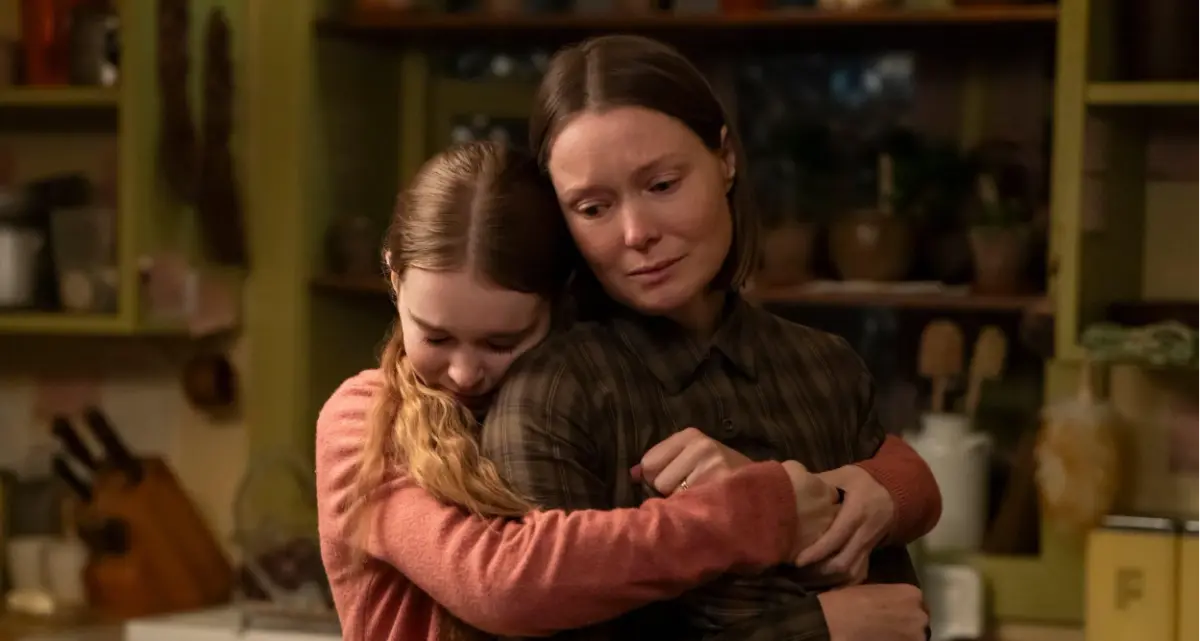
- Prime Video Series: Margaret’s character undergoes the most radical reimagining in the entire series. Showrunner Mike Flanagan and actress Samantha Sloyan lean into a deeply controversial interpretation: a sympathetic Margaret.
Rather than acting purely out of unmitigated malice, this version of Margaret possesses a profound, cynical clairvoyance regarding the cruelty of human society. Her severe overprotection of Carrie is driven by a desperate, albeit warped, desire to shield her daughter from a world she knows will destroy her.
Crucially, Margaret also possesses psychic powers. While her abilities are more dormant or less potent than Carrie’s, they are active enough to allow her to survive the structural collapse of her collapsing home. This revelation introduces a heavy thematic focus on genetic fatalism: the terrifying realization that we pass our most destructive traits—and biological curses—directly to our children.
6. Emaline and the Astral Network of Psychics
- Source Material & 1976 Film: Carrie is entirely isolated in her extraordinary abilities, believing herself to be a grotesque, singular aberration of nature.
- Prime Video Series: Carrie is not alone. Early in her public school tenure, she meets a classmate named Emaline. Initially framed as a psychological projection or a figment of Carrie’s escalating trauma, it is later revealed that Emaline is a real person—another psychic who has been astrally projecting to guide Carrie and help her unlock her latent potential before eventually manifesting in the physical world.
This introduction of a peer-mentor shatters the core theme of absolute isolation that defined King’s original narrative. Carrie now has a confidante who understands the precise burdens of telekinesis, fundamentally altering her agency and emotional resilience.
7. The Prom Massacre: Shared Telekinesis and Displaced Culpability
- Source Material & 1976 Film: Carrie experiences the blood prank, retreats into a catatonic psychological state, and subsequently unleashes a singularly driven, apocalyptic wave of telekinetic wrath that incinerates Chamberlain.
- Prime Video Series: While the pig’s blood prank remains the catalyst, the prom massacre is executed as a collaborative, multi-source psychic event.
During the chaos—which involves blown-up smartphones, severed catwalks, and localized fires—Emaline’s voice echoes directly in Carrie’s consciousness, whispering: “Let me help… let me take the wheel, ok?” Following this prompt, the violence escalates into extreme, systemic devastation.
This narrative choice creates intense interpretive friction. By implying that Emaline directly influenced or co-controlled Carrie during the massacre, the series introduces two competing subtexts:
- Mitigation of Guilt: The adaptation attempts to insulate Carrie from the full moral weight of mass murder, reflecting contemporary cultural sensitivities surrounding depictions of school violence.
- Collective Awakening: The scene emphasizes the broader existence of a psychic network, shifting the narrative focus from an individual tragedy to the mobilization of an extraordinary sub-species.
8. Shadow Organizations and the Global War on Psychics
- Source Material & 1976 Film: The supernatural elements are strictly localized to Carrie’s biological anomaly, studied only in retrospect by fictional academic journals and government reports included in King’s epistolary novel format.
- Prime Video Series: The show blows the doors off this localized scope by introducing clandestine government and corporate shadow organizations dedicated to hunting down, monitoring, and neutralizing psychic individuals.
Initially masquerading as ordinary documentary film crews tracking the high school phenomena, these operatives reveal their true, predatory colors during the series’ climax. In a stunning departure from all previous adaptations, one of these shadow agents executes Margaret White after she survives the house collapse. This transforms the final episodes into a vast, sci-fi/horror conspiracy thriller reminiscent of classic Stephen King expanded-universe lore (such as Firestarter and The Dark Tower).
9. Carrie Lives: Surviving the Apocalypse
- Source Material & 1976 Film: Carrie dies of her internal injuries amid the burning wreckage of Chamberlain, bleeding out in an alleyway while experiencing the telepathic death-shrieks of her mother.
- Prime Video Series: Carrie White survives.
Rather than succumbing to her wounds or facing poetic justice, Carrie escapes the burning ruins of Chamberlain alongside Emaline. Together, they vanish into the broader world, setting the stage for a prospective second season that promises to venture far beyond the established boundaries of King’s source text.
Supporting Context & Metrics
To understand the sheer magnitude of this adaptation’s departure, it is helpful to analyze the structural adjustments through comparative metrics:
| Narrative Element | Stephen King’s Novel (1974) | Brian De Palma Film (1976) | Prime Video Series (2026) |
|---|---|---|---|
| Setting | 1979 Rural Maine | 1976 Suburban High School | 2026 Connected High School |
| Carrie’s Education | Lifelong public schooling | Lifelong public schooling | Homeschooled until high school |
| Ralph White | Deceased prior to birth | Deceased prior to birth | Survives to teen years; apparition |
| Margaret White | Non-telekinetic fanatic | Non-telekinetic fanatic | Latent telekinetic; sympathetic |
| Isolation | Absolute, singular | Absolute, singular | Connected via Emaline (psychic) |
| Prom Massacre | Solitary telekinetic wrath | Solitary telekinetic wrath | Shared/Assisted telekinetic event |
| Antagonistic Forces | High school peers & mother | High school peers & mother | Peers, Mother, & Shadow Agencies |
| Resolution | Carrie dies of injuries | Carrie dies of injuries | Carrie survives and escapes |
Official Statements and Creative Intent
The creative team behind the Prime Video series has been vocal about the necessity of these sweeping changes, emphasizing that a beat-for-beat recreation of the 1976 film would be creatively bankrupt.
In exclusive interviews surrounding the series premiere, showrunner Mike Flanagan articulated his philosophical approach to updating King’s work:
"We weren’t interested in doing a cover version of a song that has already been perfected twice over. De Palma’s film is an untouchable masterwork, and King’s book is foundational. If you step into this ring, you have to swing differently. Our focus was on expanding the mythology—looking at what it means to carry a genetic legacy of trauma, and examining how modern society weaponizes connectivity to isolate and destroy vulnerable kids."
Actress Samantha Sloyan, who stepped into the daunting role of Margaret White, addressed the controversial humanization of the character:
"Margaret has always been viewed as a cartoon villain of religious extremism. But if you look closely at her fears, they come from a place of profound, terrifying foresight. She knew what the world was. She knew what her daughter was. In our version, her cruelty isn’t born out of hatred; it’s born out of a failed, desperate attempt to build a bomb-shelter around a soul that was already burning."
Flanagan has also openly discussed his long-term ambitions for the franchise, confirming that the survival of Carrie White and the introduction of institutional shadow organizations are intentional design choices meant to pave the way for a multi-season television arc that transcends the 1974 novel’s final page.
Future Outlook: What Lies Ahead for Season 2?
The decision to let Carrie White survive her own apocalypse and flee into the shadows alongside fellow psychic Emaline fundamentally redefines the property. No longer a self-contained tragedy with a definitive, fatalistic endpoint, Carrie has been successfully converted into an ongoing supernatural sci-fi thriller.
As the dust settles on Chamberlain, Maine, several major narrative threads remain wide open for a potential second season:
- The Shadow Organizations: Who are the mysterious operatives hunting psychics, and what is their ultimate objective? Are they harvesting telekinetic subjects for government experiments, or attempting to eradicate an evolutionary offshoot of humanity?
- The Global Psychic Network: Now that Carrie knows she is not alone, how will she interact with other latent individuals scattered across the globe? Will she emerge as a leader, a weapon, or a fugitive?
- The Intergenerational Curse: With both Margaret and Carrie possessing active telekinetic markers, the genetic implications of their bloodline will undoubtedly take center stage as Carrie navigates adulthood.
While traditionalists may lament the loss of the novel’s tragic, inescapable finality, Mike Flanagan’s Carrie has undeniably achieved the one thing previous adaptations could not: it has made a 50-year-old story feel entirely unpredictable, dangerous, and primed for a terrifying new era.


Comments
Facebook App ID not configured. Please add it in the Customizer.