
Executive Overview
The literary and entertainment landscapes are perpetually fascinated by creators who cross creative divides, translating skills honed in one medium into groundbreaking work in another. Enter Megan Mostyn-Brown, an accomplished playwright and television writer/producer whose credits feature major networks and streaming powerhouses including Fox, Netflix, AMC, Amazon, and Paramount+. Now, Mostyn-Brown is set to make a chilling transition into the literary world with her debut horror novel, The Need.
Scheduled for publication on September 22, 2026, by Del Rey—an imprint renowned for publishing some of the finest speculative, fantasy, and horror fiction—The Need promises to deliver a high-concept, deeply unsettling narrative. Represented by literary agent Kelly Karczewski at United Talent Agency (UTA), Mostyn-Brown’s entry into prose fiction is not merely a lateral career move, but the culmination of a deeply personal journey overcoming creative intimidation, breaking industry molds, and rediscovering a pure love for writing.
Set against a backdrop of relentless pursuit and dark biological secrets, The Need introduces readers to Talia and her fraternal twins, Rosie and Sam. Having lived on the run since the children were mere babies, the family has operated under the assumption that their nomadic existence is necessitated by a rare genetic disorder characterized by a form of genetic cannibalism known chillingly as "The Need." However, as the veneer of their shared reality begins to crack, the truth proves to be infinitely darker and vastly more complicated.
Read Also
In this comprehensive interview, Mostyn-Brown opens up about the winding path that led a seasoned television writer to pen a 300-page horror manuscript, the structural evolution of her novel across a three-year development cycle, the stark differences between television writers’ rooms and the traditional publishing editorial process, and the profound social themes—ranging from invisible human struggles to systemic income inequality—that anchor her terrifying debut.
Detailed Chronology: The Evolution of The Need
From Screen to Page: The Genesis of a Novel
For most creators entrenched in the fast-paced world of television production, expanding into long-form prose can feel like scaling an insurmountable peak. For Mostyn-Brown, the genesis of The Need began not as a literary endeavor, but as a conceptual pitch for a television series.
"I work in TV, and I originally wanted to pitch it as a TV show," Mostyn-Brown explains. However, the realities of the television marketplace intervened. Her manager offered pragmatic, albeit sobering, advice: she questioned whether the concept would easily sell as a television series and suggested that Mostyn-Brown pivot the idea into a short story or a novella.
This suggestion, while practical, initially triggered deep-seated anxieties tied to Mostyn-Brown’s academic past. "I was intimidated to do either, as I’d had a bad experience with a famous writer who taught a class when I was in college. They dissuaded me from writing prose."
Undeterred by the psychological barrier erected by her past instructor, but still hesitant to leap straight into traditional prose structures, Mostyn-Brown leaned into what she knew best. As a playwright and television writer, her comfort zone rested heavily on dialogue, character voice, and dramatic pacing.
"So, I started writing The Need as monologues since, as a TV writer and playwright, I’m more comfortable with that format," she shares. By utilizing monologues as a scaffolding to build out her characters’ inner worlds and harrowing circumstances, Mostyn-Brown bypassed her fear of traditional novel-writing mechanics. Before she realized what was happening, the monologue format naturally dissolved into narrative prose, and she found herself "bee-bopping my way to 300 pages."
A Three-Year Journey of Expansion and Editing
Moving from the initial spark of an idea to a finalized, publication-ready manuscript is rarely a linear path. For The Need, the entire journey spanned three years—a period marked by rigorous structural expansion, character development, and eventual, necessary curation.
When Mostyn-Brown first conceptualized the story, its scope was tightly focused on the core familial unit: Talia, Rosie, and Sam. The emotional core of the novel relied heavily on their dynamic as mother and children on the run. Yet, as the manuscript began to take shape organically, Mostyn-Brown recognized that a broader canvas was required to fully capture the terror and complexity of their world.
"As I started writing, I felt like there needed to be other points of view," she notes. This realization led to the methodical introduction of new narrative anchors. Vera was added first to widen the lens, followed subsequently by Carolyn and Joaquin, each bringing unique stakes and perspectives to the unfolding nightmare.
However, writing a sprawling manuscript often requires "killing your darlings," and Mostyn-Brown’s editing process was no exception. At various stages of development, the novel included narrative elements that ultimately proved unsustainable for a cohesive reading experience.
"Originally there was an epilogue and interstitials where you heard from Vera’s mom and Celeste and even Jonah, but those got cut because it was way too many POVs," Mostyn-Brown reflects. Despite their removal from the final published text, she views the writing of these expansive backstories as a vital exercise. "It was good to write them though, to fill in backstory for my brain."
Another major casualty of the editing process involved a planned geographical detour. At one point in the drafts, Rosie, Sam, and Talia journeyed to Six Pines, an intentional community where the characters Dee and Dante grew up. This subplot was unceremoniously pruned once Mostyn-Brown calculated the logistical reality: keeping the scene would have effectively doubled the length of the book.
Supporting Context & Metrics: The Publishing Reality
Bridging Two Worlds: TV Production vs. Traditional Publishing
Transitioning from a collaborative, fast-turnaround writers’ room to the solitary, methodical world of novel writing presents a profound cultural shift for any multi-hyphenate creator. While Mostyn-Brown had the benefit of a close household perspective—her partner, Jordan, is an established crime fiction novelist—the realities of the publishing industry still held several stark surprises.
- The Waiting Game: One of the most immediate adjustments was the sheer timeline of traditional publishing. In television, scripts are written, produced, and broadcasted on tight seasonal schedules. In contrast, the pipeline from a completed manuscript to a physical book sitting on shelves requires patience measured in years.
- The Marketing Machine: In the modern literary landscape, a author’s job extends far beyond the manuscript. Mostyn-Brown expressed genuine surprise at the heavy emphasis on social media promotion and author-driven marketing required to build visibility for a debut title in a crowded marketplace.
- Editorial Feedback Loops: Perhaps the most fascinating divergence Mostyn-Brown noted lies in the nature of editorial notes. Having spent years navigating notes from network executives, showrunners, and producers—which often focus on commercial viability, pacing for commercial breaks, and episodic arcs—receiving notes from a publishing editor provided a vastly different intellectual and creative challenge.
Genre Mechanics and Personal Revelations
Despite the steep learning curve associated with her first novel, the writing process ultimately yielded a transformative personal outcome for Mostyn-Brown. For years, the sheer volume required to complete a novel had loomed over her as an insurmountable obstacle.
"I was surprised by how much I enjoyed it," she admits. "A novel always seemed so daunting—like, geez that’s a lot of words. But writing this book really made me fall in love with writing again."
This renewed creative passion infuses The Need with an electric vitality, proving that stepping outside one’s professional comfort zone can reignite artistic purpose.
Official Statements & Insights from the Author
The Heart Beneath the Horror: Compassion and Class Inequality
At first glance, a horror novel centered around a genetic disorder involving human cannibalism—dubbed "The Need"—might seem designed solely to evoke visceral terror, suspense, and shock value. However, Mostyn-Brown insists that beneath the genre tropes lies a deeply human, empathetic core that addresses real-world societal failures.
When asked what she hopes readers will ultimately take away from her debut, Mostyn-Brown offers a reflection that bridges the macabre with profound empathy:
"This is super weird to say because the book is about cannibals, but I hope readers have more compassion for people’s silent struggles. We never really know what anyone is going through, so maybe it’s better not to judge and instead have compassion and grace."
By framing a grotesque and terrifying condition through the lens of a family desperately trying to survive, Mostyn-Brown uses horror as an allegorical vehicle to explore isolation, societal judgment, and the hidden burdens individuals carry in their day-to-day lives.
Furthermore, the author weaves sharp socioeconomic commentary into the fabric of the narrative. Beyond personal empathy, Mostyn-Brown points to systemic issues as a core thematic pillar of the book:
"I also hope the book makes them think about income inequality and how unfair it is that it’s so much easier to function in American society if you have money."
In The Need, survival is not merely a matter of biological impulse or evading pursuers; it is inextricably linked to resources, privilege, and the vast disparities that dictate who can safely navigate society and who is forced to the margins.
A Message to Aspiring Writers
Reflecting on her own winding trajectory—from being discouraged from writing prose by a college instructor to securing a major publishing deal with Del Rey—Mostyn-Brown offers a powerful, defiant message to anyone grappling with self-doubt or external gatekeeping:
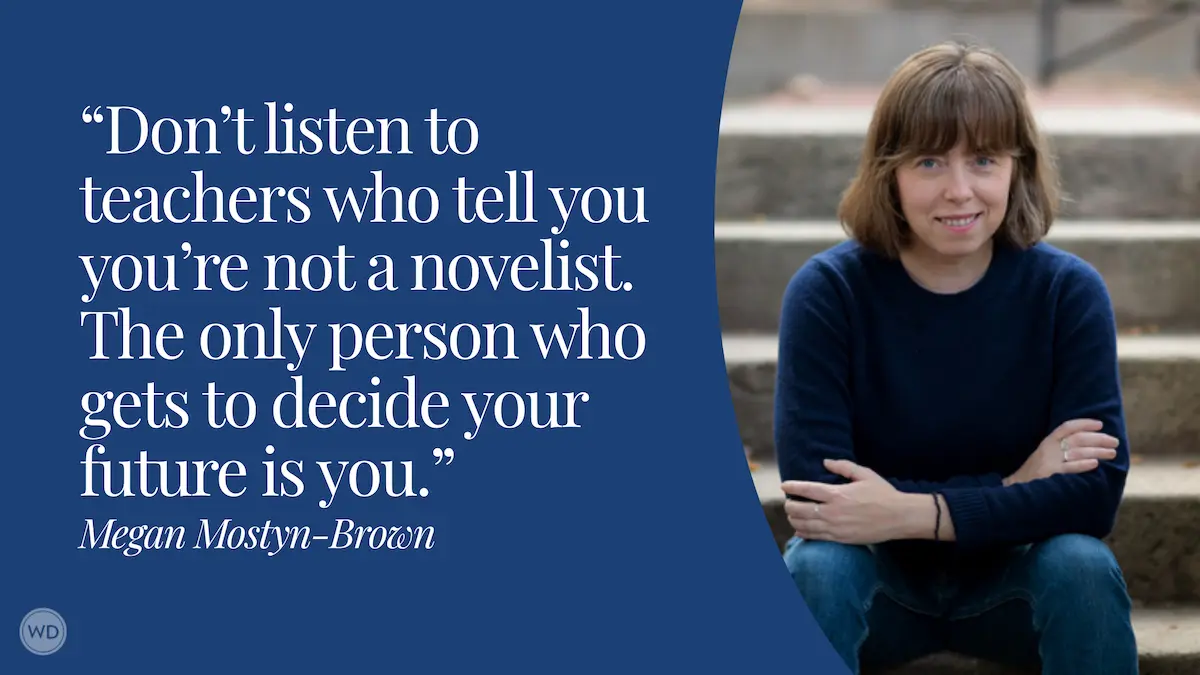
"Don’t listen to teachers who tell you you’re not a novelist. The only person who gets to decide your future is you."
Future Outlook
As the literary world counts down to September 22, 2026, anticipation for The Need continues to build across speculative fiction and horror communities. Del Rey’s backing of the novel signals a major push for Mostyn-Brown’s prose debut, positioning her as a formidable new voice in psychological and body horror.
For Mostyn-Brown, the release of The Need represents far more than just a career milestone; it is a vindication of resilience. Having successfully conquered her early creative hesitations, navigated the complex editorial landscapes of traditional publishing, and merged her master-level television pacing with deep thematic explorations of class and empathy, she has firmly established that her storytelling prowess is not bound by a single medium.
Whether The Need eventually circles back to its television roots through a screen adaptation remains to be seen, but one thing is certain: Megan Mostyn-Brown has stepped out of the shadows of the writers’ room and staked her definitive claim in the house of horror.



Comments
Facebook App ID not configured. Please add it in the Customizer.