

Executive Overview
The global e-reader market has long been dominated by larger, multi-purpose devices designed to mimic the footprint of traditional paperbacks or full-sized tablets. From 6-inch mainstays to expansive 10.3-inch note-taking powerhouses, portability has traditionally been measured by whether a device can fit inside a winter coat pocket or a standard backpack. However, a growing sub-market of minimalists, commuters, and pocket-device enthusiasts has yearned for something far smaller—a true micro-form-factor digital library that can slip effortlessly into the palm of a hand or the pocket of a pair of jeans.
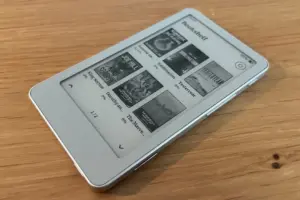
Enter the Onyx Boox Picco, an ultra-compact, featherlight e-reader launched at an aggressive price point of $99. Measuring just 105.5 x 62 x 5.5 mm and weighing a mere 58 grams, the Picco redefines physical portability in the E Ink space. Yet, alongside its diminutive dimensions and budget-friendly price tag, the device has generated significant industry chatter regarding its software architecture. Operating system speculation, custom firmware forks, hardware limitations, and strict manufacturer warnings regarding third-party modifications have turned this tiny reading companion into a focal point of technical curiosity.
This investigative report provides an exhaustive examination of the Onyx Boox Picco. We will explore the ongoing conjecture surrounding its underlying operating system, analyze its unique hardware specifications, evaluate its broad document format support, and assess the broader strategic implications of Onyx Boox entering the ultra-portable niche.
Read Also
Detailed Chronology: The Software Saga and OS Speculation
The Rumor Mill and the "CrossPoint" Discovery
When the Onyx Boox Picco first broke cover, industry analysts and enthusiasts immediately began scrutinizing its software environment. Historically, Onyx Boox has built its reputation on running flexible, full-fat versions of Android on its E Ink devices, allowing users to install virtually any third-party application from the Google Play Store—ranging from Kindle and Kobo to Reddit and web browsers.
However, the Picco represents a distinct departure from this paradigm. Because of its ultra-compact physical footprint and lightweight operational targets, speculation ran rampant regarding what type of operating system was powering the device. Onyx Boox initially maintained a cagey posture, offering vague statements about the device’s responsiveness and design philosophy rather than naming a specific operating system.
The veil was partially lifted when a specialized firmware analysis website managed to secure and decompile early system firmware builds. According to findings from this technical analysis, the Picco runs on a custom fork of CrossPoint. Crucially, investigators noted that this is not an official or standard CrossPoint release, but rather a proprietary, heavily modified adaptation tailored specifically by Onyx to meet the exact hardware constraints of the Picco’s ESP32 platform.
Official Confirmations and Performance Realities
Following the leaks regarding its underlying software architecture, Onyx Boox officially confirmed that the Picco operates on the ESP32 platform. While purists might balk at the absence of a traditional, open Android environment on a Boox device, the manufacturer has emphasized that this custom implementation is exceptionally responsive, remarkably easy to navigate, and packed with a curated suite of reading features engineered specifically to meet lightweight, distraction-free usage needs.
The decision to utilize an ESP32-based architecture rather than a power-hungry application processor highlights a design philosophy centered on maximum energy efficiency and snappy, dedicated performance. Without the overhead of a heavy multitasking OS, the Picco boots quickly, manages page turns instantly, and preserves battery life in a manner that larger E Ink tablets struggle to match.
The Firmware Modification Controversy
As word spread that the Picco was running a custom fork of CrossPoint, tech-savvy consumers began asking an inevitable question: Can users flash the official, stock CrossPoint release onto the device to unlock advanced features, broader customization, or deeper ecosystem integration?
Onyx Boox responded to these inquiries with a quietly issued, yet firm, advisory statement:
"We are aware that products with similar hardware configurations on the market support installing third-party firmware. However, we do not recommend attempting this. Modifying the firmware or flashing third-party firmware may not only damage your device, but also void its warranty."
This official warning serves as a stark reminder of the risks associated with tinkering on specialized, closed-ecosystem micro-devices. While the enthusiast community will undoubtedly attempt to break past Onyx’s software boundaries, the manufacturer has drawn a definitive line in the sand, prioritizing device stability and consumer protection over open-source experimentation for this particular product line.
Supporting Context & Metrics: Hardware and Ergonomics
To truly understand the Onyx Boox Picco, one must examine its physical and technical specifications through the lens of modern micro-engineering. Achieving a functional, front-lit E Ink device that weighs less than a standard deck of cards requires meticulous trade-offs.
Display and Visual Performance
At the heart of the Picco is a 3.97-inch Monochrome E Ink screen. While diminutive by contemporary standards, the display boasts a resolution of 480 x 800 pixels, yielding a crisp pixel density of 235 PPI (Pixels Per Inch). For text rendering, 235 PPI is more than sufficient to deliver sharp, anti-aliased letterforms that mimic the legibility of physical print.
To ensure usability in varied lighting conditions—ranging from dark bedrooms to sunlit commutes—Onyx has integrated a dual-color front-light system. Users can seamlessly switch between warm and cool lighting adjustments via a physical button interface, allowing for comfortable reading late into the night without exposing the eyes to harsh blue light.
Processing, Storage, and Memory Architecture
Under the hood, the Picco utilizes an undisclosed processor architecture tied to the ESP32 platform, optimized strictly for low-power electronic paper management.

Storage management on the Picco is handled through a unique hybrid approach:
- Internal Base Storage: Out of the box, the device ships with a 16 GB storage card included.
- Massive Expandability: The storage architecture is expandable up to a staggering 2 TB via an external card slot.
- Data Organization: All user data, documents, and e-books are stored directly on this removable card medium, ensuring that users can carry massive digital libraries that dwarf the physical capacity of the device itself.
Connectivity, Power, and Dimensions
Despite its ultra-small footprint, the Picco does not skimp on modern connectivity standards:
- Connectivity: Equipped with both Wi-Fi and Bluetooth, allowing for seamless wireless syncing and accessory integration.
- Data Transfer: E-books and image files can be transferred effortlessly to the device utilizing the proprietary BOOX Tiles app or via web-based transfer protocols.
- Physical Interface: A modern USB-C port handles device charging and wired data synchronization.
- Battery Capacity: Powered by a 920 mAh battery, which, when paired with the ultra-efficient ESP32 platform and monochrome E Ink display, promises impressive standby and reading endurance.
- Physical Footprint: Measuring a mere 105.5 x 62 x 5.5 mm and tipping the scales at just 58 grams, the Picco is engineered to be held comfortably in one hand for hours on end, fitting seamlessly into pockets, purses, and travel gear without adding noticeable bulk.
Document Compatibility and Software Ecosystem
A dedicated reading device is only as good as its ability to ingest and render a user’s existing digital library. Historically, smaller e-readers have often struggled with niche or complex document formats, forcing users into tedious conversion workflows using software like Calibre.
The Onyx Boox Picco shatters these limitations by offering native, out-of-the-box support for an exceptionally wide array of e-book and document formats. Whether sourcing content from mainstream digital storefronts or diving into open-source repositories, the Picco handles almost everything thrown its way.
Supported File Formats
The Picco natively supports the following extensive list of formats:
- Standard E-Book Formats: EPUB, MOBI, AZW, AZW3, AZW5
- FictionBook Formats: FB2, FB2.ZIP, FB3, FBZ
- Plain Text and Rich Text: TXT, RTF
- Portable Document & Web Formats: PDB, PRC, HTML, XHTML, HTM, CHM
This comprehensive format coverage ensures that users do not need to spend hours transcoding legacy files or troubleshooting rendering errors.
Built-in Micro-Apps
While the Picco is fundamentally designed to minimize digital distractions, Onyx has included a lean suite of productivity and utility applications to enhance its utility as a daily pocket companion:
- Pomodoro Timer: Ideal for structured reading sessions, study blocks, or time-boxed productivity sprints.
- Todo List: A simple task manager to keep track of daily goals and reading checklists.
- Countdown Timer: Useful for cooking, presentations, or general time management on the go.
These micro-apps elevate the Picco from a single-purpose book reader into a versatile, pocket-sized productivity tool that respects the user’s focus.
Market Positioning and Pricing Strategy
Priced aggressively at $99, the Onyx Boox Picco occupies a fascinating, virtually uncontested space in the current consumer electronics landscape.
The Economics of Micro-Form-Factor E-Readers
For years, budget e-readers have hovered around the $110 to $130 mark, typically offering 6-inch screens and stripped-down software suites from major players like Amazon (Kindle basic) and Kobo (Clara series). However, these devices are still too large to fit comfortably in a shirt pocket or small handbag without awkward bulging.
By dropping down to a 3.97-inch form factor and utilizing a lean, cost-effective ESP32-based custom OS fork rather than licensing full Android frameworks, Onyx Boox has engineered a product that hits a psychological sweet spot for consumers: the sub-$100 impulse-buy threshold.
Target Audiences
The Picco is explicitly targeted at several distinct demographic segments:
- The Minimalist Reader: Individuals seeking a dedicated device to escape the endless notifications, pings, and distractions of modern smartphones while traveling or commuting.
- The Micro-Commuter: City dwellers who read standing up on crowded subways or trains, where holding a larger 6-inch or 7-inch e-reader with one hand can become fatiguing or precarious.
- The Backup Reader: Avid book lovers who already own a massive 10.3-inch note-taking tablet or a home e-reader, but want an ultra-light device they can slip into a pocket when heading out for the evening.
Future Outlook
The launch of the Onyx Boox Picco at $99 marks a potential turning point for the e-reader industry. As consumers grow increasingly fatigued by hyper-connected, notification-heavy smart devices, the demand for "dumb" or single-purpose digital tools optimized for deep focus is experiencing a measurable renaissance.
Technological and Ecosystem Trajectories
Looking ahead, several key questions remain regarding the evolution of the Picco line and Onyx’s broader strategy:
- Software Maturity: Will Onyx continue to refine its custom CrossPoint-based fork through over-the-air (OTA) updates, adding new reading features while maintaining its lightweight performance profile?
- Community Development: Despite manufacturer warnings regarding warranty voids and firmware bricking risks, how aggressive will the modding community be in unlocking the full potential of the ESP32 hardware platform?
- Competitive Response: Will rival manufacturers such as PocketBook, Bigme, or Kobo take notice of the Picco’s success and introduce their own ultra-compact, sub-$100 micro e-readers to challenge Onyx’s dominance in this nascent category?
Final Verdict
The Onyx Boox Picco proves that big things truly do come in small packages. By combining a razor-thin 58-gram chassis, a crisp 235 PPI monochrome display, exhaustive format support, and an astonishingly low $99 price tag, Onyx has crafted a compelling device that challenges preconceived notions of what an e-reader should be. While its custom operating system and strict warnings against third-party firmware flashing may deter hardcore tinkerers, the Picco stands tall as an exceptional, distraction-free reading companion for anyone looking to carry a library in the palm of their hand.




Comments
Facebook App ID not configured. Please add it in the Customizer.