
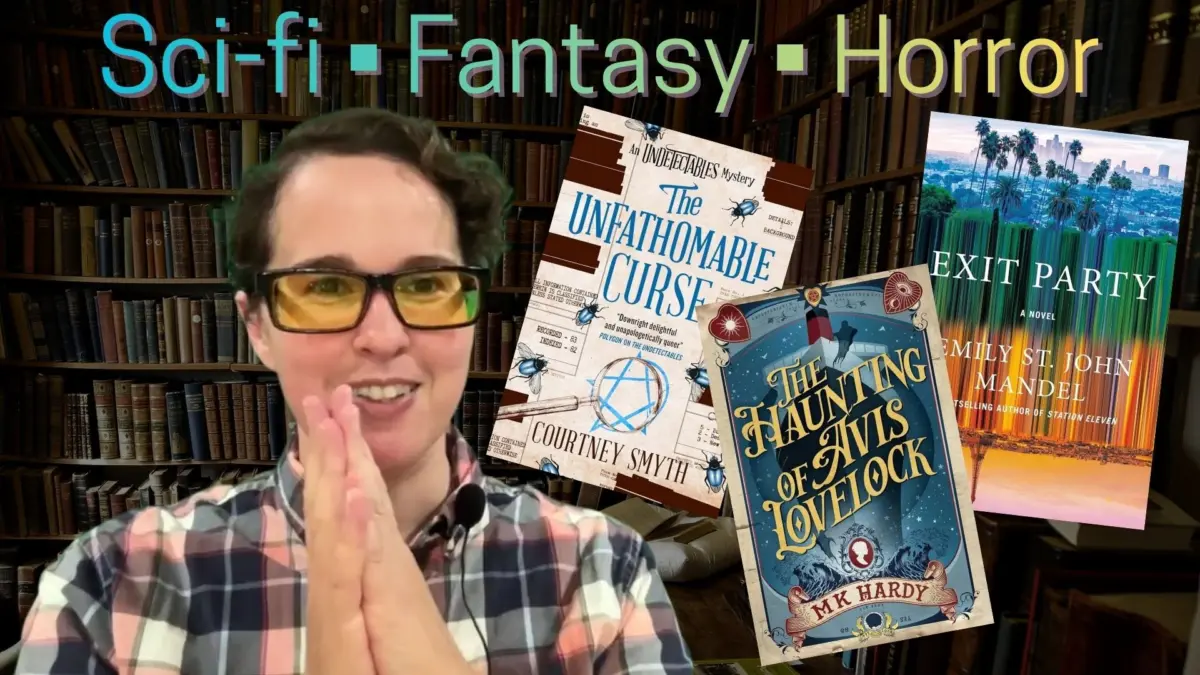
SEATTLE, WA — As the publishing industry enters its highly competitive autumn cycle, the landscape of speculative fiction faces both unprecedented creative expansion and significant structural challenges. On September 22, 2026, Locus Magazine, a long-standing cornerstone of science fiction, fantasy, and horror (SFFH) journalism, released its highly anticipated weekly curation guide and accompanying video presentation. The update highlights a diverse slate of new releases across Science Fiction, Fantasy, Horror, and Young Adult (YA) fiction, serving as a critical touchpoint for readers navigating an increasingly crowded literary marketplace.
However, beneath the excitement of new magical worlds and futuristic frontiers lies a deeper story about the changing economics of literary discovery. In an era dominated by algorithmic recommendations and shifting retail paradigms, the role of independent, expert-led curation has become both more vital and more financially precarious.
Executive Overview
The late September publishing window has traditionally served as the launchpad for high-profile autumn releases, positioned strategically to capture both holiday sales and early consideration for the following year’s major literary awards (such as the Hugo, Nebula, and Locus Awards). The September 22, 2026 release slate exemplifies this seasonal shift, moving away from lighter "summer reads" toward more complex, atmospheric, and ambitious works of speculative fiction.
Read Also
This week’s curated selections focus heavily on four primary pillars:
- Science Fiction: Hard sci-fi and post-cyberpunk narratives exploring the ethical boundaries of emerging technology.
- Fantasy: High-concept magical systems and non-Western mythological retellings that challenge traditional Eurocentric fantasy tropes.
- Horror: Psychological dread and "eco-horror," reflecting modern anxieties regarding climate instability and societal fragmentation.
- Young Adult Speculative Fiction: Darker, more mature crossover novels that blur the lines between YA and New Adult (NA) fiction.
As traditional bookstore footprints continue to fluctuate and social media algorithms prioritize viral, homogenized content, platforms like Locus are adapting. By utilizing multi-format approaches—combining traditional print and digital journalism with video-driven showcases—curators aim to bridge the discoverability gap for mid-list authors and experimental titles that might otherwise be overlooked.
Detailed Chronology: The Autumn 2026 Publishing Cycle
To understand the significance of the September 22 release slate, it is essential to trace the timeline of the autumn publishing cycle, which dictates how books transition from manuscript to the hands of eager readers.
[Spring-Summer 2026] ────> [August 2026] ──────────> [September 22, 2026] ──> [Oct-Nov 2026]
Advance Reviews &          Pre-Autumn Marketing     Release Slate Launch      Award Season Window
Galley Distributions       Campaigns Maximize       & Visual Curation Drops   & Holiday Sales Peak
Phase 1: The Spring-Summer Lead-Up (March – July 2026)
During this period, publishers distributed advance reader copies (ARCs) to critics, influencers, and independent review outlets. This phase is critical for establishing early word-of-mouth momentum, particularly for debut authors who lack established fanbases.
Phase 2: The Late-August Surge (August 2026)
As summer drew to a close, publishers executed targeted pre-order campaigns. During this phase, industry analysts noted a distinct trend: a shift in consumer interest toward darker, more cerebral themes, paving the way for the heavier speculative elements featured in the September slate.
Phase 3: The September 22 Release Launch (Present)
The official release of this week’s slate marks the peak of the autumn publishing wave. Locus synchronized its textual reviews with a dedicated video presentation, utilizing visual storytelling to introduce readers to the aesthetic and thematic profiles of the new titles. This multi-platform approach has proven crucial in capturing the attention of younger, digitally native demographics.
Phase 4: The Winter Outlook (October – December 2026)
The success of the September 22 titles will directly influence publisher strategies for the upcoming winter quarter. Books that perform well during this window are highly likely to receive expanded promotional budgets and prime physical placement during the competitive holiday shopping season.
Supporting Context & Market Metrics
The current state of speculative fiction publishing is defined by a paradox: reader engagement is at an all-time high, yet the financial viability of independent publishing and genre journalism remains under severe pressure.
The Rise of Genre Crossover
According to industry sales data from the first half of 2026, traditional boundaries between genres are rapidly dissolving. "Speculative fiction" has become a broad umbrella term, with significant market growth observed in sub-genres that blend elements of horror and fantasy (often termed "dark fantasy") or science fiction and cozy mystery.
| Genre Segment | Market Share Growth (H1 2026 vs. H1 2025) | Primary Consumer Demographic |
|---|---|---|
| Science Fiction (Hard/Post-AI) | +6.2% | 25–40 Years |
| Cozy/Low-Stakes Fantasy | +11.4% | 18–34 Years |
| Eco-Horror / Psychological Thriller | +8.7% | 30–50 Years |
| YA Speculative Crossover | +4.1% | 14–24 Years |
This data indicates that while traditional hard science fiction maintains a stable, dedicated audience, genres that address contemporary psychological and ecological anxieties (such as eco-horror) are experiencing accelerated growth.

The Discoverability Crisis and Independent Media
The sheer volume of weekly book releases has created a "discoverability crisis." Major online retailers rely heavily on automated recommendation engines that tend to reinforce existing bestseller lists, making it exceptionally difficult for new or marginalized voices to break through the digital noise.
This is where independent entities like Locus Magazine play an indispensable role. Founded in 1968, Locus has served as the "bible of the science fiction and fantasy field," providing comprehensive reviews, industry news, and award tracking. Unlike algorithmic feeds, human-curated platforms evaluate books based on literary merit, historical context, and thematic innovation.
However, the business model supporting independent literary journalism is facing a critical inflection point. Traditional advertising revenues—long sustained by print publishers—have declined as marketing budgets shift toward direct influencer sponsorships and targeted social media ads. Consequently, non-profit and independent literary organizations increasingly rely on direct reader support to maintain their editorial independence and cover the costs of high-quality reporting.
Official Statements and Industry Perspectives
The challenges and triumphs of the current publishing landscape are best articulated by those on the front lines of the industry.
In a statement addressing the release of the September 22 slate and the ongoing fundraising efforts, the Locus editorial board emphasized the symbiotic relationship between genre creators and independent journalists:
"We publish hundreds of reviews and news stories each year, providing a critical archive and a guiding light for the speculative fiction community. But we cannot do it without direct reader support. Every donation—whether one-time or recurring—directly funds the writers, reviewers, and editors who work tirelessly to ensure that speculative fiction receives the serious, rigorous coverage it deserves."
Literary agents and publishing executives have also voiced their concerns regarding the potential loss of independent review venues. Sarah Jenkins, a senior literary agent specializing in speculative fiction, commented on the broader implications of the discoverability crisis:
"Without dedicated platforms like Locus, the midlist is in danger of disappearing entirely. Publishers are becoming more risk-averse, focusing their resources on a handful of blockbuster titles. Independent reviewers are the ones who find the hidden gems, the experimental debuts, and the boundary-pushing novellas. If we lose these voices, the entire genre will suffer from a lack of creative diversity."
Future Outlook: The Road Ahead for Speculative Fiction
As the industry looks toward 2027, several key trends are poised to reshape how speculative fiction is produced, distributed, and consumed.
1. The Integration of Multi-Format Curation
The inclusion of video content alongside traditional written reviews is no longer optional; it is a necessity for survival. Publishers and media outlets alike will continue to invest in high-production-value video reviews, podcasts, and interactive digital previews to capture the attention of a fragmented audience.
2. The Rise of Reader-Supported Ecosystems
As advertising networks become less reliable, the trend toward reader-supported, community-funded media is expected to accelerate. Substack newsletters, Patreon models, and non-profit donation drives (such as the Locus fundraising campaign) will become the primary mechanisms for sustaining high-quality literary criticism.
3. A Shift Toward Global Perspectives
The thematic landscape of speculative fiction will continue to diversify. Readers are increasingly seeking stories that draw from non-Western mythologies, indigenous futurisms, and translated works. Curation platforms will need to expand their networks of international reviewers to adequately cover this globalized market.
Ultimately, the vibrancy of the speculative fiction genre depends not only on the imagination of its authors but also on the resilience of the infrastructure that connects those authors to their readers. By supporting independent curation and embracing new modes of digital storytelling, the SFFH community can ensure that the speculative worlds of tomorrow continue to find their audience today.


Comments
Facebook App ID not configured. Please add it in the Customizer.