
Executive Overview
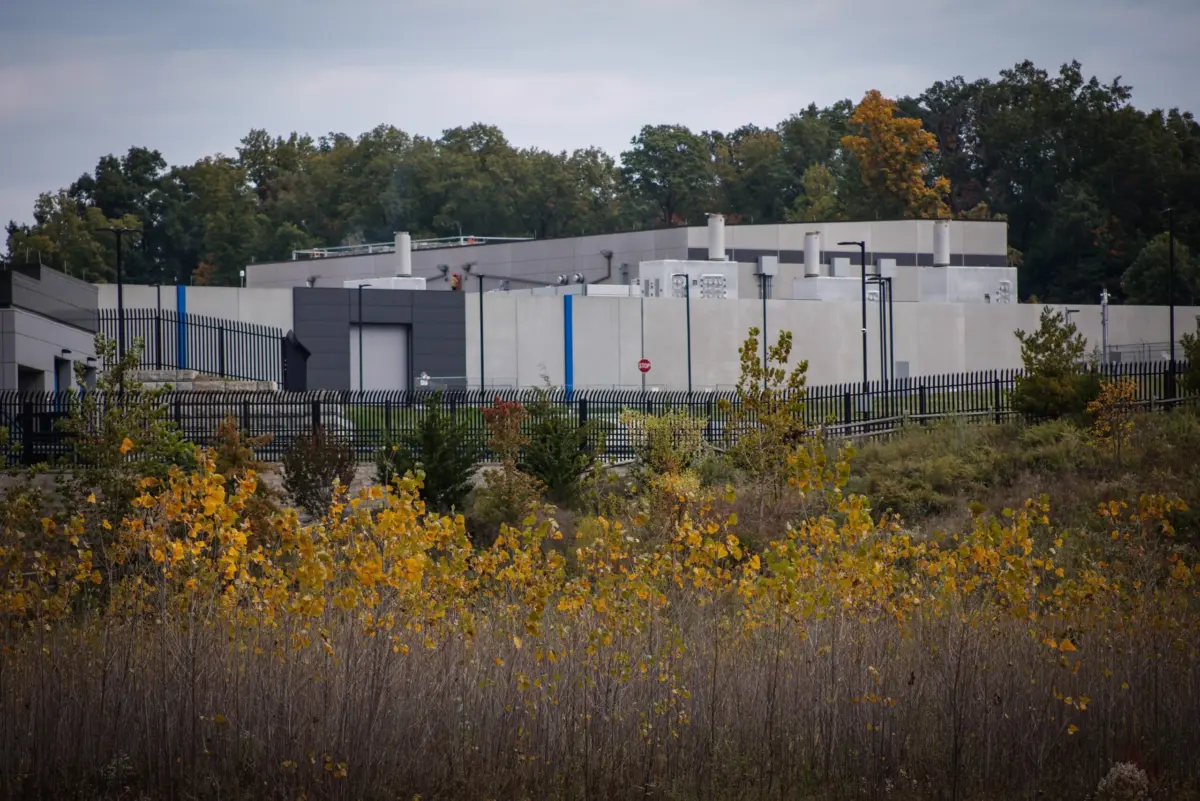
Across the United States, a quiet infrastructure war is boiling over into the public square. Once viewed as anonymous, windowless warehouses humming quietly in industrial parks, data centers have rapidly transformed into public enemy No. 1 for local communities. The grievances voiced by residents are multifaceted and deeply felt: massive consumption of local water supplies, voracious demands on electrical grids, an imposing physical footprint, persistent low-frequency noise pollution, and deep-seated anxieties over the socioeconomic dislocations promised by artificial intelligence.
Recent polling underscores the depth of this friction. A Gallup survey conducted earlier this year revealed that 71 percent of Americans actively oppose the construction of AI-supporting data centers in their local neighborhoods. Crucially, this backlash transcends traditional partisan lines, drawing unified opposition from majorities of Democrats, Republicans, and independents alike. Even in Texas—a state long celebrated for an unfettered, pro-business development model—Republican Governor Greg Abbott slammed the brakes on the boom this past autumn, directing state regulators to halt new data center permits pending comprehensive audits of their strain on local power grids and water tables.
Yet, despite this rising tide of regulatory hurdles and community resistance, digital infrastructure continues to expand. To navigate the hostile landscape, tech developers and hyperscalers are increasingly turning to public relations and community engagement specialists. Among them is Nicole Thomas, Senior Vice President of Media and Community Engagement at JSA, who represents data center developers navigating the choppy waters of public opinion. In a recent interview on the Today, Explained podcast, Thomas spoke with co-host Sean Rameswaram to unpack how the industry is scrambling to respond to an unprecedented wave of public skepticism, why she advocates for "responsible development," and whether data centers can ever truly be welcomed as good neighbors.
Read Also
Detailed Chronology: From Invisible Infrastructure to Public Lightning Rod
To understand how data centers became the focal point of the modern techlash, one must examine the industry’s historical operational model. For decades, data centers were developed under a cloak of relative obscurity.
The Era of Obscurity (Pre-2023)
For the first twenty years of the modern digital boom, building a data center was remarkably similar to building a municipal warehouse or a large-scale retail outlet like a Costco. Developers would submit zoning applications to local municipalities, secure standard approvals, and erect the facilities with minimal public fanfare.
Furthermore, because these facilities safeguard critical digital information, cybersecurity protocols necessitated strict secrecy. Operators routinely avoided drawing attention to their locations, and local planning boards processed permits with standard administrative stamps. Citizens drove past nondescript, low-profile buildings every day without realizing they housed the servers powering their corporate networks, financial systems, and personal photo libraries.
The AI Inflection Point (2023–Present)
The dynamic shifted dramatically roughly two years ago, driven by the explosive commercialization of generative artificial intelligence. As tech giants raced to build out massive, gigawatt-scale computing clusters capable of training advanced large language models, the scale of data centers expanded exponentially.
No longer comparable to standard commercial warehouses, modern AI facilities began demanding monumental blocks of continuous power—often rivaling the energy consumption of small cities—and millions of gallons of water daily for cooling systems. Mainstream investigative journalists began shining a light on the developments, and local communities woke up to massive, resource-intensive construction projects planned right in their backyards. High-profile proposals, such as the massive Utah data center project floated by businessman Kevin O’Leary, catalyzed sudden, fierce pushback from residents who felt completely blindsided by secretive municipal approvals.
Supporting Context & Metrics: The Anatomy of the Backlash
The friction between digital infrastructure developers and local populations is defined by measurable socioeconomic anxieties and physical resource constraints.
- The 71% Opposition Threshold: Gallup data highlights a sweeping, bipartisan rejection of new AI data center installations, pointing to a systemic breakdown in trust between tech developers and municipal populations.
- The Resource Footprint: Modern hyperscale facilities designed for generative AI processing routinely require hundreds of megawatts—if not gigawatts—of electricity, straining regional transmission lines. Simultaneously, evaporative cooling systems consume millions of gallons of municipal water daily, triggering alarm in drought-prone regions across the American West and Southwest.
- The AI Proxy Effect: Industry insiders note that local resistance to data centers is often a proxy war against the perceived threats of artificial intelligence itself. With prominent tech figures and AI pioneers openly warning about existential risks and labor displacement, communities seize upon the physical manifestation of AI—the data center—as the primary mechanism to assert control over an otherwise unregulated technological revolution.
Official Statements and Industry Perspectives: Inside the PR Trench
Navigating this unprecedented wave of public hostility requires a fundamental pivot in how digital infrastructure companies communicate with the public. Nicole Thomas brings a unique perspective to this challenge, having transitioned from state transportation infrastructure projects—where public engagement is mandatory—to a digital infrastructure sector that historically operated in a vacuum.
"When I got to this industry, I said, ‘Oh, what’s your community engagement like?’ And they said, ‘We don’t even have any community engagements in this industry.’ And they weren’t wrong. Because 21 years ago, [data centers] were just like infrastructure. It was like building a warehouse for your computers."
— Nicole Thomas, SVP of Media and Community Engagement, JSA
Thomas draws a sharp distinction between the baseline digital infrastructure required to support everyday conveniences—such as mobile apps, banking, and email—and the massive, power-hungry installations required for frontier AI workloads. She argues that bridging the gap requires intense, proactive public education:
"Every app on your cellphone requires a data center to save your information… We could not be having this call without digital infrastructure. It doesn’t work that way. We can’t have email without digital infrastructure."
Paradoxically, this commitment to transparency sometimes pits industry professionals directly against their own corporate ecosystems. Thomas recounted a personal experience in her home state of Indiana, where a major hyperscaler moved into her city with what she described as "horrible, absolutely horrible" community engagement. Rather than defending the developer, Thomas and her local peers took the corporation to task, championing the principle of responsible development over unmitigated expansion.
When asked how developers respond when a community digs in its heels and issues construction moratoriums, Thomas noted that outcomes vary widely. While some communities remain steadfastly opposed, others open their doors after direct, one-on-one informational workshops dispel common myths.
"There are communities who recognize the benefits of data centers. And there are going to be other communities who say, ‘No, we don’t want this.’ And then in five, six, eight years, they’re going to be like, ‘Wow, that county has a lot of tax dollars. They have a lot of really cool stuff. Why don’t we have that?’ And the answer will be data centers."
Future Outlook: Navigating the Road Ahead
The collision between rapid technological advancement and local community sovereignty shows no signs of abating. As artificial intelligence continues to dominate commercial and geopolitical landscapes, the demand for high-density computing infrastructure will only escalate.
Industry analysts and communications professionals project that the friction between tech developers and local populations will remain a defining feature of the American municipal landscape for the next three to five years. For data center operators, the era of secretive, fast-tracked zoning approvals is definitively over. Survival in the modern market will require a paradigm shift toward radical transparency, early community outreach, sustainable resource management—such as closed-loop cooling and renewable energy integration—and genuine economic partnerships that ensure local populations share equitably in the wealth generated by the digital age.
Until the tech sector successfully bridges the trust gap, every new server rack and cooling tower will remain a battleground in the broader war over the future of human-technology integration.





Comments
Facebook App ID not configured. Please add it in the Customizer.