

Executive Overview
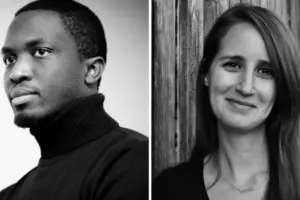
Literary creation is rarely a straight line, but in the case of acclaimed Norwegian author Karl Ove Knausgaard, it is consciously designed as a labyrinth of unknowns. With the release of The School of Night—the fourth installment in his sprawling, ambitious Morning Star novel cycle—Knausgaard once again invites readers into a world shaped by serendipity, psychological dissonance, and uncanny historical echoes. Yet, bringing a novel of this scale across the linguistic bridge from Norwegian into English is an equally intricate journey, one defined by a unique creative partnership between the author and his long-time translator, Martin Aitken.
In this deep-dive exploration of the collaborative alchemy
behind The School of Night, we examine the anatomy of Knausgaard’s writing process—a method that prizes "not-knowing," sudden character mutations, and historical improvisation. We also look closely at Aitken’s role not merely as a conduit of words, but as an interpretive performer, fact-checker, and historical consultant. Set against the atmospheric backdrop of mid-1980s London, complete with its tangible tactile details and post-punk soundscapes, this feature chronicles how a book comes into the world twice: first as a Norwegian spark of intuition, and second as a meticulously attuned English performance.
Read Also
Detailed Chronology: From the First Germ to the Final English Phrase
The genesis of The School of Night defies traditional plotting. Knausgaard operates without an outline, allowing narrative momentum to be dictated by the unpredictable behaviors of his characters and the mechanical accidents of the writing process itself.
Phase 1: The Unplanned Genesis and the London 1986 Setting
When Knausgaard sat down to write The School of Night, his conceptual parameters were remarkably sparse. He knew only two things: the protagonist had to be a photographer—someone working within a medium that fundamentally and radically transformed modern culture—and the story had to be anchored in London. The geographical choice was deliberate, intended to subtly interface with Elizabethan playwright Christopher Marlowe and his dark masterpiece, Doctor Faustus, though Knausgaard initially had no fixed roadmap for how those threads would entwine.
In the opening chapters, the protagonist, Kristian Hadeland, is introduced as an agreeable, seemingly harmless figure. However, a structural pivot occurs when Hadeland returns to his parents’ home for Christmas. In a sudden psychological shift, Hadeland is revealed to be almost completely devoid of empathy. This revelation permanently alters the trajectory of the novel.
Back in London, Knausgaard utilized another unplanned catalyst: sending Hadeland out on his bicycle for a cigarette break. Out of nowhere, a wild, unscripted event occurs that ultimately dictates the rhythm and direction of the rest of the narrative. For Knausgaard, accidents, serendipities, and coincidences are his truest allies. The state of "not-knowing" is not an obstacle to be cleared, but an essential fuel for the engine of fiction.
Phase 2: Historical Fact-Checking and Tangible Verisimilitude
Because The School of Night is heavily rooted in the mid-1980s London cultural scene—a city Knausgaard was never physically present in during 1986—the author required a localized reality check. Before the translation process even formally began, Knausgaard sent his raw Norwegian manuscript to Martin Aitken, not for linguistic conversion, but for spatial and historical verification.
Aitken functioned as a cultural curator, ensuring that the imaginary world Knausgaard constructed felt impeccably lived-in. For instance, when Knausgaard needed to ground a mundane moment of daily life, Aitken provided the precise tactile detail: in 1986 London, coffee was frequently served in thin, disposable plastic cups that grew intensely hot to the touch, vibrating slightly and shifting in the grip of the drinker.
Phase 3: The Translation Process and the Performance of Voice
Once the Norwegian manuscript was finalized, Aitken undertook the monumental task of rendering it into English. Having translated the final volume of My Struggle and the preceding volumes of the Morning Star cycle, Aitken was already deeply attuned to Knausgaard’s psychological ecosystem and literary sensibilities.
However, translation remains an act of interpretation rather than mere substitution. Aitken describes the translator’s role as that of a performer delivering a musical score. Every level of expression requires constant reflection, deliberation, and the careful weighing of linguistic forms.
Furthermore, Aitken had to navigate the temporal distance of the 1980s. Language shifts rapidly, and the dialogue had to be carefully managed to avoid anachronisms that would inadvertently anchor the characters in the contemporary twenty-first century. As a British English speaker, Aitken brought an innate domestic cadence to the text, though he remains mindful of how the transatlantic idioms read for American audiences.
Phase 4: Authorial Review and Collaborative Fine-Tuning
Knausgaard’s review of Aitken’s translation is famously light-handed, built on a foundation of absolute trust and temperamental symmetry. When Knausgaard receives a translated manuscript, he reads the opening pages not to hunt for technical errors, but to gauge the atmospheric mood and stylistic pulse.
With Aitken, that pulse is consistently maintained. Knausgaard notes that Aitken possesses the rare ability to make the text read as though it were newly minted in English, moving just far enough away from the original Norwegian to render the text slightly foreign, allowing the author to read his own work transfixed for hours.
When minor adjustments are necessary, they typically concern character voice rather than word-level literalism. During the work on The School of Night, Aitken noted that Kristian Hadeland’s tone occasionally required pulling back to ensure he maintained the precise, offhand nonchalance Knausgaard originally envisioned.
Supporting Context & Metrics: The Scale of the Partnership
To understand the weight and significance of The School of Night, it is vital to examine the literary pedigree and track record of both the author and the translator within the contemporary global literary landscape.
Literary Footprint & Translation Metrics
- Global Reach: Knausgaard’s works have been translated into 35 languages, making him one of the most widely read and influential Scandinavian authors of the twenty-first century.
- Critical Acclaim (Knausgaard): His debut novel, Out of the World, made history by becoming the first debut novel ever to win the prestigious Norwegian Critics Prize for Literature. His subsequent works have garnered international honors, including a longlisting for the International Dublin Literary Award for A Time for Everything.
- Award-Winning Translation (Aitken): Martin Aitken is a titan in the realm of Scandinavian literary translation. His exceptional work has landed him on the shortlists of the International Dublin Literary Award and the International Booker Prize, as well as earning him recognition as a Finalist for the National Book Award and a recipient of the coveted PEN Translation Prize.
The Anatomy of the Morning Star Cycle
- The School of Night stands as the fourth volume in Knausgaard’s ongoing Morning Star cycle.
- Unlike the autofictional intensity of My Struggle, the Morning Star novels plunge deep into speculative realism, exploring collective psychological disruptions, the blurring boundaries between the rational and the supernatural, and the quiet anxieties of modern life.
- The series’ thematic cohesion relies heavily on consistent stylistic delivery—a feat made possible by Aitken’s continuous tenure as the cycle’s exclusive English translator.
Official Statements & Direct Perspectives
The symbiotic relationship between author and translator is laid bare in their own reflections on the collaborative journey of bringing The School of Night to English-speaking readers.
On the Nature of Writing and Not-Knowing
Reflecting on his organic, improvisational method, Karl Ove Knausgaard emphasizes the value of surrender to the unexpected:
"Accidents, serendipities, and coincidences are my best friends when I write, the not-knowing an essential part of it."
Martin Aitken expands on this by framing the translator’s distinct responsibility compared to that of the novelist:
"The author creates the work, whereas the translator performs it. And like any performer, what you’re doing is delivering an interpretation, which involves constant reflection, deliberation, and a weighing-up of forms of expression at every level."
On Historical Accuracy and Atmosphere
Recreating 1986 London required a delicate balancing act of memory and research. Knausgaard acknowledges his reliance on Aitken’s local expertise to anchor an imaginary world:
"I was never in London in 1986 (how I wish I was!), the world I described was an imaginary one, and to make it believable, I needed the details, the small things to be correct."
Aitken details the linguistic vigilance required to prevent modern bleed-through into the 1980s setting:
"Language moves and develops very quickly, so you’ve got to be attentive to the words you’re putting into the characters’ mouths—you can’t have them saying things in a way that would identify them as belonging to our own day and age."
On Mutual Trust and Creative Alchemy
The relationship between Knausgaard and Aitken is distinguished by a rare degree of mutual respect. Knausgaard evaluates Aitken’s output not with a red pen, but with a reader’s wonder:
"I have worked with many translators, and it has happened that every word is correct, but that the life is gone, the text is flat. Martin is the best—making the text seamlessly alive in another language is a rare skill, incredibly valuable to me, of course!"
Aitken echoes this sentiment, noting their shared temperament:
"I like to work alone, and Karl Ove seems happy enough to let me get on with it… He’s more interested in voice than in word-level choices, which again fits well with how I tend to work."
Future Outlook: Metaphors, Soundtracks, and the Road Ahead
As The School of Night enters the global literary ecosystem, its thematic resonance is best captured not through traditional plot synopses, but through evocative cultural metaphors and sonic landscapes provided by its creators.
When asked to summarize the dark, magnetic pull of the novel, Knausgaard bypasses traditional musical references in favor of a chilling classical theatrical touchstone: the ultimate stage direction from Christopher Marlowe’s Doctor Faustus—"Enter DEVILS."
Meanwhile, Aitken points directly to the novel’s rich digressive soundtrack—specifically Kristian Hadeland’s 1980s post-punk record collection. Highlighting a moment in the text where Hadeland disingenuously denies owning any music by Joy Division (a character-defining lie masking his deep vulnerability), Aitken suggests that the band’s brooding sonic palette serves as an ideal ambient backdrop. In particular, he points to the Joy Division track "Dead Souls" as an evocative audio-metaphor for the haunting atmosphere that permeates the Morning Star cycle as a whole.
The Trajectory of the Morning Star Universe
With four volumes now established in the Morning Star sequence, Knausgaard’s exploration of metaphysical rupture, human alienation, and cultural shifts continues to evolve. The seamless bridge built between Norwegian and English by Knausgaard and Aitken ensures that the philosophical weight and stylistic intimacy of the project remain entirely uncompromised. As readers dive into the unsettling pages of The School of Night, they are engaging with a masterclass in modern European fiction—one where the translator is as essential to the performance of the text as the author who dared to step into the unknown without a map.




Comments
Facebook App ID not configured. Please add it in the Customizer.