
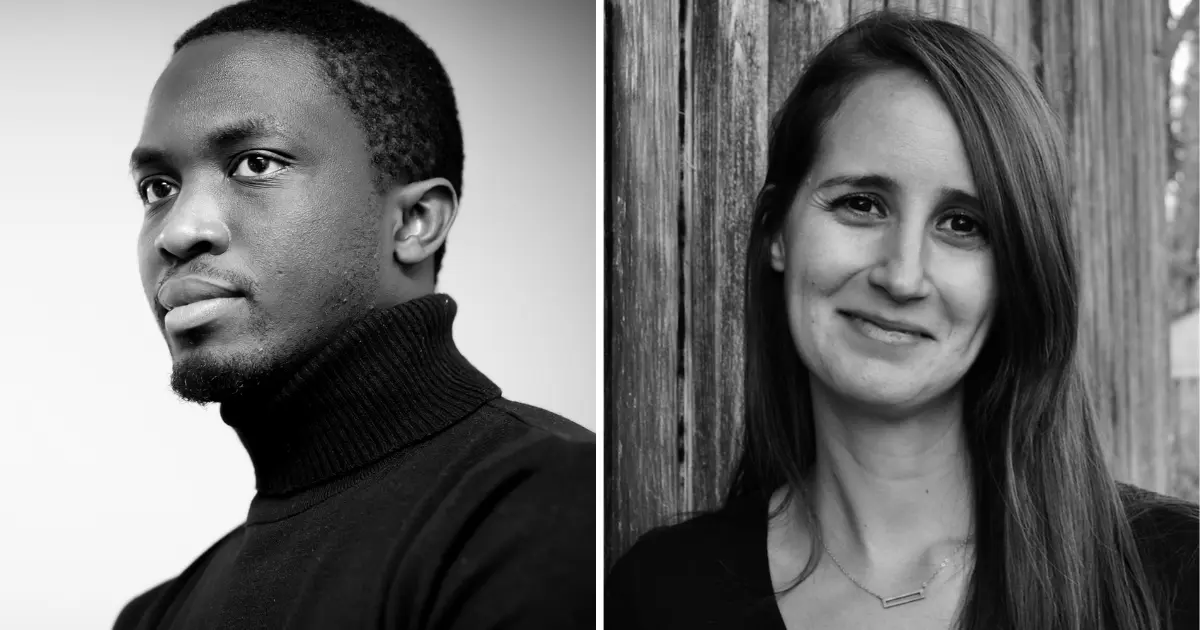
The intersection of literature, sociopolitical trauma, and the intricate art of literary translation is rarely as sharply defined as in the collaborative relationship between award-winning author Mohamed Mbougar Sarr and translator Lara Vergnaud. In their recent discussions concerning the English-language publication of Pure Men—Sarr’s searing third novel, written prior to his celebrated Goncourt-winning masterpiece The Most Secret Memory of Men—the creative pair illuminate the heavy burdens of bearing witness to violence, the delicate anatomy of cross-cultural transmission, and the profound responsibilities inherent in giving a localized tragedy a global voice.
Originally published in France after being conceived during Sarr’s formative years at a military high school in Senegal, Pure Men draws its visceral lifeblood from a horrific, real-world incident of mob violence and desecration directed against a suspected homosexual man. For nearly a decade, the haunting mental images of this atrocity lingered in Sarr’s consciousness before crystallizing into the foundational opening scene of the novel. When the time came to render this culturally dense, linguistically multifaceted French text into English, Vergnaud—having previously triumphed with The Most Secret Memory of Men—faced a formidable gauntlet of stylistic, historical, and lexical hurdles.
This deep dive examines the genesis of Pure Men, the collaborative dynamics that bridged two distinct creative minds across continents, the specific translational triumphs and terminology deliberations that defined the project, and the enduring resonance of a novel that challenges readers to reevaluate societal prejudices, institutional violence, and the ethical weight of storytelling.
Read Also
Detailed Chronology: From a Senegalese Mobile Screen to the Global Anglophone Stage
To understand the architecture of Pure Men, one must trace a timeline spanning nearly two decades, moving from a chilling digital artifact in West Africa to the precise, deliberate keystrokes of an accomplished literary translator in the West.
2008: The Germ of a Novel
In 2008, Mohamed Mbougar Sarr was an 18-year-old student at a military high school in Senegal. It was an era defined by the rapid expansion of mobile technology and peer-to-peer digital sharing. During this time, a harrowing, sordid video circulated from phone to phone across communities. The footage captured a raging, bloodthirsty mob engaged in the exhumation and desecration of the body of a man suspected of having been homosexual during his lifetime.
For a young man immersed in literature and philosophy, the images were more than merely disturbing; they represented an existential rupture. The casual cruelty of the mob, the systemic erasure of human dignity, and the pervasive climate of homophobia left an indelible scar on Sarr’s psyche. Those digital frames refused to dissipate, haunting him for nearly ten years as he developed his voice as a writer. Ultimately, this visceral memory provided the catalyst and the stark opening scene for Pure Men, his third novel.
Chronological Anachronism in Publication
Although Pure Men was written and initially published in France prior to Sarr’s fourth novel, The Most Secret Memory of Men, the publication sequence in the Anglophone market was reversed. The Most Secret Memory of Men was translated first by Lara Vergnaud for Other Press, earning widespread acclaim and securing Sarr’s reputation among English-speaking readers.
This prior collaboration laid a foundation of mutual trust and artistic understanding. When Pure Men subsequently entered the translation pipeline, Vergnaud was already intimately familiar with Sarr’s cadence, intellectual depth, and stylistic signatures. Yet, because Pure Men chronologically preceded his Goncourt-winning work, Vergnaud found herself traveling backward in time, encountering an earlier, more hesitant, yet fiercely vital iteration of Sarr’s literary voice.
The Translation and Editorial Process
The translation of Pure Men required months of meticulous labor, structural decision-making, and close consultations between author and translator. Moving fluidly between asynchronous digital communications and face-to-face discussions in cafes, Sarr and Vergnaud negotiated the treacherous waters of cultural specificity. Vergnaud wrestled with period-specific terminology, linguistic multiplicity, and the rhythmic cadence of Sarr’s prose—including complex cultural touchstones like the sabar scene and the enigmatic jotalikat.
The culmination of this process arrived with the final line of the novel—a passage described by Vergnaud as deceptively simple yet critically important. Upon the book’s publication in English, Sarr reached out with a reassuring message confirming that the translation had captured the exact emotional and thematic resonance of the original French text.
Supporting Context & Metrics: Cultural Resonance and Linguistic Mechanics
Translating a work of African literature written in French—a language bearing the complex historical legacy of colonialism—into English presents a layered matrix of linguistic and political challenges.
Navigating Linguistic Multiplicity and Terminology
One of the most defining characteristics of Sarr’s writing is his mastery of tone, irony, lyricism, and violence. Translating these elements into English demands an acute awareness of register. Vergnaud’s approach relied on hyper-attentiveness to historical, geographical, and cultural contexts.
A primary example of this rigorous editorial deliberation involved the translation of the French term "travesti." Vergnaud deliberately opted for the outdated English term "transvestite." While contemporary sensitivities might lean toward more modern terminology, Vergnaud’s choice was anchored in a specific temporal and cultural accuracy required by the text. This subtle linguistic nuance did not go unnoticed; it was specifically singled out and praised in critical evaluations, such as a review published in Words Without Borders, validating the translator’s profound historical sensitivity.
The Anatomy of Collaboration
Literary translation is frequently envisioned as a solitary endeavor, but in the case of Sarr and Vergnaud, it functioned as an ongoing, respectful dialogue. Sarr adopted the posture of a benevolent shadow—ever-present yet deliberately restrained. Rather than micromanaging the translator’s lexical choices, Sarr afforded Vergnaud the autonomy required to craft a parallel artistic creation in English.
When structural bottlenecks or ambiguous cultural idioms arose toward the end of the translation process, the partnership shifted from digital correspondence to direct, spoken dialogue. Hearing Sarr articulate the rhythm and intent of a difficult passage aloud served as a master key for Vergnaud, instantly "unlocking" the appropriate English equivalents. This synergy highlights a vital metric in modern literary translation: the ideal balance between authorial proximity and translator independence.
Metaphorical Landscapes
Asked to encapsulate the essence of Pure Men through metaphorical lenses, both creator and translator offered profound insights:
- Mohamed Mbougar Sarr likened the book to the song "Xoolal bu baax" by Wasis Diop—a poignant musical work centered on the ethical imperative of withholding judgment until one has pursued and understood the whole truth.
- Lara Vergnaud envisioned the translation process itself as operating like a "time machine." Translating the novel felt akin to journeying backward to encounter a younger, more exploratory version of Sarr, whose characteristic humor and literary quirks were present in a raw, nascent state.
Official Statements & Creative Insights
The collaborative ethos driving the English edition of Pure Men is best articulated through the reflections of the author and translator themselves, shedding light on the mechanics of translingual art.
Mohamed Mbougar Sarr on Genesis and Translation
Reflecting on the painful origins of the novel and the subsequent journey into English, Sarr notes:
"In 2008… I watched a sordid video that circulated from phone to phone. A raging crowd was seen digging up the body of a man suspected of having been homosexual during his lifetime. These images shocked me, and did not leave me for almost ten years. They ended up being the first scene of Pure Men… I was happy and curious to see how Pure Men, written earlier, would find a form in Lara’s sensibility and work after our first collaboration. I am not disappointed at all: She perfectly managed to capture the energy, tones, voices, irony, lyricism, rhythms, and the violence of the novel. The love, too."
Addressing his working relationship with Vergnaud, Sarr outlines his philosophy of authorial non-interference:
"I try to act like a shadow, always present but silent. However, I am curious about the work-in-progress, and I try to be available if needed, to specify, clarify, give some helpful elements… Lara and I usually organize a call or—even better—meet in a café, to talk very freely about the book."
Lara Vergnaud on the Challenges of Rendering Sarr in English
Detailing the obstacles overcome during the translation process, Vergnaud emphasizes the rigorous demands of Sarr’s prose:
"There were many challenges—Sarr is not a simple writer to translate! I was especially attentive to terminology, aiming to simultaneously capture and convey the original text’s time period, cultural and geographical setting, and linguistic multiplicity… But the trickiest challenge was probably the last line of the book, which is deceptively simple and yet critical. To my immense relief, Sarr sent me a kind message after the English translation was published, telling me that I got it just right."
Describing Sarr’s supportive yet hands-off methodology, Vergnaud remarks:
"Sarr is an ideal writer to translate—a distant benevolent presence whom I know is there to help if needed, but also slightly indifferent, in the sense that he respects the translation as its own creation, which doesn’t necessarily require his intervention."
Future Outlook: The Global Trajectory of African Literature in Translation
The publication of Pure Men in English marks a significant milestone not only for Mohamed Mbougar Sarr and Lara Vergnaud but also for the broader landscape of contemporary world literature. As literary markets increasingly open their doors to translated works that confront uncomfortable sociopolitical realities, novels like Pure Men serve as vital testing grounds for intercultural empathy.
Expanding the Anglophone Canon
Sarr’s meteoric rise—underscored by his Goncourt triumph with The Most Secret Memory of Men, his prestigious national honors in Senegal, and his expanding body of translated works—signals a structural shift in how international literature is received in the English-speaking world. Readers are no longer content with sanitized, monolithic portrayals of African societies; instead, there is a voracious appetite for complex, morally ambiguous, and formally adventurous texts that interrogate local prejudices while speaking to universal human failings.
The Role of Master Translators
The success of Pure Men in English also brings much-needed visibility to the intellectual labor of literary translators. Practitioners like Lara Vergnaud—whose impressive credentials include multiple PEN/Heim Translation Fund grants, National Book Award shortlistings, and an upcoming memoir, Untranslatable, slated for 2027—are increasingly recognized as co-creators. Their ability to navigate the treacherous terrain between source and target languages ensures that literary masterpieces retain their subversive power across linguistic divides.
Continuing Conversations
As Pure Men finds its place on the shelves of Anglophone bookstores and academic syllabi, it opens up critical spaces for dialogue surrounding human rights, societal scapegoating, and the ethical responsibilities of the artist. Sarr’s refusal to look away from the digital video that sparked his imagination in 2008, paired with Vergnaud’s meticulous linguistic craftsmanship, ensures that the silenced victims of real-world violence are given an enduring, resonant voice. Through the haunting refrain of “Xoolal bu baax,” the novel challenges readers to abandon hasty moral judgments, dive deep into the complexities of human suffering, and bear witness to truths that demand to be heard.





Comments
Facebook App ID not configured. Please add it in the Customizer.