
Executive Overview
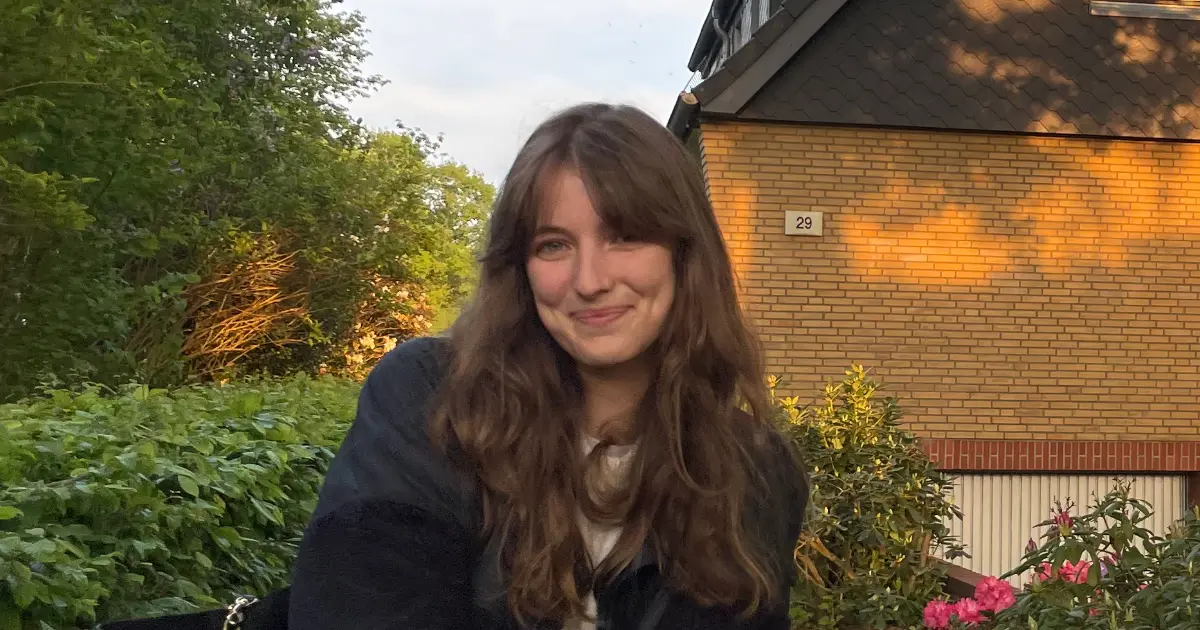
In an increasingly interconnected yet frequently polarized global landscape, the role of literature in translation has never been more vital. At the forefront of this literary bridge-building is Regan Mies, a New York-based writer, translator, critic, and editorial fellow at Words Without Borders (WWB). Mies represents a new generation of literary professionals who seamlessly navigate multiple languages, genres, and geographic divides. Balancing an eclectic portfolio—ranging from teaching undergraduate creative writing at Columbia University to translating contemporary German prose and crafting her own debut novel—Mies embodies a holistic, borderless approach to contemporary letters.
This profile explores Mies’s formative literary roots in rural Minnesota, her immersion in the vibrant European literary scene, and her profound insights into the symbiotic relationship between writing and translation. Furthermore, it examines her passionate advocacy for "writing from the margins"—multilingual and intercultural narratives that challenge traditional monolingual canons. Through detailed analysis of her creative philosophy, favorite texts, and vision for the future of translated literature, this article offers an authoritative look into the mind of a rising literary tastemaker.
Detailed Chronology: From Central Minnesota to New York’s Literary Hubs
Formative Years and the Discovery of German
Regan Mies’s journey into the intricate mechanics of language began far from the cosmopolitan publishing hubs of New York City, growing up in rural central Minnesota. This region possesses a rich, historical patchwork of European and immigrant influences, most notably a deep-rooted mid-nineteenth-century German heritage, alongside vibrant Scandinavian, Hmong, and Somali communities.
Read Also
During middle and high school, Mies seized the opportunity to study German. What began as a standard language requirement quickly blossomed into a profound intellectual passion. She discovered that language learning uniquely synthesized her love for history and literature with the structural strategy and pattern recognition inherent in linguistics. Among her earliest, most vivid literary memories are the bewildering yet captivating experiences of reading mid-century theatrical works by Swiss and German dramatists Friedrich Dürrenmatt and Max Frisch.
Crucially, this early linguistic immersion forged personal connections. Mies fondly recalls moments shared with her grandmother, who had spoken German as a very young child at home and was astonished to find that she could still comprehend and converse in the language decades later.
Academic Expansion and European Immersion
Mies carried this momentum into her undergraduate years, pursuing a dual major in German and political science while fiercely protecting space in her course schedule for creative writing workshops. The synthesis of her academic and artistic pursuits culminated during her senior year when she enrolled in her first dedicated translation course, taught by instructor Katrine Jensen.
Describing the experience as a "near-magical synthesis," Mies found that Jensen’s encouragement opened the door to a world where translation was not merely a mechanical substitution of words, but an act of high creativity, play, and structural experimentation.
Following her undergraduate studies, Mies relocated to Hamburg, Germany. Navigating the linguistic and cultural realities of daily life in a bustling European metropolis provided both profound joy and rigorous intellectual challenge. She immersed herself in the city’s literary ecosystem, spending countless hours browsing independent bookstores and attending events at the prestigious Literaturhaus Hamburg. This groundwork eventually led to a professional collaboration with New Books in German, an organization dedicated to identifying, recommending, and promoting contemporary German-language literature for the US and UK publishing markets.
Working alongside seasoned translators in Hamburg—and later returning to New York for graduate school—solidified Mies’s conviction that translation would remain a cornerstone of her personal and professional life. Today, as an editorial fellow at Words Without Borders and an instructor at Columbia University, Mies operates at the pulsing heart of international literature.
Supporting Context & Metrics: The Ecosystem of Translated Literature
To fully understand Regan Mies’s mission, one must examine the broader publishing ecosystem in which she operates. Literature in translation has historically faced structural hurdles in the Anglophone market, famously encapsulated by the "3% problem"—the persistent statistic that only about 3% of all books published in the United States are works in translation, with literary fiction and poetry making up an even smaller fraction.
| Metric / Indicator | Contextual Overview |
|---|---|
| The "3% Problem" | Historically, translated works account for a marginal percentage of total US book publishing, though indie presses are steadily expanding the metric. |
| Publishing Diversity | Organizations like Words Without Borders bridge this gap by showcasing multilingual voices across poetry, fiction, criticism, and long-form interviews. |
| Cross-Border Narratives | A surging market demand exists for diasporic and transnational literature—works that capture the lived experience of navigating multiple cultures simultaneously. |
Mies’s work with Words Without Borders directly combats these systemic limitations. By championing a publication that strikes a careful balance between emerging international voices and storied Nobel laureates, she helps sustain a vital pipeline for global storytelling. Furthermore, her curated reading lists highlight an expansive geographic and stylistic range, proving that Anglophone readers possess an insatiable appetite for work that challenges parochial literary boundaries.
Official Statements and Perspectives: In Her Own Words
Through extensive commentary on her creative process, literary preferences, and editorial philosophies, Regan Mies articulates a distinct vision for modern letters. Below are synthesized insights drawn from her reflections on the craft.
On the Dual Craft of Writing and Translation
For Mies, moving fluidly between creative writing, literary criticism, academic instruction, and translation is not merely a professional juggling act, but a deeply integrated ecosystem. Each discipline actively informs the other:
"Every writer’s goal, at least to an extent, is to develop and hone their unique voice—to write in the way only they can write. Translation turns this goal on its head; instead, I’m invited to step into and perform a voice that might be wholly distinct from my own. And rather than generate new material, my aim with translation becomes interpreting and remaking the material before me."
Mies notes that turning to translation serves as a refreshing antidote to the intimidation of the blank page after hours spent on her own prose. Conversely, the strict constraints of translation—where every single word dictates the tone, atmosphere, and pacing of a narrative—sharpen her sensitivity to language when she returns to her own manuscripts.
Defining a "Great Book"
When evaluating literature, Mies looks for visceral, transformative experiences. Her criteria are twofold:
- Total Immersion: Books that completely pull the reader into an alternate reality, temporarily erasing the mechanics of reading.
- Provocative Engagement: Books that compel the reader to pick up a pen, scribble marginalia, draw thematic connections to other texts, and urgently seek out conversational partners to dissect the work.
Ultimately, Mies asserts, all truly great books evoke a singular moment of realization in their readers: “Wow, I’ve never read anything like that.”
The Imperative of "Writing from the Margins"
Mies is particularly vocal about expanding the horizons of the English-language publishing market to embrace hybrid, transnational, and diasporic narratives. She points to authors who effortlessly transcend strict national boundaries, such as:
- Fatma Aydemir: A German writer of Turkish descent whose family novel, Djinns, explores generational and cultural friction.
- Nathacha Appanah: A Mauritian-French author whose harrowing novel Tropic of Violence is set on the island of Mayotte.
-
Igiaba Scego: A Roman author
of Somali heritage whose work Adua tracks a forty-year immigrant experience in Italy.
- Pajtim Statovci: A Finnish novelist born in Kosovo to Albanian parents, exploring complex questions of belonging.
- Yoko Tawada: A master of contemporary fiction who writes and publishes groundbreaking novels in both Japanese and German.
Future Outlook: The Horizon of Transnational Letters
As Regan Mies looks toward the future, her trajectory points firmly toward an expansion of her creative and editorial footprint. With her debut novel currently in development, alongside ongoing translation projects and her pedagogical commitments at Columbia University, Mies is positioned to remain an influential voice in American letters for decades to come.
The future of literature in translation depends heavily on scholar-practitioners like Mies—individuals who bridge the gap between academic linguistic analysis, rigorous editorial stewardship, and unbridled creative passion. By advocating for texts that reject monolithic cultural identities and by fostering an inclusive community of passionate readers and translators, Mies is helping to construct a truly borderless literary future.
Whether she is lacing up her running shoes for an autumn jog through Central Park while listening to an audiobook, meticulously reviewing student drafts, or unearthing a brilliant contemporary German text for Anglophone audiences, Regan Mies approaches language as an infinite frontier of empathy, surprise, and discovery.




Comments
Facebook App ID not configured. Please add it in the Customizer.