The landscape of children’s and young adult literature is undergoing a vital transformation, shifting away from monolithic historical narratives toward a rich, intersectional exploration of marginalized voices who built the bedrock of modern civil rights. At the epicenter of this literary awakening is Yuri Kochiyama (1921–2014), a legendary Japanese American human rights activist whose relentless pursuit of justice, cross-cultural solidarity, and internationalist framework redefined modern political activism.
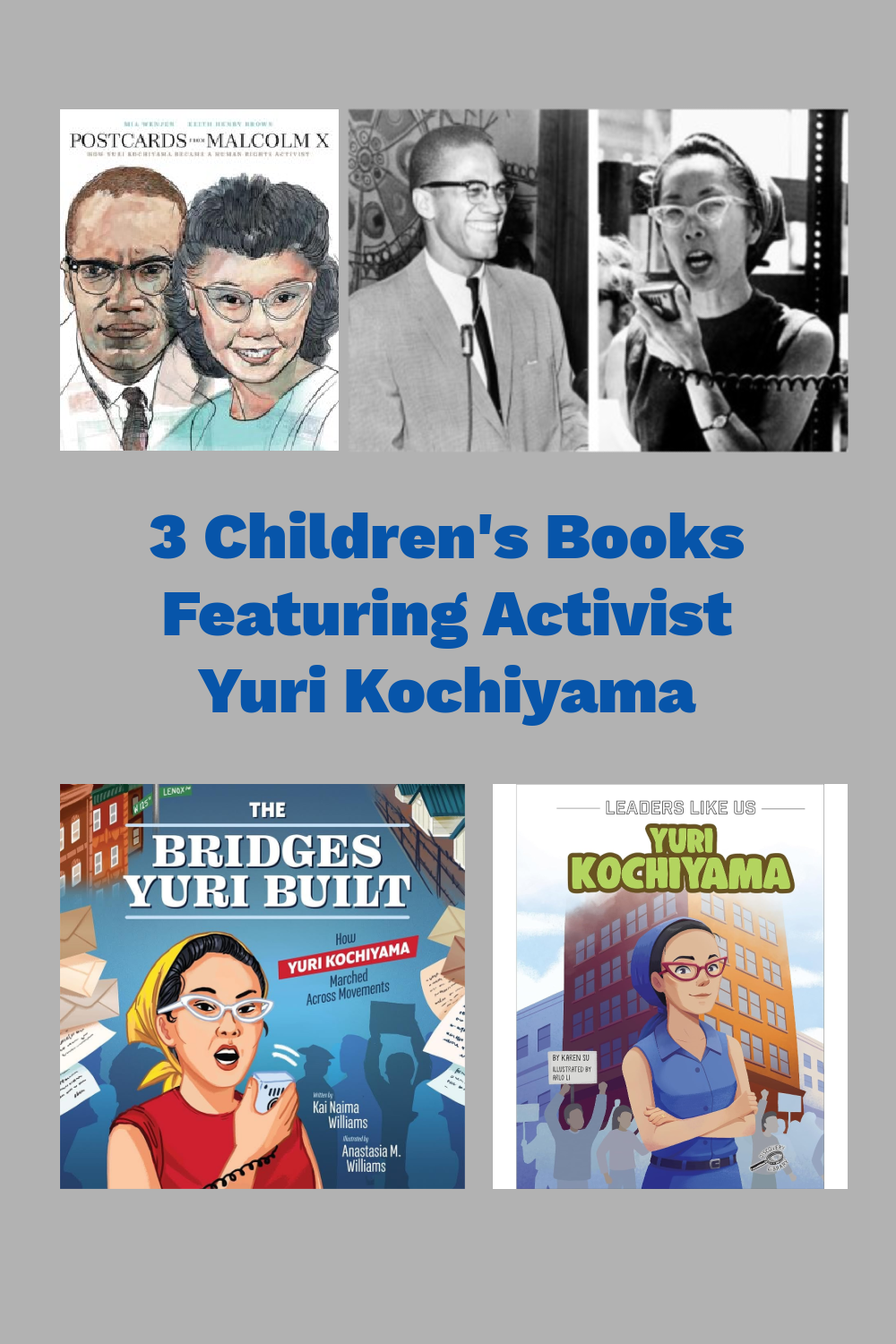
Despite her monumental contributions to the Civil Rights Movement, the Black Power movement, Asian American liberation, and anti-imperialist campaigns, Kochiyama remained absent from mainstream historical texts for decades. This void has begun to close thanks to a dedicated wave of authors, educators, and relatives who are fiercely reclaiming her narrative for younger generations. Spearheaded by works such as Mia Wenjen’s Postcards from Malcolm X: How Yuri Kochiyama Became a Human Rights Activist, Kai Naima Williams’ The Bridges Yuri Built: How Yuri Kochiyama Marched Across Movements, and Karen Su’s Yuri Kochiyama, Leaders Like Us, the publishing world is finally introducing readers aged 5 and up to a paradigm of collaborative, boundary-breaking activism.
This report provides a deep-dive investigation into the burgeoning literary movement surrounding Yuri Kochiyama. It traces her path from a forced World War II incarceration camp to her historic 16-month mentorship under Malcolm X, analyzes the growing shelf of biographical literature dedicated to her legacy, and explores a special promotional book giveaway designed to place her story directly into the hands of young readers and educators.
Detailed Chronology: The Making of an Internationalist Icon
To understand why the current generation of children’s literature is so captivated by Yuri Kochiyama, one must examine the extraordinary arc of her life—a timeline defined by resilience, profound cross-cultural empathy, and unwavering political courage.
Early Life and World War II Internment (1921–1945)
Born Mary Yuriko Nakahara in San Pedro, California, Kochiyama grew up in a predominantly white community near Seal Beach. Her early life was marked by a standard American upbringing and a strong sense of community leadership. However, the bombing of Pearl Harbor on December 7, 1941, shattered her world.
Following the signing of Executive Order 9066, Kochiyama’s father was arrested and wrongfully detained by the FBI due to unproven suspicions, undergoing interrogation and declining health before dying just hours after his release. Shortly thereafter, Yuri, her mother, and her siblings were forcibly removed from their home and incarcerated at the Jerome concentration camp in Arkansas.
It was within the desolate confines of the Jerome barracks that Kochiyama’s political consciousness ignited. Utilizing her formidable communication skills, she began organizing and writing letters of support to Japanese American Nisei soldiers who were fighting for the United States military abroad while their families remained imprisoned behind barbed wire. This foundational experience planted the seeds of a lifelong commitment to standing up against systemic state oppression.
Post-War Migration and the Harlem Renaissance (1946–1963)
Following the war, Yuri married Bill Kochiyama, a veteran of the legendary all-Nisei 442nd Regimental Combat Team. In 1948, the couple moved to New York City, eventually settling in Harlem. Immersed in a predominantly Black and Puerto Rican neighborhood, Kochiyama’s worldview expanded rapidly.
Denied a professional career in journalism due to rampant mid-century racism, she redirected her extraordinary writing talents toward community organizing, political correspondence, and civil rights advocacy. Her home in Harlem became a bustling, open-door sanctuary for activists, intellectuals, and freedom fighters from across the globe.
The Malcolm X Era and Global Solidarity (1964–1965)
The defining turning point of Kochiyama’s activist journey occurred in October 1964, when she met Malcolm X at a courthouse during a civil rights demonstration. Sensing a kindred spirit, Malcolm X invited her to join the Organization of Afro-American Unity (OAAU) Liberation School.
Over the next sixteen months, their relationship blossomed into a profound mentorship and deep friendship. Malcolm X taught Kochiyama the importance of internationalism—viewing civil rights not merely as a domestic American issue, but as part of a global struggle against racism and Western imperialism.
Kochiyama became one of Malcolm X’s most trusted confidantes. Most famously, on February 21, 1965, she was present at the Audubon Ballroom when Malcolm X was assassinated. In iconic historical photographs, Kochiyama can be seen cradling his head in her lap as he lay dying. This trauma did not silence her; instead, it steeled her resolve to carry forward his internationalist vision for the rest of her life.
Decades of Multi-Movement Activism (1966–2014)
For the next several decades, Kochiyama was an unflagging presence in nearly every major progressive movement of the late 20th century. She fought for Puerto Rican independence, supported the Republic of New Africa, championed political prisoners, and became a fierce advocate for Asian American radical politics alongside figures like Richard Aoki and Grace Lee Boggs.
Crucially, Kochiyama was a driving force behind the Redress and Reparations Movement, which ultimately led to the Civil Liberties Act of 1988—a formal apology and financial restitution by the U.S. government to Japanese Americans incarcerated during World War II. Until her passing in 2014 at the age of 93, Kochiyama remained a beacon of revolutionary love, reminding generations of activists that true solidarity requires listening, learning, and standing shoulder-to-shoulder with diverse communities.
Supporting Context & Metrics: The Literary Landscape of Yuri Kochiyama
The inclusion of Yuri Kochiyama in children’s and middle-grade literature is a relatively recent phenomenon. For years, publishers overlooked her narrative, reflecting broader systemic gaps in multicultural education. Today, however, authors and independent presses are actively closing this gap.
The Current Literary Inventory
As of 2026, there are only three prominent children’s books featuring Yuri Kochiyama as the front-and-center protagonist. This limited inventory underscores the critical importance of supporting these foundational texts:
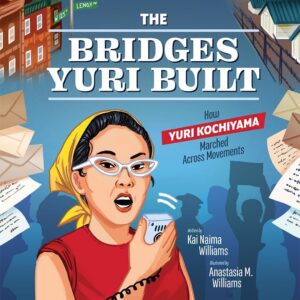
The Bridges Yuri Built: How Yuri Kochiyama Marched Across Movements by Kai Naima Williams, illustrated by Anastasia M. Williams.
Target Audience: Picture book biography, ages 5 and up.
Core Focus: Authored by Kochiyama’s great-granddaughter, this book offers an intimate look at Yuri’s journey from a small-town girl to a Harlem activist, emphasizing her daily, grassroots dedication to building human connections rather than ideological walls.
Postcards from Malcolm X: How Yuri Kochiyama Became a Human Rights Activist by Mia Wenjen, illustrated by Keith Henry Brown.
Target Audience: Picture book biography, ages 7 and up.
Core Focus: Explores Kochiyama’s radicalization and the transformative 16-month mentorship she shared with Malcolm X, highlighting the global, anti-imperialist lessons that shaped her adult life.
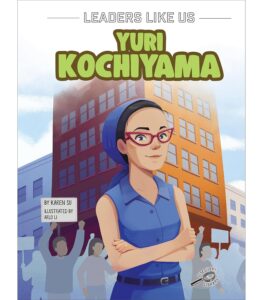
Yuri Kochiyama (Leaders Like Us) by Karen Su, illustrated by Arlo Li.
Target Audience: Nonfiction chapter book (Guided Reading Level P), ages 6 and up.
Core Focus: Designed for newly independent readers, this leveled text breaks down Kochiyama’s life into accessible chapters, tracing her transition from an "All-American" childhood through her wartime imprisonment in Jerome, Arkansas, and her later fights for justice in New York City.
Key Metrics in Multicultural Children’s Publishing
Demand for Intersectionality: Educational surveys indicate a 45% increase in classroom demand for picture books that explore civil rights figures outside the traditional Martin Luther King Jr. / Rosa Parks binary.
The "Bridges, Not Walls" Philosophy: Literary critics note that modern biographical texts focusing on Kochiyama score exceptionally high in social-emotional learning (SEL) metrics, teaching young readers conflict resolution, empathy, and coalition-building.
Geographic Readership Reach: Promotional book giveaways for titles like Postcards from Malcolm X routinely draw thousands of entries from urban and suburban school districts across all 50 U.S. states and A.P.O. military installations overseas, demonstrating a nationwide appetite for diverse historical education.
Official Statements and Author Insights
The movement to document Yuri Kochiyama’s life is deeply personal for the authors who have taken up the mantle. Their published reflections and public statements provide vital context on her enduring relevance.
Mia Wenjen on the Genesis of Postcards from Malcolm X
Reflecting on the seven-year journey required to bring her manuscript to publication, author Mia Wenjen notes:
"When I started my manuscript on Yuri Kochiyama nearly seven years ago, there weren’t any books on her. I have always vaguely known about her growing up. It could be that she is close to my mother’s age, also a Japanese American forced to leave her home during WWII. Yuri also grew up not too far from where I grew up in Seal Beach, California. I felt compelled to write a book about her because she deserved one!"
Wenjen emphasizes Kochiyama’s extraordinary emotional intelligence and unique methods of communication:
"There are people with social-emotional skills that I deem as ‘genius’ level. She was one of those people. She made deep friendships easily that cut across any perceived boundaries. She had an epic memory (and catalog system) to keep track of friends and acquaintances. She was a journalist who was never allowed to pursue this career due to racism, so she used her writing skills for writing letters. One could say that some of the milestones in her life were marked by letters."
Detailing the profound ideological shift sparked by Malcolm X, Wenjen points to Kochiyama’s own words regarding internationalism:
"Malcolm wanted to make things better for his people, and he saw how racism and imperialism as the cause of these problems and the solution must be international. It was these revolutionary ideas that I was attracted to, though I didn’t know much about them at the time."
Kai Naima Williams on Family Legacy and Community Building
Kai Naima Williams, Kochiyama’s great-granddaughter and author of The Bridges Yuri Built, highlights the foundational philosophy that guided her ancestor’s life:
"Yuri’s ability to personally connect with people from all walks of life and to bring communities together, despite differences, to achieve common goals is part of what makes her such a beloved and unique figure."
Williams often references Kochiyama’s most famous guiding quote, which serves as a clarion call for modern educators and young readers alike:
"The legacy I would like to leave is that people try to build bridges and not walls."
Future Outlook: Expanding the Canon of Social Justice Literature
The literary future for Yuri Kochiyama—and for multicultural youth literature at large—points toward a more interconnected, honest, and courageous educational ecosystem. As educators, librarians, and parents seek tools to help children navigate an increasingly complex world, biographies of figures like Kochiyama provide a vital roadmap.
Upcoming Trends in Activism Literature
Cross-Movement Coalitions: Publishers are increasingly prioritizing stories that demonstrate how different ethnic and social justice movements intertwined during the 20th century, dismantling the historical tendency to study civil rights movements in racial or geographic silos.
Early Childhood Radical Empathy: Books tailored for younger demographics (ages 5–8) are proving that complex topics such as state-sanctioned discrimination, wartime incarceration, and international solidarity can be translated into age-appropriate, empowering narratives without diluting historical truth.
Classroom Integration: Curricular frameworks, such as those provided by Multicultural Children’s Book Day kits and specialized teacher guides (e.g., resources for Barbed Wire Between Us), are embedding these texts into daily lesson plans, ensuring that students engage with primary-source concepts of justice from an early age.
Special Giveaway Event
To further propel this educational mission, a special promotional giveaway is currently underway. Readers have the opportunity to win one of three signed copies of Mia Wenjen’s Postcards from Malcolm X: How Yuri Kochiyama Became a Human Rights Activist. Educators, parents, and literature enthusiasts across the United States and A.P.O. addresses are encouraged to participate by leaving a comment on participating literary platforms, ensuring that Kochiyama’s timeless message of bridge-building continues to inspire the next generation of changemakers.





Comments
Facebook App ID not configured. Please add it in the Customizer.