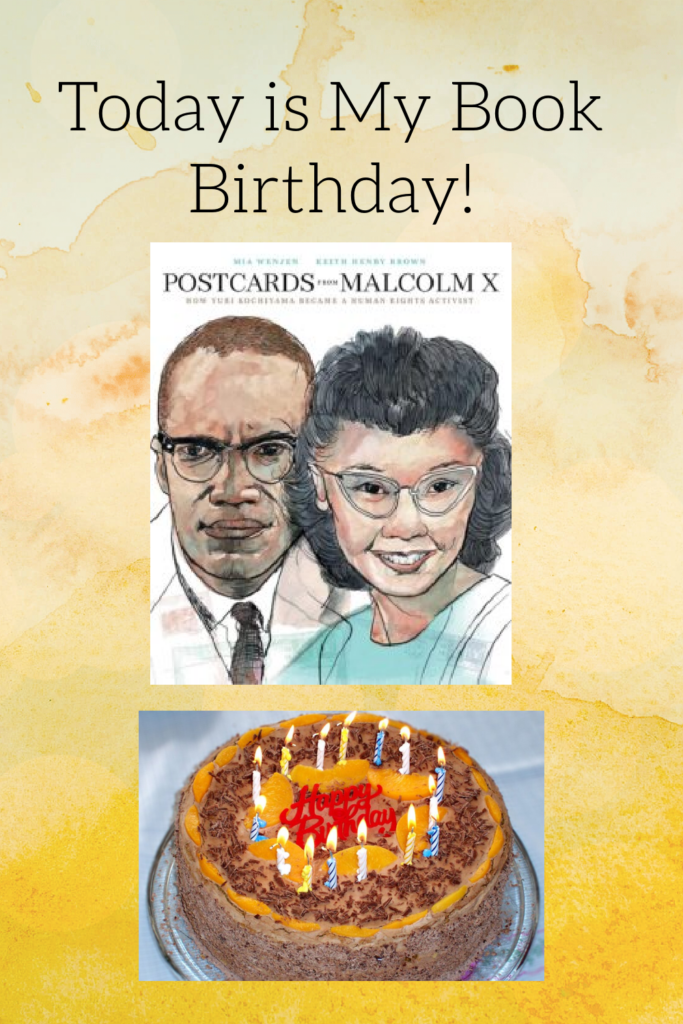
Today marks the official "book birthday" for Postcards from Malcolm X: How Yuri Kochiyama Became a Human Rights Activist, written by Mia Wenjen, illustrated by Keith Henry Brown, and published by Red Comet Press. Targeted at readers ages seven and up, this moving picture book biography chronicles the extraordinary life of Yuri Kochiyama—an ordinary Japanese American woman whose chance encounter with Malcolm X at a New York City courthouse in 1963 sparked a transformative, cross-racial friendship built on justice, solidarity, and hope.
Through accessible, narrative storytelling and evocative artwork, Postcards from Malcolm X introduces young readers to an unsung hero of the American civil rights movement. The book traces Kochiyama’s journey from a small-town California girl who initially believed racism did not exist, to a fearless human rights advocate shaped by the trauma of World War II internment and her father’s death at the hands of the FBI. Featuring original postcards sent to Kochiyama by Malcolm X during his international travels, extensive back matter, and a detailed historical timeline, the publication serves as both a powerful historical document and an inspiring call to action for the next generation of changemakers.
Detailed Chronology: The Evolution of an Activist
To understand the profound impact of the friendship between Yuri Kochiyama and Malcolm X, one must examine the distinct chronological phases of Kochiyama’s life and political awakening.
Born in a small California town, Kochiyama spent her early years as a self-described naive "All-American" girl. Free from the immediate, visible impacts of systemic oppression in her daily youth, she operated under the assumption that racism did not exist, or at the very least, that it did not touch her world. Her focus remained typical of a young student, completely unaware of the structural forces operating beneath the surface of American society.
The Crucible of World War II and Institutional Injustice
The outbreak of World War II shattered Kochiyama’s sheltered reality forever. Following the signing of Executive Order 9066, she and her family—alongside more than 120,000 Japanese Americans—were forcibly removed from their homes and incarcerated in American concentration camps. This state-sanctioned violation of civil liberties was compounded by profound personal tragedy: her father was arrested by the FBI immediately following the attack on Pearl Harbor, subjected to intense interrogation, and died shortly after his release due to the psychological and physical toll of his detention.
These devastating experiences burst the bubble of her youth, catalyzing her political awakening. However, rather than retreating into bitterness, Kochiyama channeled her growing awareness into action. Utilizing the strong writing and journalistic skills she had developed as a high school student, combined with exceptional social-emotional intelligence and an innate leadership style, she began building bridges and organizing within her community.
The Courthouse Encounter and the Harlem Movement
Relocating to New York City, Kochiyama immersed herself in the vibrant, high-stakes civil rights activism of Harlem. In 1963, a simple gesture—shaking Malcolm X’s hand at a Manhattan courthouse—changed the trajectory of her life.
At first, Malcolm X was understandably suspicious and guarded. As a prominent national figure and civil rights leader, he questioned the motivations of a Japanese American woman approaching him in a crowded courtroom. Cross-racial solidarity was fragile, and minority groups fighting overlapping fights often viewed one another with skepticism. However, Kochiyama proved her dedication through persistent action, showing up repeatedly to support Black civil rights initiatives without ever asking for personal recognition or credit.
Mentorship, Postcards, and Legacy
Over time, a deep mentorship and friendship blossomed. Kochiyama often noted that Malcolm X taught her more about the realities of activism than anyone else. While she possessed a passion for community work, Malcolm X possessed an unmatched ability to articulate the mechanics of structural racism, translating complex socio-political concepts into accessible lessons.
Recognizing her dedication, Malcolm X promised to write to Kochiyama during his next international trip. True to his word, he sent her a series of historical postcards from abroad—artifacts that now serve as a cornerstone of Wenjen’s picture book. Following Malcolm X’s tragic assassination, Kochiyama honored his legacy by developing educational curricula centered on his teachings, presenting them in schools to ensure that future generations understood his vision of human rights and equality.
Supporting Context & Metrics: Intersectional Solidarity in Children’s Literature
The publication of Postcards from Malcolm X arrives at a critical juncture in contemporary children’s literature, filling a vital gap in historical narratives regarding cross-racial alliances.
The Mechanics of Cross-Racial Bridges
Author Mia Wenjen has emphasized that her primary goal in writing the book was to showcase an authentic historical model of intersectional, cross-racial solidarity. In an era where marginalized communities often struggle to maintain unified fronts against systemic oppression, Kochiyama’s life offers a blueprint for coalition-building.
The initial friction between Kochiyama and Malcolm X highlights the raw difficulty of forming these bonds. Building trust across distinct ethnic and cultural lines requires vulnerability, accountability, and endurance. By capturing this dynamic, Wenjen provides young readers with a realistic depiction of what true allyship entails: it is not always seamless, but it is deeply transformative when grounded in mutual respect and shared objectives.
Expanding the Canon of Youth Activism
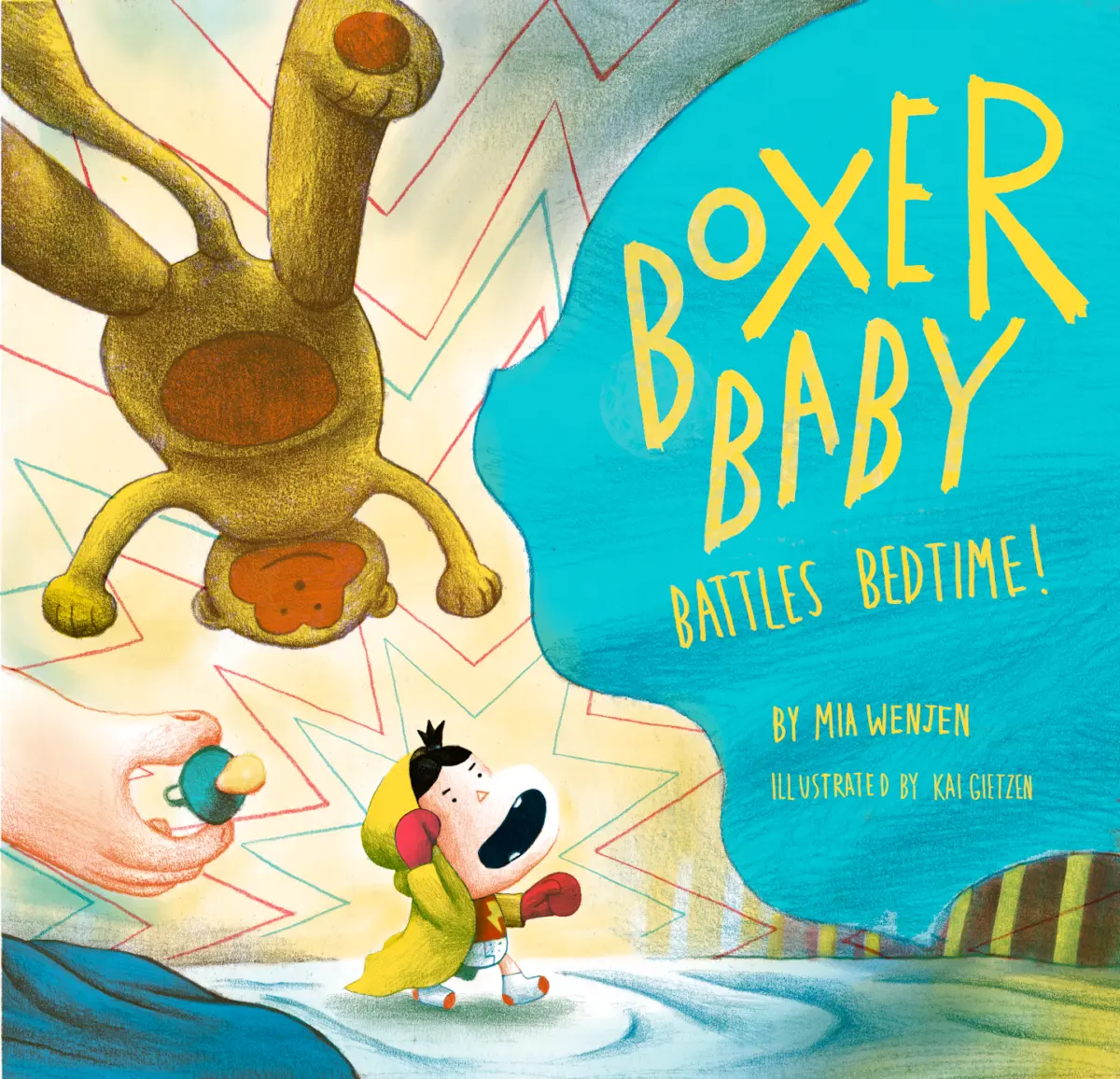
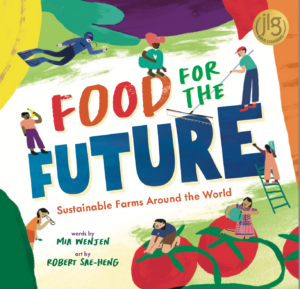
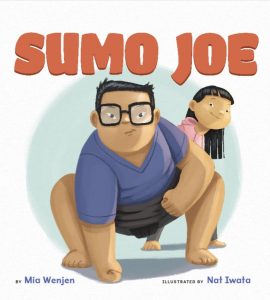
Postcards from Malcolm X is part of a broader, thriving ecosystem of works by Wenjen and fellow creators dedicated to empowering young activists. Wenjen’s extensive bibliography—including titles such as Barbed Wire Between Us (illustrated by Violeta Encarnación), Fortune Cookies for Everyone!, The Traveling Taco, We Sing from the Heart: How the Slants® Took Their Fight for Free Speech to the Supreme Court, Food for the Future: Sustainable Farms Around the World, and Changing the Game: Asian Pacific American Female Athletes—consistently highlights resilient figures who challenge injustice.
By introducing readers ages seven and up to complex historical figures like Yuri Kochiyama, these picture books democratize history, proving that children and ordinary individuals possess the capacity to reshape society.
Official Statements & Promotional Events
To celebrate the official launch of Postcards from Malcolm X, author Mia Wenjen has engaged with educators, librarians, and young readers through various digital platforms and community initiatives.
Author Insights on the Project
Reflecting on the core themes of the book, Wenjen noted:
"For this book, I wanted to show intersectional, cross-racial solidarity, as an example from the past that will hopefully inspire similar collaboration today and in the future. It was important to me to show Yuri Kochiyama’s activity journey… Malcolm X, she would state in her autobiography, was the person who taught her the most about activism. While she was an activist in her community in NYC’s Harlem area, she didn’t necessarily understand the levers that caused the racism she faced. Malcolm X understood structural racism and was a naturally gifted teacher who could make complicated concepts understandable."
Wenjen further emphasized the relevance of Kochiyama’s tenacity in overcoming initial barriers:
"I think this friendship is a realistic example of what it takes to cross racism barriers, even amongst minority groups fighting the same fight. Yuri had to prove herself to the Black Civil Rights activists by showing up, again and again, and doing the work (without asking for credit)… Yuri’s commitment serves as a role model for us all on what it takes to actually be able to support all causes, across all different ethnic groups. I hope this book inspires our children on how powerful uniting together can be, but also how difficult it is to create those ties."
Launch Celebrations and Giveaways
In honor of the book birthday, Wenjen has announced a special community giveaway, offering five free copies of Postcards from Malcolm X. Educators, parents, and literature advocates are invited to participate by leaving a comment outlining how they plan to utilize the book in classrooms, libraries, or home settings.
Additionally, the release is supported by a rich multimedia rollout, including an official book trailer, an unboxing feature, an exclusive Q&A with illustrator Keith Henry Brown, and a glowing review from the School Library Journal.
Future Outlook: Inspiring the Next Generation of Change
As educational institutions and literary communities increasingly embrace multicultural histories, Postcards from Malcolm X is positioned to become a staple resource in elementary and middle school classrooms. By examining the synergy between the Asian American civil rights movement and the Black freedom struggle, the book encourages young readers to look beyond isolated historical narratives and recognize the interconnected nature of human rights campaigns.
The inclusion of original primary sources—such as Malcolm X’s postcards—alongside Keith Henry Brown’s vivid illustrations ensures that historical figures are rendered not as distant bronze statues, but as living, breathing human beings who faced adversity, formed deep bonds, and fought tirelessly for a more just world. Through works like Wenjen’s, the legacy of Yuri Kochiyama will continue to educate, challenge, and inspire children to become active architects of a more equitable future.






Comments
Facebook App ID not configured. Please add it in the Customizer.