
Executive Overview
For decades, literary tradition maintained a strict divide between text and visual art. High literature relied almost exclusively on the evocative power of prose, relegating pictures to children’s books, technical manuals, or graphic novels. However, a profound shift has been unfolding across modern publishing: the intentional integration of photographs directly into adult fiction, poetry, and essayistic prose.
While many contemporary critics trace this trend to the late-20th-century surge in popularity of German author W.G. Sebald—whose 1990 novel Vertigo sparked widespread interest in photo-literary hybrids—an investigation into literary history reveals that the practice predates Sebald by nearly a century. Originating with French and Belgian Symbolist movements in the late 19th century, image-text literature has evolved into a diverse subterranean ecosystem.
Today, curatorial databases identify nearly 900 published books featuring embedded photography. Despite this rich body of work, the discipline lacks a unified history, formal guide, or standard taxonomy. As contemporary authors increasingly embrace visual media—using everything from grain-heavy snapshot photography and museum-grade color plates to QR codes, genetic encoding, and multi-column layouts—the literary landscape faces a fundamental transformation. Rather than serving as mere decoration, images in these hybrid works operate as active counter-narratives, altering how readers process syntax, temporal flow, and thematic meaning.
Read Also
Detailed Chronology: The Evolution of Image-Text Literature
The trajectory of photo-embedded literature reveals a historical narrative marked by moments of formal experimentation and shifting technological landscapes.
+-----------------------------------------------------------------------------------+
| HISTORICAL TIMELINE OF PHOTO-EMBEDDED LITERATURE                                  |
+-----------------------------------------------------------------------------------+
| 1892 | Georges Rodenbach publishes 'Bruges-la-Morte' (First photo-embedded novel) |
| 1928 | André Breton releases 'Nadja' (Surrealist autofiction with commissioned photos)|
| 1972 | Yves Bonnefoy publishes 'L'Arrière-Pays' (Poetic philosophy with image plates) |
| 1990 | W.G. Sebald releases 'Vertigo' (Catalyzes modern interest in photo-prose)  |
| 1995 | W.G. Sebald publishes 'The Rings of Saturn' (Standardizes text-image layout) |
| 2010 | Anne Carson releases 'Nox' (Accordion book box set of collaged archive)    |
| 2010 | Tan Lin publishes 'Seven Controlled Vocabularies' (Explores 'non-reading')  |
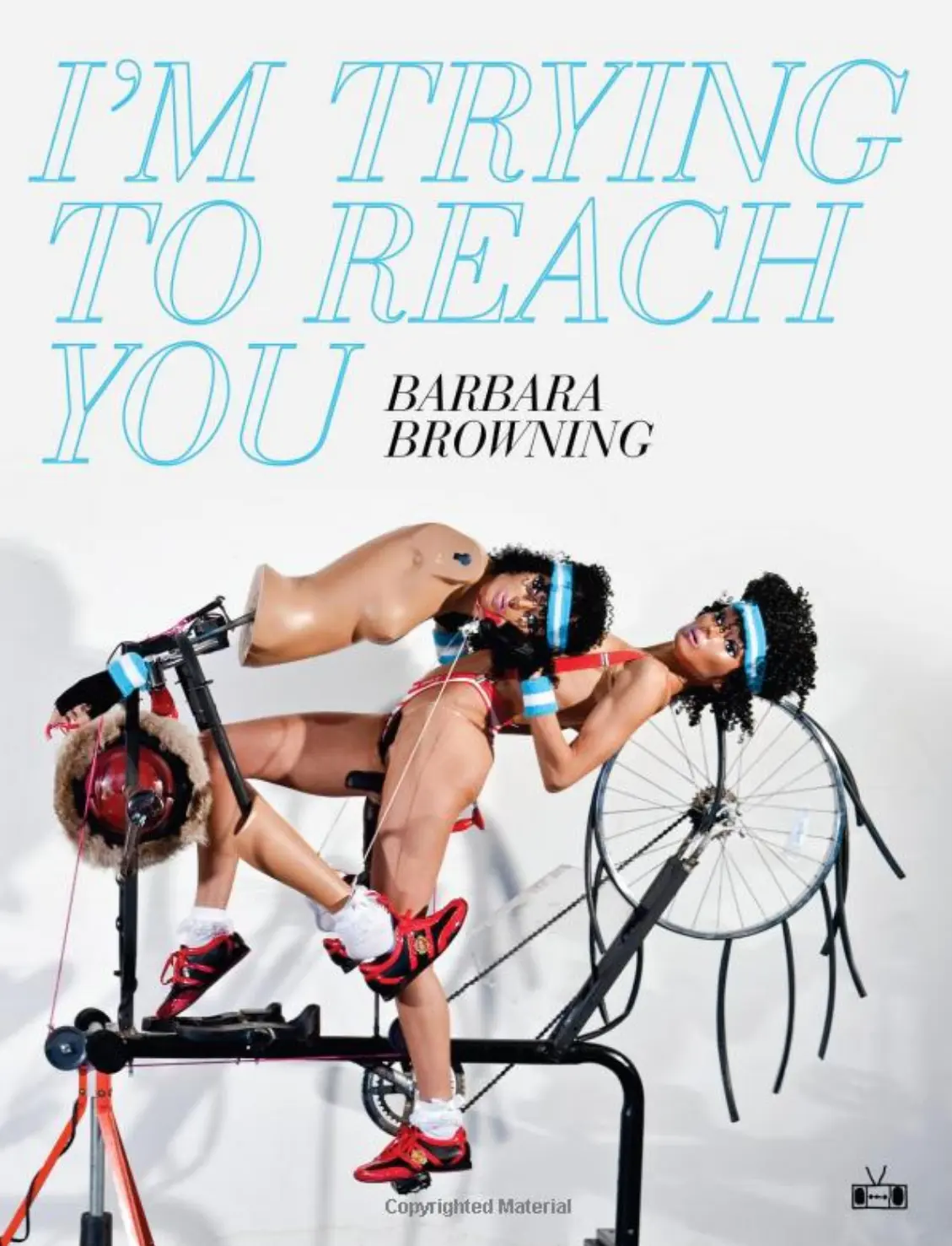
| 2012 | Barbara Browning publishes 'I'm Trying to Reach You' (Transmedia/YouTube QR)|
| 2014 | Claudia Rankine releases 'Citizen' (Visual art framing racial dialogue)    |
| 2015 | Christian Bök releases 'The Xenotext' (Bio-art poetry encoded into DNA)    |
| 2017 | Teju Cole releases 'Blind Spot' (Full-color high-gloss travel autofiction) |
+-----------------------------------------------------------------------------------+
1. The Precursors (1892–1928)
- 1892: Belgian Symbolist writer Georges Rodenbach publishes Bruges-la-Morte, widely recognized as the first novel explicitly designed by its author to incorporate photographs. Rodenbach included 35 photographs of Bruges to mirror his grieving protagonist’s spatial melancholy, setting a historical precedent.
- 1928: André Breton publishes Nadja, using real photographs commissioned of Paris landmarks, alongside drawings by Nadja herself. Breton sought to eliminate traditional literary description, relying instead on neutral documentary images to capture the surrealist experience.
2. The Mid-Century Transition and the Sebaldian Watershed (1970s–1990s)
- 1972: French poet Yves Bonnefoy publishes L’Arrière-Pays (The Back Country), employing black-and-white landscape photography alongside color art reproductions to construct a philosophical meditation on geography and memory.
- 1990–1995: W.G. Sebald releases Vertigo (1990), The Emigrants (1992), and The Rings of Saturn (1995). Sebald’s reliance on low-resolution, black-and-white photography embedded seamlessly within prose establishes a globally recognized visual vocabulary for literature addressing trauma, history, and memory.
3. Modern Experimental Diversity (2010–Present)
- 2010: Anne Carson releases Nox, an artist’s book format housed in a box with a continuous 30-foot accordion fold, combining translated Latin poetry with collaged family photographs, fragments, and personal artifacts.
- 2010: Tan Lin publishes Seven Controlled Vocabularies and Obituary 2004: The Joy of Cooking, using snapshots, receipts, and utility bills to interrogate digital non-reading and media consumption.
- 2012: Barbara Browning bridges analog print and digital video in I’m Trying to Reach You, incorporating cell phone photos, YouTube screenshots, and active QR codes linked to online dance performances.
- 2014: Claudia Rankine releases Citizen: An American Lyric, utilizing high-profile contemporary artworks by Black American artists to contextualize everyday racial microaggressions.
- 2015–2025: Canadian poet Christian Bök releases The Xenotext (Books 1 and 2), expanding visual poetry into bio-art by encoding poems into the DNA of extremophile bacteria, accompanied by molecular diagrams and protein models.
- 2017: Teju Cole publishes Blind Spot, replacing Sebaldian grayscale ambiguity with vibrant, full-page color photography paired with essayistic travel notes.
Supporting Context & Metrics: Formal Mechanics and Typology
Despite the common assumption that authors inclusion of images is an isolated novelty, quantitative and structural analysis reveals a dynamic, highly structured medium.
Cataloging the Scope: The Vertigo Archive
Curator and scholar Terry Pitts maintains a specialized archive titled Vertigo, dedicated to tracking works of poetry and fiction that utilize photographs. The repository now catalogs nearly 900 unique titles, demonstrating that photo-embedded literature is an established subgenre across global publishing rather than an occasional experiment.
           TYPOLOGY OF IMAGE-TEXT INTEGRATION IN MODERN LITERATURE

┌───────────────────────────┬───────────────────────────┬───────────────────────────┐
│     INTEGRATION TYPE      │     KEY MECHANIC          │    REPRESENTATIVE WORK    │
├───────────────────────────┼───────────────────────────┼───────────────────────────┤
│ Micro-Detail Inset        │ Low-res, inline B&W images│ W.G. Sebald, 10:04        │
│ High-Gloss Color Plate    │ Full-page facing plates   │ Teju Cole (Blind Spot)    │
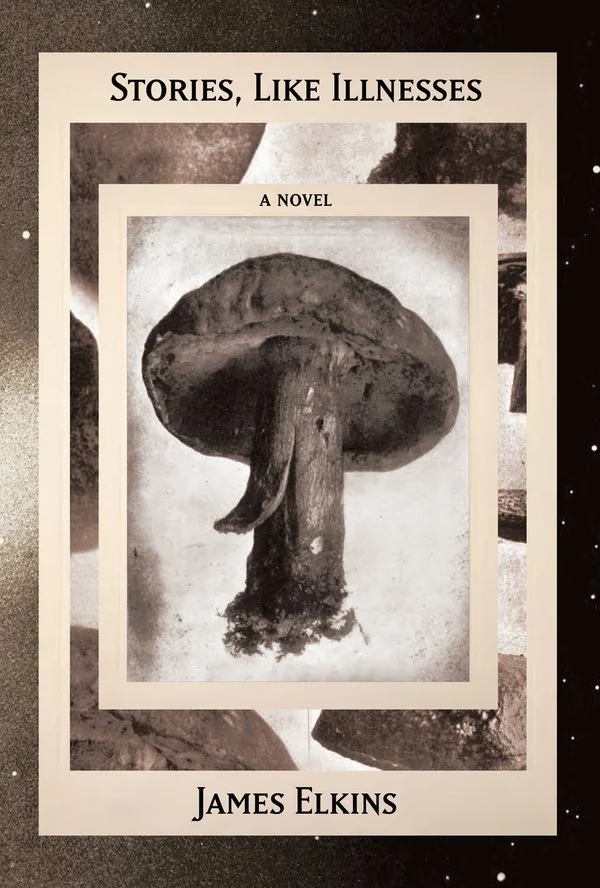
│ Spatial / Multi-Column    │ Marginal & multi-column   │ J. Elkins (5 Strange Lang)│
│ Material / Object Box     │ Accordion physical print  │ Anne Carson (Nox)         │
│ Transmedia / Hyperlink    │ QR Codes & Video Frames   │ B. Browning (Reach You)   │
│ Bio-Chemical Diagram      │ Molecular & DNA mapping   │ Christian Bök (Xenotext)  │
└───────────────────────────┴───────────────────────────┴───────────────────────────┘
Cognitive Impact: The Reader-Page Dynamics
The inclusion of visual material fundamentally changes how a reader processes narrative prose:
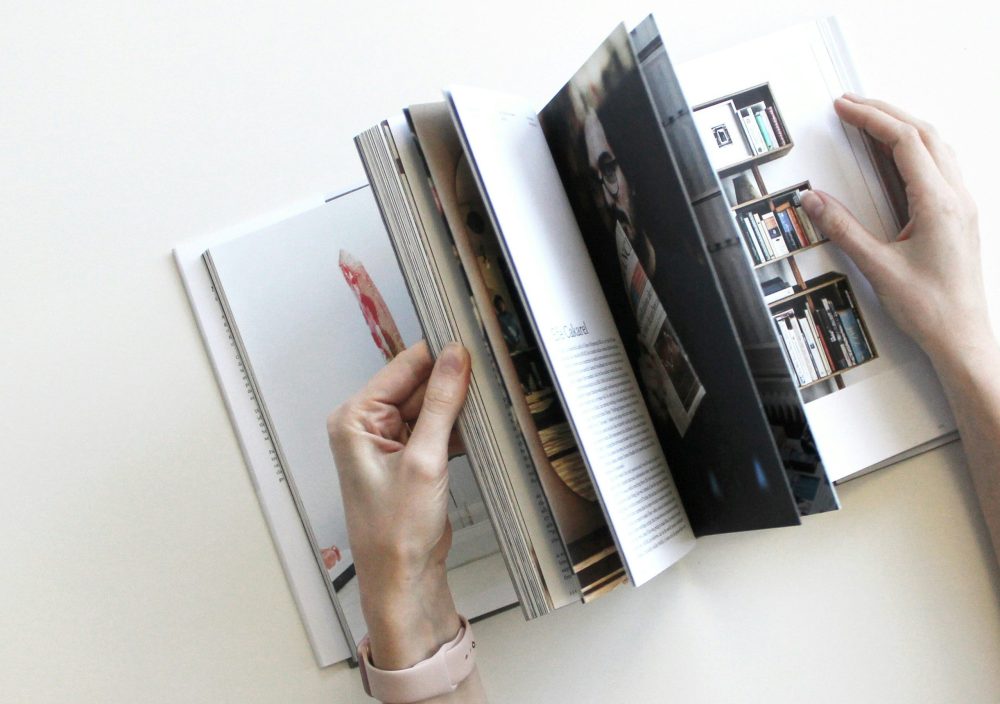
- Disruption of Linear Syntax: Readers do not merely read across a page; their eyes travel back and forth between text and image, testing detail, checking context, and analyzing visual-verbal "slant rhymes."
- Autonomous Meaning: Images rarely function as simple illustrations of written content. Instead, they often communicate in a distinct visual language—sometimes directly contradicting the narrator’s claims.
- Temporal Stasis vs. Narrative Drive: Photographs introduce a static visual "freeze," forcing readers to linger on spatial details while the linear momentum of the plot pauses.
Critical Perspectives & Case Analysis
To understand how authors use images beyond mere aesthetic accentuation, it is necessary to examine key texts that have defined and expanded the medium.
       Visual-Verbal Relationship Dynamics Across Key Texts

  Rodenbach (Bruges-la-Morte) ──► Spatial Melancholy / Atmospheric Echo
  Breton (Nadja)              ──► Anti-Descriptive / Documentary Precision
  Sebald (Rings of Saturn)    ──► Textual Timing (Anchor within 2 lines)
  Carson (Nox)                ──► Tactile Archival Grief / Material Collaging
  Cole (Blind Spot)           ──► High-Resolution Color / Pedagogical Analysis
  Browning (Reach You)        ──► Transmedia Bridging (Analog vs. Digital)
1. Spatial Melancholy: Georges Rodenbach’s Bruges-la-Morte (1892)
Rodenbach’s symbolist novel follows a widower wandering the deserted, stone-lined streets of Bruges, viewing the city’s canals and church spires as physical manifestations of his deceased wife. The included urban photographs establish a solemn atmosphere where the setting acts as a primary character.
Critical Note: A controversial 20th-century English translation published by Dedalus Books replaced Rodenbach’s original archival photographs with new photos taken by the translator. Literary critics widely panned this change, emphasizing that an author’s specific choices regarding image grain, framing, and period context are integral to the text’s narrative integrity.
2. Subverting Description: André Breton’s Nadja (1928)
Breton, the leading theorist of Surrealism, used commissioned photographs of Parisian streets, hotels, and objects to eliminate traditional descriptive passages. By letting photographs handle physical settings, Breton freed his prose to focus on internal states, coincidence, and psychological encounter. The text also includes unannotated reproductions of drawings created by Nadja herself, presenting primary evidence of her mental decline without explicit diagnostic framing.
3. Precision Engineering of Layout: W.G. Sebald’s The Rings of Saturn (1995)
Sebald refined a systematic visual strategy across his works. In The Rings of Saturn, grainy images of coastal landscapes, historical records, and literary portraits are tightly woven into the narrative layout.
SEBALD'S LAYOUT TECHNIQUE:
[Text Line 1: Explicit textual anchor / subject identification]
[Text Line 2: Lead-in description]
┌─────────────────────────────────────────────────────────┐
│                                                         │
│               Embedded Grayscale Image                  │
│                                                         │
└─────────────────────────────────────────────────────────┘
[Text Line 4: Narrative continuation]
[Text Line 5: Reflective prose]
Sebald explicitly timed image placement in both German and English editions, ensuring that the subject of an image was named within two lines before or after the image appeared. This spatial technique allows readers to glance smoothly across visual elements without breaking their reading rhythm, creating a seamless, hypnotic blend of travelogue, history, and memoir.
4. Materiality as Elegy: Anne Carson’s Nox (2010)
Formated as a folded accordion scroll housed in a solid box, Carson’s Nox acts as a replica of a handmade notebook created to mourn her deceased, estranged brother. The work features collaged family photographs, torn letters, paint smears, and systematically dictionary-analyzed fragments of a Latin poem by Catullus.
The physical mechanics of the book force the reader into a tactile encounter with grief, transforming the act of reading into an unrolling archival excavation.
5. High-Gloss Autofiction: Teju Cole’s Blind Spot (2017)
In contrast to Sebald’s muted, low-resolution aesthetic, Teju Cole’s Blind Spot uses high-resolution, full-page color photography printed on coated stock, paired with quiet narrative passages on facing pages. Cole, who taught photography at Harvard University, adopts an instructional approach. He guides the reader’s eye through composition, historical context, and political nuance, turning the book into an extended lesson in visual literacy.
6. Transmedia Integration: Barbara Browning’s I’m Trying to Reach You (2012)
Browning pushes hybrid literature across medium boundaries by embedding YouTube video screenshots, cell phone pictures, and functional QR codes alongside her prose. The plot centers on a series of mysterious dance performances posted online by a user known as "the moth."
Readers who follow the QR codes encounter real YouTube videos, complete with live view counts, comment sections, and digital metadata. This creates an unsettling crossover between print fiction and digital reality, where the number of video views serves as an external metric of reader engagement over time.
Future Outlook: The Next Frontier of Visual Storytelling
As traditional publishing shifts in response to digital media, image-text hybridity is set to expand beyond simple illustration, driving innovation across several key areas:
                  EMERGING VECTORS IN IMAGE-TEXT LITERATURE

  ┌─────────────────────────┐     ┌─────────────────────────┐
  │ Multi-Column Spatial    │     │ Dynamic Transmedia      │
  │ Layouts                 │     │ Storytelling            │
  │ (e.g., Elkins' 'Five    │     │ (QR Codes, Web Video,   │
  │  Strange Languages')    │     │  Real-Time Metadata)    │
  └────────────┬────────────┘     └────────────┬────────────┘
               │                               │
               └───────────────┬───────────────┘
                               │
                               ▼
  ┌─────────────────────────────────────────────────────────┐
  │             Next-Gen Hybrid Literature                  │
  ├─────────────────────────────────────────────────────────┤
  │ • Synthetic and Generative Media Integration           │
  │ • Biological Encoding & Bio-Art (Christian Bök)         │
  │ • Academic Codification of Image-Text Theory            │
└─────────────────────────────────────────────────────────┘- Spatial and Multi-Column Layouts: Authors are increasingly challenging the traditional top-to-bottom, single-column page format. Recent projects, such as James Elkins’ Five Strange Languages project (including Stories, Like Illnesses), utilize multi-column formats where images appear within margins, across column breaks, or simultaneously on both edges of a page to mimic sensory overload, cognitive fracture, and physical disorientation.
- Bio-Art and Non-Human Authorship: The conclusion of Christian Bök’s The Xenotext highlights an emerging movement toward non-human and biological media. Encoding poetry into living organisms, which then react by generating complementary genetic sequences, redefines the book into a biological, biochemical visual artifact.
- Integration of Synthetic Media: As generative AI and synthetic imaging become widespread, literature will likely see an influx of artificially generated visual artifacts, challenging traditional notions of photographic truth, memory, and archival documentation.
- Academic and Theoretical Codification: The cataloging of nearly 900 works by curators and scholars marks the beginning of a dedicated field of literary criticism. As creative writing programs integrate image-text theory into their curricula, future writers will engage with photography not as an afterthought or embellishment, but as a core element of narrative construction.
Ultimately, embedded photography forces both writers and readers to re-examine the capabilities and limits of language. When words are paired with concrete visual images, the resulting tension creates a distinct form of storytelling—one where the reader’s eye continually moves between text and picture, caught in the space between what can be described and what can only be seen.

Comments
Facebook App ID not configured. Please add it in the Customizer.