

Executive Overview
As autumn heralds the contraction of daylight and the arrival of cooler temperatures, literary readership traditionally experiences a pronounced shift toward dark fiction, gothic narrative, and psychological horror. While cinematic horror relies heavily on auditory cues and visual jump scares, textual horror operates through a distinct cognitive mechanism: it forces the reader’s imagination to actively co-construct the uncanny space.
An examination of recent archival selections from prominent literary imprints Recommended Reading and The Commuter reveals a sophisticated landscape of short-form dark fiction. Far from relying on simple monsters or seasonal tropes, contemporary writers are deploying horror as an analytical tool to interrogate domestic fragility, historical trauma, grief, bodily autonomy, and urban decay.
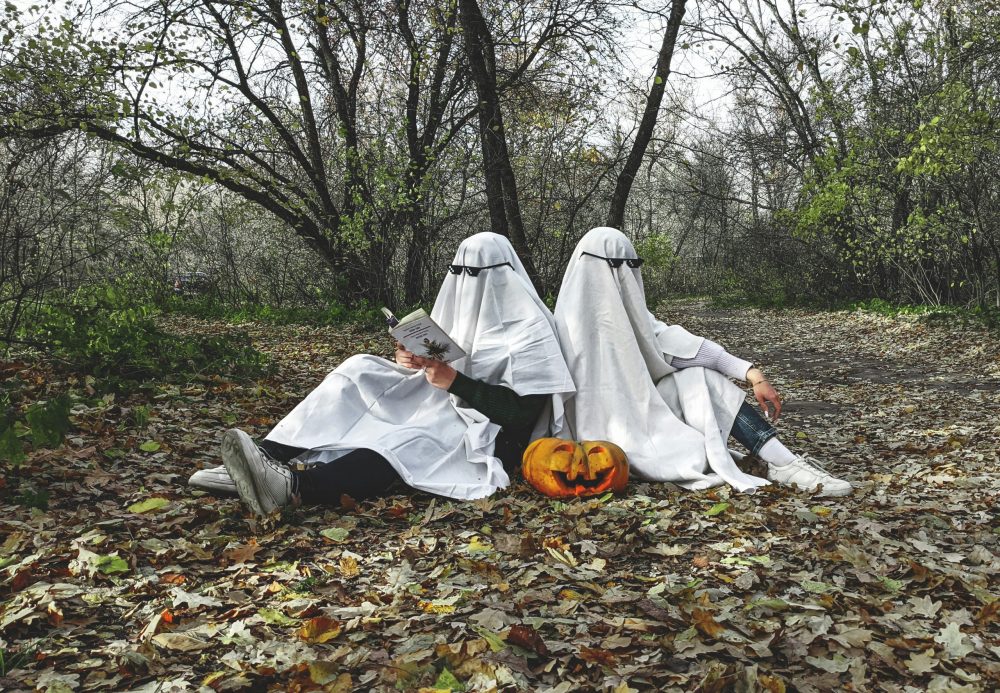
This report provides a comprehensive analysis of nine key texts curated for the autumn season. It evaluates their narrative architecture, thematic resonance, and contribution to the evolving canons of contemporary horror, Latin American Gothic, and speculative poetry.
Read Also
+-----------------------------------------------------------------------------------+
|                        THEMATIC LANDSCAPE OF AUTUMN HORROR                        |
+------------------------------+----------------------------------------------------+
| Narrative Sub-Genre          | Core Psychological / Societal Drivers              |
+------------------------------+----------------------------------------------------+
| Domestic Uncanny             | Intergenerational trauma; betrayals of care        |
| Latin American Gothic        | Historical epidemic memory; class & urban decay    |
| Cosmic / Wilderness Horror   | Subversion of nostalgia; predatory human nature    |
| Agricultural Horror          | Geographic isolation; fragile romantic dynamics    |
| Suburban Folk Horror         | Ritualistic youth culture; suppressed maternal past|
| Poetic Body & Flash Fiction  | Grief, bodily decay, and post-mortem identity      |
+------------------------------+----------------------------------------------------+
Detailed Chronology of the Dark Narrative Spectrum
A detailed breakdown of the selected works demonstrates how contemporary authors structure tension, construct settings, and manipulate narrative perspective to achieve horror across varying lengths and sub-genres.

                                 NARRATIVE SPECTRUM

 Flash Fiction / Poetry           Short Fiction                  Gothic / Horror
 [ Watson | Gregory | Croal ] ---> [ Evenson | Barron | Lynas ] ---> [ Enriquez | McMahon ]
 [ Martinello               ]
1. Brian Evenson: "Good Night, Sleep Tight"
- Core Sub-Genre: The Domestic Uncanny & Intergenerational Trauma
- Narrative Mechanics: Brian Evenson disdains overt gore in favor of psychological instability. The narrative follows an adult protagonist preparing to take his wife and son to visit his childhood home. The central tension stems from the protagonist’s recollections of his mother, who routinely tucked him in with cozy stories, but occasionally substituted them with deeply terrifying tales.
- Analytical Assessment: Evenson explores the vulnerability inherent in childhood trust. The terror does not emerge from a monster under the bed, but from the authority figure responsible for safety. By introducing the fear that these terrifying narratives will be transmitted to the next generation, Evenson frames narrative terror as a infectious, inheritable trait.
2. Mariana Enriquez: "The Dirty Kid"
- Core Sub-Genre: Latin American Gothic & Socio-Urban Decay
- Narrative Mechanics: Set in a deteriorating neighborhood in Buenos Aires, Enriquez grounds her horror in historical reality. The setting was once inhabited by 19th-century aristocrats who fled a yellow fever epidemic, leaving ornate, gargoyle-adorned mansions to rot. Today, the area is populated by the unhoused, forgotten, and marginalized.
- Analytical Assessment: When an unhoused woman and her child living on the narrator’s doorstep suddenly disappear, the investigation transcends a standard crime story. Enriquez merges real-world socioeconomic inequality with sinister, supernatural undercurrents. The decayed mansions serve as a physical metaphor for forgotten trauma, making the setting itself a primary antagonist.
3. Laird Barron: "Tiptoe"
- Core Sub-Genre: Cosmic Wilderness Dread & Subverted Nostalgia
- Narrative Mechanics: Laird Barron utilizes the framing device of an adult protagonist re-evaluating a past family camping trip. The protagonist initially insists his upbringing was wholesome and free of psychological harm, yet he seeks medical explanations for a distressing condition he has developed.
- Analytical Assessment: Barron’s horror relies on slow pacing and claustrophobic wilderness settings. The narrative exposes the predatory, animalistic impulses lurking beneath civilized human interactions. The threat in "Tiptoe" does not confront the characters directly around the campfire; instead, it stalks the periphery, gradually forcing the protagonist—and the reader—to realize that childhood memories have been selectively sanitized to protect sanity.
4. JG Lynas: "King of All Hogs"
- Core Sub-Genre: Isolationist Rural Horror & Interpersonal Breakdown
- Narrative Mechanics: The narrative establishes classic horror tropes: an isolated farmhouse in a rural landscape, an unhinged elderly couple, a decrepit barn, and a persistently ringing landline phone. The protagonist and her boyfriend, Mark, travel to an obscure pig farm Mark discovered on an obscure online forum, uninvitedly staying for dinner.
- Analytical Assessment: Lynas builds tension by pairing the external threat of the isolated farm with the internal decay of the central couple’s relationship. The horror is amplified by asymmetric information: the protagonist realizes too late that her partner’s obsession with the farm is rooted in an unwholesome impulse. The persistent, unanswered telephone acts as an auditory countdown, heightening the claustrophobia of the setting.
5. Jennifer McMahon: "Hannah-Beast"
- Core Sub-Genre: Suburban Folk Horror & Intergenerational Guilt
- Narrative Mechanics: Set on Halloween night, thirteen-year-old Erin prepares to go trick-or-treating wearing the "Hannah-beast" costume: thick blue face paint, a clown wig, and a silver cape. Her mother, Amanda, responds with intense distress, forbidding the costume because it references a tragic local legend from her own youth.
- Analytical Assessment: McMahon employs dual timelines to examine how unresolved childhood trauma resurfaces across generations. The Halloween costume acts as an avatar through which suppressed history invades the present. The narrative demonstrates that parental overprotectiveness often stems from hidden guilt, positioning the small town’s folklore not as harmless tradition, but as an active, unhealed wound.
6. Zebbie Watson: "The Bone Friend"
- Core Sub-Genre: Poetic Body Horror & Post-Mortem Romance
- Narrative Mechanics: This flash fiction piece follows a teenage girl who unearths a human skeleton and initiates a romantic relationship with it. Uniquely, the story is narrated from the perspective of the skeletal remains.
- Analytical Assessment: Watson subverts classic romantic tropes by adopting the viewpoint of the deceased. The skeleton experiences sensory deprivation and existential confusion, attempting to navigate intimacy without fleshy organs while longing to comprehend its past life. Watson combines macabre imagery with lyrical prose, creating a study of loneliness and human attachment.
7. Hannah Gregory: "Fucking Ghosts!"
- Core Sub-Genre: Erotic Speculative Flash & Spectral Grief
- Narrative Mechanics: Gregory introduces a narrator visited every October by the phantom of a former lover. The spectral presence manifests as a sudden drop in ambient temperature, driving the protagonist into secretive sexual encounters in public spaces like bar bathrooms.
- Analytical Assessment: Gregory uses irreverent humor and explicit situations to explore the lingering physical memory of grief. The phantom is not a terrifying entity to be exorcised, but a manifestation of unresolved longing. The narrative shifts from comedy to emotional resonance when the protagonist encounters another individual who shares the burden of lingering spectral romance, illustrating how grief isolates people until shared experiences bring validation.
8. Lyndsey Croal: "The Bone Hermit"
- Core Sub-Genre: Ecological Macabre & Body Horror
- Narrative Mechanics: In this piece of flash fiction, a widow disposes of her deceased husband’s body in a secluded coastal cove. Horror develops when a hermit crab takes residence within the submerged skeleton, slowly migrating parts of the remains back to the widow’s home.
- Analytical Assessment: Croal delivers a unsettling exploration of nature’s indifference to human grief. The imagery of the creature peering through the eye sockets of the husband’s skull highlights the breakdown between human remains and the marine ecosystem. The story suggests that attempts to bury or hide past loss are often undermined by natural processes.
9. Domenica Martinello: "I Pray in Screamers House of Horrors"
- Core Sub-Genre: Visceral Poetic Horror & Metaphorical Confinement
- Narrative Mechanics: As the opening piece in a poetry sequence, Martinello draws parallels between a commercial haunted house attraction and the internal struggle of addiction and recovery.
- Analytical Assessment: Utilizing visceral, claustrophobic imagery, Martinello traps the reader within scenes of physical distress. The commercial horror space serves as a metaphor for the cyclical nature of dependence and recovery. The poem poses a troubling question: whether the promise of escape and healing represents genuine hope or merely another illusion designed to prolong psychological distress.
Supporting Context & Metrics of Modern Horror Literature
The enduring appeal of short-form horror during seasonal transitions relies on specific structural and psychological factors. Comparative analysis of short fiction versus long-form novels reveals distinct narrative advantages:
+-----------------------------------------------------------------------------------+
|                        STRUCTURAL COMPARISON OF HORROR MEDIA                      |
+--------------------------+----------------------------+---------------------------+
| Attribute                | Short Horror Fiction       | Long-Form Novels / Cinema |
+--------------------------+----------------------------+---------------------------+
| Narrative Velocity       | High; immediate in media   | Moderate; extended setup  |
| Resolution Style         | Ambiguous; lingering fear  | Conclusive; cathartic     |
| Reader Involvement       | High cognitive decoding    | Passive consumption       |
| Pacing Mechanism         | Compression of detail      | Atmosphere accumulation   |
+--------------------------+----------------------------+---------------------------+
Cognitive Mechanics of Textual Horror
Textual horror relies heavily on das Unheimliche—the uncanny—a psychological concept where the familiar becomes strange and threatening.
- Information Restriction: Unlike film, which visually defines the monster, text allows the writer to withhold key sensory details. In Evenson’s and Barron’s works, the horror occurs in the gaps between narrative statements, forcing the reader’s mind to fill the void.
- Atmospheric Compression: Flash fiction pieces like those by Croal and Watson compress complex emotional states (grief, loneliness) into isolated images. This high-density storytelling delivers psychological impact rapidly, lingering long after reading.
- Subversion of Domestic Spaces: A central theme across these selections is the corruption of safe spaces. Farmhouses, childhood bedrooms, family camping trips, and suburban neighborhoods are systematically dismantled, reflecting real-world anxieties about instability within basic support structures.
Official Statements & Critical Literary Reception
Literary scholars and editors emphasize the cultural importance of horror fiction during periods of broader societal uncertainty.
Editorial curators at publications such as Recommended Reading and The Commuter note that dark fiction serves as a crucial space for emotional processing:
"The power of short fiction lies in its ability to bypass standard defenses. When a reader engages with a story about dark woods or family secrets, they are not merely seeking a thrill; they are engaging in a controlled exploration of real-world anxieties—loss, illness, decay, and betrayal."
Critical reception of writers like Mariana Enriquez and Brian Evenson underlines a broader shift within the genre. Contemporary horror has increasingly moved away from simple morality tales where evil is punished. Modern critical consensus highlights that today’s premier horror writers use the genre to examine complex socio-political issues:

- On Latin American Gothic: Critics note that Mariana Enriquez’s work demonstrates how real historical trauma—such as epidemics, dictatorships, and extreme economic inequality—naturally manifests as gothic horror.
- On Minimalist Horror: Scholars of Brian Evenson’s work observe that his stripped-down prose removes comfort, forcing readers to confront psychological uncertainty without the reassurance of conventional narrative resolution.
Future Outlook: The Evolving Landscape of Dark Short Fiction
The selections from Recommended Reading and The Commuter highlight several key trends shaping the future of horror and dark speculative prose:
                  FUTURE TRENDS IN DARK SHORT FICTION

  +-----------------------+     +-----------------------+
  |  Ecological Realism   |     | Cross-Genre Hybridity |
  | Natural world as an   | --> | Merging horror with   |
  | indifferent agent     |     | romance, comedy, etc. |
  +-----------------------+     +-----------------------+
              |                             |
              v                             v
  +-----------------------+     +-----------------------+
  | International Gothic  |     | Flash Fiction Growth  |
  | Regional histories    |     | High-density, rapid   |
  | shaping dark fiction  |     | digital consumption   |
+-----------------------+ +-----------------------+- Integration of Ecological Horror: Works like Lyndsey Croal’s "The Bone Hermit" point to a growing sub-genre where the non-human natural world acts as an indifferent, relentless agent that reclaims human remains, reflecting contemporary environmental anxieties.
- Cross-Genre Hybridization: The rigid boundaries separating horror from romance, comedy, or literary fiction continue to dissolve. Authors such as Hannah Gregory ("Fucking Ghosts!") and Zebbie Watson ("The Bone Friend") demonstrate that spectral motifs can effectively frame explorations of intimacy, humor, and grief.
- Global and Regional Gothic Traditions: The popularity of international voices like Argentina’s Mariana Enriquez underscores a demand for horror rooted in specific local histories and non-Western folklore, enriching the broader genre landscape.
- Ascendancy of Digital Flash Fiction: As reading habits adapt to digital platforms, short-form horror and flash fiction are positioned to grow. The format’s brevity allows for intense psychological impact, making digital literary journals key drivers of genre innovation.
In summary, the short fiction selected for this season demonstrates that dark literature remains a dynamic, essential medium. By transforming abstract fears into evocative prose, these writers provide readers with more than seasonal entertainment: they offer a powerful framework for examining the unsettling realities of the human condition.


Comments
Facebook App ID not configured. Please add it in the Customizer.