
Executive Overview
For the vast majority of the global workforce, employment is not merely an economic transaction; it is the central organizing structure of human existence. A standard 40-hour workweek consumes approximately one-third of an individual’s waking hours. When factored alongside commutes, off-the-clock digital availability, workplace-induced anxiety, and domestic decompression, labor claims upward of half of a person’s conscious life.
Despite this immense commitment of time and psychological energy, the granular reality of the daily grind is rarely discussed with analytical depth. Society frequently treats occupational routine as banal, choosing to obscure the underlying tensions, micro-dramas, political maneuvering, and quiet existential crises that define the workplace.
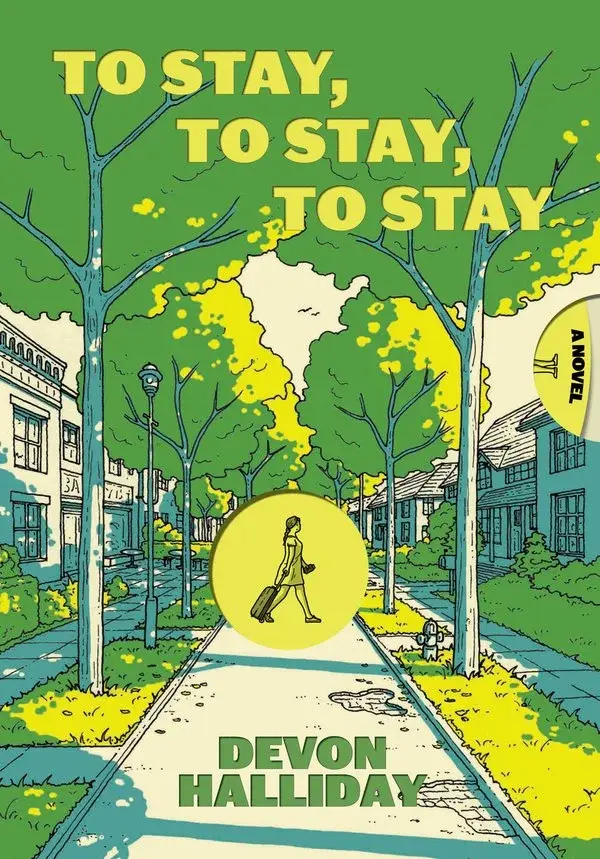
However, a rising tide of contemporary literature is turning its lens directly toward this pervasive obscurity. Led by works such as the debut novel To Stay, To Stay, To Stay—which examines the minute-by-minute occupational rhythms of an Appalachian Ohio community—authors are dismantling the myth of work as unexamined background noise. By analyzing eight seminal and contemporary novels that scrutinize labor across diverse industries—ranging from academic precarity and retail survival to corporate inertia, entertainment production, and speculative post-human space travel—this investigation reveals how literature dissects the psychological, emotional, and structural mechanics of modern employment.
Read Also
Detailed Chronology: The Literary Evolution of Workplace Realism
The representation of labor in fiction has evolved from early social realism into complex psychological, absurdist, and speculative critiques of capital. The following chronological lineage illustrates how authors across eras and geographies have captured the relentless cadence of the workplace.
+-----------------------------------------------------------------------------------+
|                            EVOLUTION OF WORKPLACE FICTION                         |
+-----------------------------------------------------------------------------------+
|  1957 | Bernard Malamud | "The Assistant"                                         |
|       | -> Granular retail survival & immigrant small-business minutiae           |
+-----------------------------------------------------------------------------------+
|  1965 | John Williams | "Stoner"                                                  |
|       | -> Academic bureaucracy, departmental warfare, and vocational devotion   |
+-----------------------------------------------------------------------------------+
|  2018 | Ling Ma | "Severance"                                                     |
|       | -> Late-stage corporate inertia & apocalyptic pandemic routine            |
+-----------------------------------------------------------------------------------+
|  2019 | Halle Butler | "The New Me"                                              |
|       | -> Millennial temp-agency precarity & corporate culture hollowness        |
+-----------------------------------------------------------------------------------+
|  2020 | Kikuko Tsumura | "There’s No Such Thing as an Easy Job"                   |
|       | -> Burnout, workplace surveillance, & the illusion of low-stress labor    |
+-----------------------------------------------------------------------------------+
|  2020 | Olga Ravn | "The Employees"                                               |
|       | -> Speculative post-human labor, corporate metrics, & lost humanity       |
+-----------------------------------------------------------------------------------+
|  2024 | Maria Adelmann | "The Adjunct"                                            |
|       | -> Higher education gig economy, financial precarity, & institutional dread|
+-----------------------------------------------------------------------------------+
|  2024 | Jenny Tinghui Zhang | "Superfan"                                          |
|       | -> Industrialized stardom, hyper-regulated schedules, & parasocial labor  |
+-----------------------------------------------------------------------------------+
1. Mid-Century Retail Realism: The Assistant by Bernard Malamud (1957)
Malamud’s classic novel grounds itself in the obsessive accounting of a struggling neighborhood grocery store. The narrative turns minor monetary fluctuations—whether the shop earns $1.25 or $1.50 on a given day—into matters of existential significance. When a mysterious assistant named Frank joins the store, sales incrementally rise, yet the underlying grind of small-business ownership remains unsparing. Malamud establishes that retail labor is not merely physical effort, but an ongoing test of moral endurance and financial micro-management.
2. The Institutional Siege: Stoner by John Williams (1965)
Williams turns the quiet hallways of academia into a battlefield of attrition. Following the life of Midwestern professor William Stoner, the novel documents how passion for literature is steadily squeezed through the gears of university politics, petty departmental feuds, and bureaucratic warfare. Stoner demonstrates that even professions widely viewed as intellectual sanctuaries are governed by administrative friction and thankless labor.
3. Corporate Inertia in Crisis: Severance by Ling Ma (2018)
Ma’s novel bridges dystopian fiction and corporate satire. Set against the backdrop of a global pandemic (the "Shen Flu"), the protagonist, Candace Chen, coordinates the offshore printing of specialty bibles for a New York publishing house. As society collapses around her, Candace continues commuting to her office, bound by corporate inertia, automated email schedules, and the promise of a lucrative severance bonus. Ma highlights how modern employment induces a hypnotic state of compliance that persists even amidst societal decay.
4. Temp-Work Precarity and Millennial Malaise: The New Me by Halle Butler (2019)
Butler presents an unsparing portrait of administrative temp work through thirty-something protagonist Millie. Locked in a cycle of short-term secretarial assignments, Millie encounters the performative optimism and structural hollowness of corporate offices. The novel illustrates how precarious employment strips workers of agency, leaving them alienated from both their colleagues and their own ambitions.
5. Burnout and Emotional Capitalism: There’s No Such Thing as an Easy Job by Kikuko Tsumura (2020)
Translated by Polly Barton, Tsumura’s narrative follows a Japanese worker seeking low-stress, low-responsibility positions following a debilitating episode of professional burnout. From monitoring surveillance feeds of a reclusive author to hanging municipal posters, the protagonist discovers that no modern job is immune to emotional labor, organizational dysfunction, and unsolicited colleague intensity. Tsumura exposes the myth of the "frictionless job" in contemporary society.
6. Speculative Labor and Post-Humanity: The Employees by Olga Ravn (2020)
Ravn structures her sci-fi novel as a series of workplace witness statements collected from humans and humanoids aboard a deep-space research vessel. Tasked with maintaining alien objects, both organic and synthetic workers exhibit signs of existential grief, nostalgia, and mounting frustration with corporate metrics. Ravn’s work asks a fundamental question: when productivity becomes the ultimate metric of existence, what remains of human consciousness?
7. Higher Education as a Gig Economy: The Adjunct by Maria Adelmann (2024)
Adelmann tackles the modern crisis of higher education through Sam, an adjunct instructor balancing five classes across multiple campuses while burdened by debt, parking fees, and endless grading. The Adjunct captures the hyper-fragmentation of modern academic labor, where highly credentialed professionals are subjected to gig-economy conditions under the distant promise of tenure-track stability.
8. Industrialized Stardom and Parasocial Work: Superfan by Jenny Tinghui Zhang (2024)
Zhang demystifies the music industry by framing pop stardom as a high-intensity assembly line. Following an internationally famous boy band, Superfan detailing the grueling physical routines, controlled media appearances, and hyper-curated social media outputs required to maintain parasocial fan relationships. The novel illustrates that entertainment is an industry defined by rigid schedules and unrelenting emotional production.
Supporting Context & Metrics: Quantifying the Occupational Burden
To understand the narrative weight these novels carry, it is necessary to examine the structural metrics of contemporary labor. The psychological friction depicted in workplace fiction corresponds directly to quantitative economic realities.
The Lifetime Work Allocation Metric
Assuming a standard 40-year career from age 22 to 62:
$$textDirect Work Hours = 40 text hours/week times 50 text weeks/year times 40 text years = 80,000 text hours$$
$$textCommute Time (Avg 1 hr/day) = 5 text hours/week times 50 text weeks/year times 40 text years = 10,000 text hours$$
$$textTotal Direct Workplace Commitment = 90,000 text hours$$
When accounting for cognitive off-duty tasks—such as checking correspondence outside shift hours, preparing work attire, and managing occupational stress—an individual surrenders over 50% of their total conscious adult life to professional maintenance.
+-------------------------------------------------------------------------------+
|                       ESTIMATED ADULT CONSCIOUS TIME                          |
+-------------------------------------------------------------------------------+
| [===================] Direct Work & Commute (~50%)                           |
| [=============] Personal Life, Family & Leisure (~35%)                       |
| [====] Off-Clock Occupational Stress & Work Prep (~15%)                       |
+-------------------------------------------------------------------------------+
The Invisible Burden: Emotional Labor and Precarity
Contemporary workplace literature heavily emphasizes the rise of emotional labor—a term coined by sociologist Arlie Hochschild to describe jobs that require workers to display specific, curated emotions as part of their duty.
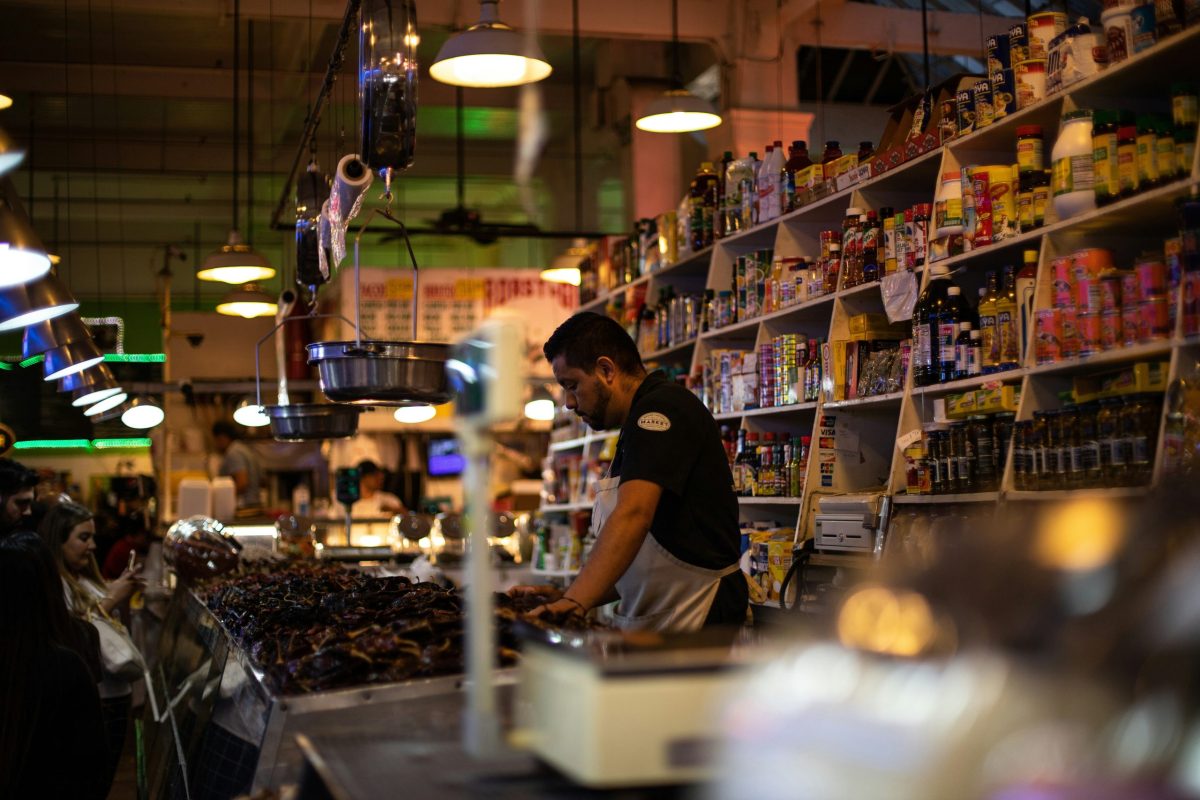
- Retail & Service (e.g., The Assistant, To Stay, To Stay, To Stay): High volumes of interpersonal exchanges requiring sustained pleasantness regardless of personal state or compensation.
- Corporate & Gig Administration (e.g., There’s No Such Thing as an Easy Job, The New Me): Compulsory alignment with corporate culture, enthusiasm metrics, and professional performativity.
- Entertainment & Public Relations (e.g., Superfan): Continuous maintenance of a curated persona to preserve commercial viability across broadcast and digital platforms.
Official Statements & Critical Commentary
Literary critics and authors alike emphasize that focusing on the granular details of work transforms routine labor into a lens for broader societal analysis.
In her introduction to the themes behind To Stay, To Stay, To Stay, the novel’s author underscores the paradoxical nature of how work is perceived versus how it is experienced:
"We act as though work is boring, and yet, at every job I’ve ever held, my workday has been filled with tiny bursts of drama, ferocious irritations, minor victories, and long-standing power struggles… I wanted to capture what the workday feels like minute by minute. What is it like to stand behind the counter of a bakery for eight hours, exchanging hundreds of pleasant greetings? What is it like to sit through a therapy appointment with client after client, assuring them all that they’re making progress?"
The omniscient narrative structure of To Stay, To Stay, To Stay mirrors the broader literary trend of treating small-town labor—such as Appalachian Ohio services, health care, and local businesses—not as static backgrounds, but as dynamic environments where individuals routinely negotiate identity and choice.
Literary theorists note that workplace fiction functions as a vital critique of modern economic structures. By documenting how professionals navigate rigid schedules, administrative barriers, and emotional strain, these narratives transform abstract concepts like "capitalism" and "productivity" into lived human experiences.
Future Outlook: Alienation, Automation, and the Next Frontier of Labor Fiction
As the nature of work changes, the literary exploration of labor is poised to evolve along three key axes:
+-------------------------------------------------------------------------------+
|                        FUTURE TRAJECTORIES OF LABOUR FICTION                  |
+-------------------------------------------------------------------------------+
| 1. SURVEILLANCE & METRICS                                                     |
|    - Algorithmic management, desk-monitoring software, productivity tracking   |
+-------------------------------------------------------------------------------+
| 2. AUTOMATION & AI DISPLACEMENT                                               |
|    - Human-AI dynamics, loss of vocational purpose, post-work existentialism    |
+-------------------------------------------------------------------------------+
| 3. HYBRID & FRAGMENTED WORKPLACES                                             |
|    - Eradication of spatial boundaries between domestic life and labor        |
+-------------------------------------------------------------------------------+
1. Algorithmic Management and Digital Surveillance
With the rapid expansion of remote-monitoring software, automated dispatch systems, and keystroke metrics, workplace literature is increasingly focusing on digital panopticism. Novels like Tsumura’s There’s No Such Thing as an Easy Job anticipated this trend, but future workplace fiction will likely explore environments where human managers are entirely replaced by algorithmic performance metrics.
2. The AI Displacement and Post-Human Labor Era
Olga Ravn’s The Employees laid the groundwork for examining the boundary between human and synthetic labor. As artificial intelligence automates cognitive, creative, and administrative tasks, future literature will increasingly wrestle with the existential question of identity when traditional vocational purpose is removed or heavily augmented by algorithms.
3. The Eradication of Spatial Boundaries
The post-pandemic shift toward remote and hybrid work environments has blurred the physical boundary between domestic sanctuary and professional obligation. Writers are increasingly focused on the claustrophobia of home offices, where labor encroaches upon personal spaces, ensuring that the daily grind is no longer confined to traditional office towers or commercial counters.
Conclusion
Workplace literature serves as a crucial counterweight to corporate narratives of efficiency and self-actualization. By insisting on the detailed record of the daily grind—the tedious paperwork, the precarious contracts, the micro-aggressions, and the genuine moments of shared human connection—authors ensure that the vast amount of time spent earning a living is neither forgotten nor unexamined.




Comments
Facebook App ID not configured. Please add it in the Customizer.