
Executive Overview
The decision to enter into parenthood—or to actively reject it—has long been framed by Western individualism as a private, singular choice. However, a growing body of contemporary global fiction exposes this view as an oversimplification. Far from occurring in a vacuum, reproductive choices are bound to cultural heritage, intergenerational trauma, diaspora histories, and complex negotiations of female ambition against societal expectations.
This investigation explores how contemporary authors interrogate the origins of reproductive desire. From the legacy of African-American, Caribbean, Middle Eastern, and Asian heritage to the somatic realities of pregnancy, modern literature is moving beyond simplistic celebrations of motherhood. Authors such as Guadalupe Nettel, Avni Doshi, Jessica Au, ‘Pemi Aguda, Mieko Kawakami, Jacqueline Woodson, Jesse Greengrass, and the author of The Meaning of Daughter are reshaping the literary canon.
By analyzing maternal ambivalence, grief, bodily sovereignty, and community care, these narratives demonstrate that deciding to have—or not have—a child is fundamentally an act of navigating legacy, art, autonomy, and historical inheritance.
Read Also
Detailed Chronology and Thematic Breakdown
To understand how contemporary literature deconstructs reproductive decision-making, we must examine how modern authors treat the intersect between cultural history, personal ambition, and maternal legacy across varying geographic and thematic landscapes.
+-----------------------------------------------------------------------------------+
|                        THEMATIC SPECTRUM OF REPRODUCTIVE FICTION                  |
+-----------------------------------------------------------------------------------+
|  AUTONOMY & COMMUNITY  |  INTERGENERATIONAL TRAUMA  |   SPECULATIVE & SOMATIC     |
|                        |                            |                             |
|  • Still Born          |  • Burnt Sugar             |  • One Leg on Earth         |
|  • Breasts and Eggs    |  • Red at the Bone         |  • Sight                    |
|  • Meaning of Daughter |  • Cold Enough for Snow    |                             |
+-----------------------------------------------------------------------------------+
1. Heritage, Ambition, and the Seven-Decade Arc
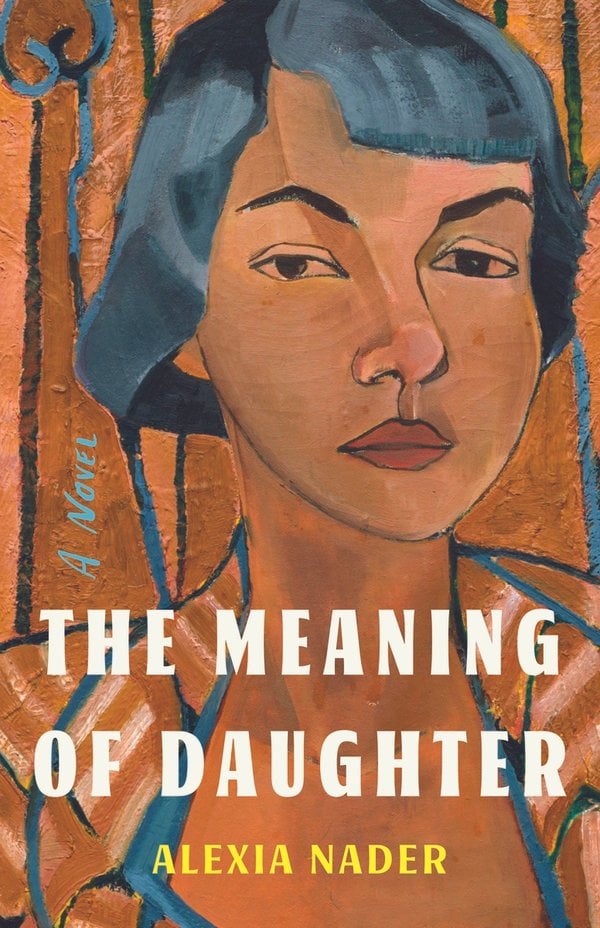
The foundational tension between creative ambition and inherited cultural duty is vividly mapped in The Meaning of Daughter. Centering on Merjan—a first-generation Lebanese-Haitian artist—the narrative explores the weight of community expectations that equate womanhood strictly with wifehood and mothering.
Spanning seven decades and three nations, the work traces how ancestral memory (infused with African-American, Jamaican, Lebanese, and Haitian traditions) shapes reproductive choices across three generations of women. Merjan’s struggle sets the baseline for contemporary inquiry: how does one honor inherited heritage while protecting individual artistic identity?
2. Redefining Care Beyond Biology: Still Born
Translated from Spanish by Rosalind Harvey, Guadalupe Nettel’s Still Born explores childlessness alongside high-risk pregnancy. The novel opens with a stark declaration of bodily autonomy: the narrator’s decision to undergo tubal ligation.
When the narrator reveals her decision, her mother responds with a nuanced warning:
"It’s important to have someone to love, someone to take care of. It makes us less selfish."
Rather than confirming traditional motherhood, Nettel uses this premise to dismantle the nuclear family. The protagonist finds deep meaning through non-biological caretaking—supporting a friend navigating the psychological weight of bringing a child with severe microcephaly into the world, while aiding a neighbor fleeing domestic abuse. Nettel expands motherhood into a collective, radical act of community care.
       [ Tubal Ligation / Voluntary Childlessness ]
                           │
                           ▼
          [ Maternal Pushback & Traditional Logic ]
                           │
                           ▼
          [ Re-centering Care on Community ]
                           │
                           ▼
 [ Support of High-Risk Infant & Vulnerable Neighbors ]
3. Intergenerational Trauma as a Reproductive Catalyst: Burnt Sugar
Avni Doshi’s Burnt Sugar presents a darker, gothic examination of maternal lineage set in Pune, India. The protagonist is tasked with caring for an aging mother who abandoned her during childhood to join an ashram.
Here, the choice to become pregnant serves as psychological retribution and an attempt at emotional resetting. The protagonist views childbirth as a way to construct a unblemished mother-child bond free from her own childhood scars. However, Doshi avoids easy catharsis; the novel’s ending illustrates how unexamined intergenerational trauma can subvert even the most intentional efforts to escape it.
4. The Spectral Lines of Lineage: Cold Enough for Snow
Jessica Au’s understated novella Cold Enough for Snow frames reproductive contemplation as an existential journey. Set during a quiet trip through Tokyo and Kyoto, a daughter travels with her mother while quietly weighing whether to pursue motherhood.
The narrative contrasts the private self—focused on art, solitude, and intellectual independence—with the communal self tied to caretaking. The mother observes that in her youth, she "had never thought of herself in isolation, but rather as inextricably linked to others."
As the journey progresses into surreal solitude, Au questions where the mother’s identity ends and the daughter’s begins, demonstrating how parental influence shapes internal voice long before any child is conceived.
5. Speculative Realities and Somatic Terror: One Leg on Earth
In ‘Pemi Aguda’s Nigerian novella One Leg on Earth, reproductive choice takes on supernatural urgency. In Lagos, pregnant women are drawn by a mystical force to drown themselves in the ocean. When the protagonist, Yosoye, experiences an unexpected pregnancy, her decision to carry it to term becomes an act of psychological resilience.
Confronted by friends who question her sanity in bringing a child into a precarious environment, Yosoye reflects on her own emotionally distant mother:
"Could someone with a mother like that understand what a child might mean for Yosoye? Yosoye who’d never even had her mother to call her own?"
Aguda uses speculative elements to position pregnancy as a complex arena of risk, artistic urge, and deep longing for unconditional intimacy.
[ Lagos Epidemic of Maternal Drownings ] ──► [ Unexpected Pregnancy ]
                                                      │
                                                      ▼
[ Familial Skepticism ] ◄── [ Reclamation of Maternal Intimacy ]
6. Bodily Sovereignty and Single Parenthood: Breasts and Eggs
Mieko Kawakami’s Breasts and Eggs (translated by Sam Bett and David Boyd) contrasts two distinct expressions of female physical autonomy in contemporary Tokyo. The first section examines Makiko’s fixation on cosmetic surgery, while the second explores her sister Natsuko’s determination to undergo artificial insemination as an unmarried woman.
Kawakami presents a subtle inversion: Makiko, acutely aware of the economic and social burdens of single parenthood from her own life, questions Natsuko’s choice to raise a child alone. Natsuko must look outside her family to a network of friends and donors to validate her desire for a child on her own terms.
7. Time Jumps and Non-Linear Kinship: Red at the Bone
Jacqueline Woodson’s Red at the Bone examines the ripples of an unexpected teenage pregnancy across two African-American families in Brooklyn. Utilizing a rotating first-person narrative, Woodson moves fluidly between past and present.
The novel captures the dual perspective of the young parents’ elders: initial anxiety over lost educational opportunities shifting into deep devotion for their granddaughter. Woodson illustrates how unexpected parenthood reshapes structural trajectories while highlighting the capacity for healing across generations.
8. Intellectualizing the Gestational Body: Sight
Jesse Greengrass’s Sight pairs an impending second pregnancy with reflections on medical history and personal grief. As the narrator prepares for birth, she reviews her memories of her late mother and grandmother alongside historical milestones: Wilhelm Röntgen’s discovery of the X-ray, the psychoanalytic dynamics between Sigmund and Anna Freud, and the work of early anatomists mapping the human uterus.
Greengrass demonstrates how the physical reality of pregnancy triggers a desire to intellectually map the past, using historical analysis to process personal loss and transformation.
Supporting Context & Literary Metrics
The rise of literature exploring reproductive choice reflects broad shifts in both global demographics and international publishing trends. As birth rates decline across industrial nations and conversations around bodily autonomy evolve, contemporary fiction increasingly mirrors these shifts.
+---------------------------------------------------------------------------------------------------------+
|                                COMPARATIVE MATRIX OF KEY LITERARY WORKS                                 |
+------------------------+-------------------+-----------------------------+------------------------------+
| Work & Author          | Cultural Context  | Core Reproductive Tension   | Primary Literary Strategy    |
+------------------------+-------------------+-----------------------------+------------------------------+
| The Meaning of         | Lebanese-Haitian /| Artistic ambition vs.       | Multi-generational family    |
| Daughter               | Afro-Caribbean    | diasporic expectations      | saga spanning 7 decades      |
+------------------------+-------------------+-----------------------------+------------------------------+
| Still Born             | Mexico            | Voluntary childlessness vs. | Dual-narrative contrasting   |
| (Guadalupe Nettel)     |                   | radical community care      | tubal ligation with illness  |
+------------------------+-------------------+-----------------------------+------------------------------+
| Burnt Sugar            | India             | Pregnancy as weapon against | Gothic psychological study   |
| (Avni Doshi)           |                   | intergenerational trauma    | of dementia and maternal harm|
+------------------------+-------------------+-----------------------------+------------------------------+
| Cold Enough for Snow   | Japan / Australia | Individual autonomy vs.     | Quiet, understated narrative |
| (Jessica Au)           |                   | inherited maternal lineage  | with spectral ambiguity      |
+------------------------+-------------------+-----------------------------+------------------------------+
| One Leg on Earth       | Nigeria           | Maternal longing amidst     | Speculative surrealism set   |
| ('Pemi Aguda)          |                   | existential environmental risk| in contemporary Lagos        |
+------------------------+-------------------+-----------------------------+------------------------------+
| Breasts and Eggs       | Japan             | Elective single motherhood  | Social realism exploring     |
| (Mieko Kawakami)       |                   | and somatic control         | reproductive technology      |
+------------------------+-------------------+-----------------------------+------------------------------+
| Red at the Bone        | African-American  | Unexpected teen pregnancy   | Non-linear multi-vocal       |
| (Jacqueline Woodson)   |                   | and class mobility          | generational framing         |
+------------------------+-------------------+-----------------------------+------------------------------+
| Sight                  | United Kingdom    | Gestational terror vs.      | Intellectual essayistic fiction|
| (Jesse Greengrass)     |                   | historical grief processing | blending science with memory |
+------------------------+-------------------+-----------------------------+------------------------------+
Key Analytical Takeaways:
- De-centering the Nuclear Paradigm: Across all featured works, conventional nuclear family structures are subverted. Caretaking responsibility frequently shifts to sisterly bonds, chosen networks, or historical contemplation.
- Global Translation Impact: The critical acclaim of translated titles like Breasts and Eggs and Still Born signals a global demand for nuanced narratives about reproductive autonomy that transcend Western-centric frameworks.
- The Subversion of "Maternal Instinct": Authors increasingly portray reproductive desire not as an innate biological impulse, but as a complex resolution shaped by artistic intent, ancestral duty, or psychological processing.
Official Statements & Authorial Perspectives
The discourse surrounding modern matrescence relies heavily on how contemporary writers define the boundary between individual sovereignty and ancestral legacy.
Reflecting on her own journey and the construction of The Meaning of Daughter, the author frames the central question of modern motherhood as one of unspoken cultural inheritance:
"When I began trying to get pregnant, I didn’t know exactly why I wanted to have a child, but I knew my parents had something to do with the desire… How did my parents’ choice to become parents—and my perceived effect of that choice on their lives—seep into my decision making? How did the African-American, Jamaican, Lebanese, and Haitian cultures they grew up in influence their decision and mine?"
Addressing the myth of isolated decision-making, the author notes:
"Even though the choice to have children is often framed as one that involves one or two people, this ignores the truth that families and cultures often influence the decision."
This perspective is reinforced across contemporary literature:
- Guadalupe Nettel shows that choosing childlessness does not mean rejecting care, arguing through her narrative that community responsibility offers an equally meaningful path for nurturing.
- Avni Doshi highlights the darker side of maternal continuity, using her narrative to demonstrate how unexamined maternal trauma can persist across generations despite deliberate attempts to avoid it.
- Mieko Kawakami challenges societal expectations regarding women’s bodies, placing single motherhood alongside cosmetic surgery to assert a woman’s fundamental right to self-determination.
Future Outlook
The literary exploration of reproductive choices is entering a transformative era. As global conversations around reproductive rights, climate anxiety, and artificial reproductive technologies intensify, the stories surrounding parenthood are expanding into new narrative territory.
+-----------------------------------------------------------------------------------+
|                        FUTURE TRAJECTORIES IN REPRODUCTIVE LITERATURE             |
+-----------------------------------------------------------------------------------+
|  1. EXPANSION OF SPECULATIVE REALISM                                              |
|     Addressing climate grief and bio-technological interventions.                 |
|                                                                                   |
|  2. RE-DEFINITION OF DIASPORIC INHERITANCE                                        |
|     Mapping cross-border identities and multi-generational heritage.              |
|                                                                                   |
|  3. DE-COUPLING CARE FROM BIOLOGY                                                 |
|     Legitimizing chosen networks, collective care, and intentional childlessness. |
+-----------------------------------------------------------------------------------+
Key Emerging Trends:
- Climate and Eco-Anxiety Narrative Integrations: Future works will likely place reproductive choices within the context of environmental uncertainty, extending themes explored in works like One Leg on Earth.
- Technological Autonomy: As assisted reproduction, IVF, and surrogacy become more widely available globally, literary works will continue to question traditional definitions of lineage, expanding on the themes set by Kawakami’s Breasts and Eggs.
- Intergenerational Diaspora Frameworks: Writers from multi-ethnic backgrounds will increasingly examine how migration and cultural assimilation shape parental choices across multiple borders.
Ultimately, these authors demonstrate that deciding whether to bring life into the world is never a simple personal choice. It remains a profound human reflection—a narrative crossroads where history, memory, bodily autonomy, and future hopes converge.



Comments
Facebook App ID not configured. Please add it in the Customizer.