
Executive Overview
In a decisive move to address historical injustices, the Swiss Federal Office of Culture has announced a substantial funding injection of $2.4 million dedicated to provenance research across the nation’s museums and cultural institutions. Unveiled earlier this week, this financial commitment will directly support 26 distinct research projects scheduled to run from 2027 through 2028. The initiative is the result of a rigorous public call for proposals designed to bring transparency to collections accumulated during some of the most morally complex periods in modern history.
The core objective of this funding wave is to systematically investigate the acquisition histories of items gathered under colonial expansion, archaeological excavations, and the oppressive regime of the Nazi era. As cultural institutions worldwide face an ethical reckoning regarding the origins of their holdings, Switzerland’s latest funding cycle aims to bridge the gap between well-resourced national institutions and smaller, regional collections that have historically lacked the financial and human resources to conduct deep archival investigations.
The scope of the awarded projects is remarkably broad. It encompasses multi-institutional collaborations, partnerships with source communities in the Global South, and meticulous, item-by-item cataloging of sensitive archives and digital databases. By empowering curators, historians, and international partners to interrogate the paper trails and oral histories of contested objects, the Swiss government is laying the groundwork not only for academic transparency but also for future dialogues concerning restitution, repatriation, and ethical stewardship.
Read Also
Detailed Chronology and Project Breakdown
The selected projects represent a diverse cross-section of Switzerland’s cultural landscape, ranging from world-renowned fine art institutions to regional natural history museums. The chronological rollout of these initiatives, slated for the 2027–2028 window, will see teams tackling complex webs of ownership, forced sales, and colonial appropriation.
Tracing Human Remains: The Basel-Indonesia Partnership
Among the most sensitive initiatives receiving support is a collaborative venture between the Natural History Museum in Basel and Gadjah Mada University in Indonesia, which has been awarded $120,000. This project confronts a legacy that strikes at the heart of human dignity: the presence of 189 Indonesian human remains within the museum’s collection.
The research team will meticulously reconstruct the acquisition pathways that brought these remains from the Indonesian archipelago to Switzerland. More importantly, the project seeks to identify potential descendant communities and local stakeholders. By establishing the precise historical contexts of their removal, the project aims to build an empirical and ethical foundation for formal restitution dialogues between Swiss authorities and Indonesian representatives.
Unpacking Colonial Legacies: The Nine-Museum Cameroon Initiative
In a separate collaborative effort, nine Swiss museums—prominently featuring the Museum of Cultures Basel and the Bern Historical Museum—have been granted $120,000 to spearhead a massive joint investigation. Their focus is directed toward more than 6,300 cultural artifacts originating from Cameroon.
Given the sheer volume of the objects, the project will utilize a synchronized approach to examine the contexts of appropriation and the complex chains of ownership that led these items from Central Africa into Swiss display cases and storage vaults. Crucially, the project proposal emphasizes a contemporary dialogue, aiming to understand the cultural and spiritual significance of these artifacts to modern-day Cameroonians. This ensures that the research is not merely retrospective, but actively engaged with the source nation’s living heritage.
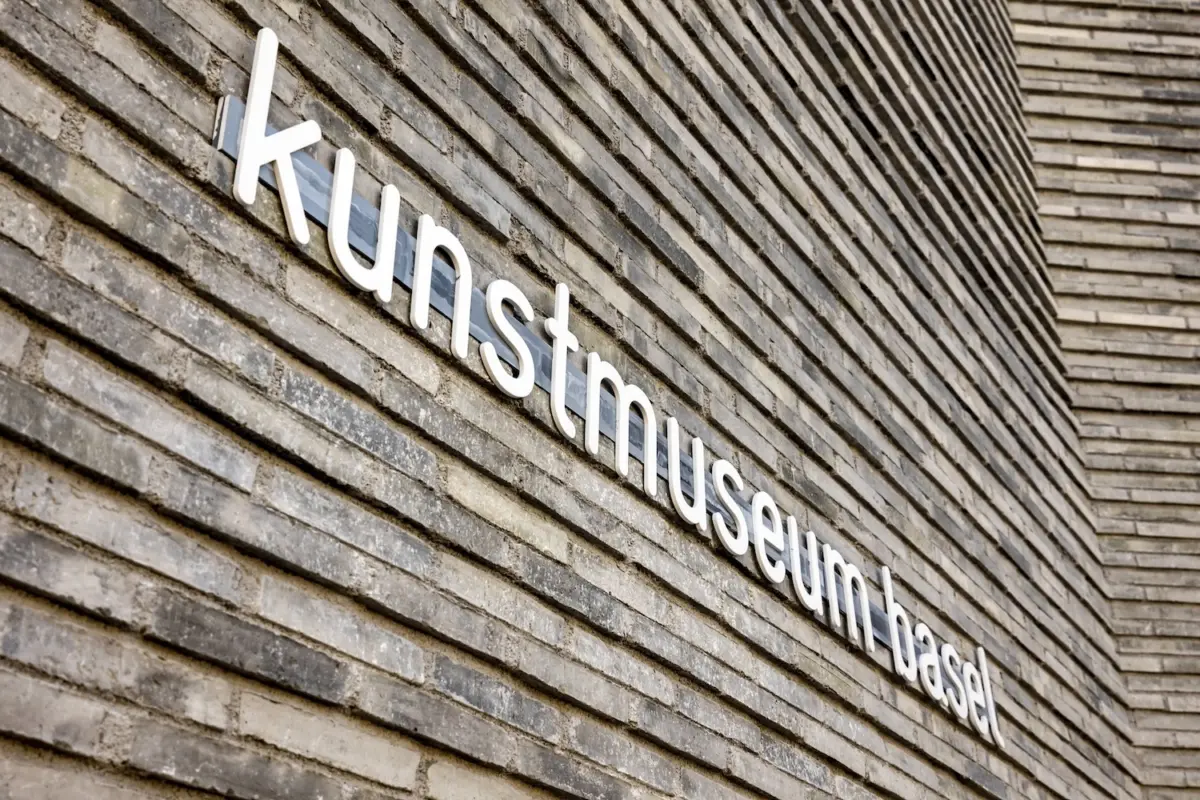
Confronting Nazi-Era Looting: The Kunstmuseum Basel
While colonial and archaeological contexts form a massive pillar of the funding initiative, Nazi-era provenance research remains a critical priority for Swiss art institutions. The Kunstmuseum Basel has secured a $120,000 grant to scrutinize 336 drawings within its collection that have long carried flagged or problematic provenance markers.
Between 1933 and 1945, the art market was flooded with forced sales, looted assets, and works sold under duress by persecuted individuals, primarily of Jewish descent. The Kunstmuseum Basel’s project will dive deep into the fates of the individuals and families who sold or lost these drawings. Furthermore, the research will critically analyze the museum’s own acquisition strategies and institutional behavior during the Nazi period, offering a transparent look at how European museums interacted with a compromised art market during the Second World War.
Supporting Context & Metrics: The Global Reckoning on Provenance
To fully understand the weight of Switzerland’s $2.4 million investment, it is necessary to examine the broader international landscape of provenance research. For decades, Western museums operated under a paradigm of universal heritage, wherein institutions viewed themselves as safe havens for world culture, regardless of how those objects were acquired. However, the paradigm has shifted dramatically in the 21st century.
The Metrics of Contested Heritage
- Colonial Displacements: Historians estimate that upwards of 80% to 90% of sub-Saharan African cultural heritage currently resides outside the continent, largely housed in European and North American museums. Switzerland, while not a colonial power in the traditional British or French sense, was deeply integrated into the global trade and scientific networks that profited from colonial expansion.
- Nazi-Looted Art: Following the Washington Principles on Nazi-Confiscated Art (1998) and the Terezin Declaration (2009), museums worldwide have faced mounting moral and legal obligations to identify looted assets. Despite these frameworks, thousands of works in Swiss and international collections still feature gaps in their provenance between 1933 and 1945.
- Funding Disparities: While major institutions like the Kunsthaus Zürich or the Museum of Ethnography in Geneva often possess dedicated provenance research staff, smaller regional museums in Switzerland have struggled. The Federal Office of Culture’s current funding round specifically targets this disparity, ensuring that institutions with limited experience receive the financial backing necessary to audit their holdings safely and professionally.
This systemic review reflects a broader cultural shift. Provenance research is no longer viewed as a niche academic exercise for damp archives, but as an essential component of institutional accountability, public trust, and international diplomacy.
Official Statements and Institutional Perspectives
The announcement by the Swiss Federal Office of Culture has garnered significant attention from cultural policy experts, museum directors, and international watchdogs. Government officials have emphasized that transparency is the prerequisite for any ethical future in museum curation.
"Museums are public institutions entrusted with the preservation of our shared human history, but that preservation must be built on a foundation of truth and justice," a spokesperson for the Swiss Federal Office of Culture noted following the announcement. "By investing in these 26 projects, we are enabling our institutions to look critically at their own pasts. Whether dealing with the dark shadow of the Nazi era or the imbalances of colonial history, Switzerland is committed to supporting thorough, independent, and transparent research."
Representatives from the participating institutions have similarly voiced a sense of professional responsibility. Dr. Anna Keller, a lead researcher involved in one of the funded archival initiatives, stressed that provenance research is ultimately about human stories.
"Every gap in a provenance record represents a silenced voice—a family displaced, a community stripped of its sacred objects, or an individual coerced into selling their most cherished possessions," Keller stated. "This funding does not just buy archival hours; it finances the recovery of history. It allows us to transition from passive custodianship to active moral stewardship. When we look at objects from colonial contexts or the Nazi era, we are not just cataloging wood, paper, and bone; we are reconstructing human dignity."
International legal scholars and restitution advocates have also praised the inclusion of diverse project types, noting that funding cross-border partnerships—such as the Basel-Indonesia collaboration—sets a new standard for collaborative provenance research that respects the agency of source communities.
Future Outlook: What Lies Ahead for Swiss Museums
As the 27–28 funding cycle approaches, the cultural sector in Switzerland stands at a critical crossroads. The disbursement of these funds is expected to yield significant academic findings, but the true test will lie in how institutions act upon the discoveries made by the research teams.
Challenges on the Horizon
- Navigating Restitution Claims: As provenance researchers uncover the undeniable histories of looted art and wrongfully acquired colonial artifacts, Swiss museums will increasingly face formal restitution claims. Institutional readiness to return contested items will test the sincerity of these research initiatives.
- Legal and Bureaucratic Hurdles: Swiss museum governance is complex, involving federal, cantonal, and municipal authorities. Navigating the legal frameworks required to deaccession and return items can be a labyrinthine process that requires legislative support alongside historical research.
- Sustaining Momentum: While $2.4 million is a robust injection of capital for 26 projects, provenance research is notoriously time-consuming and labor-intensive. Ensuring long-term funding beyond 2028 will be vital if smaller institutions are to maintain the momentum generated by this initial federal push.
The Path to Ethical Stewardship
Ultimately, the Swiss government’s funding initiative signals an irreversible evolution in museum culture. The era of unquestioned possession is giving way to an era of relational ethics. By funding investigations into Nazi-looted art, colonial appropriations, and sensitive archaeological remains, Switzerland is acknowledging that true cultural value cannot be separated from historical integrity.
Over the next few years, the findings generated by these 26 projects will not only rewrite museum catalogs but will also redefine Switzerland’s relationship with the global community. As the archival dust settles and the difficult conversations begin, the commitment to transparency will serve as a benchmark for how modern nations reconcile the shadows of their collections with the demands of a just future.




Comments
Facebook App ID not configured. Please add it in the Customizer.