

Executive Overview
In an era defined by geopolitical turbulence, shifting cultural paradigms, and an urgent need for empathetic articulation, poetry remains one of humanity’s most vital counterweights. Today, English PEN, operating in collaboration with Irish PEN/PEN na hÉireann and the Estate of Seamus Heaney, formally announced the shortlist for the highly anticipated PEN Heaney Prize 2026.
Now entering its prestigious third year, the PEN Heaney Prize has rapidly established itself as a cornerstone of the international literary calendar. It is designed to honour a single-author collection of poetry that not only demonstrates exceptional literary merit but also engages deeply and unflinchingly with the profound impacts of cultural or political events on the human condition and interpersonal relationships.
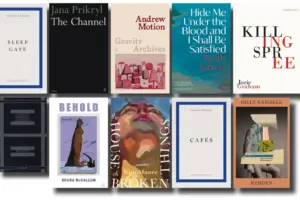
The announcement of this year’s shortlist brings to light a fresh constellation of contemporary poetic voices. While the specific list of shortlisted poets and collections awaits the final public unveiling of individual titles, the overarching prestige of the prize continues to draw immense attention from critics, academics, and readers worldwide. This year’s judging panel—comprising celebrated poets Victoria Adukwei Bulley, Vona Groarke, and Stephen Sexton, alongside Mick Heaney acting as the non-voting Chair representing the Estate of Seamus Heaney—has spent months sifting through a rigorous selection of works to curate a shortlist that promises to redefine contemporary verse.
Read Also
The journey to the ultimate winner will culminate on Tuesday, December 1, 2026, when the victor will be formally announced. As the prize rotates annually between the operational jurisdictions of English PEN and Irish PEN/PEN na hÉireann, the 2026 iteration carries forward a legacy rooted in artistic integrity, freedom of expression, and the enduring spirit of Nobel laureate Seamus Heaney.
Detailed Chronology: The Evolution and Milestones of the PEN Heaney Prize
To understand the weight of the PEN Heaney Prize 2026, one must examine the meticulous trajectory that brought this award into being. The prize is not merely an addition to the crowded landscape of literary accolades; it is a deliberate tribute to the life, work, and ethos of Seamus Heaney—a poet whose words frequently bridged the treacherous chasms between political violence, cultural identity, and intimate human vulnerability.
The Genesis and Inaugural Year (2024)
The PEN Heaney Prize was officially inaugurated in 2024, born out of a partnership between English PEN, Irish PEN/PEN na hÉireann, and the Heaney Estate. The inaugural award set an exceptionally high benchmark for the prize. In 2024, the literary world watched as poet Susannah Dickey captured the inaugural PEN Heaney Prize for her striking and harrowing debut collection, ISDAL (published by Picador).
ISDAL explored themes of anonymity, surveillance, identity, and the haunting residues of unsolved mysteries, setting a definitive tone for what the prize intended to celebrate: poetry that refuses to look away from the darker contours of modern existence. Dickey’s victory signalled to the publishing industry that the PEN Heaney Prize would not shy away from debut voices or unconventional structures, provided the work possessed undeniable literary power and a sharp engagement with socio-political realities.
The Second Iteration (2025)
Building upon the momentum of its launch, the 2025 prize cycle introduced a new layer of prestige by honouring established mastery. Veteran poet Tom Paulin claimed the 2025 PEN Heaney Prize for Namanlagh (Faber), marking his first poetry collection in over a decade.
Namanlagh was widely lauded by critics for its linguistic verve, its fierce engagement with history, and its unflinching look at political and cultural landscapes through a deeply personal lens. Paulin’s win demonstrated the prize’s remarkable range—capable of recognizing both the explosive energy of a debut author (as seen with Dickey) and the seasoned, decades-long artistic endurance of a literary master (as seen with Paulin).
The 2026 Cycle: Reaching the Shortlist
The 2026 prize cycle officially commenced months prior to today’s shortlist announcement, as publishers across the UK, Ireland, and beyond submitted their premier poetry titles published within the eligibility window. The administrative burden of managing the prize alternates seamlessly between English PEN and Irish PEN/PEN na hÉireann, ensuring a bi-jurisdictional celebration of literature that honours Heaney’s cross-border resonance.
Today’s announcement of the 2026 shortlist marks the critical penultimate phase of the award cycle. Over the coming weeks, the shortlisted poets will engage in public readings, media interviews, and literary events, bringing their work into direct dialogue with readers. The timeline will culminate on December 1, 2026, when the winner will be revealed at a special ceremony, sealing the collection’s place in modern literary history.
Supporting Context & Metrics: The Mechanics and Philosophy of the Award
The Core Criteria
What sets the PEN Heaney Prize apart from other major literary awards—such as the T.S. Eliot Prize, the Forward Prizes, or the Costa/Booker equivalents—is its hyper-specific thematic mandate. The prize is explicitly reserved for a single-author collection of poetry of outstanding literary merit that engages with the impact of cultural or political events on human conditions or relationships.
In an era where poetry is sometimes unfairly relegated to the realm of private, solipsistic expression, the PEN Heaney Prize insists on the public, civic, and political function of verse. It asks: How do structural forces—war, displacement, political upheaval, cultural shifts, and historical trauma—fracture, shape, or elevate our private lives, loves, and griefs? The collections that rise to the top of this prize are those that answer this question with formal brilliance, emotional resonance, and intellectual rigour.
The Rotating Administration
A unique operational feature of the PEN Heaney Prize is its nomadic administrative structure. The prize moves annually between the regions of work covered by English PEN and Irish PEN/PEN na hÉireann. This structural choice is a subtle yet profound nod to Seamus Heaney’s own life and identity—born in Northern Ireland, living and working extensively in the Republic of Ireland, and commanding a global audience that transcended national borders. By rotating the administrative focus, the prize continually reaffirms the interconnected literary ecosystem of these islands while maintaining an international outlook.
The Judges: A Powerhouse Panel
The integrity of any literary prize rests squarely on the shoulders of its judges. The 2026 judging panel represents some of the most dynamic, respected, and critically acute voices in contemporary poetry:
- Victoria Adukwei Bulley: A celebrated British-Ghanaian poet, writer, and filmmaker whose debut collection Quiet explored themes of rest, interiority, and collective liberation. Her critical eye brings a sharp focus to contemporary identity, diaspora, and the politics of space.
- Vona Groarke: An esteemed Irish poet with numerous critically acclaimed collections published by Gallery Press and Wake Forest University Press. Groarke brings a deep mastery of lyricism, historical memory, and the nuances of poetic form.
- Stephen Sexton: An award-winning Northern Irish poet whose debut collection If All the World and Love Were Young and subsequent work have earned widespread international acclaim for their exquisite emotional depth, formal control, and engagement with memory and loss.
- Mick Heaney (Non-Voting Chair): Representing the Estate of Seamus Heaney, Mick Heaney ensures that the ethos, spirit, and legacy of his father remain central to the deliberations, guiding the panel with institutional memory and familial insight while leaving the evaluative power entirely in the hands of the three independent poet-judges.
Official Statements and Industry Reactions
The announcement of the PEN Heaney Prize 2026 shortlist has generated immediate ripples of excitement across the literary sector, prompting reflections from institutional leaders, publishers, and the judges themselves.
While individual statements from the shortlisted poets continue to roll out alongside their respective publishers, representatives from the partnering organizations have emphasized the growing cultural necessity of the award.
A spokesperson for English PEN remarked during the launch:
"At a time when freedom of expression is under continuous global threat, and when political polarization threatens to reduce complex human experiences to binary slogans, poetry offers a vital space of nuance and resistance. The PEN Heaney Prize was founded to champion writers who look directly at the fires of our time and translate them into art that sustains the human spirit. The 2026 shortlist exemplifies this mission with breathtaking clarity."
Similarly, representatives from Irish PEN/PEN na hÉireann highlighted the collaborative nature of the prize:
"Seamus Heaney belonged to Ireland, to Britain, and to the world. In co-administering this prize, we celebrate not only his enduring literary footprint but also the borderless community of writers who continue to interrogate what it means to live, love, and endure in a fractured world. Our judges have performed an extraordinary public service in narrowing down this year’s formidable pool of submissions."
Literary critics have noted that the 2026 prize cycle arrives at a particularly poignant political juncture globally. With numerous international conflicts dominating the headlines, widespread economic anxieties, and rapid technological transformations reshaping human interaction, poetry that directly addresses the intersection of the political and the personal has never felt more urgent.
Future Outlook: The Road to December 1, 2026
As the literary world digests today’s shortlist announcement, attention now turns toward the final stretch of the 2026 prize cycle.
Over the next two months, the shortlisted collections will experience a surge in critical attention, academic analysis, and commercial readership. Independent bookshops, libraries, and literary festivals across the UK, Ireland, and beyond are already planning showcase events featuring the shortlisted poets. These events will provide audiences with the rare opportunity to hear the work performed live and to engage in discussions regarding the socio-political themes underpinning the collections.
What Lies Ahead for the Winner?
When the winner of the PEN Heaney Prize 2026 is announced on Tuesday, December 1, 2026, they will not only receive widespread critical acclaim and a significant financial or promotional boost—they will also cement their place in a lineage that includes Susannah Dickey and Tom Paulin. More importantly, the winning collection will stand as a definitive artistic artifact of our current historical moment, capturing the anxieties, griefs, and enduring resilience of human relationships in the mid-2020s.
Furthermore, as the prize looks beyond 2026, its founders envision an even greater international expansion of its footprint. By solidifying its reputation as one of the premier poetry accolades in the English-speaking world, the PEN Heaney Prize ensures that the humanist, deeply observant, and politically conscious poetic tradition championed by Seamus Heaney remains vibrant, provocative, and entirely indispensable for generations to come.
As readers, critics, and fellow writers await the December announcement, the message of the PEN Heaney Prize 2026 remains resoundingly clear: in times of profound change, poetry is not a luxury—it is an essential map of the human heart.



Comments
Facebook App ID not configured. Please add it in the Customizer.