

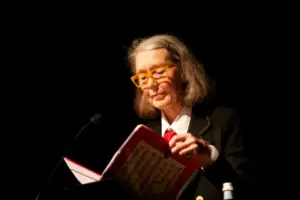
London, United Kingdom — In a resounding tribute to a defining voice in contemporary British and international literature, the Royal Society of Literature (RSL) has announced that the celebrated Guyanese-born poet Grace Nichols is the recipient of this year’s prestigious Pioneer Prize. Valued at £10,000, the annual award serves to honor pioneering British women writers who have acted as trailblazers within their respective literary fields—particularly during historical periods when establishing a successful, enduring writing career presented formidable systemic barriers for women.
With this year’s edition of the prize casting a spotlight specifically on the genre of poetry, Nichols was selected by a distinguished judging panel chaired by Ruth Borthwick, current Chair of English PEN and former Chief Executive and Artistic Director of Arvon. Borthwick was joined on the panel by acclaimed poet, academic, and editor Sarah Howe, alongside Judith Palmer, Director of The Poetry Society.
The accolade marks yet another monumental milestone in a celebrated career spanning decades, reinforcing Nichols’ legacy as a writer who has continually expanded the boundaries of language, identity, and the poetic imagination.
Read Also
Executive Overview: Honoring Decades of Poetic Excellence
The Royal Society of Literature’s Pioneer Prize is more than a monetary award; it is a critical corrective to the historical marginalization of women writers whose foundational contributions paved the way for subsequent generations. Grace Nichols, whose evocative and rhythmically rich poetry has bridged cultures, continents, and communities, represents the very essence of this mission.
From her groundbreaking 1983 debut collection, I is a Long-Memoried Woman, to her upcoming late-2026 release, The Tracks of My Name, Nichols has maintained an unwavering commitment to her unique artistic vision. Her work seamlessly weaves Caribbean folklore, British landscape, post-colonial identity, and the intimate textures of everyday life. By bestowing the £10,000 Pioneer Prize upon her, the RSL not only honors her individual brilliance but also cements her status as an indispensable pillar of modern literature.
Detailed Chronology: A Literary Journey Across Continents
To understand the magnitude of Grace Nichols’ achievement is to trace a literary journey that spans over four decades of prolific output, critical acclaim, and cultural impact.
Roots and Early Recognition
Born in Georgetown, Guyana, in 1950, Nichols spent her formative years in a small country village before moving to the city, where she studied at the University of Guyana. Prior to graduating, she completed a period of National Service—an experience that she would later reflect upon as a formative encounter with the concept of being a "pioneer." Before dedicating herself full-time to writing, she worked as a teacher, a journalist, and a government information officer, immigrating to the United Kingdom in 1977.
Her arrival in Britain coincided with a vibrant, turbulent era for Black British writing—a time when writers of the diaspora were carving out space within a largely Eurocentric literary establishment. In 1983, Nichols captured international attention with her debut poetry collection, I is a Long-Memoried Woman. The book chronicled the historic experiences and endurance of Caribbean women through generations of slavery and displacement. It was met with widespread critical acclaim and captured the prestigious Commonwealth Poetry Prize, making Nichols the first Caribbean writer to win the award.
Expanding the Canon (1984–2020)
Throughout the 1980s and 1990s, Nichols built a formidable body of work that challenged rigid poetic forms and introduced vibrant, vernacular rhythms to British readers.
- 1984: She published The Fat Black Woman’s Poems, a witty, subverted, and body-positive collection that challenged traditional Western beauty standards and remains a staple of contemporary academic curricula.
- 1989: Released Lazy Thoughts of a Lazy Woman, further cementing her reputation for lyrical accessibility and psychological depth.
- 1996: Published Sunris, an ambitious book-length sequence that engaged deeply with the sun as a metaphor for renewal, post-colonial awakening, and global interconnectedness.
- 2009 & 2017: Continued to innovate with Picasso, I Want My Face Back and The Insomnia Poems, demonstrating a restless artistic curiosity that refused to stay within fixed thematic boundaries.
- 2020: Released Passport to Here and There, a deeply reflective collection exploring themes of migration, memory, and belonging.
In recognition of this profound body of work, Nichols was awarded the Queen’s Gold Medal for Poetry in 2021, an honor that cemented her place in the upper echelons of the British literary canon.
The Next Chapter: The Tracks of My Name (Late 2026)
Nichols shows no signs of slowing down. Her upcoming collection, The Tracks of My Name, is scheduled for publication by Bloodaxe Books on November 19, 2026. The book has already been selected as a Poetry Book Society Choice for the winter season, ensuring that members of The Poetry Society—who receive an exclusive 10% discount on purchases through the PBS—will be among the first to engage with her latest poetic explorations.
Supporting Context & Metrics: The Genesis of the Pioneer Prize
The Pioneer Prize is a relatively young yet profoundly impactful fixture on the British literary calendar. It was founded in 2025 by RSL President Emerita Bernardine Evaristo, who generously directed the entire £100,000 cash sum from her Women’s Prize Outstanding Contribution Award toward funding the Pioneer Prize over a ten-year span.
Evaristo’s motivation behind establishing the award was deeply personal and political. Upon receiving her windfall, she realized that sharing these unexpected funds with older women writers was a vital method of acknowledging their foundational spirits and lifetime achievements. Speaking at the prize’s inception, Evaristo noted:

"It’s very easy to forget the feminist struggles of the past and the intrepid women who paved the way for successive generations, and it’s important to celebrate our trailblazers while they are still around to enjoy it: to remember them, to thank them, to honour them."
By focusing on poets in its current iteration, the prize addresses a historical oversight: while novelists often enjoy greater commercial visibility, poets working outside mainstream commercial imperatives have frequently labored in relative obscurity, despite shaping the very linguistic fabric of the nation.
Official Statements: Perspectives from the Winner, the Judges, and Partners
The announcement of Grace Nichols as the recipient of the 2026 Pioneer Prize drew emotional and celebratory reactions from the literary community.
Grace Nichols on the Meaning of "Pioneer"
Upon learning of her win, Nichols expressed a mix of astonishment and deep reflection:
"It was a wonderful surprise. The word, Pioneer, is an interesting one—and my mind immediately flashed to when, as young students at the University of Guyana (our university education was free) we had to do a month’s ‘National Service’ before graduation. Dressed in military uniforms, we served as ‘Young Pioneers’ in the forested region of Guyana, as part of the Government plan to develop a Hydro-project Scheme in our hinterland.
Maybe that’s what we do as poets in the act of writing a poem or book; we’re like pioneers embarking on a new adventure with language in the forest of the imagination, finding a path true to our essential voice and vision, lighting things up from our own perspective. I am honoured and delighted to have the ‘RSL Pioneer Prize’ bestowed on me and grateful to poetry for all that it’s given me, as well as to the judges and my parents who made books a part of our lives."
Judith Palmer on Nichols’ Enduring Appeal
Poetry Society Director Judith Palmer emphasized the emotional resonance and accessibility of Nichols’ poetry across multiple decades:
"What a joy to be able to recognise a poet, who has herself brought joy to so many. Thank you, Grace Nichols, for everything you’ve done over your energetic career to inspire readers and writers of all ages. Even when tackling difficult subjects, Grace’s poetry has a warmth and a lightness of touch which buoys you up and sparks kinship. She was probably the first poet who really lifted poetry off the page for me, and over the decades I’ve seen her cast her spell over successive generations; a modest, sure-footed trailblazer who has succeeded in making so many more people feel that poetry is a place where they too might belong."
A Longstanding Partnership with The Poetry Society
The relationship between Grace Nichols and British poetic institutions has been profound and mutually enriching. The Poetry Society has proudly collaborated with Nichols throughout her career, frequently featuring her work in its flagship quarterly magazine, The Poetry Review.
Readers looking to trace her trajectory can explore her early poem "Black Englishman between Trains," published in the June 1983 issue of The Poetry Review, or her more recent piece "Mushrooms," featured in the September 2026 issue. Furthermore, audio recordings of Nichols reading her signature works remain accessible to the public via the Poetry Archive, ensuring that her dynamic vocal delivery continues to inspire new audiences.
Future Outlook: Securing the Legacy of Women’s Writing
As the Royal Society of Literature continues its mission to champion diverse voices through initiatives like the Pioneer Prize, the broader literary landscape is undergoing a necessary reckoning regarding how literary history is recorded, celebrated, and funded.
The recognition of Grace Nichols serves as a blueprint for future cultural investments. By celebrating trailblazers during their lifetimes—ensuring they receive both the financial security and the public adulation they deserve—prizes like the RSL Pioneer Prize dismantle the narrative that literary greatness must wait for posthumous rediscovery.
With The Tracks of My Name arriving in late 2026, Grace Nichols proves that her pioneering journey is far from over. As she continues to chart paths through the "forest of the imagination," she carries with her the deep gratitude of readers, fellow writers, and cultural institutions alike. The 2026 Pioneer Prize does not merely look backward to honor a lifetime of achievement; it celebrates a living legend whose voice remains as vital, urgent, and luminous as ever.


Comments
Facebook App ID not configured. Please add it in the Customizer.