
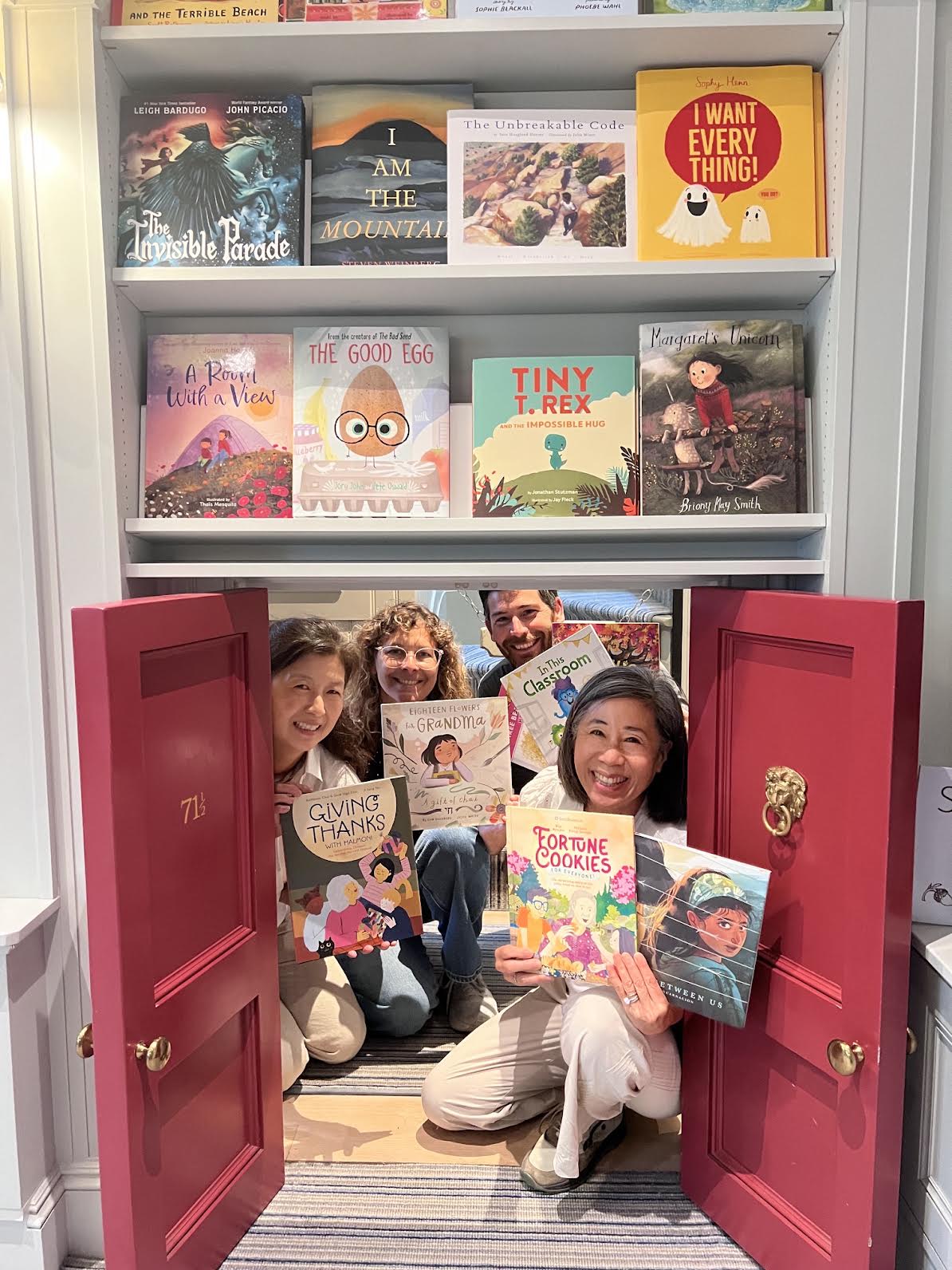
The vibrant literary landscape of Greater Boston recently served as the epicenter for one of the independent publishing community’s most anticipated annual traditions: the Red Comet Crawl. Bringing together an eclectic mix of authors, publishing professionals, and local literary enthusiasts, the 2026 iteration of the crawl marked another milestone in the ongoing renaissance of independent bookstores. Spearheaded by acclaimed author Mia Wenjen alongside literary talents Alison Goldberg, Kathy Choi, and Andrew Hackett, this year’s tour celebrated the enduring synergy between visionary independent publishers—specifically Red Comet Press—and the brick-and-mortar institutions that champion diverse, high-quality literature.
Spanning several iconic Boston neighborhoods, the crawl was far more than a routine promotional tour; it was a testament to community resilience, architectural preservation in retail spaces, and the powerful role that local bookstores play as cultural hubs. From the historic elegance of Beacon Hill to the bustling commercial energy of the Back Bay and the rich cultural heritage of the North End, the participants traversed a carefully curated route designed to highlight both historic literary landmarks and modern retail innovations.
This comprehensive report examines the structural anatomy of the 2026 Red Comet Crawl in Boston. It details the precise itinerary, analyzes the unique architectural and cultural features of the host venues, contextualizes the broader ecosystem of independent children’s and YA publishing, and outlines the long-term outlook for community-driven literary events in urban landscapes.
Read Also
Detailed Chronology: The Boston Literary Itinerary
The 2026 Red Comet Crawl was executed with military precision, balancing tight scheduling with the unhurried joy of literary discovery. The day’s events unfolded across three distinct neighborhoods, punctuated by classic Boston culinary traditions and behind-the-scenes explorations of retail architecture.
Morning Session: Beacon Hill Books & Cafe
The crawl commenced in the historic and picturesque neighborhood of Beacon Hill. Known for its gas-lit lanterns, cobblestone streets, and Federal-style row houses, Beacon Hill provided an appropriately classic backdrop for the morning’s launch.
The group—comprising Mia Wenjen, Alison Goldberg, Kathy Choi, and Andrew Hackett—arrived at Beacon Hill Books & Cafe, an establishment that has rapidly become a crown jewel in Boston’s independent bookstore ecosystem. Housed in a meticulously restored 19th-century townhouse, the bookstore merges high literature with an intimate domestic aesthetic.

During this initial stop, the creators engaged with local booksellers, discussed inventory curation, and evaluated how multi-level residential architecture can be successfully adapted into a high-traffic retail environment. The morning light filtering through the classic multi-paned windows illuminated displays featuring independent press titles, establishing an energetic and welcoming tone for the rest of the day.
Midday Leg: Trident Booksellers and Cafe & The North End
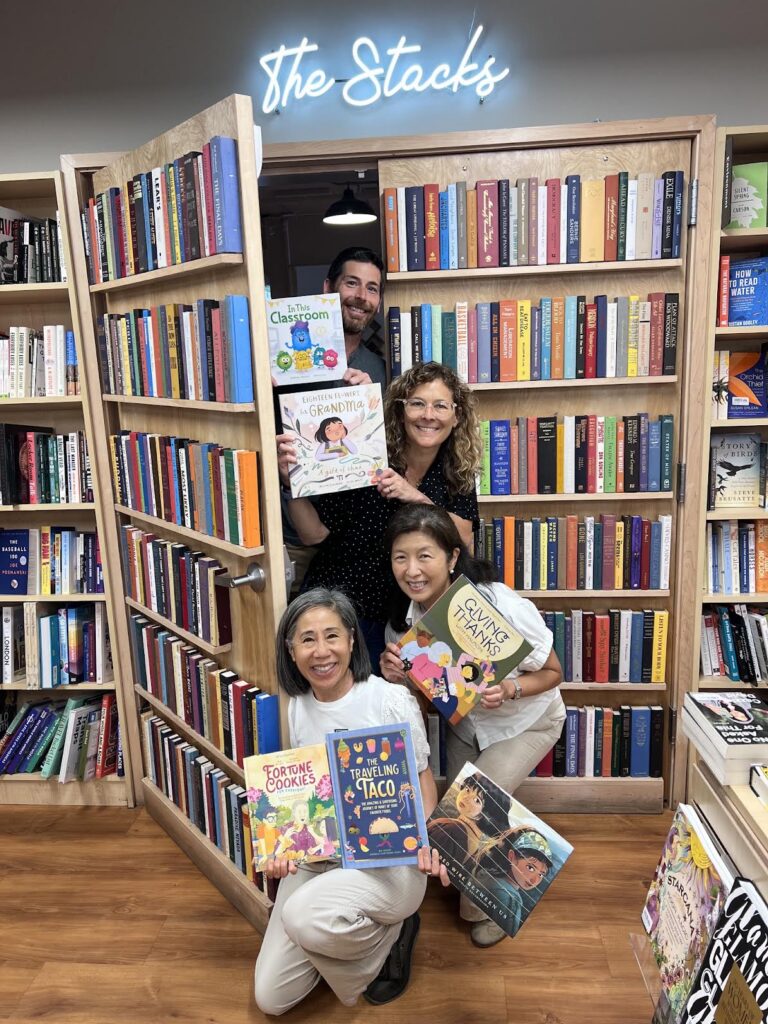
Moving southwest into the bustling Back Bay, the crawl made its second major stop at Trident Booksellers and Cafe on Newbury Street. Trident has long served as an anchor for Boston’s counter-culture, student, and literary populations.

The highlight of the Trident visit transcended standard book browsing. Guided by staff insights, the crawl participants uncovered one of Newbury Street’s best-kept retail secrets: a hidden door leading to an expansive, climate-controlled back room. Resembling a Prohibition-era speakeasy, this expansive space is purposefully designed to host large-scale author events, book clubs, and community gatherings without disrupting the main retail floor. The architectural dichotomy between the narrow, bustling storefront facing Newbury Street and the cavernous, hidden event space left a profound impression on the visiting creators.
Following the Back Bay exploration, the entourage transitioned to Boston’s historic North End for a culturally immersive lunch break. Trading high-concept retail spaces for old-world culinary craftsmanship, the group enjoyed giant, New York-style slices of pizza at Ernesto’s, a North End staple celebrated for its no-nonsense approach to authentic Italian-American comfort food.

No North End excursion is complete without espresso and confections. The culinary tour concluded just down the street at Caffe Vittoria, Boston’s oldest Italian café. Amidst the vintage espresso machines, tin ceilings, and walls lined with historical memorabilia, the creators reflected on the morning’s engagements and planned the afternoon’s final retail push.
Afternoon Finale: I Am Books
The final stop of the physical bookstore crawl brought the team to I Am Books in the heart of the North End. As Boston’s premier Italian-American bookstore, I Am Books represents a specialized micro-ecosystem within the broader independent retail market.

By focusing on multicultural narratives, translated works, and local heritage titles, the store offered a resonant thematic parallel to the mission of independent publishers like Red Comet Press. The interaction with the staff at I Am Books underscored the critical importance of niche inventory curation in maintaining bookstore viability within hyper-gentrified urban centers.
Supporting Context & Metrics: The Architecture of Independent Publishing
To fully appreciate the significance of the Red Comet Crawl, one must examine the broader economic and cultural framework surrounding independent publishing houses like Red Comet Press and their relationship with brick-and-mortar storefronts.

The Rise of Red Comet Press
Founded with a commitment to artistic integrity, sophisticated design, and diverse storytelling, Red Comet Press has carved out a formidable reputation in the children’s and young adult literary sectors. Under the creative direction of editorial leaders such as Mike Yuen-Killick, the press has consistently produced titles that challenge young readers while maintaining exceptional aesthetic standards.
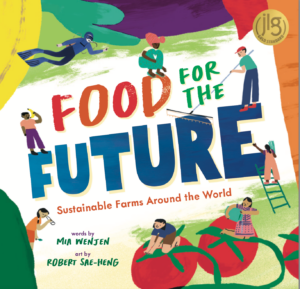
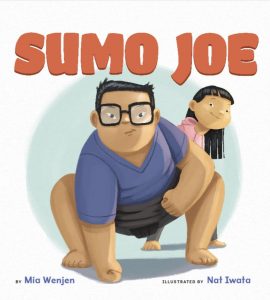
The synergy between authors like Mia Wenjen—whose extensive bibliography spans works such as Barbed Wire Between Us, Postcards from Malcolm X: How Yuri Kochiyama Became a Civil Rights Activist, Fortune Cookies for Everyone!, The Traveling Taco, We Sing from the Heart, Boxer Baby Battles Bedtime, Food for the Future: Sustainable Farms Around the World, Sumo Joe, and Changing the Game: Asian Pacific American Female Athletes—and innovative publishing houses highlights a shared dedication to multicultural representation and historical education.
Urban Bookstore Density and Community Resilience
Boston possesses one of the highest densities of independent bookstores per capita in the United States, a phenomenon largely driven by its massive collegiate population and deep-rooted intellectual history. However, operating physical retail spaces in metropolitan areas like Boston presents severe financial challenges, including skyrocketing commercial real estate leases, supply chain volatility, and competition from e-commerce giants.
| Bookstore Name | Neighborhood | Architectural Highlight | Primary Cultural Function |
|---|---|---|---|
| Beacon Hill Books & Cafe | Beacon Hill | Restored 19th-Century Townhouse | Upscale neighborhood literary salon |
| Trident Booksellers & Cafe | Back Bay | Hidden Speakeasy-Style Event Room | High-traffic community and counter-culture hub |
| I Am Books | North End | Specialized Boutique Footprint | Multicultural and Italian-American heritage focal point |
As demonstrated by the architectural features uncovered during the crawl—such as Trident’s hidden event space and Beacon Hill Books’ multi-story residential conversion—successful independent bookstores are increasingly relying on adaptive reuse and experiential retail models. By transforming bookstores into hybrid spaces that incorporate cafes, event lounges, and community programming, these businesses insulate themselves against digital disruption.

Official Statements and Acknowledgments
The success of the 2026 Boston Red Comet Crawl was heavily dependent on cross-institutional collaboration, logistical coordination, and the generous hospitality of local booksellers.
Reflecting on the event, organizer and participating author Mia Wenjen emphasized the grassroots nature of the endeavor:
"We had another great Red Comet Crawl with Alison Goldberg, Kathy Choi, Andrew Hackett, and me, this time in Boston. These crawls are vital because they put creators and publishers directly into the physical spaces where readers discover stories. It is one thing to see a book online; it is entirely another to see it thoughtfully displayed on a historic mahogany shelf in Beacon Hill or discussed in a hidden Back Bay event room."
Special recognition was extended to Kathy Choi, whose meticulous logistical planning ensured that the multi-neighborhood itinerary operated without friction. Furthermore, the participants formally thanked the management and staff of Beacon Hill Books & Cafe, Trident Booksellers and Cafe, and I Am Books for opening their doors, coordinating staff schedules, and providing a warm, professional welcome to the touring literary contingent.
Future Outlook: Sustaining the Movement
As the independent publishing sector looks toward the remainder of the decade, events like the Red Comet Crawl serve as blueprints for community engagement. The model established in Boston—combining multi-author coordination, architectural exploration of retail spaces, and localized culinary tourism—demonstrates high scalability.
Strategic Implications for Future Crawls
- Expansion of Digital-Physical Hybrids: Future iterations of the crawl will likely incorporate live-streamed components (similar to the embedded documentation featured in the 2026 tour) to bridge the gap between local attendees and a nationwide audience of educators, parents, and young readers.
- Deepening Institutional Partnerships: Strengthening ties between independent presses, local authors, and urban bookstores creates a resilient economic feedback loop. When readers visit a bookstore during a curated crawl, their purchasing patterns directly support regional supply chains and secure shelf space for marginalized or independent voices.
- Educational Integration: With extensive companion resources—such as downloadable teacher guides for titles like Barbed Wire Between Us and multimedia book trailers—author crawls are increasingly doubling as professional development and literacy advocacy missions for educators.
Ultimately, the 2026 Boston Red Comet Crawl proved that despite the digitization of modern media, the physical act of walking into an independent bookstore, discovering a hidden room, sharing a slice of pizza, and discussing the power of storytelling remains an irreplaceable human experience.





Comments
Facebook App ID not configured. Please add it in the Customizer.