
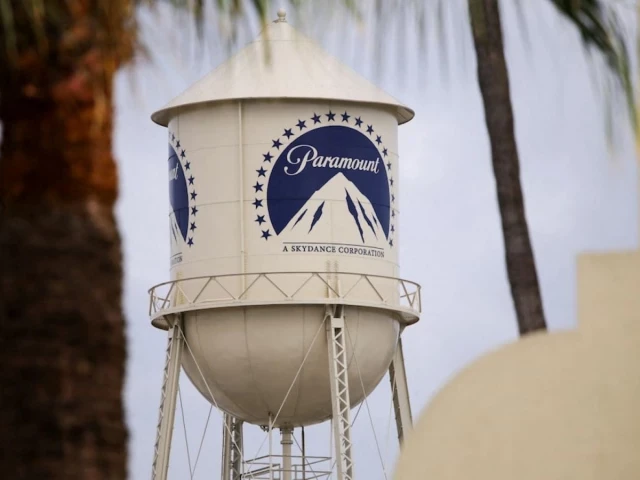
LOS ANGELES — In what will undoubtedly be recorded as a defining moment in media history, Paramount Skydance announced on Tuesday the formal completion of its monumental $110 billion acquisition of Warner Bros. Discovery. The transaction marries two of Hollywood’s most storied and culturally influential institutions, creating an unprecedented entertainment conglomerate operating simply under the banner of Skydance.
Helmed by CEO David Ellison—son of Oracle co-founder Larry Ellison—the newly forged entity instantly assumes the mantle of a dominant global heavyweight. The sprawling portfolio now under Ellison’s direct purview unites generation-defining intellectual properties, legacy broadcast networks, premier cable channels, and powerhouse streaming platforms under a single corporate umbrella.
As the ink dries on the regulatory and financial paperwork, the transaction marks the culmination of a high-stakes, multi-year consolidation wave in Hollywood. It also signals a radical shift in how entertainment, news, and streaming will be consumed, produced, and monetized in the latter half of the decade.
Read Also
Executive Overview: The Architecture of a Media Colossus
The sheer scale of the Paramount Skydance-Warner Bros. Discovery merger defies traditional industry comparisons. By bridging the assets of Paramount, Skydance, and Warner Bros., the newly minted corporate giant commands an ecosystem that touches nearly every facet of modern media consumption.
At the box office and on streaming screens, the company now houses the creative engines behind legendary franchises such as Mission: Impossible, Top Gun, Harry Potter, and the expansive cinematic universes of DC Studios. On the television and broadcasting fronts, the enterprise boasts an immense footprint encompassing the historic CBS network, the global newsgathering apparatus of CNN, the premium prestige television of HBO Max, and the broad-reach subscription service Paramount+.
To reflect its new operational reality and signal a clean break from the past, shares of the combined enterprise transitioned on Tuesday from the Nasdaq to the New York Stock Exchange, trading under the ticker symbol "SKYD".
While the transaction secures David Ellison’s status as one of the most powerful executives in corporate history, it also places immense expectations on his leadership team. The company inherits roughly $80 billion in debt, stepping into an industry actively grappling with declining linear cable revenues, skyrocketing content costs, and an intensely saturated streaming market.
Detailed Chronology: From Indie Backer to Hollywood Hegemony
The trajectory of Skydance Media is a masterclass in aggressive, calculated corporate scaling. Founded just sixteen years ago in 2010 by David Ellison, the firm began its journey as an independent film financing entity and production partner, famously cutting its teeth by co-financing major Paramount blockbusters, including True Grit and Mission: Impossible – Ghost Protocol.
Over the subsequent decade, Skydance cemented its reputation as a reliable, high-ROI creative partner for major studios, culminating in its massive success as a co-financier and producer of 2022’s global box-office phenomenon, Top Gun: Maverick.
However, Ellison’s ambitions extended far beyond traditional production deals.
The Path to Consolidation
- August 2025: Following prolonged negotiations and regulatory reviews, Skydance successfully closed its initial $8 billion merger with Paramount Global, instantly establishing Ellison as a major studio chief.
- Late 2025 – Early 2026: Barely settled into his new role, Ellison turned his sights toward Warner Bros. Discovery, which had been exploring strategic options amid ongoing financial pressures in the linear television landscape.
- The Bidding War: Skydance entered a ferocious, highly publicized bidding contest for Warner Bros. Discovery, going head-to-head with streaming pioneer Netflix, while drawing concurrent interest from legacy telecom and media giant Comcast.
- September 2026: Major legal hurdles were cleared when Paramount finalized settlements with a coalition of U.S. state attorneys general and Hollywood writers’ unions, effectively neutralizing antitrust and labor opposition to the mega-merger. Regulatory filings later revealed that Warner Bros. shareholders received an additional $41.9 million in "ticking fees," calculated based on the duration between the end of September and the ultimate closing date.
- October 6, 2026: The transaction officially concludes, transforming the media landscape overnight.
Ellison noted during corporate briefings that the decision to retain the "Skydance" corporate name—rather than inventing a synthetic portmanteau—was intentional. By keeping the name, the leadership aims to respect and preserve the storied individual legacies of the Paramount and Warner Bros. studio lots, even as administrative and operational functions are radically streamlined.
Supporting Context & Metrics: Navigating Debt, Savings, and Strategy
Beneath the glamour of Hollywood red carpets and blockbuster premieres lies a complex, high-stakes financial balancing act. Wall Street analysts and financial institutions have scrutinized the merger’s balance sheet, weighing the company’s vast revenue potential against its heavy debt burden.
Financial Projections and Targets
According to prominent financial brokerages, including forecasts from MoffettNathanson, the newly combined Skydance is projected to hit substantial financial milestones over the next several years:
- 2028 Projections: Anticipated revenues of approximately $67 billion, with an expected Earnings Before Interest, Taxes, Depreciation, and Amortization (EBITDA) of $16 billion.
- 2030 Projections: Projected revenues climbing to roughly $70 billion, supported by an EBITDA target of $19 billion.
The $6 Billion Cost-Savings Mandate
To achieve these financial targets, Ellison and his executive team have committed to delivering $6 billion in annual cost savings. Paramount executives have previously indicated that a substantial portion of these reductions will stem from "non-labor sources"—specifically by consolidating cloud infrastructure, merging redundant streaming technologies, and streamlining back-office administrative operations.
Nevertheless, industry labor unions and creative guilds have expressed vocal concerns regarding the inevitable human cost of such massive consolidation. With two massive corporate infrastructures colliding, workforce reductions across Hollywood are widely expected, prompting renewed debates over job security and the protection of creative workers’ rights in an era of corporate convergence.
Streaming and Theatrical Commitments
To counter subscriber churn and satisfy audiences fatigued by fragmented applications, Skydance has announced plans to merge its primary streaming assets—specifically HBO Max and Paramount+—into a single, unified digital platform.
Simultaneously, the studio has made a bold counter-cyclical bet on the theatrical window. Skydance has formally pledged to release at least 30 feature films per year during the first two years following the merger, a figure scheduled to ramp up to 32 films annually for the subsequent three years. This ambitious theatrical slate represents a direct challenge to industry trends that have seen many streaming-first competitors scale back their cinematic output.
Official Statements and Leadership Dynamics
A merger of this magnitude requires a carefully calibrated leadership structure capable of navigating competing corporate cultures and creative egos.
David Ellison has structured the executive suite to balance day-to-day operational execution with long-term creative vision. In a strategic appointment, Ellison named former Mattel CEO Ynon Kreiz as Skydance Co-CEO. Kreiz will take the operational reins, managing day-to-day business affairs and spearheading the complex integration of the two global companies, while Ellison retains direct oversight of creative direction and overarching corporate strategy.
In the realm of journalism and hard news, continuity has been prioritized. Skydance confirmed that CNN chief Mark Thompson and CBS News Editor-in-Chief Bari Weiss will remain in their respective leadership roles, maintaining editorial stability across two of the most influential newsrooms in the free world. Regulatory disclosures also revealed that Ellison will draw an annual base salary of $5 million, backed by a target annual bonus of $5 million.
While Wall Street analysts have largely praised the clarity of the leadership appointments, some media critics note that the retention of the "Skydance" moniker underscores the absolute centralization of power under Ellison. In just over a decade, a boutique independent studio has effectively absorbed two founding pillars of the American motion picture industry, placing the keys to Hollywood’s most prized intellectual properties into the hands of a single executive.
Future Outlook: The Road Ahead for Skydance
As the dust settles on the trading floor of the New York Stock Exchange, the true test for Skydance is only just beginning. The media landscape of late 2026 is vastly different from the golden age of cable television or the early, unfettered expansion years of the "Streaming Wars."
Consumers are increasingly cost-conscious, exhausted by subscription fatigue, and selective about their entertainment spending. Concurrently, linear television viewership continues its structural decline, forcing traditional media companies to accelerate their digital transformations while squeezing every possible dollar of cash flow from legacy networks.
For David Ellison and Ynon Kreiz, the mandate is clear: successfully merge two colossal content libraries, execute the $6 billion cost-reduction strategy without crippling creative output, launch a unified streaming platform capable of competing with tech-giant-backed rivals like Netflix and Amazon, and manage an $80 billion debt load—all while releasing upwards of 30 theatrical films a year.
If successful, Skydance will not merely have survived the great media consolidation wave of the 2020s; it will have rewritten the rules of engagement for the global entertainment industry for decades to come. If it stumbles, the reverberations will be felt from the soundstages of Hollywood to the trading floors of Wall Street, marking a historic cautionary tale of overreach. For now, Tinseltown watches, waits, and prepares for a new era under the Skydance banner.





Comments
Facebook App ID not configured. Please add it in the Customizer.