
Executive Overview
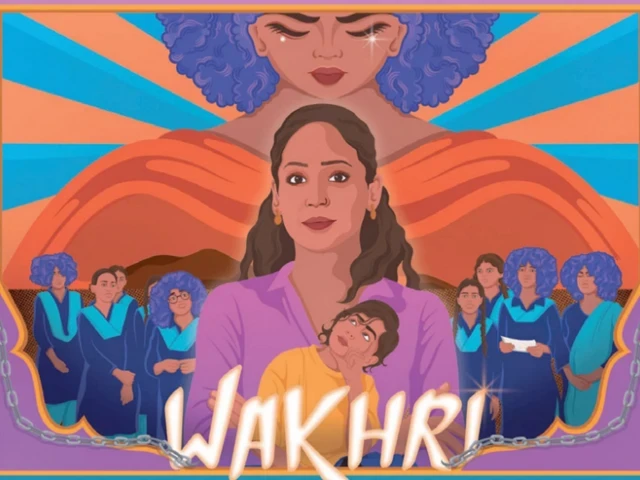
In an era where the digital landscape serves as both a liberating megaphone and a dangerous battleground for women, cinema continues to hold a mirror up to society’s most uncomfortable truths. In a major milestone for Pakistani cinema, Wakhri—a provocative, socially charged feature film directed by Iram Parveen Bilal and inspired by the harrowing, tragic life of murdered social media icon Qandeel Baloch—has been officially selected for Channel 4 and Film4’s prestigious South Asian Film Season 2026 in the United Kingdom.
This international showcase, renowned for curating cutting-edge and politically resonant cinema from across the subcontinent, will feature Wakhri alongside a handpicked selection of nine contemporary masterpieces from Pakistan, India, and Bangladesh. Curated by esteemed Indian cinema expert and veteran consultant Nasreen Munni Kabir, the lineup spans genres from psychological thrillers to hard-hitting social realism. Yet, Wakhri stands out not merely for its aesthetic and narrative ambition, but because of the urgent, universal dialogue it forces regarding gender inequality, digital surveillance, online violence, and the fierce price of female autonomy.
The film stars Faran Tahir, Gul-e-Rana, Nimra Bucha, and introduces Faryal Mehmood in the lead role of Noor Malik, a widowed schoolteacher whose accidental digital rebellion plunges her into a vortex of overnight fame, systemic misogyny, and mortal peril.
Read Also
For the production team, headed by producer Abid Merchant, this UK broadcast and festival inclusion represents the culmination of a grueling, high-stakes journey. It signals that Pakistani stories—though deeply rooted in local sociopolitical realities—resound with a terrifying, universal familiarity across global borders. As the film prepares to reach millions of British households through Channel 4 and Film4’s platforms, Wakhri demands to be recognized as more than just a piece of entertainment; it is a cultural artifact of resistance, a requiem for the silenced, and a warning about the digital age’s capacity to consume and destroy its own creators.
Detailed Chronology: From Real-World Tragedy to Cinematic Reckoning
The Genesis of a Modern Tragedy: Qandeel Baloch and the Shadow of "Honor"
To fully understand the narrative weight of Wakhri, one must retrace the life and brutal death of Fauzia Azeem, globally known by her pseudonym Qandeel Baloch. Hailing from a conservative family in rural Punjab, Baloch rose from profound poverty to become Pakistan’s first self-made digital superstar. In a patriarchal society that strictly policed female bodies, behavior, and speech, Baloch weaponized her sexuality, wit, and defiance against the establishment. She posted provocative videos, challenged mullahs, flirted with cricketers, and demanded autonomy over her own identity.
However, her public persona invited immense vitriol. She received constant death threats, harassment, and societal ostracization. On July 15, 2016, the inevitable occurred: Baloch was strangled to death in her family home in Multan by her brother, Muhammad Waseem, who chillingly confessed to the murder, stating he had no regrets because she had "brought disrepute to the family name."
The murder sent shockwaves across the globe, exposing the gruesome reality of "honor killings" in South Asia. Yet, even in death, the state’s apparatus failed to deliver swift justice until civil society mobilized. The public outcry eventually forced the Pakistani government to amend the legal loopholes that allowed murderers to walk free if pardoned by family members—a landmark legislative shift often dubbed "Qandeel’s Law."
Conception, Production, and the Birth of Wakhri
Moved by the systemic failure that cost Baloch her life, filmmaker Iram Parveen Bilal began conceptualizing a cinematic response. Recognizing that Baloch’s story was not an isolated incident, but rather a symptom of a much larger global sickness regarding women in the public eye, Bilal set out to write and direct Wakhri (which translates from Punjabi and Urdu as "One of a Kind" or "Unique").
The production faced numerous hurdles, ranging from securing financing in an industry heavily reliant on safe, commercial romantic dramas to navigating conservative pushback regarding the film’s themes. Despite these obstacles, Bilal assembled a powerhouse cast. Faryal Mehmood stepped into the demanding lead role of Noor Malik, a repressed, widowed schoolteacher living a double life: by day, she adheres to the strict, modest expectations of her conservative community; by night, behind a burqa and an anonymous avatar, she unleashes razor-sharp, unfiltered critiques of societal hypocrisy on social media.
When one of her video rants inadvertently goes viral, Noor becomes an overnight digital sensation—"Wakhri." But this sudden visibility brings immediate peril. As her online follower count skyrockets, so does the hostility from conservative factions, political opportunists, and patriarchal gatekeepers who view her voice as an existential threat.
The International Festival Circuit and the Channel 4 Breakthrough
Following its domestic release in Pakistan, Wakhri embarked on an international festival run, captivating audiences and critics alike with its gritty blend of narrative fiction, animation, and real social media aesthetics. The film’s selection for Channel 4 and Film4’s South Asian Film Season 2026 marks its most significant international deployment to date.
Channel 4, known historically in the UK for championing provocative, boundary-pushing, and diverse programming, provides the ideal platform for a film that refuses to pander to sanitized depictions of South Asian womanhood. Through this partnership, Wakhri transcends traditional art-house circuits to enter mainstream British television and digital streaming landscapes, ensuring that the echoes of Qandeel Baloch’s struggle will be heard by millions who have never set foot in Pakistan.
Supporting Context & Metrics: The Sociopolitical Anatomy of Online Misogyny
To evaluate the cultural significance of Wakhri, one must examine the empirical landscape of gender-based violence, digital harassment, and the state of Pakistani cinema.
The Digital Panopticon: Women and Online Harassment in South Asia
The internet was once heralded as a great equalizer—a democratic space where marginalized voices could bypass traditional media gatekeepers. However, for women in South Asia, the digital sphere has increasingly transformed into a panopticon of surveillance, abuse, and targeted violence.
According to data compiled by digital rights organizations such as Pakistan’s Bytes for All and the Digital Rights Foundation (DRF), women account for an overwhelming majority of reported cyber-harassment cases, including non-consensual intimate image sharing, doxxing, deepfake generation, and organized trolling campaigns.
- The Toll of Visibility: Studies indicate that female journalists, activists, artists, and influencers in Pakistan experience vitriol at rates exponentially higher than their male counterparts. The abuse is rarely abstract; it frequently spills over into physical threats, stalking, and offline violence.
- State Complicity: While cybercrime legislation exists (such as Pakistan’s Prevention of Electronic Crimes Act, or PECA), enforcement remains deeply skewed. Laws meant to protect citizens from online harassment are frequently weaponized against women who speak out, accusing them of "defaming" cultural or religious values.
Wakhri tackles this precise dynamic. The film illustrates how algorithms reward sensationalism and controversy, turning women’s trauma into viral currency while simultaneously exposing them to lethal offline consequences.
The Evolution of Pakistani Cinema (Lollywood to "New Wave")
For decades, Pakistan’s film industry—colloquially termed "Lollywood"—was trapped in a cycle of formulaic Punjabi-language action films and melodramatic Urdu melodramas that largely catered to a localized, working-class male demographic. However, the mid-2010s heralded a "New Wave" of Pakistani cinema, characterized by young, diaspora-trained or internationally exposed directors like Bilal, Mehreen Jabbar, Sarmad Khoosat, and Nabeel Qureshi.
This new generation of filmmakers has systematically rejected escapism in favor of social realism. Films like Khuda Kay Liye (2007), Bol (2011), Kamli (2022), Joyland (2022), and now Wakhri (2026) have redefined Pakistani cinema on the global stage. They prove that Pakistani artists are capable of interrogating religious extremism, LGBTQ+ rights, mental health, and patriarchal oppression with nuance, artistic rigor, and unflinching courage.
Yet, this artistic renaissance does not occur in a vacuum. The path of Wakhri underscores the paradox faced by contemporary Pakistani filmmakers: while their work garners critical acclaim at major international festivals in Toronto, London, and Berlin, they often face severe censorship, threats of bans, and administrative hurdles at home.
Official Statements and Industry Perspectives
The inclusion of Wakhri in the South Asian Film Season has sparked conversations across the international film community. Producers, directors, and curators have stepped forward to contextualize the film’s broader mission.
Speaking exclusively to The Express Tribune, producer Abid Merchant articulated the profound validation the selection represents for the entire cast and crew:
"This is a huge validation for us. Wakhri is about a widowed teacher who raises her voice on social media. It is inspired by the tragic story of Qandeel Baloch, but its message is universal," Merchant emphasized.
He further noted that transitioning from independent international festival runs to a major mainstream UK broadcaster like Channel 4/Film4 is a watershed moment:
"Wakhri’s journey from international film festivals to a major UK broadcaster represents an important milestone for the project. It proves that human stories rooted in local resistance can strike a chord with global audiences who grapple with the exact same questions of digital safety, identity, and freedom of expression."
Nasreen Munni Kabir, the veteran Indian cinema expert and curator of the 2026 South Asian Film Season, shed light on why Wakhri was selected alongside titles from India and Bangladesh. In her curatorial notes, Kabir emphasized the season’s focus on works that dismantle stereotypes and confront structural inequalities:
"The films chosen for this season do not offer easy comforts. They confront the fault lines of our societies—whether racial, class-based, political, or gendered. Iram Parveen Bilal’s Wakhri does this with ferocious energy and stylistic inventiveness. It forces the viewer to confront the price that women pay when they dare to occupy public space without asking for permission."
Director Iram Parveen Bilal, in previous statements regarding the film’s thematic core, noted that Noor Malik’s character was designed to reflect the internal contradictions every modern woman navigates:
"Noor is not a flawless superhero; she is flawed, afraid, angry, and deeply human. She represents every woman who has ever bitten her tongue in a boardroom, a classroom, or a dining room, and wondered what would happen if she finally let loose. Wakhri is a tribute to those unsaid words—and a warning about the world that punishes women for finally speaking them."
Future Outlook: The Global Resonance of South Asian Counter-Narratives
As Wakhri prepares for its high-profile showcase during the Channel 4 and Film4 South Asian Film Season 2026, its trajectory points toward several critical trends in international media, digital rights, and South Asian filmmaking.
1. The Decentralization of Film Distribution
The traditional model of theatrical distribution—where a film must conquer local box offices before gaining international recognition—is rapidly evolving. For contentious, socially critical films like Wakhri, streaming platforms and public-service broadcasters like Channel 4 provide a vital lifeline. By bypassing domestic censorship boards and reaching transnational audiences directly, these platforms ensure that vital socio-political critiques cannot be easily silenced by local authorities.
2. Solidarity Across Borders in South Asian Cinema
The curation of Wakhri alongside contemporary works from India and Bangladesh under a unified "South Asian" banner highlights a growing collaborative and comparative discourse among regional filmmakers. While political borders remain heavily militarized and fraught with nationalism, cultural products from the subcontinent increasingly share a united thematic front: interrogating the rise of authoritarianism, digital surveillance, caste and class stratification, and patriarchal violence.
3. The Ongoing Battle for Digital Safety and Freedom of Expression
Ultimately, Wakhri arrives at a time of profound global anxiety regarding the weaponization of the internet. From deepfake scandals and targeted doxxing campaigns to state-sponsored internet shutdowns and the criminalization of online speech, the themes explored in the film—inspired by a tragedy that occurred a decade ago—are more relevant today than ever before.
As audiences across the UK sit down to watch Noor Malik’s digital awakening and subsequent trials, they are not merely watching a localized Pakistani story. They are witnessing a universal reflection of the modern digital condition: a world where speaking truth to power online can make you an icon, but where the algorithms—and the patriarchs—will always demand a blood sacrifice.
Through Wakhri, the memory of Qandeel Baloch refuses to be consigned to a Wikipedia page or a forgotten news clipping. Instead, transformed through the alchemy of cinema, her spirit echoes across borders, reminding every woman who logs onto the internet that her voice, however perilous its exercise, remains her most dangerous and revolutionary weapon.


Comments
Facebook App ID not configured. Please add it in the Customizer.