
Executive Overview
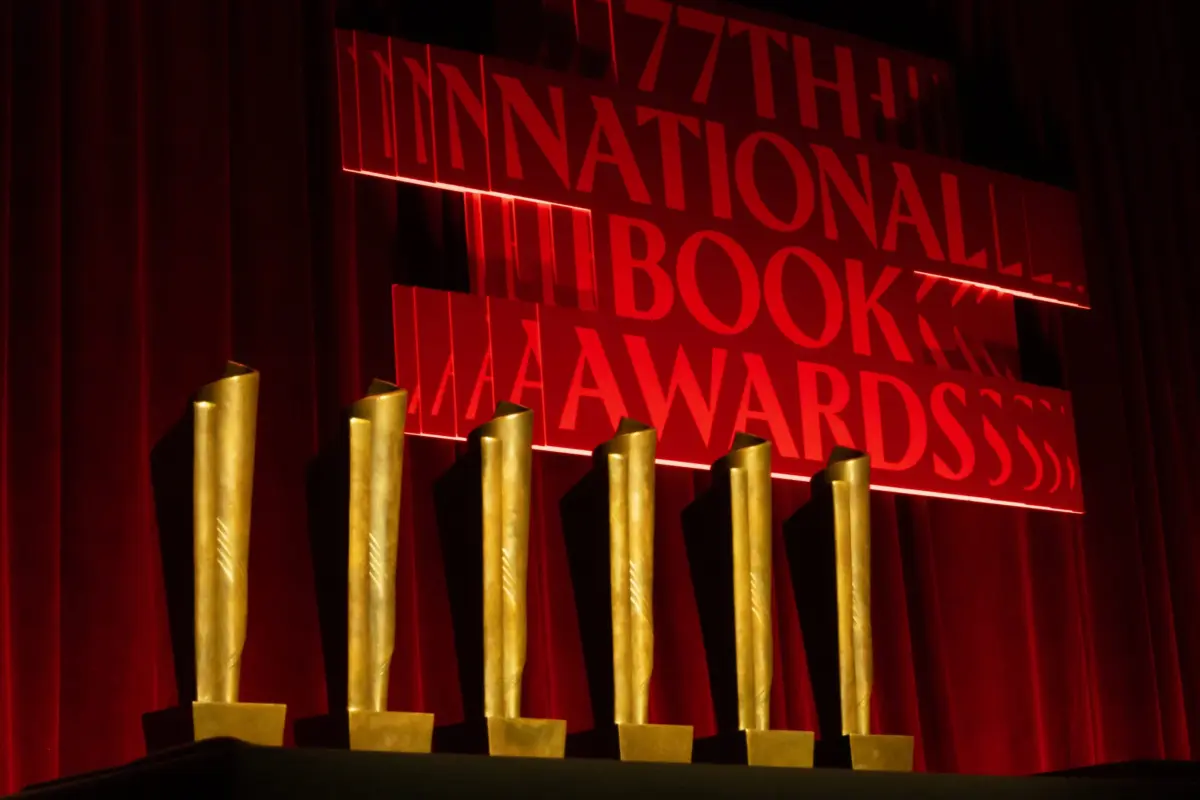
The annual National Book Awards ceremony stands as the premier event in the American literary calendar. Traditionally celebrated for its black-tie elegance, champagne toasts, and star-studded gatherings, the gathering has increasingly evolved into a pivotal platform for political discourse, industry critique, and cultural commentary. The latest staging of the awards underscored this dual identity, serving simultaneously as a showcase of aesthetic achievement and a battleground over pressing sociopolitical issues.
Throughout the evening, honorees and presenters addressed structural pressures threatening the integrity of contemporary literature. Key themes included the rapid encroachment of artificial intelligence on artistic labor, systemic reductions in media coverage for books, state-sponsored censorship targeting marginalized voices, and the heavy-handed enforcement of national borders.
The ceremony was dominated by the conspicuous absence of Nonfiction winner Abdelrahman ElGendy, who was denied an entry visa by federal authorities despite earning one of the nation’s highest literary honors. Paired with impassioned speeches defending trans youth, queer histories, and Palestinian identity, the evening highlighted a literary community increasingly determined to push back against domestic institutional failures and global violence.
Read Also
Detailed Chronology: A Night of Celebration and Protest
                                CEREMONY TIMELINE

  [Opening Monologue] ──> Host Kyle MacLachlan sets tone: humor, AI satire, library advocacy
            │
  [Young People's Lit] ──> Levithan & Duckels win for 'The Fight of Our Lives'
            │             └─ Solidarize with absent ElGendy; condemn LGBTQ+ book bans
            │
  [Translated Lit]    ──> Mora & Bery win for 'Centroeuropa'
            │             └─ Highlight mathematical translation complexity AI cannot copy
            │
  [Poetry]            ──> Brenda Hillman wins for 'Still House in the Desert'
            │             └─ Direct challenge to press corps over marginalized verse coverage
            │
  [Nonfiction]        ──> Abdelrahman ElGendy wins for 'Huna' (Accepted by Helen Thomaides)
            │             └─ Visceral highlight: Visa denial, exile, NBF eligibility defense
            │
  [Fiction Climax]    ──> Hannah Lillith Assadi wins for 'Paradiso 17'
                          └─ Meditation on Palestinian resilience, personal grief, and memory
Opening Remarks and Industry Satire
The evening commenced with opening remarks by actor Kyle MacLachlan, whose hosting balanced lighthearted humor with an acute awareness of the room’s underlying anxieties. MacLachlan opened with nods to public libraries, his iconic performance in David Lynch’s adaptation of Dune, and a self-deprecating joke regarding the acronym shared by the National Book Association and the National Basketball Association—a perennial point of search-engine confusion during award season.
MacLachlan directly addressed the publishing sector’s growing unease surrounding artificial intelligence. Joking that while generative models did not write his opening script—an act he labeled immoral—he was taking full credit for the work of the human ghostwriter who did, framing it as a more traditionally accepted industry practice. This satirical opening paved the way for more rigorous critiques of tech encroachment delivered by subsequent speakers throughout the evening.
Early Category Breakthroughs and Anti-Censorship Declarations
The competitive portion of the evening began in the Young People’s Literature category, awarded to David Levithan and Gabriel Duckels for The Fight of Our Lives, a historical account of the HIV/AIDS crisis in the United States.
Taking the podium, Levithan immediately established a tone of political solidarity, grounding the room in the broader realities of state restriction. Their acceptance speech confronted the surge in book bans and policy initiatives targeting LGBTQ+ literature across school districts nationwide, issuing an explicit defense of trans and nonbinary youth.
Human Precision versus Generative AI in Translation
In the Translated Literature category, author Vicente Luis Mora and translator Rahul Bery were awarded for Centroeuropa, a novel detailing a widower’s discovery of fallen soldiers buried beneath agricultural land. Mora’s acceptance remarks reflected on the devastation of contemporary warfare, expressing a desire for geopolitical stability that extends beyond literary utopianism.
Bery addressed the practical mechanics of literary translation, drawing a direct line between human artistic labor and computational limits. He highlighted the structural complexity of Centroeuropa—a text that doubles its page count in successive chapters down to the precise word count—arguing that such intricate compositional constraints demonstrate the irreducibility of human translation in an era dominated by automated language models.
Media Accountability and the Defense of Verse
Accepting the Poetry award for Still House in the Desert, Brenda Hillman addressed the assembled press corps directly. Looking toward the media tables at the rear of the hall, Hillman urged journalists, editors, and news executives to reconsider the systematic marginalization of poetry in critical coverage and end-of-year lists. Her statement underscored a growing rift between independent literary creators and mainstream media organizations that have curtailed dedicated arts journalism.
       NATIONAL BOOK AWARDS 2026: CATEGORY SUMMARY & CORE THEMES
┌───────────────────────────┬───────────────────────────────┬──────────────────────────────────────────┐
│ Category                  │ Winner(s) & Work              │ Primary Theme / Key Message              │
├───────────────────────────┼───────────────────────────────┼──────────────────────────────────────────┤
│ Young People's Literature │ D. Levithan & G. Duckels      │ Erasure of HIV/AIDS history; defense of  │
│                           │ ('The Fight of Our Lives')    │ trans and nonbinary youth.               │
├───────────────────────────┼───────────────────────────────┼──────────────────────────────────────────┤
│ Translated Literature     │ V. L. Mora & R. Bery (Trans.) │ Mathematical artistic constraints vs.    │
│                           │ ('Centroeuropa')              │ AI; reflections on war and peace.        │
├───────────────────────────┼───────────────────────────────┼──────────────────────────────────────────┤
│ Poetry                    │ Brenda Hillman                │ Advocacy for poetry coverage in          │
│                           │ ('Still House in the Desert') │ mainstream media outlets.                │
├───────────────────────────┼───────────────────────────────┼──────────────────────────────────────────┤
│ Nonfiction                │ Abdelrahman ElGendy           │ Visa denials, state violence, political  │
│                           │ ('Huna')                      │ exile, and bureaucratic harassment.      │
├───────────────────────────┼───────────────────────────────┼──────────────────────────────────────────┤
│ Fiction                   │ Hannah Lillith Assadi         │ Collective Palestinian grief, memory,    │
│                           │ ('Paradiso 17')               │ and aesthetic beauty amidst trauma.      │
└───────────────────────────┴───────────────────────────────┴──────────────────────────────────────────┘
The Absent Winner: Nonfiction in the Shadow of Border Enforcement
The central focal point of the ceremony occurred during the presentation of the Nonfiction award to Egyptian writer Abdelrahman ElGendy for his memoir Huna. ElGendy was unable to accept the award in person after being denied an entry visa by federal immigration authorities.
The award was accepted on ElGendy’s behalf by his editor, Helen Thomaides. Reading from a prepared statement, Thomaides detailed how ElGendy’s documentation of human rights violations led to his initial political exile, subsequent asylum in the United States, and ultimate exclusion from re-entering the country even as a celebrated cultural figure.
The absence was further compounded by pre- and post-ceremony eligibility challenges published by The New York Times, which questioned ElGendy’s qualification for the honor despite explicit clarification and verification from the National Book Foundation.
The Climax of Fiction: Grief, Memory, and the Palestinian Story
The final award of the evening, presented in Fiction, was conferred upon Hannah Lillith Assadi for her novel Paradiso 17. Assadi’s speech contextualized her narrative within broader dynamics of personal bereavement and geopolitical violence, connecting her father’s terminal illness to the collective trauma experienced by the Palestinian diaspora. Her closing remarks offered a reflection on the intersection of aesthetic creation, ancestral memory, and political survival.
Supporting Context & Metrics
Geopolitical Obstacles and Border Enforcement
ElGendy’s visa denial illustrates an escalating trend wherein international writers, journalists, and scholars face severe mobility restrictions enforced by state border apparatuses. The National Book Foundation’s decision to maintain ElGendy’s eligibility despite public challenges from legacy media institutions marks a significant precedent in defending international authors operating under political exile.
                   CRITICAL INDUSTRY STRESSORS
┌─────────────────────────────────────────────────────────────────┐
│ [Geopolitical Restrictions]                                     │
│  └─ Visa denials, asylum complications, border barriers         │
├─────────────────────────────────────────────────────────────────┤
│ [Media Retrenchment]                                            │
│  └─ Dissolution of dedicated book review sections & platforms    │
├─────────────────────────────────────────────────────────────────┤
│ [Technological Encroachment]                                    │
│  └─ Publisher interest in generative AI vs. human labor         │
├─────────────────────────────────────────────────────────────────┤
│ [Legislative Censorship]                                        │
│  └─ State-level bans targeting LGBTQ+ and minority literature   │
└─────────────────────────────────────────────────────────────────┘
The Crisis in Literary Media and Cultural Coverage
The ceremony highlighted systemic contraction across cultural journalism:
- Closure of Specialized Outlets: The recent shutdown of prominent literary platforms like Catapult has dramatically reduced publisher space for long-form essays, debut reviews, and author interviews.
- Reduction of Legacy Coverage: Prominent newspapers continue to eliminate or downsize independent book review sections—a structural decline illustrated by Kiran Desai’s recollection of her mother, Anita Desai, reviewing legacy figures like Lifetime Achievement recipient Salman Rushdie in the now-defunct Washington Post standalone books section.
- Institutional Backlash: Mainstream media scrutiny regarding longlist diversity—typified by public critiques in The New York Times—underscores an ongoing cultural tug-of-war regarding representation in major awards.
Tech Encroachment and the Generative AI Threat
While executive leadership across major publishing houses continues to evaluate machine learning models to streamline operational pipelines, authors and translators at the ceremony pushed back strongly. Speakers framed algorithmic generation as an existential threat to authentic human art, calling on editorial staff and executive leadership to protect original creative labor from corporate cost-cutting measures.
Official Statements
On International Mobility and Author Eligibility
"We stand in solidarity with any author who is kept from being here tonight."
— David Levithan, Co-Winner for Young People’s Literature"Abdelrahman ElGendy’s commitment to speaking out against injustice put a target on his back… Having found refuge in America, he was once again forced to flee. Now, he’s not able to return even as a celebrated visitor."
— Helen Thomaides, Editor, accepting on behalf of Abdelrahman ElGendy(Official Statement) "The National Book Foundation unequivocally affirms the eligibility of all longlisted, shortlisted, and winning authors under our established guidelines, regardless of administrative visa delays or arbitrary border restrictions."
— The National Book Foundation
On Censorship and LGBTQ+ Literature
"The past, present, and future of HIV and AIDS cannot be erased. Yes, there are people who want to erase our stories from the shelves, but know there are far, far, far more people who want our stories to be heard. We will not allow our youth, particularly our trans and nonbinary youth, to go unsupported. We will not let the noise of others drown out the music of who we are."
— Gabriel Duckels & David Levithan, Co-Winners for Young People’s Literature
On Artificial Intelligence and Human Creativity
"In a year where everyone’s talking about AI and its threat to all kinds of human creativity and endeavor, I like to think that, for now at least, this is something the computers couldn’t do."
— Rahul Bery, Translator, Centroeuropa
On Media Responsibilities and Literary Coverage
"We’re grateful for you [the press], but you know, sometimes poetry gets kind of a short shrift. We ask the press to consider that best books include poetry too."
— Brenda Hillman, Winner for Poetry
On Narrative, Memory, and Palestinian Heritage
"During the writing of this book, I experienced deep personal grief and unimaginable collective grief… Perhaps this is the Palestinian story on this earth. So beautiful, so painful. And isn’t this story all of ours?"
— Hannah Lillith Assadi, Winner for Fiction
Future Outlook
As the literary industry heads into 2027, the events of the National Book Awards signal an era of heightened political engagement and structural realignment for authors, publishers, and arts organizations.
                                  LOOKING AHEAD TO 2027

  ┌─────────────────────────────┐    ┌─────────────────────────────┐    ┌─────────────────────────────┐
  │     BORDER & VISA REFORM    │    │   INDEPENDENT MEDIA GROWTH  │    │  ANTI-CENSORSHIP LITIGATION │
  │                             │    │                             │    │                             │
  │ Pressuring institutions to  │ ──>│ Alt-lit publications and    │ ──>│ Coalition building between  │
  │ safeguard international     │    │ reader-funded platforms     │    │ authors, publishers, and    │
  │ writers against state bans. │    │ filling coverage voids.     │    │ civil rights legal groups.  │
└─────────────────────────────┘ └─────────────────────────────┘ └─────────────────────────────┘- Heightened Advocacy for International Authors: The public controversy surrounding Abdelrahman ElGendy’s visa denial is expected to mobilize literary organizations, PEN America, and civil liberties groups to push for streamlined cultural visas and stronger legal protections for exiled writers.
- Expansion of Independent Literary Coverage: With traditional media outlets reducing coverage of books, non-profit digital publications and reader-supported digital platforms are increasingly becoming the primary archives for literary critique, author interviews, and poetry coverage.
- Formalized Resistance to Generative AI: Authors Guild initiatives and unionized publishing staff are expected to demand explicit contractual protections limiting corporate usage of generative AI models in translation, editing, and cover design.
- Legal and Grassroots Pushback Against Book Bans: The explicit declarations made by winners in the Young People’s Literature category reflect a coordinated effort among creators and legal advocacy groups to challenge state-level censorship of marginalized voices in courts and school boards across the country.



Comments
Facebook App ID not configured. Please add it in the Customizer.