
Executive Overview
The modern live entertainment landscape is undergoing a profound structural evolution. For decades, the lifeblood of the music industry was the grueling cross-country or international tour—a relentless cycle of packing up semi-trucks, boarding sleeper buses, and playing a new city every 24 to 48 hours. Today, however, that model is increasingly being sidelined by the high-profile concert residency.
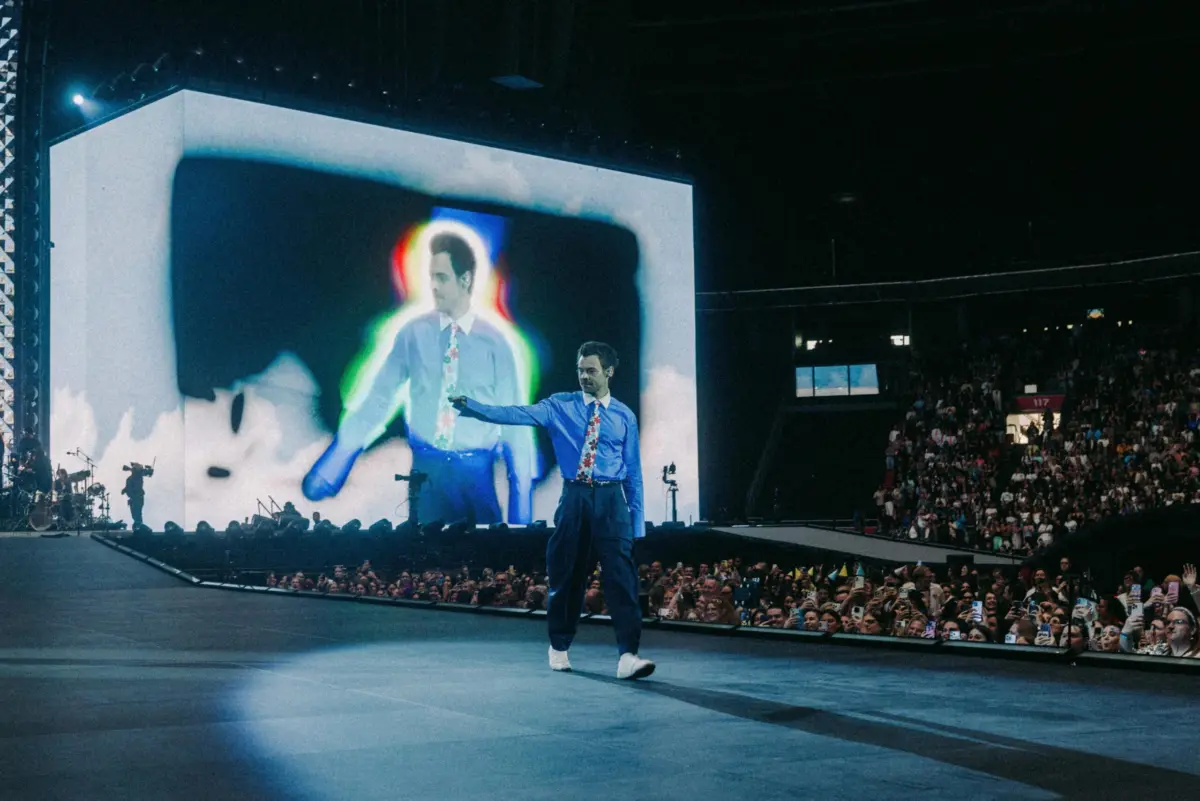
The trend reached a striking milestone when Harry Styles kicked off his landmark 30-night residency at New York City’s Madison Square Garden. By opting to plant roots in Manhattan for a month rather than embarking on a conventional, globe-trotting tour, Styles joined an elite roster of contemporary megastars—including Adele, Bad Bunny, and Billy Joel—who are fundamentally rewriting how fans experience live music.
This shift is far from a mere scheduling preference; it represents a major economic and cultural realignment. Driven by escalating touring overhead, post-pandemic demand shifts, and a collective reckoning with the physical and mental toll of life on the road, artists are staying put. Yet, while residencies alleviate burnout and maximize logistical efficiency for performers, they shift a heavy financial and logistical burden onto consumers. Fans are no longer waiting for music to come to their hometowns; instead, they are forced to buy expensive tickets and finance destination travel, raising pressing questions about economic accessibility, ticket pricing, and the future of cultural consumption.
Read Also
Detailed Chronology: The Rise of the Stationary Superstar
The transition from the traditional tour bus circuit to the fixed-location residency has accelerated rapidly over the last several years, shifting from a novelty associated with aging legacy acts in Las Vegas to a dominant business strategy for the world’s biggest pop and rock icons.
Phase 1: The Las Vegas Blueprint and the Post-Pandemic Boom
Historically, multi-night residencies were synonymous with Las Vegas, pioneered by icons like Elvis Presley and later modernized by Celine Dion. Vegas offered a built-in infrastructure: a massive influx of tourists on corporate expense accounts, world-class hospitality, and centralized transit hubs.
However, the post-pandemic live music boom shattered geographic boundaries. As global economies emerged from COVID-19 lockdowns, pent-up consumer demand sent ticket prices soaring. Artists realized that audiences were willing to pay unprecedented sums for live entertainment, provided the experience felt monumental. This paved the way for "destination residencies" outside of Nevada. Adele’s massive custom-built pop-up residency in Munich, Germany, set a new benchmark, featuring bespoke architecture, massive state-of-the-art visual displays, and hundreds of thousands of international attendees traveling specifically for the event.
Phase 2: The Shift Toward Multi-Night Stands
Even for artists not executing full-scale, multi-month residencies, the standard touring model has morphed. Industry analysts note a pervasive trend toward "clustered routing"—fewer total venues, but longer stays in each location. Artists are routinely booking two-, three-, and four-night stands in major metropolitan hubs rather than moving nightly from city to city.
Phase 3: The Harry Styles Paradigm at Madison Square Garden
Harry Styles’ 30-night run at Madison Square Garden epitomizes the apex of this evolution. By declaring an extended residency with zero other domestic US tour dates, Styles has weaponized the principle of scarcity. Rather than diluting his market presence across dozens of mid-sized arenas nationwide, he has forced the entire North American fanbase to funnel into a single cultural capital. The residency format transforms a standard concert into an extended cultural happening, anchoring the city’s economy while redefining the artist-venue relationship.
Supporting Context & Metrics: The Economics of Staying Put
To understand why artists are abandoning the traditional tour, one must look past the glittering ticket revenue and examine the staggering costs of modern touring.
Minimizing Outbound Capital
Public discourse surrounding the concert business invariably focuses on top-line box office grosses—the hundreds of millions of dollars pouring in. Rarely, however, do observers analyze the immense capital flowing out.
Touring is logistically astronomical. Transporting dozens of production trucks, audio-visual arrays, instruments, wardrobes, and hundreds of crew members across continents incurs massive expenses in fuel, labor, venue rentals, and transit insurance. By parking a production in a single arena like Madison Square Garden for 30 nights, an artist slashes transit overhead to near zero. The production builds once, the crew stays in one hotel, and the profit margins widen exponentially.
The Lifestyle and Health Evolution
For generations, the "romance of the road" was romanticized through classic rock lore—the exhaustion, the burnout, and the toll of substance abuse beautifully encapsulated in anthems like Bob Seger’s "Turn the Page."
That dark mythology has largely lost its cultural cachet. Performers and their management teams are increasingly prioritizing longevity, mental health, and physical well-being. The grueling grind of moving from city to city induces severe fatigue. Residencies provide stability, allowing artists to maintain a healthy sleep schedule, retain personal routines, and protect their voices and bodies from the wear and tear of continuous travel. As veteran performers age, the stationary model offers a sustainable alternative to retirement or early burnout.
The Consumer Impact and "FOMO" Economics
While the residency model solves logistical and health challenges for the artist, it transfers financial strain onto the audience.
- The Travel Tax: Fans residing outside of major hubs like New York, Los Angeles, or London must absorb the costs of flights, hotels, and local transit on top of inflated ticket prices.
- The "Event" Premium: Because residencies are finite and concentrated, they generate intense Fear Of Missing Out (FOMO). Promoters leverage this by elevating the production value—introducing world-record-breaking screens, immersive set designs, and exclusive setlists.
- The Inelastic Demand Curve: Economic theory suggests that as prices rise, demand drops. Yet, the live music market defies traditional economic constraints. Consumers who tighten their belts on discretionary retail goods (such as clothing or electronics) continue to splurge on marquee live music experiences. Because an artist like Beyoncé or Harry Styles has no direct substitute—there is no "budget alternative" that scratches the same itch—demand remains remarkably resilient even amidst broader economic pressures.
Official Statements & Industry Insights
Industry experts point out that the residency model is not merely a passing fad, but a permanent structural adjustment driven by consumer behavior and economic pragmatism.
Speaking on these shifts, entertainment analysts emphasize that the decision to anchor a tour in a single city comes down to curating an unmissable cultural moment. Robert Levine, a prominent writer for Billboard, noted in discussions regarding modern touring economics:
"You really have to create a sense of event. You have to have a claim on people’s souls. In the modern concert business… it’s not so much, ‘Why do you want to see them?’ but, ‘Why now and not next year or the year after?’"
Discussing the operational realities behind massive residencies like Adele’s in Munich or Styles’ in New York, industry observers highlight the alignment of world-class infrastructure with high-yield demographics:
"If you’re charging people that amount of money, it doesn’t just need to be a great show. It needs to be part of a great weekend. It has to be a city with a lot to do. It has to have great air connections and a lot of hotel rooms. New York scores on all of those."
Furthermore, experts emphasize that the decision to stay put reflects a broader cultural pivot away from the glorification of touring exhaustion:
"There used to be a romance to being miserable and now there’s not. We’re coming to your town, we’ll help you party down. Now you have to come to them and help them party down… Performers realize they might not want to move around so much."
Future Outlook: The New Normal for Live Entertainment
As Harry Styles embarks on his milestone residency at Madison Square Garden and global superstars continue to eye multi-week lock-ins in major cultural capitals, the implications for the broader live event industry are profound.
1. The Stratification of the Live Music Market
The residency model threatens to deepen the divide between elite global superstars and mid-tier touring acts. While A-list artists with massive international followings can successfully compel fans to travel to them, developing or regional acts still rely on traditional touring to build grassroots fanbases. This dynamic could concentrate wealth and media attention even further at the very top of the industry pyramid.
2. Urban Tourism and Economic Synergy
Cities that host major residencies stand to reap massive economic windfalls. Hotels, restaurants, retail shops, and local transit systems benefit immensely from the influx of music tourists who treat a concert ticket as the anchor for a multi-day vacation. Consequently, major metropolitan centers will likely begin competing aggressively—offering tax incentives, municipal cooperation, and venue partnerships—to land high-profile residencies.
3. The Ceiling of Consumer Spending
While current data shows that live music demand is remarkably price-inelastic, economists caution that the bubble must eventually face limits. As inflation and cost-of-living pressures persist, even the most dedicated superfans may eventually hit a financial wall regarding how much they can spend on destination travel and premium ticket tiers.
Nevertheless, for now, the writing is on the wall. The era of the tireless, endless bus tour is giving way to the era of the stationary spectacle. By trading the open road for the stability of the residency, artists are proving that when it comes to the future of live music, less traveling can actually mean more magic—and significantly better business.





Comments
Facebook App ID not configured. Please add it in the Customizer.