
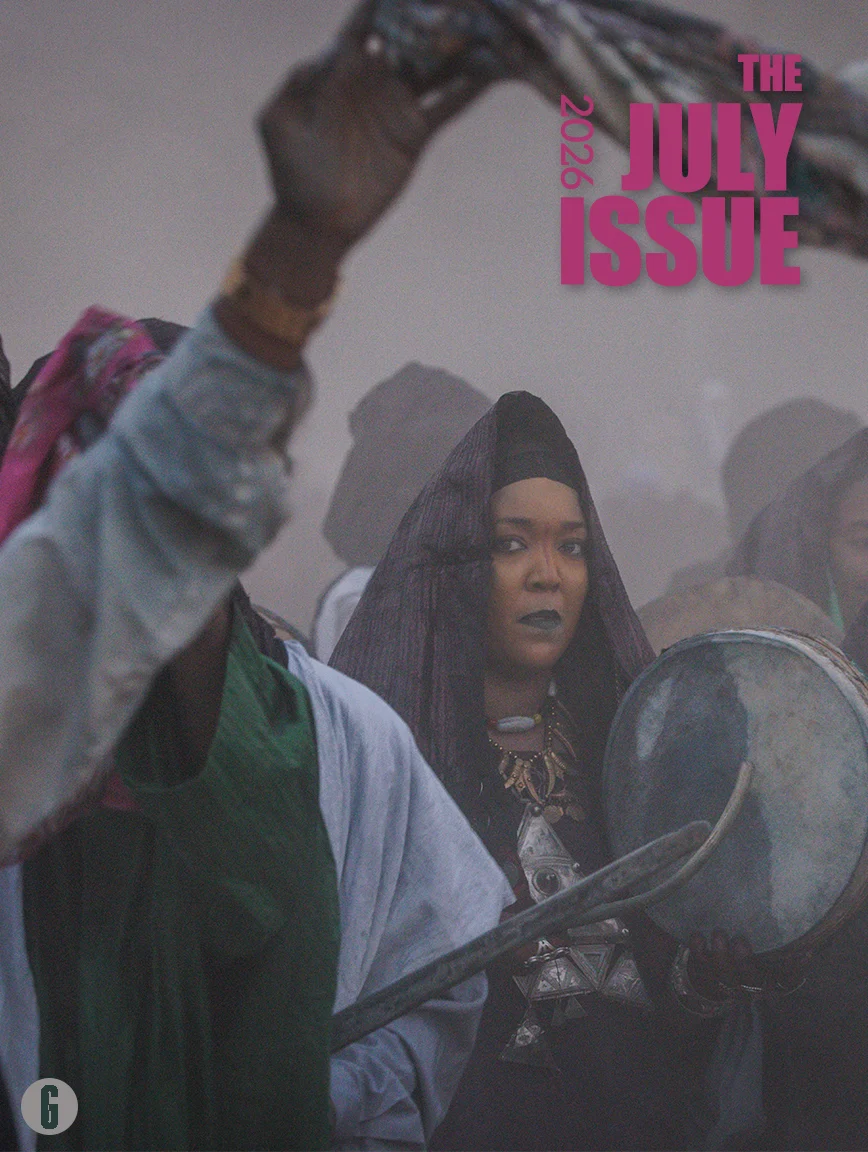
Executive Overview
In the contemporary cultural landscape, human attention has increasingly become reactive, magnetized primarily by catastrophe, endangerment, and erasure. This troubling paradigm serves as the intellectual cornerstone for Guernica magazine’s July issue. Spearheaded by Editor-in-Chief Raaza Jamshed, the edition asks a haunting, foundational question: Must a people disappear for us to know that it existed?
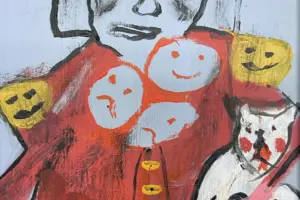
Spanning across photography, narrative nonfiction, fiction, translation, poetry, and rigorous interviews, the July issue resists the late recognition that characterizes modern media consumption. Instead, the diverse array of contributors challenges audiences to look before disappearance, to listen before silence sets in, and to love before loss becomes absolute. Featuring striking original artwork by Ben Buckland, Melissa Monroe, and Andra Otilia Nicolescu, this month’s curation acts as a collective manifesto against apathy. It anchors its urgency in a quote by philosopher Bayo Akomolafe, championed by poet Kathy Engel within the issue’s pages: "The times are urgent—we must slow down."
By refusing to treat vulnerable cultures, historical trauma, and personal grief as mere footnotes, the issue’s contributors offer a masterclass in deep observation. This extensive report examines the thematic architecture of the July issue, analyzing how each piece contributes to an overarching dialogue on human visibility, structural violence, and the enduring architecture of memory.
Read Also
Detailed Chronology and Thematic Breakdown
The July issue is structured not merely as a collection of literary works, but as a carefully calibrated journey through time, geography, and human consciousness. The progression moves from the precarious visibility of endangered traditions to the intimate, interior landscapes of grief, migration, and historical reckoning.
Visual Anthropology and the Ethics of Visibility
Opening the issue is Ben Buckland and Carissa Western’s striking photo essay, which transports readers deep into the Sahara to document Sebeïba, a centuries-old festival practiced by the Imuhar people. Beyond capturing the vibrant cultural life of the community, the essay interrogates the uneasy ethics of visibility.
In an era defined by hyper-tourism, state extraction, and digital voyeurism, Buckland and Western raise critical questions about spectatorship. Can state interest, preservation efforts, and tourism ever remain innocent when they arrive at the threshold of threatened worlds? By framing the Imuhar not as vanishing relics, but as a living, breathing culture navigating modern pressures, the essay challenges the reader’s complicity in the commodification of indigenous survival.
Intimate Geographies: Motherhood, Grief, and Male Friendship
Moving from the macrocosm of cultural preservation to the microcosm of the human heart, Mahreen Sohail’s essay The Death Years explores the harrowing intersection of motherhood and mortality. Sohail weaves together family history, inherited trauma, and the paralyzing, everyday terror of loving a child in a volatile world. The work asks a poignant question: How does one properly honor the dead while still learning how to remain present for the living?
In the realm of fiction, Herbert Girtley’s Bojack Blues offers a masterclass in character-driven storytelling. The narrative begins with a seemingly simple premise—a man disappears shortly before a scheduled musical performance—only to expand into a rich, empathetic portrait of male friendship. Set beside a quiet creek, the story captures two men pausing long enough to articulate shared pain and unspoken vulnerabilities. In that brief, suspended moment, Girtley demonstrates how vulnerability between men can create space for communal healing and unexpected sublimity.
Post-Socialist Displacement and the Architecture of Exile
Shifting the geographical focus to the seismic geopolitical shifts of the late 20th century, Andra Otilia Nicolescu’s Places of Memory—an excerpt from her unpublished novel Midnight in Exile—follows characters Paul and Ana as they navigate late-life immigration to the United States.
Set against the historical backdrop of 1989 and the collapse of state socialism across Eastern Europe, the narrative explores the uprooting of old certainties regarding nationhood, ideology, and home. Nicolescu crafts a layered meditation on migration and marriage, proving that the most profound historical reckonings often occur in the quiet, domestic spaces long after the geopolitical dust has settled.
Art, Activism, and Perennial Resistance
In an extensive and deeply reflective piece titled The Poems Will Not Stop: An Interview with Kathy Engel, interviewer Tyler Barton sits down with the veteran poet, activist, and organizer. Engel’s life’s work has been inextricably bound to the global struggles for Palestinian liberation, indigenous sovereignty, and social justice.
The dialogue traces its roots back to 1982, when Palestinian poet Mahmoud Darwish was barred from a New York poetry event in the wake of Israel’s invasion of Lebanon and the devastating Sabra and Shatila massacres. Engel and Barton reflect on the enduring duty of artists to refuse the artificial separation between the aesthetic poem and the brutal realities of the geopolitical world.
Global Spotlights and Folklore
Representing the issue’s Global Spotlight, Go for it by Masami Kakinuma, translated from the Japanese by Sharni Wilson, invites readers into a grandmother’s ancestral home in rural Iwate. Kakinuma masterfully braids traditional folklore with the muted, quiet disappointments of adult life. The story reimagines the concept of good fortune, casting it not as random luck, but as a state made possible by the quiet, terrifying courage required to pursue the life one once wished for.
The Poetics of Terror and Inheritance
The poetry selection in the July issue serves as a visceral archive of historical and domestic trauma.
- Michelle Matthees (Svetlana at the Dacha, 1938 and Joseph) plunges the reader into the chilling innocence of childhood cast against the oppressive shadow of Stalinist terror, investigating how private, domestic wounds inevitably metastasize into historical violence.
- Denoo Edinam Yawo (The Anatomy of a Bullet Alchemising into Death) explores violence not merely as an isolated incident, but as a biological inheritance stored within the human body. Here, the bullet transforms into a generational language of displacement, secrecy, and grief passed down from mother to child.
- Anna T. Szabó (translated from the Hungarian by Ági Bori in Her Five Children and Noose) meticulously maps the precise threshold where the safety of the domestic sphere fractures into horror, questioning what remains of human care when societal support structures collapse.
Supporting Context & Metrics
To fully appreciate the weight of Guernica’s July publication, one must examine the broader socio-cultural and literary metrics that frame independent journals in the digital age. Independent literary magazines face unprecedented financial and operational pressures, relying heavily on diverse donor bases, academic partnerships, and reader subscriptions to sustain long-form, intellectually rigorous journalism and creative writing.
| Issue Metric / Dimension | Qualitative & Quantitative Overview |
|---|---|
| Primary Thematic Focus | Anticipatory witness, systemic invisibility, historical memory, and the ethics of spectatorship. |
| Genre Distribution | Encompasses photojournalism, creative nonfiction, literary fiction, translated prose, in-depth interviews, and poetry. |
| Geographical Reach of Content | Spans the Sahara (Imuhar people), Eastern Europe (post-1989 displacement), Palestine/Nicaragua solidarity, rural Japan (Iwate), and domestic landscapes of the US and Hungary. |
| Editorial Philosophy | Rooted in Bayo Akomolafe’s paradigm of radical slowness and deliberate attention in times of hyper-accelerated crisis. |
Independent literary publications like Guernica continue to serve as vital counterweights to the 24-hour news cycle. While mainstream algorithms reward speed, sensationalism, and immediate crisis-reporting—often abandoning communities the moment the cameras turn away—literary journalism offers sustained, patient excavation of human experience.
Official Statements and Editorial Vision
In her introductory note as Editor-in-Chief, Raaza Jamshed establishes the theoretical framework that binds these disparate narratives together. By centering the question, "Must a people disappear for us to know that it existed?" Jamshed confronts the fatal flaw of contemporary human empathy:
"The works gathered in this issue question and resist this belated recognition. Across photography, nonfiction, fiction, interview, translation, and poetry, they ask what it means to look before disappearance, to listen before silence, to love before loss."
This sentiment is amplified in the dialogue between Tyler Barton and Kathy Engel, where the invocation of Bayo Akomolafe’s philosophy provides a tactical directive for the reader:
"The times are urgent—we must slow down."
This paradox—acting with urgency precisely by slowing down—summarizes the editorial mandate of the July issue. It argues that meaningful solidarity, authentic artistic creation, and profound human connection cannot occur within the hyper-accelerated churn of modern media. Instead, true awareness requires the deliberate deceleration of the mind, allowing readers to bear witness to the lives, cultures, and struggles that unfold just beneath the threshold of mainstream visibility.
Future Outlook
As the cultural and political landscapes of the mid-2020s continue to grapple with intersecting crises of mass displacement, environmental degradation, and historical revisionism, the themes explored in Guernica’s July issue carry profound implications for the future of literary and journalistic practice.
The insistence on "looking before disappearance" challenges writers, artists, and editors to reject fatalism. Too often, cultural documentation functions as a post-mortem exercise—an archive of ghosts. By shifting the lens toward living cultures, active struggles, and ongoing human relationships, Guernica points toward a more ethical paradigm of witness.
In the months and years ahead, the cultural durability of these works will likely be measured by how effectively they inspire readers to apply this radical attentiveness to their immediate surroundings. Whether through the preservation of endangered indigenous traditions, the intergenerational reckoning with state-sponsored terror, or the quiet maintenance of human bonds in the face of exile and grief, the July issue demonstrates that art’s highest calling is to make the invisible undeniable, and to ensure that human dignity is recognized long before the silence arrives.

Comments
Facebook App ID not configured. Please add it in the Customizer.