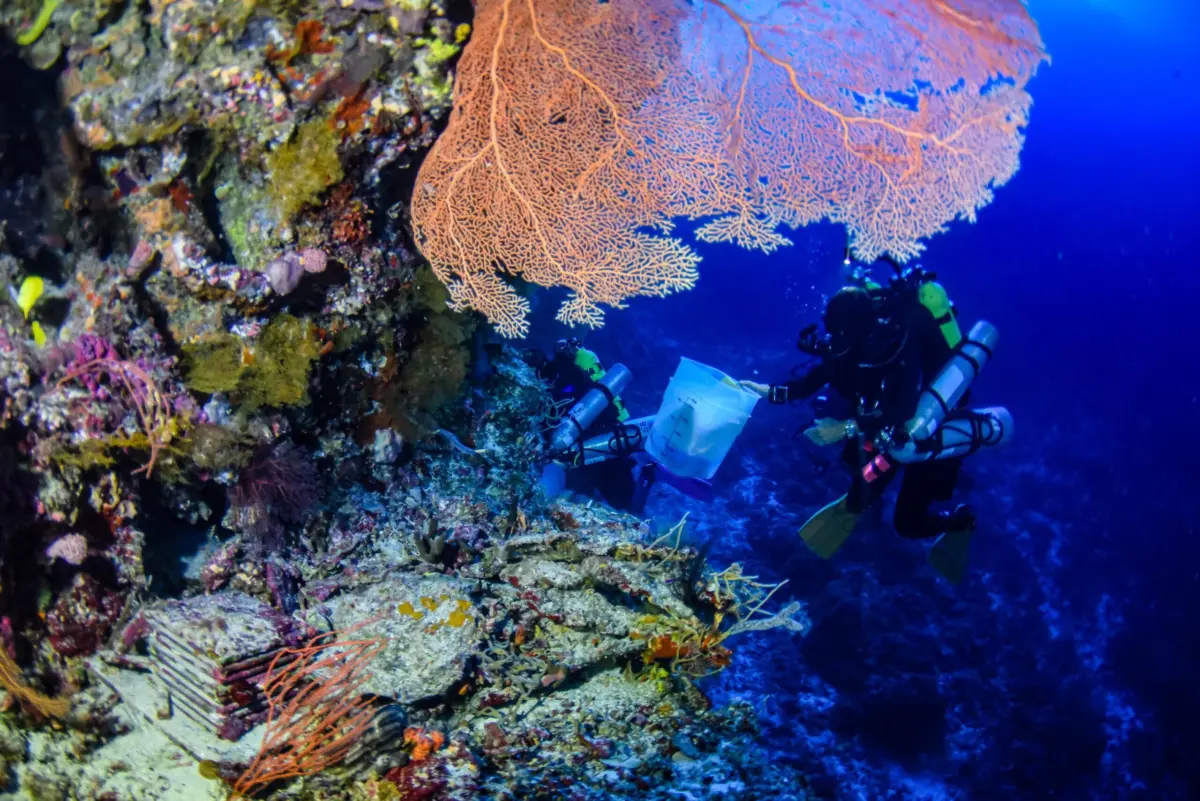
Beneath the blindingly turquoise surface of the western Pacific, far below the vibrant, sun-drenched coral gardens that draw tourists and marine biologists alike, lies a hidden and profoundly misunderstood frontier: the mesophotic coral ecosystems. Ranging from 30 to 150 meters (100 to 500 feet) beneath the ocean surface, these "deep reefs" occupy an aquatic twilight zone where sunlight barely penetrates and temperatures drop significantly.
For decades, this subterranean marine realm has remained largely inaccessible, shrouded in a veil of scientific mystery. Traditional scuba diving is severely restricted at these depths due to the physiological perils of compressed gases and high-pressure nervous syndrome, limiting direct human observation to brief, frantic windows of five to seven minutes. Remotely operated vehicles (ROVs) and submersibles offer alternative views, yet they frequently miss the intricate, cryptic microhabitats that harbor the ocean’s smallest and most elusive organisms.
However, a collaborative international team of marine biologists, led by Dr. Luiz Rocha—curator and zoologist at the California Academy of Sciences—has spent the last decade employing an innovative, long-term methodology to decode the secrets of the deep. By utilizing Autonomous Reef Monitoring Structures (ARMS)—essentially standardized, prefabricated "mini-hotels" deployed onto the sea floor—researchers are finally capturing a comprehensive, standardized snapshot of biodiversity in the ocean’s twilight zone.
Following a grueling recovery mission off the coast of Palau, scientists have hauled nearly a decade’s worth of encrusted ARMS plates to the surface. Processing thousands of biological samples at the Palau International Coral Reef Center, researchers are peering through microscopes at new species, bizarre symbiotic relationships, and genetic time capsules. While scientists acknowledge that mapping the entire deep reef ecosystem will take generations, this landmark retrieval mission marks a monumental leap forward in understanding the architecture, vulnerability, and resilience of the planet’s least-explored coral communities.
Detailed Chronology
The 2016 Deployment: Planting the Seeds of Discovery
The foundation for this landmark marine expedition was laid nearly a decade prior. Recognizing the inherent inefficiencies of traditional deep-sea diving—where researchers are granted only minutes of functional time before facing hours of mandatory decompression stops—Dr. Luiz Rocha and his colleagues sought a passive, long-term sampling method.
Between 2016 and 2018, backed by private funding, Rocha’s team descended into the mesophotic zones of the western Pacific, installing ARMS units across a range of depths in Palau, Guam, the Marshall Islands, and French Polynesia. These units were bolted onto the seabed at strategic intervals: shallow reefs at 10 meters, intermediate mesophotic zones at 50 meters, and extreme deep reefs down at 100 meters. Once secured, the grey, featureless stacks of PVC plates were left entirely alone, quietly waiting as ambient marine larvae drifted by to colonize the artificial habitats.
The May Recovery: Returning to the Twilight Zone
Fast-forward to last May. A specialized team of technical divers and researchers returned to the sunlit waters of Palau aboard a research vessel. Their primary objective: retrieve the ARMS units that had spent the better part of ten years quietly accumulating marine life in the ocean’s twilight zone.
The recovery dives required meticulous planning and execution. Descending past the recreational diving limits into the mesophotic zone, technical divers systematically detached the encrusted ARMS units from the rocky substrate. Ascending safely required hours of staged decompression to prevent nitrogen buildup and decompression sickness.
Once hoisted onto the boat, the structures revealed a stark contrast to their original sterile grey appearance. Some units were sparsely populated, while others were choked with a vibrant riot of reds, oranges, pinks, and whites. Massive sponges, delicate octocorals, and cascading fronds of marine growth transformed the plastic plates into thriving miniature ecosystems. The harvested units were immediately submerged in seawater-filled transport bins and rushed to the Palau International Coral Reef Center to prevent specimen degradation.
The Laboratory Phase: Processing the "Scientific Puzzle Box"
Back on land, the Palau International Coral Reef Center transformed into an around-the-clock biological processing hub. Researchers from the Smithsonian Institution, the University of São Paulo, and the California Academy of Sciences initiated a meticulously organized assembly line.
Working late into the night, scientists pried apart the PVC plates using wrenches, photographing each layer to preserve a visual historical record of the micro-habitat. Biologists meticulously combed through organic debris, sorting, cataloging, and transferring specimens into specialized storage tubes. The processing reached its gritty crescendo during the final stages, where remaining organic material was scraped off the plates, blended into a slurry, and squeezed dry—a process colloquially termed "milking the turd"—to extract environmental DNA (eDNA) for comprehensive genetic sequencing.
Supporting Context & Metrics
To fully appreciate the significance of the Palau deep-reef expedition, one must examine the vast environmental and biological disparities separating shallow coral reefs from their mesophotic counterparts.
Defining the Mesophotic Zone
The term mesophotic derives from Greek roots meaning "middle" and "light." Operating as a biological bridge between sunlit coral reefs and the pitch-black abyss of the deep ocean, these ecosystems present unique environmental conditions:
Light Penetration: Reduced to a fraction of surface levels, halting traditional photosynthesis-driven hard coral dominance.
Temperature Gradient: Significantly cooler than shallow waters, favoring stenothermal organisms adapted to stable, lower thermal baselines.
Structural Shifts: While shallow reefs rely heavily on hard corals forming symbiotic relationships with photosynthetic algae (zooxanthellae), deep reefs see a proliferation of heterotrophic filter-feeders, soft corals (octocorals), sponges, and specialized macroinvertebrates.
The ARMS Advantage
Traditional sampling methods—such as collecting random rocks or using robotic submersibles—fail to provide standardized baseline data. Autonomous Reef Monitoring Structures solve this by offering:
Standardized Architecture: Every ARMS unit features identical spacing, surface area, and material composition, allowing direct comparative analysis across global oceanic regions and varied depths.
Comprehensive Colonization: The multi-layered PVC plates create safe micro-cavities that attract mobile invertebrates (crustaceans, mollusks, polychaete worms) alongside sessile filter-feeders (sponges, ascidians, bryozoans).
Current Processing Metrics
As of mid-summer following the recovery mission, the sheer volume of data remains overwhelming:
Total Specimens Collected: Approximately 3,000 biological samples.
Species-Level Identification: Roughly 3 percent of specimens identified down to the species level.
Genus-Level Identification: Just under 20 percent categorized at the genus level.
Broader Taxonomic Grouping: The vast majority of collected organisms currently await rigorous DNA barcoding and morphological review to confirm if they represent species entirely new to science.
Official Statements
The expedition has generated widespread excitement within the global marine biology community, underscoring both the challenges of deep-reef exploration and the profound ecological implications of the findings.
Dr. Luiz Rocha, zoologist and curator at the California Academy of Sciences, emphasized the exploratory nature of the work:
"Anything between 30 meters and 150 meters is really, really unknown. Whenever we go somewhere, the first thing we find is new species… It’s the most basic thing in science you can do. But in some ways, we don’t even know what questions to ask. We really only know what questions to ask after we have a baseline understanding of what the ecosystem is. And for deep reefs, we don’t know that yet."
Addressing the long-term outlook of the research and the generational effort required to map the twilight zone, Rocha remarked:
"If it’s a hard puzzle, at the end of it, the reward is always bigger. In our lifetimes, will we assemble the deep reef puzzle? No, we will not assemble the puzzle, no, but we’ll generate some good pieces for the next generation to assemble."
Dr. Chris Meyer, director of the Smithsonian Global ARMS program, highlighted the elegance of the deployment strategy:
"Every one’s the same. It’s prefab housing, and then you just look to see who moves in."
Sarah Tweedt, research biologist at the Smithsonian National Museum of Natural History, underscored the importance of cataloging ecological relationships alongside genetic sequencing:
"We’re looking for every unique thing, which we call a morphospecies, and we’re trying to get some representative tissue samples from all of these things so that we can sequence the DNA—and match the DNA to the organism."
Future Outlook
The successful retrieval of the Palau ARMS units represents merely the opening chapter of a much larger scientific endeavor. Over the coming years, genetic sequencing laboratories across institutions like the California Academy of Sciences and the Smithsonian National Museum of Natural History will cross-reference DNA extracted from the 3,000 specimens against global genetic databases. This will clarify phylogenetic trees, uncover hidden symbioses—such as the intricate relationships observed between red sea snails and octocorals, or skeleton shrimp and hydroids—and confirm formal descriptions of novel species.
Crucially, this research carries profound implications for global conservation policy. As anthropogenic climate change, marine heatwaves, and coral bleaching events devastate shallow reef systems worldwide, marine biologists have long debated whether mesophotic coral ecosystems might serve as a "deep refuge"—a biological sanctuary where threatened shallow-water species could migrate or persist under cooler, more stable conditions.
By analyzing the depth-dependent overlap of species through comparative ARMS data sets harvested from Palau, Guam, the Marshall Islands, and French Polynesia, researchers are moving closer to answering these critical conservation questions. While the complete ecological tapestry of the deep reefs remains obscured by shadows, the standardized data extracted from these ten-year underwater "hotels" provides essential building blocks. The twilight zone is slowly giving up its secrets, offering humanity a clearer vision of how to protect the full spectrum of ocean life before it is too late.







Comments
Facebook App ID not configured. Please add it in the Customizer.