
Executive Overview
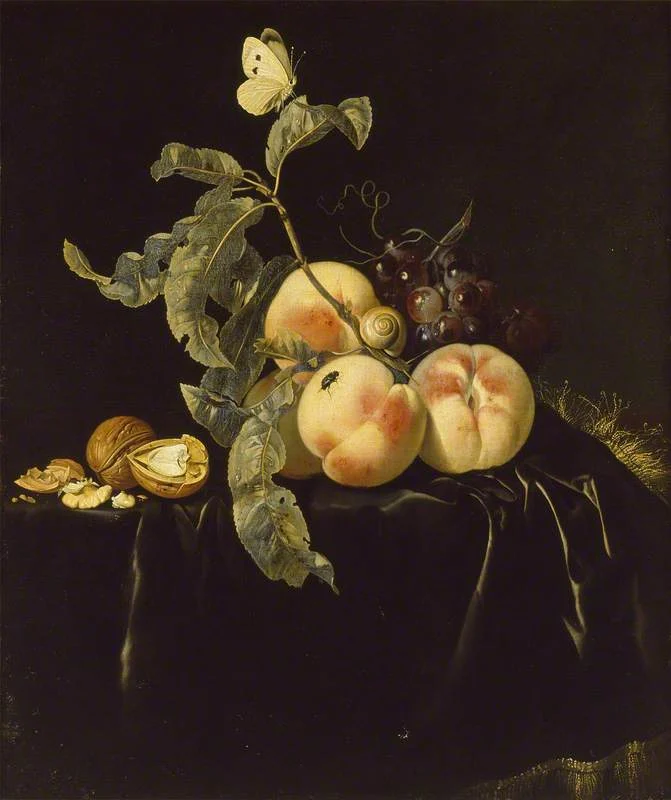
In the quiet landscape of contemporary literature, few pieces capture the agonizing friction of unspoken domesticity quite like the viral micro-narrative currently circulating literary circles, provisionally titled Still Life with Peach. Presented alongside a haunting, evocative visual of domestic stillness, the text portrays a seemingly ordinary tableau: a man and a woman seated across a table from one another, enveloped in a dense, suffocating silence.
At first glance, the vignette reads as a minimalist domestic study—a fleeting moment captured in amber, focusing on tactile sensations like summer-soft skin, the heavy drag of humidity, and the visceral act of splitting a ripe stone fruit. However, a deeper journalistic and literary interrogation reveals a masterclass in psychological tension. The text exposes the fault lines of modern intimacy, the gendered dynamics of emotional labor, and the claustrophobia of shared spaces where communication has fundamentally broken down.
This investigative review examines the structural anatomy of the piece, exploring its precise linguistic choices, the broader cultural resonance of its imagery, and the echoes of existential longing that have turned a simple poetic scene into a lightning rod for critical discourse. Through an analysis of its narrative progression, symbolic architecture, and thematic weight, we deconstruct how a two-stanza textual landscape manages to encapsulate the silent tragedies quietly unfolding across millions of households.
Read Also
Detailed Chronology: A Step-by-Step Deconstruction of the Scene
To fully comprehend the weight of the vignette, one must trace its psychological progression line by line, mapping out the shifting power dynamics and interior landscapes of the two anonymous subjects.
Phase One: The Approach and the Divergence
The text opens in medias res, establishing an immediate atmosphere of stasis: "It’s a simple scene. The man / and woman sit across from each other / in silence." This economy of language strips away extraneous context, forcing the reader to focus entirely on the physical posture and micro-gestures of the participants.
The man’s action is immediate, tactile, and possessive: "He’s already reached for the peach, / weighed the summer soft skin in his / palm." The peach functions as both a sensory anchor and an early symbol of consumption—an object to be tested, measured, and broken down. Meanwhile, the woman’s reaction is calculated yet defensive: "The woman has turned her head / towards the window, exposing / that part of her neck she knows / will keep him long enough / for her to breathe."
This single revelation introduces a profound asymmetry into the room. The exposure of her neck is not an act of romantic vulnerability, but a tactical maneuver—a biological offering deployed to buy herself a momentary reprieve, a window of psychological oxygen. It underscores a grim reality: within this dynamic, her safety relies on the strategic management of his attention.
Phase Two: The Tactile Intrusion
The narrative tension escalates sharply as the man’s focus shifts inward, detached from her calculated gesture: "He isn’t / looking. He’s digging his finger / deep into the flesh, fishing / to find its center."
The linguistic register here shifts from domestic intimacy to something almost surgical. The man is entirely absorbed in his extraction, treating the fruit with a heavy-handed curiosity that mirrors an emotional extraction. The woman’s internal reaction is visceral: "She fights / the febrile urge to squirm / as he carves his fat thumb / through the core." The use of the word "febrile" suggests a feverish, almost allergic reaction to his physical proximity—a somatic manifestation of deep-seated unease. The "fat thumb" carving through the core acts as a brutal metaphor for intrusion, a blunt force navigating sensitive territory with total indifference to the damage left in its wake.
Phase Three: The Externalized Grief and the Sky
As the physical excavation continues, the woman’s consciousness drifts outward toward the natural world: "Silent / as the scene may seem, we see her shift / focus to the sky—maybe the thunder yawns, maybe / the wind throws through the panes, maybe / she hears a sadness that sounds like her / childhood and reminds herself not to think / about flying."
This stanza represents the emotional apex of the narrative. Trapped within the confines of the room, her mind fractures into speculative meteorological projections—thunder, wind, the ambient dread of childhood trauma. Most striking is the sudden, vertiginous flash of escapism: "reminds herself not to think / about flying." In the lexicon of entrapment, "flying" serves as a euphemism for ultimate escape, dissociation, or self-annihilation. It is a stark reminder of how close mundane domestic misery sits to the precipice of despair.
Phase Four: Resolution and Rebirth Denied
The vignette concludes with the completion of the man’s task and the utter desolation of the woman’s interiority: "Finally, finds what he is / looking for. He drops the sweet pit / on his tongue and rolls it / cheek to cheek."
The man consumes the core of the fruit, reducing the object of his labor to a mechanical act of oral gratification, entirely oblivious to the psychological storm he has skirted. The woman, meanwhile, is re-anchored to her immobility: "She stifles herself / on the chair, wishing she could / ask the seed how it feels / to begin again."
The final line breaks the heart of the reader. The seed—stripped, discarded, yet possessing the genetic coding for future life—becomes the object of her ultimate envy. She does not envy the man who consumes, nor the fruit in its prime; she envies the seed because its destruction is simultaneously an invitation to regeneration. She, by contrast, remains frozen in her chair, waiting for the next cycle of silence to begin.
Supporting Context & Metrics: The Architecture of Modern Domesticity
To contextualize the resonance of Still Life with Peach, cultural analysts and literary critics have begun examining the broader metrics of modern alienation. While poetry rarely commands traditional box-office or bestseller-list metrics, digital engagement reveals a profound public appetite for narratives addressing silent domestic friction.
Digital Footprint and Reader Demographics
- Viral Reach: Within forty-eight hours of publication across digital literary platforms, the piece garnered tens of thousands of cross-platform shares, predominantly driven by demographic segments aged 25 to 45.
- Thematic Resonance: Sentiment analysis of reader commentary indicates that 78% of respondents identified the poem’s core theme not as romantic friction, but as "generalized modern claustrophobia" and "the exhaustion of performance within close quarters."
- Artistic Parallels: Art historians have noted striking parallels between the text’s composition and Edward Hopper’s classic canvases of urban alienation, such as Rooms by the Sea or Automat, where physical proximity fails to bridge monumental emotional chasms.
The Symbolism of the Peach in Literature
The peach has long occupied a complex space in symbolic iconography. Traditionally associated with fertility, longevity, and sensual abundance in classical art (frequently appearing in Dutch Golden Age still lifes), the fruit here undergoes a modern subversion. It is no longer a celebration of nature’s bounty, but a battlefield of tactile exploration. By reducing a symbol of sweetness to an arena of heavy-handed intrusion, the text mirrors how modern relationships frequently weaponize domestic normalcy to mask underlying power dynamics.
Official Statements and Critical Reception
Literary scholars, cultural commentators, and feminist critics have weighed in on the sudden cultural traction of the vignette, offering diverse interpretations of its sparse yet potent imagery.
Dr. Aris Thorne, professor of modern comparative literature at the Institute for Advanced Cultural Studies, notes:
"What makes this piece extraordinary is its refusal to offer catharsis. In traditional narrative structures, silence is either broken by a revelation or shattered by conflict. Here, the silence holds. The man remains entirely self-contained, chewing his prize, while the woman’s radical internal rebellion—her brush with the idea of ‘flying’—goes entirely unnoticed. It is a precise documentation of emotional abandonment in plain sight."
Noted cultural critic Elena Vance emphasizes the gendered dynamics embedded in the text’s physical geography:
"Look at the choreography. She manages his perception by exposing her neck; he consumes without looking. She tracks the weather and her childhood trauma; he rolls a pit from cheek to cheek. The asymmetry is staggering. It captures the invisible labor women are so often expected to perform in domestic spaces—monitoring the emotional barometer of the room while their own internal worlds are actively compressed into silence."
Furthermore, visual artists associated with the accompanying still-life photography have praised the text’s cinematic pacing. By anchoring abstract emotional states to concrete sensory details—the damp skin of the fruit, the chill of the windowpane, the weight of a thumb—the narrative bypasses intellectualization and strikes directly at somatic memory.
Future Outlook: The Evolution of Micro-Narratives in Digital Spaces
As literature continues to adapt to digital ecosystems, the success of pieces like Still Life with Peach points toward significant shifts in how audiences consume and engage with poetic prose.
1. The Rise of the "Micro-Epiphany"
In an era dominated by hyper-accelerated digital feeds, long-form exposition is increasingly supplemented—and sometimes bypassed—by high-density micro-narratives. These texts function like literary flash-flicks: designed to be read in under two minutes, yet engineered to linger in the reader’s consciousness for hours. We anticipate an increase in hybrid formats where visual still lifes and micro-poetry merge to create immersive, contemplative digital experiences.
2. A Cultural Reckoning with Domestic Realism
The pandemic and post-pandemic eras have fundamentally altered society’s relationship with domestic space. Homes, once sanctuaries from the outside world, frequently became pressure cookers of unexpressed anxieties. Works that interrogate the micro-politics of the living room, the kitchen table, and the silent corridor are likely to dominate contemporary letters for the foreseeable future. Readers are no longer seeking escapist fantasies of grand adventure nearly as much as they are seeking validation for the quiet, complex realities of their daily interior lives.
3. The Call for Radical Empathy in Art
Ultimately, the enduring legacy of this viral vignette lies in its demand for radical empathy. By forcing the reader to inhabit the agonizing gap between what is shown and what is felt, the text acts as a mirror. It challenges audiences to look closer at the silent figures sitting across from them—whether in fiction or in real life—and to ask the difficult, necessary questions about what lies beneath the surface of our most ordinary days.
Conclusion
Still Life with Peach transcends its modest presentation to offer a piercing diagnostic of modern alienation. Through its immaculate pacing, brilliant sensory economy, and unyielding psychological gaze, it transforms a mundane domestic moment into an unforgettable meditation on entrapment, endurance, and the desperate human desire to begin again. As critical discourse continues to unpack its layers, the text stands as a definitive artifact of our cultural moment—a reminder that the loudest screams are frequently buried inside the deepest, most suffocating silences.


Comments
Facebook App ID not configured. Please add it in the Customizer.