
Executive Overview
In a strategic convergence of digital-first publishing, romance-fantasy subgenres, and legacy intellectual property, Disney Publishing Worldwide is officially diving headfirst into the booming "romantasy" market. Unveiled during a major presentation at Disney’s D23 fan convention earlier this month, the upcoming multimedia comic book initiative titled Disney Cursed Love represents a watershed moment for the House of Mouse. By blending the globally recognized cachet of iconic Disney Princess lore with the fast-paced, high-stakes emotional intensity of contemporary romance-fantasy, Disney is positioning itself to capture an older, fiercely engaged demographic of readers.
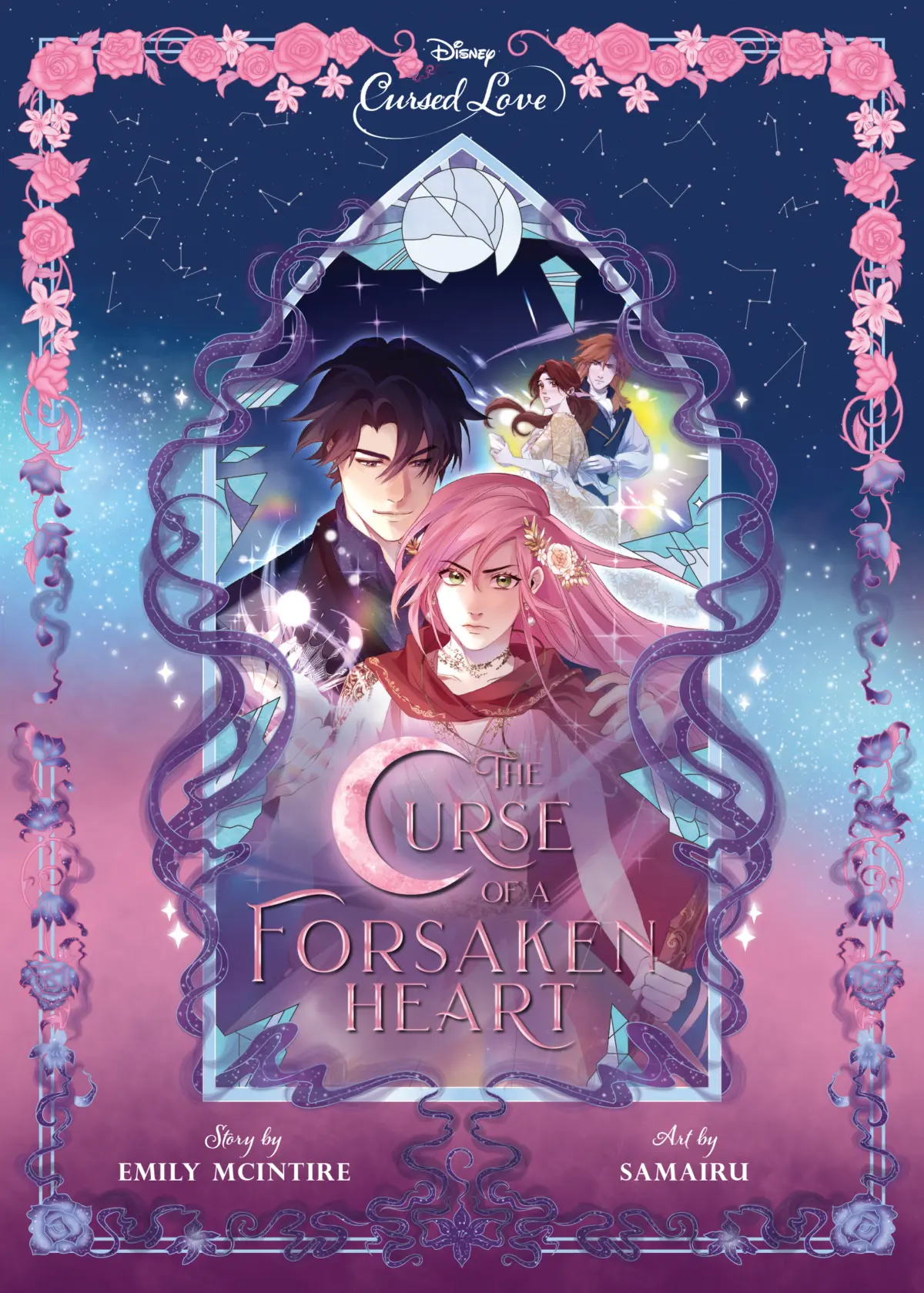
The Disney Cursed Love franchise will launch as a four-part original comic book series, debuting first on the dominant digital webcomics platform Webtoon next year before transitioning into traditional print formats. The flagship title, The Curse of a Forsaken Heart, pairs the narrative talents of bestselling Never After series author Emily McIntire with the vibrant illustrative stylings of artist Samairu.
This ambitious publishing play is far more than a one-off digital experiment. It forms a cornerstone of an expansive, multi-year strategic partnership between Disney and Webtoon inked last year. That foundational agreement encompasses the adaptation of roughly 100 comic titles spanning Disney, Marvel, 20th Century Studios, and Star Wars brands into Webtoon’s signature mobile vertical-scroll format. Furthermore, the alliance extends deep into corporate integration, characterized by a dedicated curation hub on the Webtoon app, the collaborative development of an entirely new digital comics ecosystem, and a strategic 2% equity investment by Disney in Webtoon.
Read Also
As traditional publishing boundaries continue to dissolve and digital-first consumption habits dictate youth culture, Disney’s aggressive push into webcomics underscores a broader industry evolution. This article provides an exhaustive examination of the Disney Cursed Love initiative, detailing its genesis at D23, analyzing the mechanics of the Disney-Webtoon partnership, contextualizing the rise of "romantasy" in contemporary media, and outlining the multiplatform roadmap that will carry Disney’s timeless characters into a dynamic new era of storytelling.
Detailed Chronology: From D23 Revelation to the Webtoon Launchpad
The genesis of Disney Cursed Love can be traced back to the sprawling exhibition floors and packed presentation halls of Disney’s D23 convention, where executives map out the studio’s transmedia future. While Hollywood blockbusters and theme park expansions traditionally dominate convention headlines, the publishing division commanded significant industry attention by carving out a distinct space for literary adaptations aimed at young adult (YA) and new adult audiences.
The D23 Unveiling
During the publishing panels at D23, Disney executives pulled back the curtain on Disney Cursed Love, framing it as a direct response to shifting consumer reading habits. The anthology-style series is structured around four original comic arcs, each of which reimagines the boundaries of classic fairy-tale canon by pairing iconic Disney Princess archetypes with brand-new characters tailored specifically for romance-driven narratives.
The announcement immediately generated buzz across social media literary circles—affectionately known online as "BookTok" and "Bookstagram"—due to the creative pedigree attached to the lead title. The Curse of a Forsaken Heart enlists Emily McIntire, a powerhouse author renowned for her dark romance retellings, signaling that Disney is willing to lean into morally grey themes, emotional peril, and mature narrative pacing. Paired with the intricate, stylized artwork of Samairu, the project aims to bridge the aesthetic gap between traditional Japanese manga, Western graphic novels, and digital webtoons.
The Plot Mechanics of The Curse of a Forsaken Heart
According to early narrative briefs released during the convention rollout, The Curse of a Forsaken Heart takes a meta-textual, high-concept approach to fairy-tale world-building. The story pulls the iconic, titular characters of Beauty and the Beast out of their familiar provincial setting and thrusts them directly through an enchanted, glowing stained-glass window into an unfamiliar, perilous magical realm.
Once trapped within this fractured universe, the protagonists are charged with a daunting quest: they must aid a beleaguered local princess in lifting a devastating curse that has paralyzed her kingdom. This premise allows the creative team to deconstruct familiar tropes of redemption, transformation, and romantic longing, filtering them through the lens of modern serialized webcomics. Characters who were once bound by 20th-century animated constraints are recontextualized as complex figures navigating interpersonal tension, high-fantasy politics, and slow-burn romantic tension.
The Webtoon Pipeline
True to the modern digital distribution playbook, Disney Cursed Love will not debut on traditional comic book store shelves. Instead, its first window of availability will be exclusively digital, leveraging Webtoon’s massive, hyper-engaged mobile user base.
The rollout schedule is designed to maximize audience acquisition through serial habituation. Weekly or bi-weekly vertical-scroll installments will allow readers to digest the narrative in bite-sized chunks optimized for smartphones. Once the digital arcs complete their initial runs on the platform, Disney Publishing Worldwide will bundle the comics into premium physical trade paperbacks and graphic novels, capturing both digital natives and physical collectors. This dual-format strategy mirrors the successful models pioneered by Korean webtoon giants and adapted increasingly by Western publishers seeking to de-risk production while building organic, community-driven fandoms long before print books hit retail channels.
Supporting Context & Metrics: The Romantasy Boom and the Webtoon Alliance
To fully understand why Disney is investing heavily in vertical-scroll webcomics and romantic fantasy, one must examine the macroeconomic shifts currently reshaping the global publishing landscape.
The Rise of "Romantasy"
Over the past five years, the publishing industry has witnessed the meteoric, unstoppable rise of "romantasy"—a hybrid genre blending elements of high-fantasy world-building, political intrigue, magic systems, and emotionally intense romantic entanglements. Propelled largely by digital communities on TikTok and Instagram, authors like Sarah J. Maas, Rebecca Yarros, and Tracy Wolff have turned genre fiction into a multi-million-dollar juggernaut.
Traditionally, Disney’s princess narratives have operated firmly within the confines of wholesome, family-friendly fairy tales where romance acts as a thematic resolution rather than a visceral narrative driver. However, as generations of readers who grew up watching these animated classics mature into adulthood, a distinct appetite has emerged for more sophisticated, emotionally complex, and romance-forward explorations of these characters. By hiring authors like Emily McIntire—who specializes in dark, subverted romance—Disney is explicitly catering to this demographic, proving that its intellectual property can successfully transition into mature YA and new adult spaces without alienating its core identity.
Anatomy of the Disney-Webtoon Strategic Partnership
The launch of Disney Cursed Love is the most prominent original creation to emerge from a broader, multi-year pact forged between Disney and Webtoon. Announced initially last year, the partnership was designed to bridge the gap between traditional cinematic and literary franchises and the burgeoning digital webcomics medium.
The scope of this multi-year deal is staggering:
- Catalog Integration: Approximately 100 comic titles drawn from Disney’s massive IP vault—spanning Disney classics, Marvel superhero lore, 20th Century Studios properties, and Star Wars universes—are being systematically adapted and formatted for Webtoon’s mobile vertical-scroll reading experience.
- Dedicated Curation Hub: Disney has established a dedicated, branded section directly within the Webtoon app. This curated digital storefront allows users to easily discover, bookmark, and binge official content ranging from the Disney Villains series originally published by Dynamite Entertainment to Marvel’s latest iteration of The Ultimates.
- Digital Infrastructure Collaboration: Beyond mere content licensing, the partnership includes a collaborative effort to develop an entirely new digital comics platform optimized for global audiences.
- Equity Stake: Underscoring the seriousness of the venture, Disney secured a 2% equity investment in Webtoon, aligning the economic interests of both entertainment titans and cementing a long-term commitment to digital-first comic consumption.
To date, Disney has successfully introduced over 20 distinct comic titles into the Webtoon ecosystem. The addition of Disney Cursed Love marks a critical evolutionary step: rather than merely recycling legacy print comics into digital vertical formats, Disney is now commissioning born-digital original content tailor-made for the platform’s unique reading habits.
Official Statements and Corporate Vision
The strategic rationale behind Disney’s pivot toward webcomics and romantasy was articulated clearly by key leadership during the rollout of the initiative. Executives are betting that multiplatform storytelling will be the ultimate differentiator in an increasingly crowded digital entertainment economy.
In an official statement detailing the future of the publishing line, Carlotta Quattrocolo, Executive Editor at Disney Publishing Worldwide, emphasized that Cursed Love is just the tip of the iceberg:
"We are already developing future releases across webcomics, graphic novels, YA fiction, and additional formats, building Disney Cursed Love into a true multiplatform storytelling initiative."
Quattrocolo’s remarks highlight a deliberate shift away from siloed media strategies. In the past, a Disney comic book, a YA novel, and a feature-length animated film operated as separate promotional touchpoints. Under the current multiplatform framework, intellectual property is engineered from the ground up to fluidly migrate across formats. A reader discovers The Curse of a Forsaken Heart on their smartphone via Webtoon during their morning commute; they purchase the collected graphic novel at a bookstore on the weekend; and they may eventually engage with expanded-universe YA prose novels or digital audiobooks exploring the same characters.
Industry analysts have praised this approach, noting that webcomics serve as a low-friction, high-engagement testing ground. By observing real-time audience metrics, user comments, and sharing habits on Webtoon, Disney can gauge fan demand for specific characters and romantic pairings with granular precision before committing millions of dollars to physical print runs or screen adaptations.
Future Outlook: The Next Frontier for Disney Publishing
As Disney Cursed Love prepares for its high-profile debut next year, the broader implications for both Disney Publishing and the digital comics industry are profound.
Expanding the Demographic Horizon
For nearly a century, Disney’s princess branding has been synonymous with children’s entertainment. While that foundational audience remains vital, the company’s executive leadership recognizes that long-term brand health relies on generational expansion. By leaning into the romantasy genre through sophisticated webcomic adaptations, Disney is successfully capturing older teens, college students, and working adults who crave narrative depth, romantic tension, and elevated artistic styles.
This maturation of IP does not dilute the original classics; rather, it creates a parallel universe of storytelling that respects the aging demographics of the original fans. Just as Marvel and Star Wars successfully diversified their storytelling to cater to mature audiences through streaming series and prestige graphic novels, Disney Publishing is proving that its fairy-tale catalog possesses infinite elasticity.
The Evolution of Digital Reading
The success of the Disney-Webtoon partnership will likely serve as a blueprint for other legacy media conglomerates looking to monetize their back catalogs in the digital age. As physical retail spaces for comic books continue to contract, mobile-first, vertical-scroll platforms offer a direct, frictionless pipeline to global readerships—particularly in Asian and Latin American markets where webtoons have already achieved absolute cultural dominance.
When The Curse of a Forsaken Heart drops on Webtoon next year, it will carry the weight of immense expectations. If Emily McIntire and Samairu’s dark, romantic reinterpretation of Beauty and the Beast resonates with Webtoon’s millions of active daily users, it will validate Disney’s multiplatform gamble and unlock a floodgate of similar adaptations.
Ultimately, Disney Cursed Love signals a bold new chapter for the House of Mouse. By wedding time-tested fairy-tale magic with the raw, emotional urgency of modern romantasy and the cutting-edge distribution of webcomics, Disney is ensuring that its iconic princesses will not merely endure in the digital age—they will conquer it.



Comments
Facebook App ID not configured. Please add it in the Customizer.