
Executive Overview
The landscape of Western entertainment is undergoing a seismic, long-overdue transformation. For decades, South Asian characters in Hollywood were relegated to narrow, monochromatic tropes—often framed as the stereotypical sidekick, the hyper-academic overachiever, or the exoticized outsider. Today, however, a new generation of creators and performers is redefining what it means to be seen on screen. Leading this cultural shift is Maitreyi Ramakrishnan, the breakout star whose journey from a virtual unknown to a global television phenomenon has mirrored the very evolution of diverse storytelling in the industry.
In her recent promotional rounds for the Netflix collegiate dance comedy Best of the Best, Ramakrishnan offered profound insights into the state of South Asian representation. Moving far beyond tokenism, contemporary storytelling has transitioned into a space where characters are defined first by their complex, multidimensional personalities, with their cultural heritage serving as an organic layer of their identity rather than the singular sum of it. Yet, this progress has not occurred in a vacuum. Ramakrishnan is quick to honor the legacy of industry pioneers—such as her mentor, Mindy Kaling—and the countless actors who fought for minor, often thankless roles in earlier decades, laying the structural bedrock upon which modern blockbusters and streaming hits are built.
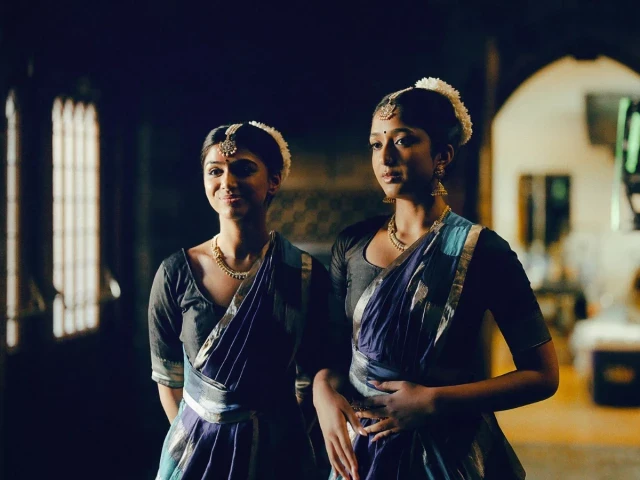
Directed by Lena Khan and streaming globally on Netflix, Best of the Best epitomizes this maturation. Centered on the high-stakes, hyper-energetic world of competitive university Bollywood-fusion dance, the film avoids the lazy, homogenized caricatures of South Asian culture that once plagued Hollywood. Instead, it embraces an intricate tapestry of regional dance forms, authentic choreography, and multicultural realism. This in-depth article explores Ramakrishnan’s reflections on authentic storytelling, the historical trajectory of representation in Western media, the meticulous creative vision behind Best of the Best, and the broader socio-cultural implications of a rapidly shifting Hollywood ecosystem.
Read Also
Detailed Chronology: From Pandemic Breakthrough to Collegiate Ambition
The Accidental Stardom of Never Have I Ever
To understand Maitreyi Ramakrishnan’s unique perspective on the entertainment industry, one must revisit the extraordinary circumstances under which she entered it. In early 2020, as the COVID-19 pandemic ground global society to a halt, Netflix released Never Have I Ever, a coming-of-age comedy-drama co-created by Mindy Kaling and Lang Fisher. Cast out of 15,000 hopefuls through an open casting call—having had no prior professional acting experience—Ramakrishnan stepped into the role of Devi Vishwakumar, a high-achieving, emotionally volatile Indian-American teenager grappling with the sudden loss of her father.
The timing was surreal. Dropping amidst a flurry of viral quarantine content like Tiger King and Love Is Blind, the series captured a captive global audience starved for comfort viewing. For Ramakrishnan, who was only 18 years old at the time, the launch felt abstract and detached from reality.
"Season one came out in COVID, and because everything was online, it kind of felt a little fake at first," Ramakrishnan shared in an interview with Gulf News. "It was right after Tiger King, Love is Blind, and Too Hot to Handle. So, everyone’s bars were really low, and we slid right in there with a nice little comedy that’s actually a story about grief."
Despite the unconventional and isolating rollout, Never Have I Ever became an undeniable global phenomenon. It ran for four critically acclaimed seasons, concluding in June 2023. The show carved out a vital space for South Asian youth culture on mainstream television, proving that a series anchored by a neurotic, messy, unapologetic South Asian female protagonist could resonate universally.
Navigating Sudden Fame Under the Guidance of Mindy Kaling
Being thrust into the global spotlight as a teenager could easily have derailed a young actor’s life. Ramakrishnan has repeatedly credited her seamless navigation of early fame to the mentorship of Mindy Kaling, whom she describes as one of the ultimate pioneers of South Asian representation in the West.
Kaling, who broke ground with The Office and later created The Mindy Project, served not only as an executive producer but as a protective guardian figure for the young newcomer.
"I got the biggest gift in having the best first boss in the world with my icon and one of the first true faces and pioneers of South Asian representation in the West, Mindy Kaling," Ramakrishnan noted.
Rather than handling her with kid gloves, Kaling maintained a grounded, direct approach. She recognized that Ramakrishnan had been plucked from obscurity and thrust into a complex, high-pressure machine.
"She always kept it real and never went easy on me. She would always lead with her heart and truly saw me as a young kid who she realized she plucked out of nowhere and doesn’t know this world. She really took such good care of me," Ramakrishnan reflected, adding with characteristic self-deprecating humor: "So, I didn’t crash out, I’m not shaving my head yet. We’re still here. So, I guess we’re all right."
The Next Chapter: Entering the World of Best of the Best
Following the conclusion of Never Have I Ever, Ramakrishnan sought projects that would allow her to stretch her range while continuing to honor her cultural roots. This quest led her to Best of the Best, which premiered globally on Netflix on September 18.
The film follows childhood best friends Maya (played by Ramakrishnan) and Anjali (portrayed by Priyanka Kedia) as they transition from high school to the sprawling, high-stress environment of UCLA. Upon arrival, the duo sets their sights on joining the university’s elite, hyper-competitive Bollywood-fusion dance team. What begins as an exciting collegiate adventure quickly transforms into a grueling test of endurance, ambition, identity, and the limits of friendship as they chase the prestigious US national championship.
The ensemble cast reads like a who’s who of contemporary diverse talent, featuring Lilly Singh, Janina Gavankar, Ankur Rathee, Chaneil Kular, Nico Greetham, Nihar Duvvuri, Shreya Navile, Amryn Khurana, Tanishq Joshi, Saara Chaudry, and Sasha Bhasin. Through this project, Ramakrishnan steps into a narrative that shifts the lens from high school angst to collegiate ambition, blending comedy, intense physical performance, and the complexities of young adult relationships.
Supporting Context & Metrics: The Evolution of South Asian Representation
From Stereotype to Spectrum
To fully appreciate the cultural weight of Best of the Best and Never Have I Ever, one must examine the historical trajectory of South Asian actors in Western cinema. For decades, representation was plagued by systemic limitations. In early Hollywood and television, South Asian characters were routinely subjected to flat, one-dimensional tropes: the heavily accented convenience store clerk, the submissive sidekick, the mystical guru, or the perpetually stressed medical professional. When romance or complex emotional depth was involved, South Asian actors were rarely permitted to lead.
The late 1990s and 2000s saw incremental cracks in the glass ceiling through projects like Bend It Like Beckham (2002) and the foundational work of comedians and actors like Aziz Ansari and Mindy Kaling. However, these milestones were often isolated oases in a desert of exclusion.
In recent years, the democratization of content through streaming platforms has fundamentally altered these metrics. According to various media diversity reports, the volume of South Asian-led narratives on major subscription video-on-demand (SVOD) services has increased exponentially over the past five years. More importantly, the nature of these stories has matured.
As Ramakrishnan astutely observed:
"In recent years, representation has gotten strides farther than where we were before. It’s personality first, and then the non-changeable factors of their cultural backgrounds is additional information."
This philosophy marks a critical philosophical departure from early diversity initiatives. Instead of characters whose primary narrative function is to "represent" their culture—often having to explain cultural practices to a presumed white audience—modern characters exist as fully realized individuals first. Their cultural heritage is woven into the texture of their lives naturally, requiring no explanatory exposition.
Honoring the Pioneers
Crucially, this evolution has not blinded contemporary artists to the struggles of those who came before them. Ramakrishnan is vocal about acknowledging the actors who took on minor, marginalized roles in past decades—roles that modern audiences might critique or dismiss as outdated stereotypes.
"I have to give the dues where it’s deserved," Ramakrishnan emphasized. "We did have past representations that might not have necessarily been what we fully resonated with or saw ourselves in, but sometimes even just existence, though might not be reflective of your experience, still moves the needle."
She views contemporary hits not as isolated achievements, but as the cumulative result of generational persistence.
"A project like ours stands on the backs of all those past projects that you know paid their dues and fought the good fight to get that side role, because it all builds together. That’s the only way we’re going to continue."
Official Statements and Creative Insights
Director Lena Khan and the Multicultural Reality
The authenticity of Best of the Best is driven not only by its cast but by its creative leadership. Directed by Lena Khan—known for her ability to blend commercial appeal with genuine cultural nuance—the film was designed to reflect the actual demographic mosaic of modern society.
In an interview with Variety, Khan articulated the foundational philosophy guiding the film’s world-building:
"At some point this country and the world is just full of people in different cultures."
Rather than treating multiculturalism as a political statement or a rare exception, Khan’s direction normalizes the coexistence of diverse communities. The fictional UCLA campus in Best of the Best mirrors the genuine pluralism of contemporary university life, where intersecting identities, multi-ethnic friendships, and cross-cultural exchanges are standard everyday experiences.
The Rigor of Authentic Choreography
One of the most defining aspects of Best of the Best is its treatment of dance. Collegiate Bollywood-fusion is a vibrant, physically demanding, and culturally rich subculture across North American universities. It requires dancers to seamlessly merge classical Indian dance forms with hip-hop, contemporary, and folk styles.
In past cinematic representations, South Asian dance was frequently reduced to generalized, Bollywood-inspired background choreography that lazily conflated entirely distinct regional traditions. The creative team behind Best of the Best made a deliberate choice to eradicate this practice.
According to Variety, the production’s choreography drew extensively from a diverse array of traditional and modern styles, including Kuthu (a fast-paced folk dance originating from Tamil Nadu), Bharatanatyam (one of the oldest classical dance traditions of India), and Pakistani-influenced dance styles. This meticulous attention to detail mirrored the multicultural makeup of the fictional university team.
Ramakrishnan was particularly emphatic about the dedication required from the cast and crew to honor these art forms:
"All these dance styles come from very rich cultures and histories and our choreographers kept it real. We’re not settling for just waving our hands in the air anymore. That’s not happening."
This refusal to compromise on cultural authenticity ensures that the dance sequences in Best of the Best are not merely aesthetic interludes, but visceral expressions of identity, competitive drive, and artistic passion.
Future Outlook: The Horizon of Inclusive Storytelling
As Best of the Best streams to global audiences on Netflix, it serves as a powerful indicator of where the entertainment industry is heading—and where it still needs to go. The film demonstrates that stories centered on niche collegiate subcultures can achieve broad, mainstream appeal without sacrificing cultural specificity.
Yet, industry veterans and emerging stars alike recognize that the fight for authentic representation is an ongoing marathon, not a finalized sprint. While milestones like Never Have I Ever and Best of the Best prove that South Asian women can anchor mainstream comedies and romantic narratives, the industry must continue to expand into darker dramas, high-concept science fiction, gritty thrillers, and beyond. Representation must evolve from being a progressive "genre" into a standard industry baseline where diversity is simply a reflection of reality.
Furthermore, the passing of the torch from pioneers like Mindy Kaling to actors like Maitreyi Ramakrishnan highlights the importance of mentorship and institutional memory. By understanding the sacrifices of past generations of actors who accepted minor television roles just to keep the door cracked open, young artists are better equipped to keep that door wide open for the generations that follow.
In reflecting on her journey from a COVID-era streaming breakout to a collegiate dance competitor, Ramakrishnan embodies the resilience, adaptability, and sharp intellect of her generation. With projects like Best of the Best, she is not just entertaining audiences; she is helping to author a more inclusive, nuanced, and authentic chapter in the history of global cinema.




Comments
Facebook App ID not configured. Please add it in the Customizer.