
Executive Overview
The contemporary urban landscape is defined by an intractable paradox: shelter is universally recognized as a fundamental human necessity, yet it operates primarily as a speculative financial asset. Across the globe, renters and prospective homeowners alike find themselves locked out of stability by soaring rents, predatory landlord practices, and an acute shortage of affordable inventory. Amid this worsening urban crisis, the literary and intellectual journal n+1 is hosting a pivotal public event to confront these structural failures head-on.
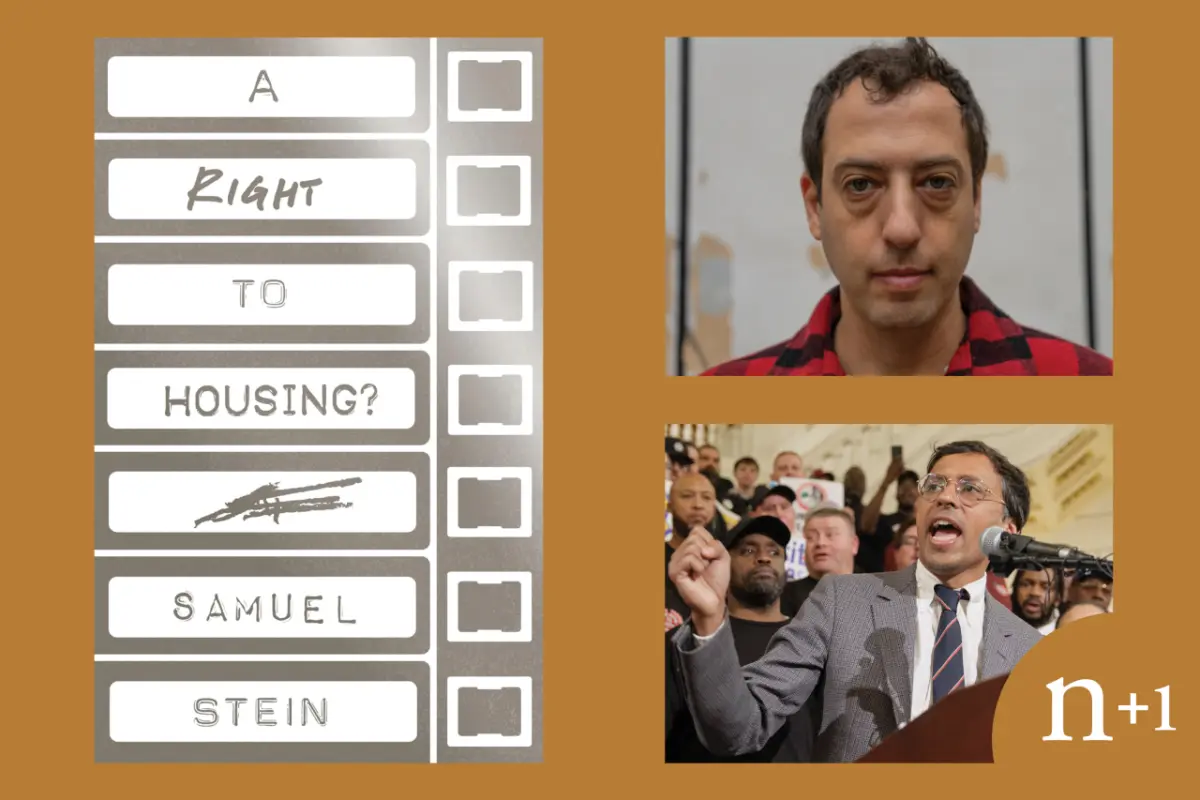
On Tuesday, September 8, the n+1 office in Greenpoint, Brooklyn, will serve as the venue for the official celebration and discussion of Samuel Stein’s highly anticipated new book, A Right to Housing?, published by Verso. Stein, a renowned urban theorist and housing policy analyst, will unpack the complex web of real estate politics, systemic failures, and radical possibilities explored in his latest work. He will be joined in conversation by former n+1 coeditor Nikil Saval, a prominent voice on urbanism, labor, and housing equity.
The event, open to the public with complimentary refreshments including beer and wine, arrives at a critical juncture for American cities. As housing costs continue to outpace wage growth, turning the American Dream into a statistical improbability for millions, Stein’s book offers both a rigorous critique of current conditions and a sobering examination of why traditional policy levers have fallen short. Advance praise from leading scholars and urban historians underscores the urgency of the text, positioning it as an indispensable guide for activists, policymakers, and anyone grappling with the seemingly hopeless geometry of the modern housing market.
Read Also
This report provides a comprehensive examination of the upcoming event, contextualizes the broader systemic crises driving Stein’s research, details the logistics of the Brooklyn gathering, and explores the long-term outlook for housing justice movements in the United States.
Detailed Chronology: The Evolution of Modern Housing Politics
To understand the weight of Samuel Stein’s A Right to Housing?, one must trace the historical trajectory that led contemporary urban centers to their current breaking points. The evolution of housing policy over the past century reveals a steady retreat of the public sector from direct provision, replaced by market-driven mechanisms that prioritize investor returns over human needs.
The Post-War Settlement and the Rise of Private Subsidies
In the mid-20th century, the post-World War II economic boom introduced significant federal interventions in housing. However, unlike European models that invested heavily in social housing and cooperative ownership, the United States chose a bifurcated path. Through federal mortgage guarantees, redlining, and massive highway construction, the state subsidized suburban homeownership primarily for white middle-class families while systematically underfunding and racializing urban public housing. This foundational policy choice planted the seeds for modern segregation and wealth inequality.
The Neoliberal Turn and the Financialization of Shelter
By the late 1970s and 1980s, the Keynesian consensus began to fracture. The neoliberal era ushered in a wave of deregulation, the dismantling of public housing authorities, and the widespread privatization of urban space. Housing was no longer viewed as a social safety net or a public utility; instead, it was integrated into global financial markets. Mortgage-backed securities, private equity buyouts of multi-family complexes, and the commodification of urban land transformed apartments and homes into vehicles for capital accumulation.
The 2008 Foreclosure Crisis and the Corporate Landlord Boom
The catastrophic subprime mortgage meltdown of 2007–2008 exposed the deep vulnerabilities of the financialized housing model. Millions of working-class families lost their homes to foreclosure. Rather than stepping in to socialize distressed properties or guarantee housing security, the federal government and institutional investors facilitated a massive corporate land grab. Wall Street firms, flush with cheap capital, bought up hundreds of thousands of single-family and multi-family homes, turning themselves into mega-landlords. This dynamic permanently altered rental markets, suppressing tenant bargaining power and accelerating displacement.
The Pandemic Shock and the Present Impasse
The COVID-19 pandemic brought these simmering tensions to a boil. While temporary eviction moratoriums and emergency rental assistance provided a brief reprieve, their expiration triggered a wave of housing instability. Today, renters face historic rent hikes, inflation-driven cost-of-living pressures, and an aggressive pushback from real estate lobbies against tenant protection laws. It is within this grim contemporary conjuncture that Samuel Stein’s A Right to Housing? enters the public discourse, offering a much-needed theoretical and practical reckoning.
Supporting Context & Metrics: The Anatomy of an Urban Emergency
The urgency of the discussion between Samuel Stein and Nikil Saval is underscored by a sobering array of economic indicators, housing statistics, and structural challenges facing American cities today.
The Cost-Burden Crisis
According to data compiled by the Joint Center for Housing Studies of Harvard University, a record number of American households are "cost-burdened," meaning they spend more than 30 percent of their income on housing.
- Severe Rent Burdens: Over half of all renters in the United States now fall into the cost-burdened category, with millions spending upwards of 50 percent of their earnings solely to keep a roof over their heads.
- The Affordable Housing Gap: The National Low Income Housing Coalition (NLIHC) consistently reports a severe shortage of affordable and available rental homes for extremely low-income households, with a deficit of millions of units nationwide. In many major metropolitan areas, there are fewer than 40 affordable units available for every 100 households in need.
The Real Estate Lobby vs. Tenant Power
The political economy of urban development remains heavily skewed in favor of real estate developers, property management conglomerates, and speculative investors. Real estate political action committees (PACs) routinely outspend tenant advocacy groups, lobbying municipal and state governments to weaken rent regulation, block "good cause" eviction protections, and underwrite luxury development under the guise of trickle-down supply-side economics.
Despite these structural imbalances, the past decade has witnessed a remarkable resurgence of tenant organizing. Across cities like New York, Los Angeles, and Chicago, tenant unions have successfully coordinated rent strikes, blocked unjust evictions, and pushed progressive housing legislation onto municipal agendas. Stein’s book engages directly with this tension, examining the triumphs and limitations of contemporary housing activism against the overwhelming force of capital.
Official Statements & Critical Praise
The critical acclaim surrounding A Right to Housing? reflects its profound impact on contemporary discussions of urban sociology, political economy, and social justice. Scholars and authors who have engaged with advance copies of the text have highlighted its unsparing realism and its utility for on-the-ground organizers.

Gail Radford, author of Modern Housing in America, offers a ringing endorsement for those on the front lines of the struggle:
"Highly recommended for activists of all stripes, but a must-read for everyone who has struggled to instantiate a human right to housing."
David Madden, coauthor of In Defense of Housing, emphasizes the timeliness and intellectual depth of Stein’s inquiry:
"A deeply thoughtful and provocative exploration of housing politics in the current conjuncture."
Perhaps most compellingly, Amanda Huron, author of Carving out the Commons, points to the psychological and political honesty that distinguishes Stein’s writing:
"What a pleasure to see inside the doubting mind of Samuel Stein as he grapples with the impossibility of our housing quagmire. If you too have the uncomfortable suspicion that solving housing might be hopeless: read this book."
These testimonials signal that Stein’s work is not a simplistic policy handbook filled with empty optimism, but a rigorous confrontation with structural impossibilities—a necessary first step toward formulating genuine political alternatives.
Event Details & Logistics
For those wishing to attend the launch event in Brooklyn, n+1 has released the complete schedule and venue information.
- Date: Tuesday, September 8
- Time: 7:00 PM EST
- Venue: n+1 Office
- Address: 37 Greenpoint Ave #316, Brooklyn, NY 11222
- Accessibility: The n+1 office is fully wheelchair accessible.
- Admission: Free and open to the general public. Copies of A Right to Housing? will be available for purchase, alongside complimentary beer and wine.
While the event is free, spatial constraints mean that RSVPs are strongly encouraged. Attendees can secure their spots by visiting the official registration page hosted via Give Lively.
Future Outlook: Where Do Housing Movements Go From Here?
As Samuel Stein and Nikil Saval take the stage on September 8, their conversation will inevitably pivot toward the horizon: What comes next for the fight for housing justice?
The Limits of Reform vs. The Necessity of De-Commodification
A central theme of contemporary urban discourse is the recognition that incremental zoning tweaks and modest inclusionary zoning requirements are insufficient to solve a crisis rooted in the systemic financialization of land. Future housing policy must grapple with the fundamental question of de-commodification. Can housing function as both a speculative investment vehicle and a human right? History and theory suggest they are mutually exclusive.
Moving forward, housing movements are increasingly focusing on structural alternatives:
- Social Housing Expansion: Scaling up publicly owned, democratically controlled housing models—inspired by international precedents like Vienna’s municipal housing model—that are permanently removed from the speculative market.
- Tenant Acquisition and Community Land Trusts (CLTs): Empowering tenant cooperatives and non-profit trusts to acquire distressed properties, thereby stabilizing neighborhoods and shielding residents from displacement.
- Robust Tenant Protections: Enacting universal rent caps, stringent source-of-income discrimination bans, and sweeping eviction protections to rebalance the power dynamics between landlords and tenants.
The Role of Independent Intellectual Work
Events like the n+1 book launch for A Right to Housing? play a vital role in this broader ecosystem of struggle. By creating physical spaces for rigorous debate, political education, and community building, independent literary and political institutions help bridge the gap between academic theory and grassroots activism.
As urban centers continue to navigate the compounding pressures of climate change, economic inequality, and housing scarcity, the insights generated by thinkers like Samuel Stein and Nikil Saval will be indispensable. The conversation on September 8 is not merely a celebration of a new book; it is a vital checkpoint in the ongoing war for the right to the city.





Comments
Facebook App ID not configured. Please add it in the Customizer.