
Executive Overview
In a modest, three-thousand-seat arena on the outskirts of Paris, eighteen-year-old Hugo Yimga-Moukouri glides across the court for Nanterre 92. Standing six-foot-eight with a chiseled frame, he swishes three-pointers, dominant on the glass and locking down the perimeter with effortless athleticism. On his warmup shirt, where teammates bear their surnames, Yimga-Moukouri wears his initials: HYM—a subtle, phonetic declaration that he is, indeed, Him. Armed with a newly minted endorsement deal with Nike, the teenager represents the latest iteration of a talent assembly line that is systematically reshaping professional basketball.
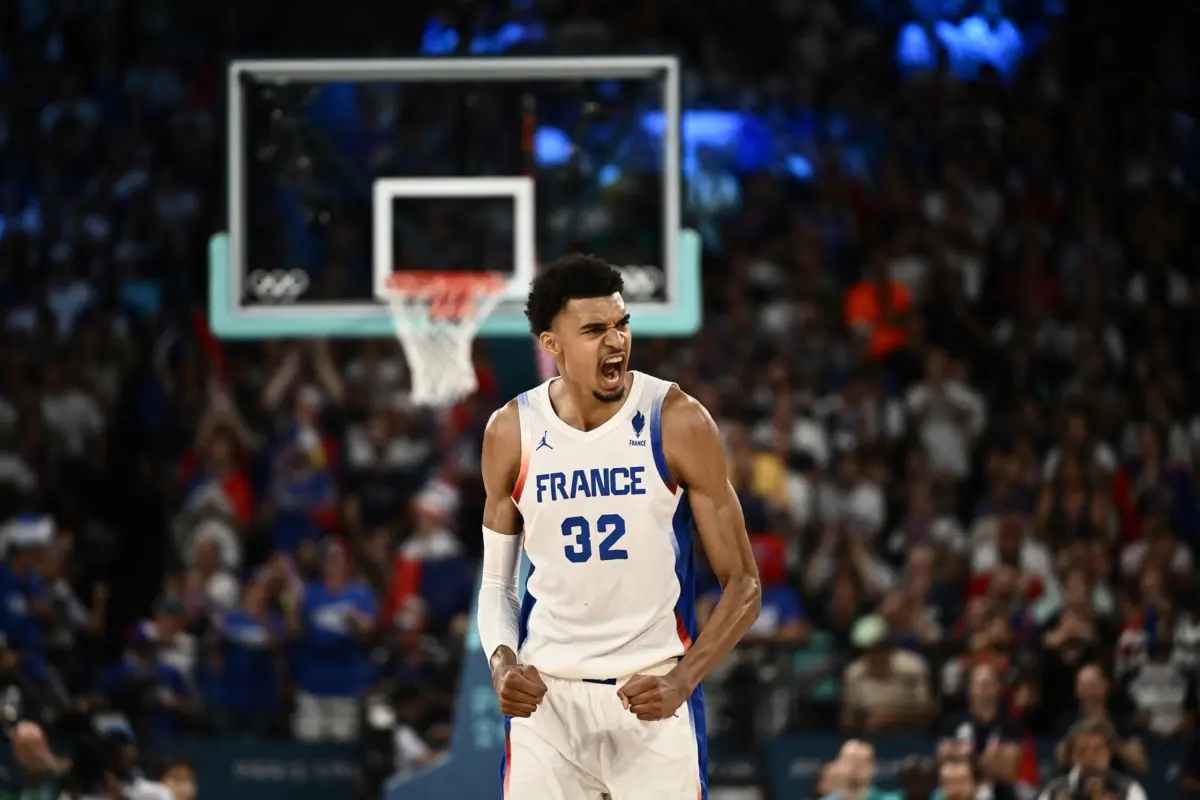
The rise of French basketball is no longer a peripheral story; it is the dominant narrative in international sports development. Thirty years ago, no French citizen had ever played on a professional roster in the United States. Today, a record seventeen French players are under contract in the NBA—more than any nation outside the U.S.—with over fifty having reached the league historically. For two consecutive years, French prodigies have been selected No. 1 overall in the NBA Draft, headlined by twenty-two-year-old phenom Victor Wembanyama (2023) and Zaccharie Risacher (2024), alongside seven other countrymen selected in the top thirty over the past four draft cycles. Having secured back-to-back Olympic silver medals, France stands as the primary structural challenger to American basketball supremacy.
This explosion of elite athletic capability is neither accidental nor a statistical anomaly. It is the calculated result of a centralized, state-funded development blueprint commissioned during the mid-twentieth century. By merging Cold War-era Eastern European sports science, rigorous fundamental training, sophisticated biological scouting, and the rich cultural dynamics of France’s suburban diaspora, the French Republic has created the most efficient athletic incubator on Earth. However, as these young, predominantly Black athletes of immigrant descent conquer the global stage, their success exposes profound socio-political paradoxes within a nation grappling with fiscal austerity, rising right-wing nationalism, and civil unrest in the very suburbs that produce its greatest champions.
Read Also
Detailed Chronology: The Anatomy of a Systemic Rise
+-----------------------------------------------------------------------------------+
|                            THE FRENCH BASKETBALL TIMELINE                         |
+-----------------------------------------------------------------------------------+
| 1960          | Rome Olympics failure triggers De Gaulle's state sports mandate. |
| 1970s-1980s   | Infrastructure roll-out; launch of centralized academies & INSEP. |
| 1992          | Barcelona Olympics "Dream Team" effect intersects built system.   |
| 1997          | Tariq Abdul-Wahad becomes first French player in the NBA.         |
| 2000          | France wins Sydney Olympic Silver; Tony Parker drafted in 2001.   |
| 2023-2024     | Back-to-back #1 NBA Draft picks (Wembanyama, Risacher).           |
+-----------------------------------------------------------------------------------+
1. The Post-War Foundation and State Mandate (1960–1980)
The roots of France’s modern basketball hegemony trace back to a moment of geopolitical and sporting humiliation. Following an abysmal showing at the 1960 Rome Olympics—where the nation failed to rank within the top twenty in total medals—President Charles de Gaulle was reportedly enraged. The men’s soccer team similarly faltered, failing to qualify for multiple World Cups through the 1960s and 1970s.
In response, the French government instituted a systemic overhaul of its national sports apparatus. Looking to Eastern European models of state-directed athletic cultivation, the Sports Ministry began heavy investments in centralized youth infrastructure. The objective was straightforward: build municipal gyms, pitches, and courts nationwide to widen the base of the athletic pyramid, then filter elite prospects into specialized regional performance hubs.
2. Institutionalization and the INSEP Blueprint (1983–1991)
By the early 1980s, French basketball remained a regional backwater. Jean-Pierre de Vincenzi, a former captain of the French Army basketball team who enrolled in the coaching program at the National Institute of Sport, Expertise, and Performance (INSEP) in 1983, recalled that the national team was considered a global "laughing stock," routinely suffering 40-point losses to Spain and Italy and missing five consecutive Olympic Games.
De Vincenzi and his contemporaries transformed INSEP—a sprawling, state-funded campus tucked into the woods at the eastern edge of Paris—into an elite finishing school. The academy instituted a uncompromising sporting philosophy rooted in technical mastery. Prospects spent years perfecting basic mechanics through relentless repetition, akin to classical musicians practicing scales, establishing a foundation of positional fluid craftsmanship that would later define French NBA talent.
3. The Barcelona Spark and Pipeline Validation (1992–2000)
The strategic investment reached critical mass in 1992. When the original U.S. "Dream Team" captivated global audiences at the Barcelona Olympics, youth participation exploded across France’s playgrounds. Unlike other European nations caught unprepared by this cultural wave, France possessed a fully operational development engine ready to absorb and refine the raw talent inspired by Michael Jordan.
       [ Local Youth Clubs ] (e.g., Élan Béarnais - Municipal Subsidies)
                 │
                 ▼
       [ Pôle Espoirs ] (10 Regional Academies - Talent Filtering)
                 │
                 ▼
       [ INSEP Academy ] (Elite Central Facility - Technical Mastery)
                 │
                 ▼
  [ Professional Leagues / NBA Draft ] (LNB Élite, EuroLeague, NBA)
In 1992, De Vincenzi led the French junior national team to a European Championship. Among its stars was Tariq Abdul-Wahad, the son of immigrants from French Guiana, who subsequently transitioned to American college basketball before becoming the first French national to play in the NBA in 1997. Three years later, with De Vincenzi coaching the senior team, France captured the Olympic silver medal at the 2000 Sydney Games—a roster featuring Stéphane Risacher, whose son Zaccharie would make history two decades later.
4. The Golden Era to Global Dominance (2001–Present)
The entry of INSEP alumnus Tony Parker into the NBA in 2001 marked a paradigm shift. Drafted by the San Antonio Spurs, Parker’s four NBA championships and Hall of Fame career demonstrated to French youth that elite success at the sport’s highest level was attainable. A wave of first-round picks followed, including Boris Diaw, Mickaël Piétrus, Nicolas Batum, and Rudy Gobert.
By the time Victor Wembanyama emerged—born in 2004 to an athletic family of Congolese descent and trained through the Nanterre and INSEP pathways—the pipeline was operating at peak efficacy. Wembanyama’s combination of eight-foot wingspan, perimeter ball-handling, and rim protection represents the apex of France’s long-term developmental blueprint.
Supporting Context & Metrics
Quantitative Scale of the French Pipeline
The quantitative footprint of French basketball in the modern era underscores a system producing results at an unprecedented rate:
- NBA Roster Presence: 17 active players under contract for the 2024–25 season, establishing a national record for non-U.S. representation.
- Draft Benchmark: 2 consecutive No. 1 overall selections (Victor Wembanyama, 2023; Zaccharie Risacher, 2024); 9 players selected in the top 30 of their respective draft classes over recent years.
- International Podium Success: Back-to-back Olympic Silver Medals (Tokyo 2020, Paris 2024), pushing Team USA to single-digit margins in gold medal matches.
- Grassroots Economics: Municipal investments, such as the €800,000+ annual subsidy provided to regional club Élan Béarnais, ensure that high-level instruction remains accessible regardless of socioeconomic status.
The Science of Height Projection and Early Identification
A critical differentiator of the French Basketball Federation (FFBB) methodology is its proactive approach to physical forecasting. Recognizing that elite basketball talent is fundamentally constrained by height, French scouts utilize advanced biological profiling to identify high-ceiling prospects before their athletic skills fully mature.
+-----------------------------------------------------------------------------------+
|                        FFBB TALENT IDENTIFICATION PROTOCOL                        |
+-----------------------------------------------------------------------------------+
| Biometric Diagnostics | Wrist X-rays and skeletal growth modeling to project    |
|                       | adult stature.                                            |
+-----------------------+-----------------------------------------------------------+
| Mandatory Quotas      | Regional academies (*Pôle Espoirs*) must reserve slots for|
|                       | high-stature prospects, regardless of immediate skill.     |
+-----------------------+-----------------------------------------------------------+
| Motor Skill Tolerance | Accommodating temporary lack of coordination in rapidly   |
|                       | growing athletes while prioritizing drill-based mastery.  |
+-----------------------------------------------------------------------------------+
Former national team director Jean-Pierre de Vincenzi mandated that regional academies retain quotas for players projected to reach exceptional height. This structural tolerance prevents tall, late-coordinating adolescents from being discarded early in favor of more physically mature but lower-ceiling peers.
Official Statements & Commentary Analysis
The structural transformation of French basketball is best understood through the perspectives of the architects, agents, and players who inhabit the system:
On the Evolution from World "Laughing Stock" to Global Power:
"Did we ever imagine France would be fighting for Olympic gold medals in basketball? It seemed like a fantasy. When I was growing up, we were the laughing stock of the world, losing by forty points to the Italians and Spaniards. We concentrated on specific building blocks—much like musicians practicing their scales."
— Jean-Pierre de Vincenzi, Former Director of the French National Basketball TeamOn the Structural Preparedness During the 1992 Olympic Boom:
"When you have that major moment in ’92 with the Dream Team, all the ingredients were already there in France. You already had the right kind of system in place to capture that surge of interest."
— Lindsay Sarah Krasnoff, Sports Historian and AuthorOn the Psychological Impact of Pioneering Superstars:
"For kids in France, all of a sudden you were able to see a French player becoming a superstar in the NBA. The playgrounds filled up, and the pathway to get there was clearly defined."
— Olivier Mazet, NBA Agent representing French TalentOn the Accelerating Quality of Modern Cohorts:
"We would have got smacked if our INSEP cohort played against these current kids. Every year, I feel like the generation coming up is vastly better than the last one."
— Joël Ayayi, Guard for Paris Basketball and former Gonzaga/NBA player
Future Outlook: Socio-Political Friction and Suburban Realities
As France celebrates its emergence as a global basketball superpower, the infrastructure underpinning this success faces unprecedented internal pressures. The sport’s rise is deeply intertwined with the demography of the banlieues—the working-class suburbs surrounding Paris, Lyon, and Marseille. The majority of France’s top basketball talent, including Wembanyama, Yimga-Moukouri, and historical icons like Tony Parker and Tariq Abdul-Wahad, are children of immigrants, primarily from West and Central Africa and the Caribbean.
+-----------------------------------------------------------------------------------+
|                      THE CANOPY OF FRENCH BASKETBALL SYSTEM                       |
+-----------------------------------------------------------------------------------+
|   CULTURAL CONVERGENCE    |   STATE INFRASTRUCTURE    |   POLITICAL FRICTION      |
|  Afro-French diaspora,    | INSEP, Pôle Espoirs,  | Austerity measures vs.    |
|  hip-hop identity, &      | and heavily subsidized | public sports funding;    |
|  urban youth culture.     | municipal youth clubs. | rise of Far-Right (RN).   |
+-----------------------------------------------------------------------------------+
This multicultural realities of modern French athletic success stands in sharp contrast to the country’s shifting political climate:
- Political Anti-Immigration Sentiment vs. Multicultural Excellence: The rise of the far-right Rassemblement National (RN), led by Marine Le Pen, has pushed nationalist policies into mainstream political discourse. While right-wing factions advocate for stricter immigration controls and narrower definitions of French identity, the national basketball team serves as a high-visibility model of a multicultural Republic.
- Fiscal Austerity and Public Infrastructure: Amid mounting national debt, calls for spending reductions threaten the public subsidies that sustain grassroots athletic clubs. Facilities like "One Ball" in Noisy-le-Grand and dynamic franchises like Paris Basketball—co-owned by actor Omar Sy and former NBA executive David Kahn—increasingly rely on private capital and commercial enterprise to supplement state investment.
- Suburban Disinvestments and Civil Unrest: A stark divide persists between state expenditure on elite athletic development and public investment in basic suburban infrastructure. Ongoing protests across Paris suburbs over overcrowded, deteriorating schools highlight systemic inequalities. Notably, figures from the basketball community have taken prominent stands; Saint-Denis Mayor Bally Bagayoko—a former semi-pro basketball player and youth coach—garnered national attention by intervening between riot police and student protesters, a movement publicly backed by Victor Wembanyama.
Ultimately, French basketball is more than an elite athletic talent factory. It serves as a testing ground for the modern French state. The centralized machine built to redeem national pride after the 1960 Olympics has succeeded beyond its founders’ wildest dreams. Yet, as its young stars continue to dominate global draft boards and threaten American dominance on the court, the system’s ongoing success will depend on France’s willingness to support and invest in the communities that produce them.




Comments
Facebook App ID not configured. Please add it in the Customizer.