
Executive Overview
For generations, the necromancer was fixed in the literary firmament as a static, unyielding archetype: a wizened, skeletal sorcerer draped in tattered vestments, lingering in subterranean crypts, and radiating an ethereal green luminescence born of prolonged exposure to decaying flesh. They were the architects of doom, the sinister antagonists who drove the plot through wholesale slaughter and the blasphemous reanimation of corpses. Romance was not merely absent from their narratives; it was antithetical to their very existence.
Today, however, the literary landscape has shifted dramatically. Driven by the explosive, cross-media boom of the "romantasy" genre—where sweeping emotional arcs and passionate entanglements carry equal narrative weight to geopolitical conflicts and magical world-ending crises—the modern necromancer has undergone a profound metamorphosis. No longer confined to the shadowy periphery of villainy, death-speakers are stepping into the spotlight as complex, yearning, and deeply seductive romantic leads.
This evolution has birthed an exciting subgenre: necromantasy. Blending the macabre visceral reality of death magic with the high-stakes emotional vulnerability of romance, contemporary authors are discovering that the path to true love often runs directly through the graveyard. This report examines the mechanics of writing necromantasy, exploring how authors embrace the inherent darkness of the craft, engineer compelling romantic pairings, and subvert traditional tropes to redefine what it means to fall in love with someone who controls the dead.
Read Also
Detailed Chronology: From Crypt Keeper to Coveted Lead
To understand how necromancers transitioned from terrifying monsters to swoon-worthy protagonists, it is essential to trace the historical evolution of the archetype within speculative fiction.
- The Classical Era of Horror and High Fantasy (Mid-to-Late 20th Century): In early foundational fantasy works, death magic was strictly demarcated as an absolute evil. Necromancers were categorically villains—lone, obsessive men hoarding skulls and plotting world domination. Romance, if it existed at all in these tales, was reserved for noble paladins, dashing rogues, and pure princesses.
- The Anti-Hero Transition (Late 1990s–2010s): As urban fantasy and grimdark subgenres gained traction, writers began peeling back the layers of traditional villains. Anti-heroes emerged, and magic systems grew more nuanced. Necromancers began appearing as morally grey protagonists, yet their romantic subplots remained fraught with tragedy, often ending in betrayal, sacrifice, or emotional isolation.
- The Romantasy Boom and the Modern Renaissance (2020s–Present): Fueled by digital book communities, a hunger for emotionally intense speculative fiction, and a cultural appetite for complex, morally ambiguous characters, the romantasy genre crystallized. Readers began demanding characters who were powerful, deeply flawed, and capable of profound emotional transformation. The necromancer, carrying the ultimate baggage of guilt, mortality, and power, emerged as the ultimate romantasy vessel.
Supporting Context & Metrics: Defining Romantasy and Necromantasy
Before crafting a tale of eternal love amid the graveyard dirt, writers must deconstruct the two foundational pillars of the subgenre.
Defining Romantasy
While definitions vary across literary circles, romantasy as a genre rests on a fundamental balance: equal narrative real estate must be dedicated to both the romantic development of the characters and the external fantasy plot. In a true romantasy, characters fall in love on the page through dialogue, shared peril, and emotional exposure, and this romantic resolution is treated with the same thematic weight as defeating an empire or closing a dimensional rift.
Defining Necromantasy
Apply the rigorous relationship stakes of romantasy to a world where at least one central character possesses the power to command corpses, converse with the deceased, and manipulate the boundary between life and afterlife, and you arrive at necromantasy. It is a genre defined by the juxtaposition of the most final, cold reality known to humanity—death—with the warmest, most vulnerable human experience—falling in love.
Embracing the Darkness: Why Broken Magic Makes for Better Romance
At its core, necromancy is classified as "dark magic." Whether an author writes about physical reanimation or osteomancy (divining futures through the manipulation of bones), the craft is inherently experimental, taboo, and accompanied by horrific psychological and physical consequences.
However, a common misstep for developing writers is attempting to sanitize necromancy—softening its mental toll or stripping away its grim atmospheric overtones to make the protagonist more immediately palatable. To do so is to squander the immense potential for deep, character-driven angst.
The Psychology of the Death-Wielder
To write a compelling romantic lead who commands the dead, an author must dial the emotional stakes up to their maximum threshold. Effective necromantasy leverages several distinct archetypal approaches:
- The Burdened Bearer: A protagonist crushed under the psychological weight of their past mistakes, haunted both literally and figuratively by the souls they have manipulated. Their journey toward love is simultaneously a journey toward self-forgiveness and emotional rehabilitation.
- The Arrogant Innovator: A brilliant, mad-scientist-ambitious magic user who pushes boundaries too far, stumbling into supernatural dangers from which only a deeply bonded partner can rescue them.
- The Misunderstood Outcast: Tortured by a society that reviles their natural gift, forcing them to yearn fiercely for acceptance, loyalty, and intimacy.
These characters are fundamentally human (or mostly human), making their desperate yearning for connection all the more poignant against a backdrop of decay.
Summoning a Perfect Pair: Crafting the Ultimate Dynamic
Romance lives and dies on chemistry, friction, and dynamic interplay. Bringing two magic-users together—such as a necromancer and a traditional elementalist, a demon summoner, or a celestial priest—creates an instant pressure cooker of narrative tension.
Magical Counterparts in Conflict
When a necromancer falls for a magical contemporary, their differences in philosophy open immediate avenues for intimate dialogue. Discussions concerning the ethical boundaries of clandestine magic, the sanctity of the soul, and the morality of a fantasy world stop feeling like exposition dumps and instead become deeply personal arguments. These intellectual clashes allow characters to bare their souls while debating the nature of the afterlife.
Pairing with the Non-Magical
Conversely, pairing a necromancer with a non-magical love interest places profound ethical and emotional questions front and center:
- Magic is real?
- Why are you utilizing it to raise an infantry of the fallen?
- How do I emotionally reconcile my affection for you with your terrifying vocation?
This dynamic shines brightest when both characters share a unified, high-stakes objective that forces the non-magical partner to accept, and even participate in, forbidden practices—such as summoning an out-of-reach spirit to solve a dynastic murder, raising an undead army to resist an invading empire, or conspiring to achieve the ultimate fantasy goal: defeating death itself.
Defying Death (And Expectations): World-Building the Necromantasy Setting
To keep necromantasy fresh, modern authors are actively dismantling traditional tropes and reframing how death-magic is perceived within their fictional universes.
Uncoupling Magic from Judeo-Christian Dogma
Historically, the widespread condemnation of death-related "dark magic" in Western fantasy mirrors real-world religious taboos regarding corpses and the afterlife. Authors can shatter these predictable boundaries by inventing world-specific cultures where necromancy is not viewed as inherently evil. By placing necromancers in positions of cultural prominence, fame, or institutional power, writers open entirely new character arcs for their romantic leads.
Societal Integration and Complex Structures
Rather than portraying necromancers as isolated loners dwelling in swamp-side hovels, contemporary world-building often weaves them directly into the intricate machinery of complex societies.
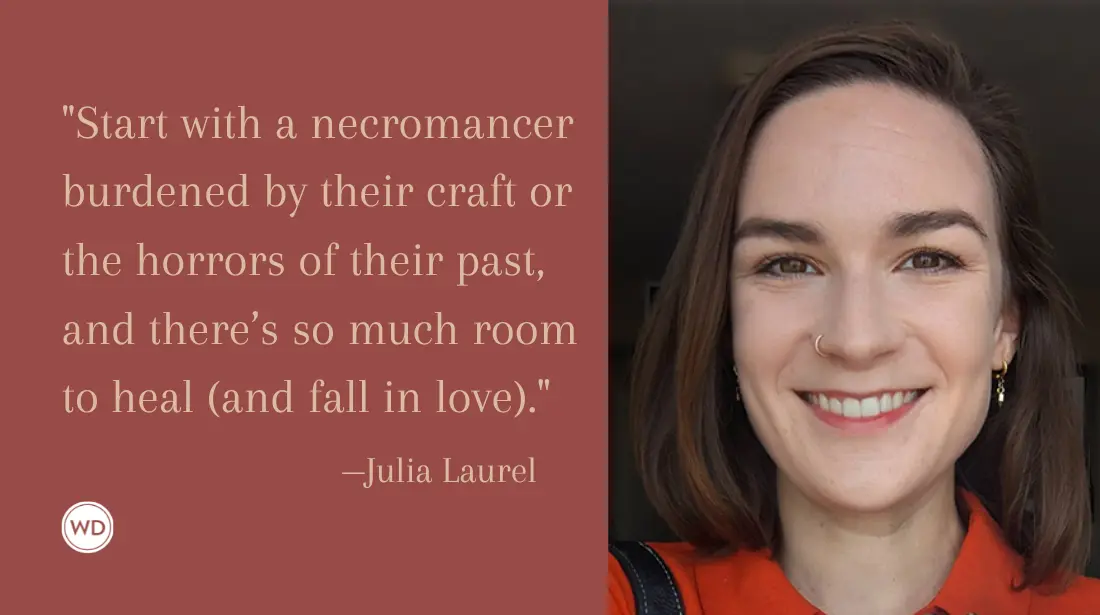
A prime example of this subversion can be found in Julia Laurel’s debut novel, An Embodiment of Souls, where necromancers are born into a rigid, Puritanical culture. Operating from a remote island to safeguard their cultural traditions and maintain demographic control, these practitioners view necromancy as an act of profound faith and righteousness. However, when an authoritarian aristocracy co-opts the practice, the magic is repurposed to control bodies—granting high-class elites an entire second human body to utilize as they see fit.
This intricate sociopolitical landscape creates a razor-sharp narrative tension for a budding romance between a native necromancer and his romantic interest: a magical detective hailing from an exterior society where necromancy is strictly outlawed. By blending dark atmospheric world-building with intense interpersonal conflict, these characters must navigate the ethical implications of twisted magic while fighting their own mutual attraction—proving that even within the most rigid systems of bodily control, queer romance and revolutionary love can bloom.
Future Outlook: The Maturation of Necromantasy in Modern Publishing
As the romantasy market continues to expand and mature, readers are increasingly searching for subgenres that subvert traditional relationship dynamics. The era of the squeaky-clean fantasy romance is yielding to stories that demand emotional grit, moral gray areas, and high-stakes supernatural world-building.
Necromantasy stands at the vanguard of this literary evolution. By transforming the quintessential villain of classic fantasy into a vulnerable, yearning romantic lead, authors are proving that love can conquer all—even mortality itself. Whether through exploring the psychological trauma of raising the fallen, engineering high-tension ideological clashes between magical partners, or constructing elaborate sociopolitical systems where death is merely another tool of governance, the future of romance is delightfully dark.
For aspiring writers looking to make their mark on the romantasy boom, the prescription is clear: pick up a shovel, delve into the shadows, and remember that when crafting a love story that spans the veil between life and death, you literally cannot spell necromancer without romance.


Comments
Facebook App ID not configured. Please add it in the Customizer.