
Executive Overview
In the hyper-competitive landscape of contemporary publishing, an author’s biography is rarely treated with the strategic gravity it demands. Too often viewed as an afterthought—a hurried paragraph cobbled together minutes before a manuscript deadline or a conference submission—the author bio holds the power to open doors or quietly close them. Behind every compelling bio lies a fundamental, probing question: What do you want to be known for?
When an author gets this right, every subsequent marketing, promotional, and networking effort becomes smoother. When they get it wrong, they produce a generic placeholder that could belong to any one of a hundred other writers in their genre: accurate, competent, and entirely forgettable.
Compounding the problem is a severe lack of meaningful guidance for emerging and midlist writers. Many new authors fall into the trap of mimicking bestselling household names who no longer need descriptive bios because their very names have transformed into global brands. For the vast majority of writers who have not yet reached household-name status, a bio must work tirelessly across wildly divergent contexts—from live event introductions and book jackets to literary query letters, book proposals, social media profiles, and academic conference programs. Relying on a single, static version for all of these formats is a recipe for missed opportunities. Furthermore, a bio that was sharp and
Read Also
accurate a few years ago frequently goes stale as an author’s career evolves, subtly working against them without their conscious realization.
To address these pain points, industry veterans are stepping up to reframe how writers view their professional introductions. Alongside professional development initiatives like masterclasses in bio-construction, the literary community continues to buzz with creative engagements, including exclusive international retreats and ongoing flash-fiction competitions that challenge writers to hone their craft down to a single sentence. This report explores the architecture of the modern author bio, examines the strategic tools required to master it, and rounds up the latest opportunities and community milestones shaping the writing world today.
Detailed Chronology: The Evolution and Mechanics of Author Branding
To understand why the traditional author bio is broken, one must examine its historical trajectory and how digital publishing upended the rules of authorial introduction.
The Shift from Static Dust Jackets to Dynamic Digital Real Estate
For decades, the author bio was a static artifact. Confined primarily to the back flap of a hardcover dust jacket or the final pages of a paperback, it followed a rigid, predictable formula: born in City X, educated at University Y, currently residing with a pet in Location Z, with a brief nod to previous publications. Readers rarely encountered these bios until after they had already purchased and opened the book.
The advent of the internet and social media fundamentally inverted this timeline. Today, a writer’s bio is almost always consumed before the work. Prospective agents, acquisitions editors, event organizers, and casual readers encounter a writer’s digital footprint via Twitter/X profiles, Instagram bios, Substack landing pages, author websites, and newsletter welcome emails. In this hyper-linked ecosystem, the bio acts as a digital handshake and a filter.
[Traditional Publishing Era]  --> Book Purchased --> Dust Jacket Bio Read (Static/Informational)
[Modern Digital Era]          --> Bio Encountered (Digital/Strategic) --> Book/Project Considered
Recognizing this paradigm shift, publishing educators have begun designing targeted interventions. For instance, publishing strategist Jane recently launched a comprehensive live webinar titled "Build a Better Bio," hosted through Writer’s Digest University. This educational milestone marks a broader industry push away from passive biography-writing toward active, strategic personal branding for authors at all career stages.
Key Milestones in the Modern Author Toolkit
- The Pre-Digital Era: Bios served as simple bibliographic appendixes, prioritizing biographical pedigree over audience connection.
- The Social Media Boom (2010s): Authors scrambled to condense their life stories into 160-character Twitter bios, often sacrificing professional clarity for casual brevity.
- The Multi-Platform Ecosystem (Present): Writers are now forced to maintain an entire suite of bios—ranging in length from a single punchy sentence to a comprehensive professional narrative—tailored specifically to platforms like TikTok, Substack, Amazon Author Central, and formal query letters.
- Strategic Interventions (Current Wave): Industry workshops and specialized training modules are emerging to teach authors how to treat their bios as fluid, evolving marketing instruments rather than permanent biographical monuments.
Supporting Context & Metrics: Why the Generic Bio Fails
Data from independent publishing consultants and literary agencies reveal a startling consistency: more than 70% of query letters and pitch packages submitted by emerging writers feature bios that fail to establish a clear authorial brand or unique selling proposition (USP).
The Pitfalls of Mimicry
Emerging writers frequently study bestselling authors—such as Stephen King, James Patterson, or Zadie Smith—and attempt to replicate their minimalist public profiles. A bestselling author can safely get away with a three-word bio or a dry list of previous titles because their name alone commands immediate market recognition and trust.
For an emerging or midlist author, however, adopting this approach is counterproductive. Without established brand equity, a minimalist or overly sparse bio fails to answer the critical questions swirling in an agent or reader’s mind:
- Who is this writer, and what world do they inhabit?
- Why are they uniquely qualified to tell this specific story?
- What kind of reading experience can I expect from their work?
The Multi-Context Dilemma
A major hurdle for working writers is the fragmentation of media channels. A single bio rarely serves all required contexts well. Consider the operational variance required across a writer’s professional ecosystem:
| Platform / Context | Optimal Length | Primary Objective | Key Tone |
|---|---|---|---|
| Query Letter / Proposal | 50–75 words | Establish credentials, hook the agent, list relevant publishing credits. | Professional, authoritative, concise |
| Book Jacket / Back Cover | 75–150 words | Entice the casual browser, establish authority and location/background flavor. | Engaging, polished, slightly narrative |
| Conference Program | 40–60 words | Inform attendees of panelist expertise and recent book releases. | Informative, approachable |
| Social Media (X / Instagram) | 1–2 lines (under 160 chars) | Capture attention, display genre/vibe, direct traffic to a link-in-bio. | Witty, punchy, thematic |
| Website "About" Page | 300–500+ words | Build a deep emotional connection with readers; share the human story behind the writing. | Conversational, authentic, immersive |
When writers fail to adapt their bios across these channels, they either overwhelm readers with long-winded paragraphs on fast-paced social feeds or underwhelm literary agents with casual quips in formal proposals.
Official Perspectives & Expert Guidance
Industry professionals emphasize that crafting an effective bio is an exercise in strategic editing and psychological positioning. During her specialized webinars on author branding, publishing expert Jane breaks down the mechanics of bio-writing into actionable principles designed to rescue writers from mediocrity.
1. The Bio as a Strategic Tool, Not an Afterthought
"Too many writers view their bio as a chore—a boring summary of where they went to school and where they walk their dog," industry analysts note. "In reality, your bio is one of the highest-converting pieces of real estate in your author toolkit. It is a filter designed to attract your ideal readers and repel the wrong ones."
2. Identifying Your Core "What"
The foundational exercise in modern bio-writing is defining what you want to be known for. This requires looking past individual book titles and identifying the overarching themes, emotional territories, or genre innovations that define your body of work. Are you known for writing high-octane historical thrillers rooted in archival research? Are you the voice of modern, witty domestic comedy? Nailing this core identity provides a magnetic anchor for your bio, ensuring that even if a reader has never read your books, they immediately understand your creative lane.
3. Avoiding the Staleness Trap
Careers evolve. A science fiction writer who transitions into writing cozy mysteries, or a novelist who eventually wins prestigious fellowships and literary awards, often forgets to update their digital footprint. An outdated bio that highlights past amateur workshops while ignoring recent major achievements can unconsciously signal to industry professionals that the author is inactive or out of touch with the current market.
Future Outlook & Community Opportunities
As the publishing industry continues to evolve through technological shifts and changing reader behaviors, supporting structures for writers are expanding. Beyond mastering the written introduction, writers are actively seeking immersive community experiences, professional retreats, and creative micro-challenges to sharpen their skills.
Escaping to Tuscany: The 2027 International Writing Retreat
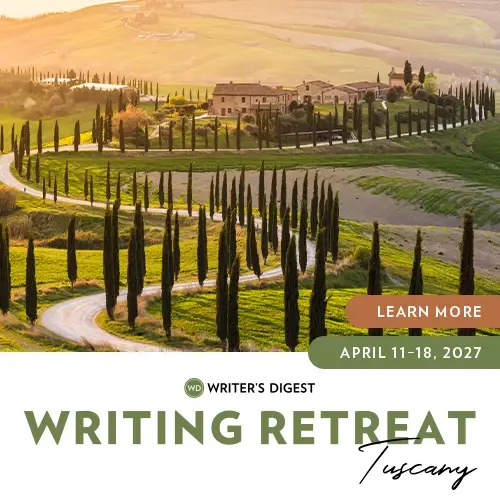
For authors looking to step away from the digital noise and focus intensively on their craft, opportunities for deep immersion are returning to the global stage. Writer’s Digest has announced final remaining spots for its exclusive Writing Retreat in Italy, scheduled for April 2027.
Set against the tranquil backdrop of the Tuscan countryside, this week-long retreat is specifically designed to provide authors with dedicated writing time, advanced craft workshops, and direct mentorship from seasoned publishing professionals. Participants will balance rigorous editing sessions with cultural excursions, enjoying the rich culinary landscape of Italy while forging lasting connections with fellow writers. Industry insiders note that retreats of this caliber offer a crucial psychological reset for authors trapped in the daily grind of marketing and administrative tasks.
Flash Fiction and Creative Micro-Challenges: The "Your Story" Series
While long-form novels and strategic bios require careful planning, micro-writing exercises continue to capture the imagination of the global literary community. The ongoing "Your Story" competition series hosted by Writer’s Digest provides a masterclass in conciseness—a skill intrinsically linked to writing punchy, effective bios and query hooks.
Recent milestones in the creative pipeline highlight high levels of engagement:
- "Your Story #143": Out of more than 100 competitive entries, editors carefully reviewed submissions to select 5 standout finalists whose opening lines brilliantly captured the essence of the visual prompt.
- "Your Story #144": Building on that momentum, a subsequent round drew over 100 submissions, ultimately yielding 7 exceptional finalists praised for their narrative economy and emotional resonance.
- "Your Story #145" (Open Now): The competition cycle continues with the launch of #145. Aspiring and established writers are challenged to craft a one-sentence opening line to a story based on a designated photo prompt. Whether poignant, humorous, witty, or deeply dramatic, participants are invited to email their single-sentence submissions to
[email protected]using the subject line "Your Story 145."
Summary
Ultimately, whether an author is distilling their entire career into a 50-word query bio, drafting a single-sentence flash fiction opener for a contest, or packing their bags for a writer’s retreat in Tuscany, the underlying rule remains the same: intentionality is everything. By treating every element of the author platform—starting with the professional bio—as a deliberate, evolving strategic tool, writers can navigate the complexities of the modern publishing world with confidence, clarity, and enduring impact.

Comments
Facebook App ID not configured. Please add it in the Customizer.