
Executive Overview
In the literary ecosystem, "never give up" is treated less as advice and more as an unassailable dogma. Aspiring authors are fed a steady diet of resilience narratives: the manuscript rejected eighty times before finding a home, the debut novelist who spent a decade in the drawer, the writer who wallpapered their office with rejection slips until success finally knocked. This cultural fixation on persistence frames perseverance as a universal good, suggesting that any departure from a project is a failure of character, a surrender to doubt, or a lack of creative fortitude.
However, a rigorous examination of the creative process reveals a more nuanced, professional reality. Successful careers are rarely built on the stubborn refusal to abandon a sinking ship; rather, they are forged through the sophisticated, highly strategic art of letting go.
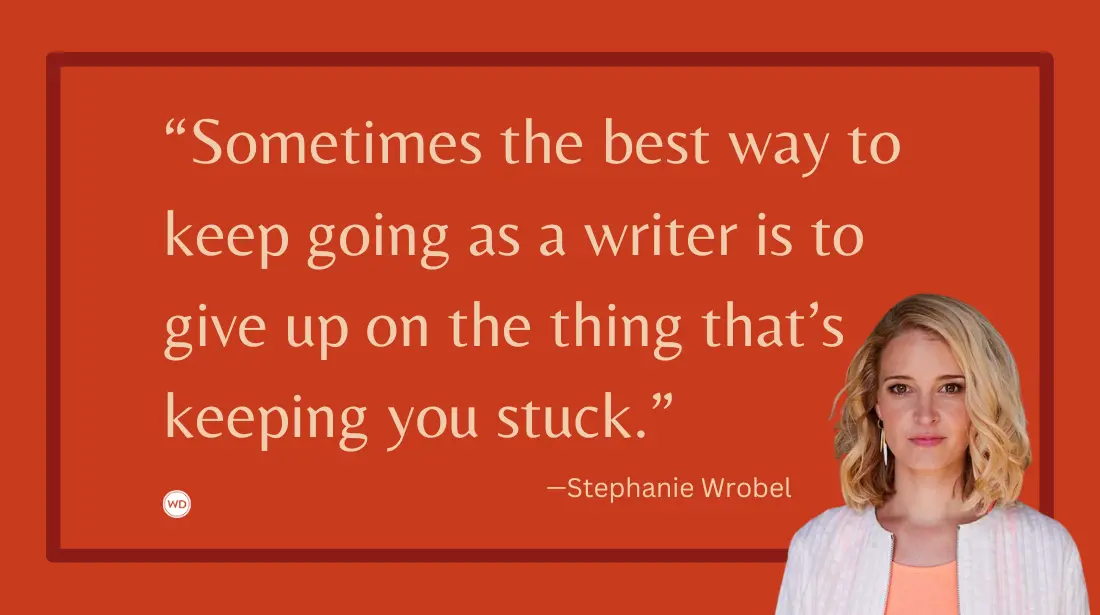
Author Stephanie Wrobel understands this dichotomy better than most. Before her breakout success with her debut novel, Darling Rose Gold—which secured five offers of representation within a single month—Wrobel accumulated 221 rejections across five short stories during her time in graduate school. Instead of viewing those rejections as a prompt for rejection #222, she made a deliberate, career-defining choice: she quit. She recognized that short fiction was not her optimal medium and pivoted entirely to the novel form she had always wanted to conquer.
Read Also
In the years since, Wrobel has refined this philosophy into a rigorous creative framework, shedding five distinct works-in-progress during a single summer alone. Her thesis challenges the foundational myth of the tortured artist chained to a single, decaying manuscript. True literary longevity, she argues, requires authors to distinguish between the overarching ambition of a creative life and the specific, sometimes toxic attachment to a dead-end project. When persistence crosses the line into delusion, knowing when to walk away is not quitting—it is professional survival.
Detailed Chronology: The Evolution of a Writing Career
To understand how strategic abandonment operates in practice, one must trace the trajectory of Wrobel’s evolution from an MFA student trapped in the cycle of short-story rejections to a seasoned novelist capable of ruthless self-editing at the project level.
Phase 1: The Graduate School Crucible and the 221 Rejections
During her graduate studies, Wrobel operated under the traditional paradigm of the aspiring writer: generate pages, polish them, and send them out into the void. Focusing on short fiction, she produced five distinct stories that were systematically rejected 221 times combined.
The turning point did not arrive via a sudden epiphany of marketability or a breakthrough structural edit. Instead, Wrobel engaged in a cold, analytical assessment of her output. She asked herself whether the medium aligned with her long-term creative ambitions. Recognizing that her ultimate goal—the reason she had applied to MFA programs in the first place—was to write novels, she made the executive decision to shelf the short stories permanently. This was not a capitulation; it was a reallocation of finite creative capital.
Phase 2: The Pivot to Long-Form and Darling Rose Gold
With her energy redirected away from short fiction, Wrobel concentrated entirely on long-form narrative. The transition yielded immediate professional validation. The very first novel she completed attracted five separate representation offers within one month of querying. That manuscript became Darling Rose Gold, cementing her arrival in the psychological thriller space and proving that giving up on the wrong format had cleared the path for the right one.
Phase 3: The Multi-Platform Ghost Project
The dangers of misallocated persistence are best illustrated by Wrobel’s protracted battle with an ill-fated horror concept centered on a diabolical grandmother. The project’s lifecycle serves as a cautionary tale of creative stubbornness:
- Iteration One: Conceived as a novel pitch, it was swiftly rejected by editors.
- Iteration Two: Re-packaged and pitched as an audiobook concept, it met a similar dead end.
- Iteration Three: In a final, desperate bid to salvage the months of investment, Wrobel spent weeks adapting the premise into a feature-length horror screenplay.
It was only when she reached page 51 of the screenplay that the illusion shattered. She was no longer writing out of passion or narrative conviction; she was working out of a sunk-cost fallacy, terrified that abandoning the project meant wasting the months already spent on character development and outlining. Once she stripped away the emotional baggage of time invested, the project was quietly and permanently retired.
Phase 4: The Discovery of New Horizons and Revenge Plot
This ongoing refinement of her editorial boundaries culminated in her fifth book cycle. While developing a speculative thriller for her editors, a third, entirely separate idea seized her attention. Initially attempting to suppress the distraction in favor of "staying the course," Wrobel eventually acknowledged that the new concept was demonstrably superior.
She shelved the speculative thriller—which she later successfully resurrected as a television pilot—and dedicated herself to the new manuscript. This experience directly inspired her darkly comic novel, Revenge Plot, which examines the logical extreme of creative persistence: an aspiring writer who takes a literary agent hostage until she reads his manuscript. Through satire, Wrobel explores the precise moment dedication curdles into obsession, reinforcing her core message that knowing when to quit is just as vital as knowing when to push through.
Supporting Context & Metrics: The Cost of Misplaced Persistence
In the publishing industry, time is an author’s most scarce and non-renewable resource. Yet, professional discourse rarely addresses the economic and psychological toll of staying married to a broken manuscript.
The Metrics of Attrition
- The Sunk-Cost Threshold: Behavioral economists define the sunk-cost fallacy as the tendency to continue an endeavor because of previously invested resources (time, money, emotional energy). In writing, this manifests when authors spend six months fixing structural flaws in a premise that was fundamentally flawed from inception. If an author spends a year on a dead-end project, they have effectively forfeited a year that could have been dedicated to a commercially viable or creatively fulfilling work.
- Market Realities: Publishing houses operate within strict genre expectations and economic cycles. When writers spend years contorting an unmarketable premise to fit shifting buyer expectations—stripping away unique, off-the-wall elements until a story becomes a "pedestrian domestic thriller"—they diminish their own market value and artistic satisfaction.
- The Rejection Ratio: As Wrobel’s early career demonstrates, 221 rejections across five short stories signaled a profound structural mismatch between creator and medium. While persistence is mandatory for querying agents and enduring editorial rounds, applying that same unyielding tenacity to a conceptually dead manuscript yields negative returns.
The Diagnostic Framework for Abandonment
To assist writers in distinguishing between standard creative friction and terminal project failure, Wrobel’s methodology establishes five diagnostic checkpoints:
- Difficulty vs. Disinterest: Every writing project hits a wall where the prose becomes arduous. However, fatigue is distinct from apathy. If an author can no longer articulate the core spark that initially excited them about the premise, the project has suffered a fatal loss of narrative momentum.
- Execution vs. Premise: No amount of snappy dialogue, character arc adjustments, or structural pacing can save a narrative whose foundational premise lacks originality, structural sustainability, or a clear narrative engine.
- The Sunk-Cost Trap: Evaluating whether a project is being sustained by genuine artistic belief or merely by the terror of admitting that months (or years) of outlining and drafting were an educational detour.
- Editorial Contortion: Assessing whether compromise with market expectations has stripped the manuscript of its distinctive voice, reducing a once-passionate endeavor into a generic chore.
- The Quality of the New Idea: Differentiating between the superficial dopamine hit of a "shiny, new" unwritten concept and the quiet, undeniable pull of a genuinely superior narrative framework.
Official Statements & Industry Perspectives
The dogma of unyielding persistence is deeply entrenched in creative writing programs, writers’ conferences, and publishing lore. However, working professionals across the literary landscape increasingly advocate for strategic pruning.
Industry veterans frequently emphasize that publishing houses buy trajectories, not just single books, but an author’s personal growth is inextricably tied to their willingness to discard inferior work. When an author clings to a flawed debut manuscript for a decade, they deprive themselves of the evolutionary space needed to develop the voice that will actually break through the market.
In the case of Stephanie Wrobel’s work, literary critics and readers alike have noted the sharp, uncompromising pacing of her thrillers—a structural precision that could only be achieved by an author intimately familiar with the mechanics of pruning dead weight. As Wrobel observes in her public discussions on the creative process:
"A manuscript is not a career. Neither is a short story, a screenplay, an agent, a publisher, or even a particular vision of how your writing life is supposed to unfold."
This perspective reframes the act of abandoning a project from a moral failing into an act of editorial hygiene. Major literary agents and acquiring editors routinely advise debut authors that the ability to recognize a "drawer novel"—a project that serves its purpose as a practice run without ever seeing the light of day—is the defining marker of professional maturity.
Future Outlook: Redefining Resilience in Modern Publishing
As the publishing industry navigates shifting reader consumption habits, algorithmic discovery models, and hyper-competitive market spaces, the romanticized archetype of the starving artist laboring for decades over a single, rejected manuscript is rapidly losing currency.
The future belongs to the agile creator. Writers who view their creative output as a portfolio of projects rather than a singular, sacred text are better equipped to weather the cyclical rejections of the traditional market. Strategic abandonment allows authors to:
- Accelerate Skill Acquisition: Completing multiple projects—even if several are ultimately shelved—teaches pacing, structure, and voice far faster than spending five years trying to resuscitate a terminally flawed first novel.
- Protect Creative Mental Health: Constantly forcing oneself to love a compromised, over-edited manuscript breeds burnout, creative paralysis, and deep-seated impostor syndrome.
- Maintain Market Agility: By remaining unattached to specific sunk costs, writers can pivot quickly toward emerging market trends or explore alternative mediums—such as transitioning a failed novel pitch into a television pilot or audio project.
Ultimately, the cultural obsession with "never giving up" requires a critical amendment. Writers must never give up on their fundamental vocation, their core passion for storytelling, or their ultimate ambition of building a sustainable literary career. But they must become ruthless, highly skilled executioners of the specific drafts, premises, and career trajectories that no longer serve that ambition.
Sometimes, the bravest, most productive act a writer can perform is to close the document, empty the trash bin, and walk away toward something better.



Comments
Facebook App ID not configured. Please add it in the Customizer.