
Executive Overview
As the United States hurtles toward a demographic milestone, a quiet crisis is brewing in living rooms, nursing homes, and congressional offices across the nation. Unlike the speculative forecasts surrounding automation, artificial intelligence, or future birth rates, the aging of the American population is a statistical certainty already baked into the demographic ledger. By 2036, the number of Americans aged 65 and older is projected to skyrocket from 65.6 million to 77.5 million, according to data from the Congressional Budget Office (CBO). More critically, the cohort of citizens aged 85 and older—those most likely to require intensive, daily personal assistance—is expected to nearly double, surging from 6.8 million to 11.1 million in that same timeframe.
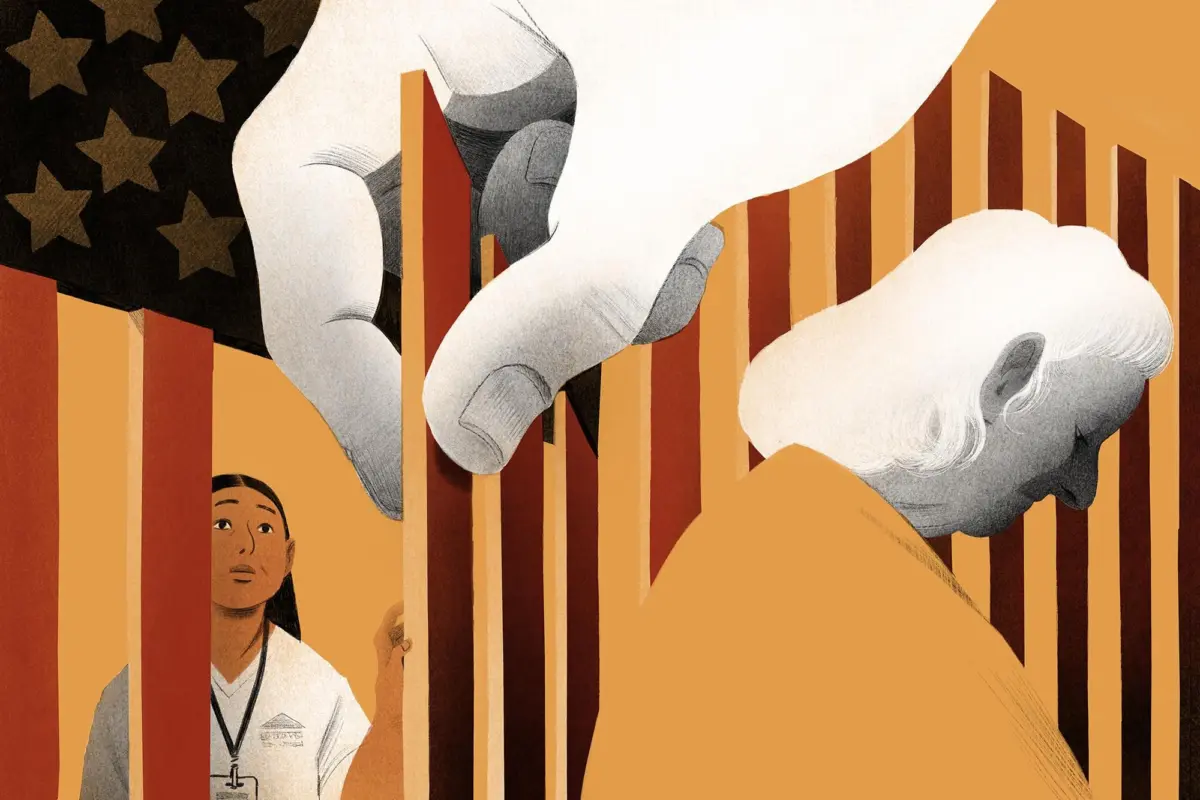
This impending surge presents an insurmountable math problem for the nation’s healthcare infrastructure: the United States does not have enough direct care workers to manage the coming wave. Comprising home health aides, personal care aides, and nursing assistants, this invisible workforce provides the fundamental scaffolding of daily life for older adults and disabled individuals. They assist with bathing, dressing, medication management, and mobility. Predominantly female and disproportionately composed of immigrants, this workforce of approximately 3.6 million is largely funded by Medicaid—the joint federal-state health insurance program that serves as the nation’s dominant, yet strained, payer for long-term care.
To maintain current standards of care—let alone mend a system that is already critically understaffed—the nation will need to recruit between 625,000 and 1.3 million additional direct care workers over the next decade. Industry researchers, such as the national advocacy nonprofit PHI, project that the country will face a staggering 9.6 million total job openings in this sector between 2025 and 2035, driven primarily by workers retiring, changing fields, or otherwise exiting the profession.
Read Also
With domestic labor pools tapped out and state-level budget interventions consistently swallowed by inflation and Medicaid cuts, policy experts argue that the federal government has only one viable lifeline left: immigration reform. Surprisingly, in an era marked by intense partisan gridlock, eldercare is emerging as the rare issue capable of uniting unusual political allies. As family caregivers burn out and nursing facilities increasingly turn away residents due to staffing shortages, Washington may finally be poised to address immigration through the pragmatic lens of national care.
Detailed Chronology of Legislative and Policy Shifts
The realization that eldercare cannot be sustained without systemic immigration reform has evolved through a series of key milestones, policy failures abroad, and recent legislative breakthroughs in Washington.
- 1999: Congress establishes a specialized visa program intended to alleviate severe nursing shortages in understaffed hospitals. However, hyper-restrictive eligibility guidelines and burdensome transfer rules for workers render the program virtually unusable. Barely a thousand visas are issued over a decade, leading to its expiration in 2009 and leaving lawmakers wary of specialized healthcare visa structures.
-
2022: The United Kingdom incorporates care workers into its Health and Care Worker visa program to combat post-Brexit labor shortages. The initiative yields an immediate surge, with 106,000 visas granted in 2023 alone. However, the program is swiftly
marred by rampant employer exploitation, crushing debt bondage linked to contract repayment clauses, and the displacement of tens of thousands of workers when sponsor licenses are revoked—forcing a sharp policy reversal by 2025.
- June 2025: The Department of Homeland Security issues termination notices for the CHNV (Cuba, Haiti, Nicaragua, and Venezuela) humanitarian parole program. This administrative shift immediately strips vital legal protections from established immigrant workers, dealing a severe blow to eldercare facilities in states like Florida that rely heavily on these populations.
- July 2025: Representatives María Elvira Salazar (R-FL) and Veronica Escobar (D-TX) introduce the bipartisan Dignity Act. The comprehensive bill pairs enhanced border security with legal status for long-term undocumented residents, permanent residency pathways for Dreamers, and structural reforms explicitly pitched as a remedy for the aging demographic squeeze. Eldercare coalitions quickly rally behind the measure.
- September 2025:
- Senators Kevin Cramer (R-ND) and Dick Durbin (D-IL) reintroduce legislation aimed at reclaiming unused green cards from previous years and redirecting them to doctors and nurses.
- Brookings Institution economist Tara Watson publishes a comprehensive policy proposal outlining a dedicated direct care worker visa. The plan envisions starting with 30,000 visas annually and scaling to 65,000, while mandating above-market wages and employer-provided health insurance.
- Spring 2026: The bipartisan Problem Solvers Caucus formally endorses the Dignity Act. Following post-midterm shifts in political calculus—including comments from former President Donald Trump labeling his previous deportation stances "too tough"—proponents seize the momentum to frame eldercare reform as an achievable legislative imperative.
- Summer 2026: Representative Gabe Vasquez (D-NM) introduces the Careworker Visa Act, proposing a temporary visa allocation of up to 100,000 workers annually for childcare, eldercare, and home-based disability support, complete with portability to protect workers from abusive employers.
Supporting Context and Metrics: The Anatomy of a Shortage
To fully understand why policymakers are breaking decades of legislative paralysis on immigration to address eldercare, one must examine the stark metrics defining the sector.
The American Community Survey estimated the direct care workforce at roughly 3.62 million individuals in 2024. Yet, this workforce is perpetually destabilized by low compensation, grueling physical labor, and a lack of upward mobility. According to demographic analyses by KFF (Kaiser Family Foundation), roughly one-third of all direct care workers are immigrants, and approximately 12 percent are noncitizens, including a vital population of undocumented workers.
When these workers lose legal protections—such as the roughly 40 Haitian staff members at Hebrew SeniorLife in Massachusetts who lost their Temporary Protected Status this year—the ripple effects are immediate and devastating. Facilities are forced to reduce bed capacity, and homebound seniors are left without essential daily assistance.
Furthermore, state-level interventions have proved insufficient. While numerous states have attempted to mandate wage increases, offer retention bonuses, or implement specialized training programs, these efforts are continually undermined. Federal Medicaid funding cuts, combined with persistent inflation, frequently swallow wage gains before they can meaningfully alter recruitment and retention metrics.
At the same time, the informal safety net is buckling. The AARP reports that America’s 63 million family caregivers are facing an unprecedented crisis point. While lawmakers have historically focused on tax credits and retirement protections for family members who care for aging relatives, policy experts emphasize that professional direct care workers are not competitors to family caregiving—they are its vital reinforcement. A home health aide who assists an aging parent three days a week provides the margin of survival that allows a daughter or son to maintain employment, avoid professional burnout, and secure a full night of rest.
Official Statements and Stakeholder Perspectives
As the debate intensifies, key stakeholders, economists, and lawmakers have articulated the urgent need for a paradigm shift in how the United States views caregiving and immigration.
- Amy Robins, Senior Director of Policy at PHI: Emphasizing the impossibility of solving the crisis through domestic labor alone, Robins noted: "We can’t do it with the current US-born workforce. We need to have mechanisms where people can come into this country and do this work." On the synergy between family and professional care, she added that direct care workers represent a fundamental way to support the millions of Americans carrying crushing care responsibilities.
- Rep. María Elvira Salazar (R-FL), Co-Author of the Dignity Act: Pitching the legislation as an economic necessity for entitlement programs, Salazar appealed directly to the changing political landscape following the midterms. Posting on social media, she urged leadership to seize the moment, noting: "You can surpass Reagan’s legacy by delivering a historic immigration reform. This is your moment."
- Rep. Gabe Vasquez (D-NM), Author of the Careworker Visa Act: Highlighting the pragmatic consensus building among Democrats, Vasquez stated: "We all know that immigrants are already taking on these jobs in large numbers. One of the conversations we’re having amongst the Democratic coalition is how to craft meaningful immigration-related legislation that can be bipartisan on a couple specific issues. And certainly this bill rises to the very top of that conversation." He also stressed the importance of Department of Labor enforcement to shield vulnerable workers from systemic abuse.
- Tara Watson, Economist at the Brookings Institution: Reflecting on the difficult policy trade-offs inherent in designing a functional care visa, Watson explained: "You really do see this tension—the more you try to make sure the workers are protected, the more onerous it becomes for the employers. You’re choosing between scale and some of those restrictions. I’m trying to hit somewhat of a middle ground." She characterizes eldercare reform as the ultimate "low-hanging fruit" in a notoriously paralyzed immigration debate.
- Linda Couch, Senior Vice President of Policy at LeadingAge: Underscoring the limitations of state-level budgets in the face of federal Medicaid reductions, Couch warned: "Federal policymakers hold a lot of the cards for systemic change to meet the needs of older adults. Without action to secure immigration reform and reverse Medicaid cuts, we’re putting access to aging services at risk for older adults across the country."
Future Outlook: A Narrow Window for Bipartisan Consensus
The convergence of an aging demographic cliff, the exhaustion of family caregivers, and shifting political posturing has created a unique window of opportunity in Washington. While comprehensive immigration reform remains a political minefield, caregiving stands apart as an issue that transcends traditional partisan divides.
Whether through the comprehensive regularization framework of the Dignity Act, the dedicated temporary quotas of the Careworker Visa Act, or targeted economic safeguards proposed by researchers like Tara Watson, policymakers are increasingly recognizing that border enforcement alone cannot resolve an internal care crisis. The baby boomer generation has reached retirement age, and the citizens who will require assistance over the next decade are already alive and aging.
Ultimately, the decisions made by Congress over the next few cycles will determine whether aging in America is marked by dignity, stability, and adequate support, or whether a compounding labor shortage will leave millions of vulnerable seniors without care. In an otherwise gridlocked political climate, the simple, undeniable reality of an aging nation may finally force Washington’s hand.





Comments
Facebook App ID not configured. Please add it in the Customizer.