
Executive Overview
The contemporary art world exists in a perpetual state of friction between high-minded institutional preservation and the chaotic, decentralized impulses of internet culture. Over the past week, this dynamic has played out on multiple fronts across the globe. From crowds of smartphone-wielding citizens attempting to physically shove Anish Kapoor’s 110-ton public sculpture in Chicago—fueled by a viral internet myth—to the high-stakes architectural and spatial debates inside the Louvre regarding the future housing of the Mona Lisa, art is proving to be as culturally volatile as ever.
Simultaneously, the industry is grappling with profound losses and monumental recoveries. The sector mourns the passing of legal titan Michael Ward Stout, who steered the legacies of Robert Mapplethorpe and Salvador Dalí, alongside French conceptual pioneer Fred Forest, who orchestrated his own posthumous announcement. In Germany, a long-lost cache of Peter Paul Rubens oil sketches has finally returned to its historic home after eight decades of absence. Yet, beneath these cultural milestones, the art market and its institutional guardians face darker realities: gallery evictions, international artifact heists, political protests over monumental architecture, and profound institutional reckonings surrounding mass incarceration.
This report provides an exhaustive investigation into these unfolding events, charting the intersection of viral absurdity, legal precarity, and institutional transformation.
Read Also
Detailed Chronology
The Chicago "Push the Bean" Phenomenon
On a brisk Sunday afternoon in Chicago’s Millennium Park, hundreds of citizens converged under a singular, absurd banner: "Push the Bean!" The viral gathering was organized in response to a pervasive internet legend claiming that a man was trapped inside Anish Kapoor’s iconic, seamless stainless-steel sculpture, Cloud Gate (affectionately dubbed "The Bean"). According to the satirical lore, the only way to liberate the imaginary captive was to physically nudge the 110-ton masterpiece seven inches to the left.
Videos capturing the event quickly flooded social platforms, showcasing crowds of eager participants pressing their palms against the mirror-like surface. Most attendees pushed with a single hand while elevating their smartphones with the other to document the futile exercise—a logistical choice that mathematically halved an already impossible endeavor.
While city officials have repeatedly pleaded with the public to cease treating local infrastructure as an interactive cartoon, the incident underscores the growing power of digital folklore to materialize real-world foot traffic. Downtown Alderman Brendan Reilly, who has previously been forced to issue official public confirmations that no human being is entombed within the structure, faced renewed waves of constituent inquiries.
Valued Legacies and Posthumous Farewells
The art world paused this week to honor figures who shaped the legal, conceptual, and physical boundaries of modern culture. Michael Ward Stout, a formidable attorney who managed the complex estate of Robert Mapplethorpe and represented Surrealist master Salvador Dalí, passed away at the age of 83. Stout’s legal acumen extended far beyond individual personalities; he served as a vital architect for artists’ rights, handling international licensing, high-stakes contracts, major institutional exhibitions, and estates including those of Jean-Michel Basquiat and legendary dealer Barbara Gladstone. His death marks the passing of an era when art law transitioned from a niche practice into a sophisticated corporate safeguarding mechanism.
Simultaneously, French video and "sociological" artist Fred Forest died at the age of 93. True to his lifelong commitment to conceptual disruption, Forest did not leave his passing to traditional obituary writers. Instead, he orchestrated his own final conceptual act. In a statement released through his son, Adrien, Forest wrote:
"Thanks to the affectionate complicity of my son Adrien, I have the pleasure of announcing my own death… Lying in this hole dug in the earth at Anserville [north of Paris], I will now have all the time to reflect calmly on what I will be doing tomorrow, my friends…"
Forest’s career, celebrated in major retrospectives at the Centre Pompidou in 2017 and 2024, consistently probed the intersections of mass media, institutional power, and electronic communication, making his self-penned exit a fitting capper to a subversive life.
The Rubens Homecoming and French Museum Heists
In institutional news, the art world celebrated a triumphant recovery in Germany. Two oil sketches by Peter Paul Rubens, which vanished during the turbulent disruptions of the mid-20th century and remained lost for over 80 years, have officially reappeared. The works are slated to rejoin three surviving companion pieces at the Ducal Museum in Gotha, returning to the very collections they inhabited for centuries prior to their disappearance.
Conversely, the security vulnerabilities plaguing European cultural institutions were highlighted by French investigators, who successfully arrested four individuals linked to a string of brazen summer burglaries. The suspects are tied to the July thefts of high-value jewelry from the Musée Lalique and ancient monetary artifacts from the Archaeology Centre in Montans.
Supporting Context & Metrics
The intersection of finance, real estate, and cultural preservation continues to generate severe friction within the gallery ecosystem and urban planning spheres.
The Fall of The Hole Gallery
In New York, the commercial gallery scene faces another cautionary tale as The Hole confronts severe financial distress. Court filings reveal that the Bowery-based gallery is currently facing eviction proceedings after falling deeply into arrears. The institution owes $102,823 in combined back rent and accumulated late charges. This financial collapse aligns with broader, ongoing lawsuits accusing the gallery of failing to adequately compensate participating artists and staff members, exposing the fragile liquidity underpinning mid-tier commercial spaces in post-pandemic metropolitan art markets.
Washington, D.C., Protests Against Monumental Architecture
Political friction has similarly manifested in the United States capital, where over 50 preservationists and activists gathered in Washington, D.C., last week. The demonstration was organized to voice fierce opposition to proposed federal initiatives, specifically targeting Donald Trump’s controversial plans for a neo-classical triumphal arch project. Critics argue that the monumental structure serves as an aesthetic regression and a political symbol antithetical to democratic urban space.
Prison Art as Sociological Reckoning
Shifting from political monuments to carceral realities, the Grand Rapids Art Museum has launched a landmark survey examining creative production born from the American penal system. The exhibition features powerful, confronting works, including:
- Julie Green’s monumental 1,000-piece ceramic installation, meticulously chronicling the final-meal requests of individuals awaiting execution on death row.
- Gary Tyler’s intricate, appliquéd quilted works, created by an artist who endured decades of wrongful imprisonment after being incarcerated at age 17.
The exhibition positions art not merely as an aesthetic commodity, but as vital historical testimony to human rights abuses within domestic borders.
Official Statements
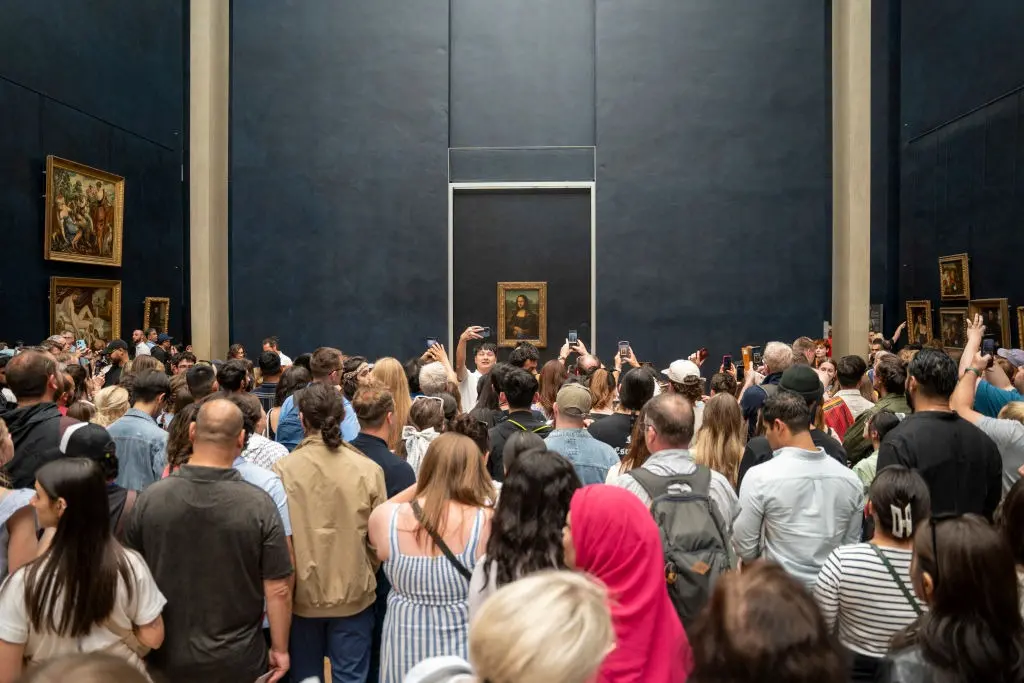
The debate surrounding architectural heritage and visitor management reached a fever pitch in Paris, centering on the world’s most famous painting. Louvre President Christophe Leribault addressed the media regarding the museum’s sweeping, $1-billion-plus renovation strategy, which hinges on a controversial proposal: relocating the Mona Lisa out of its current, bottlenecked gallery and into a dedicated, isolated subterranean or standalone room.
While the relocation is designed to alleviate chronic overcrowding and improve security flow, Leribault expressed personal reservations about the psychological impact of the move:
"It is sad. It will separate the Mona Lisa from the other Leonardo da Vinci paintings."
Despite internal debate, architectural planning for the multibillion-dollar overhaul moves forward, though the museum remains fully operational, welcoming global tourists who continue to queue by the thousands to photograph Leonardo’s masterpiece alongside adjacent Renaissance masterworks.
Future Outlook
As the art world navigates the remainder of the decade, several structural trajectories are becoming increasingly clear:
- The Digital-Physical Feedback Loop: The viral "Push the Bean" phenomenon demonstrates that public art is no longer evaluated solely on its formal or spatial merits, but on its capacity to generate decentralized digital mythologies. Institutions must increasingly prepare for interactive, internet-driven interventions that treat monumental sculpture as performance art props.
- Institutional Security and Restitution: The recovery of the Gotha Rubens sketches highlights the long-tail success of provenance research, even as modern institutions must simultaneously upgrade physical security protocols in the wake of brazen heists like those in France.
- Real Estate Pressures: The financial struggles of galleries like The Hole indicate that commercial spaces operating on razor-thin margins will continue to face consolidation, eviction, and labor disputes as urban commercial rents outpace market liquidity.
- The Evolution of the Megamuseum: The Louvre’s monumental billion-dollar renovation signals a new era of infrastructure spending aimed at crowd management. How institutions balance populist tourism demands against scholarly integrity—typified by the debate over isolating the Mona Lisa—will define the museum experience for generations to come.

Comments
Facebook App ID not configured. Please add it in the Customizer.