
Executive Overview
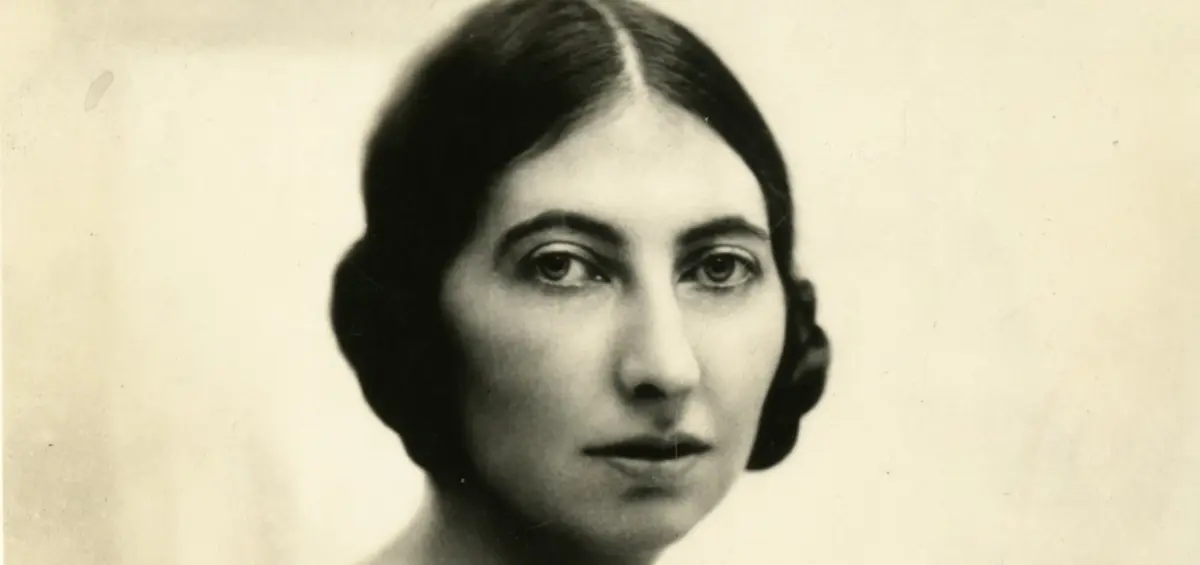
In the landscape of twentieth-century English literature, few reputations have suffered as severe a post-mortem eclipse as that of Margaret Kennedy. Once celebrated internationally as a literary darling following the 1924 publication of her breakout second novel, The Constant Nymph, Kennedy commanded the upper echelons of both critical esteem and popular acclaim. Yet, like many mid-century writers whose work defied strict categorization, her star dimmed dramatically in the decades following her death in 1967. Relegated to the nebulous, often dismissively viewed category of "middlebrow popular writer," Kennedy drifted to the obscure margins of the canon.
That narrative, however, is undergoing a profound and long-overdue revision.
Earlier this year, independent publisher McNally Editions injected new life into Kennedy’s legacy by reissuing two of her most compelling late-period masterworks: The Feast (1950) and Troy Chimneys (1953). This strategic republication catalyzed a significant wave of critical appreciation, punctuated by an extensive, glowing review in the New York Review of Books by Columbia University’s Lionel Trilling Professor in the Humanities, Edward Mendelson. Mendelson’s authoritative endorsement has served as a rallying cry for scholars and avid readers alike, urging a comprehensive reassessment of Kennedy’s literary stature and cementing her place as a master satirist, moralist, and structural innovator.
Read Also
This feature explores the mechanics of Kennedy’s literary revival, dissects the intricate theology and morality underpinning her most famous late-career novel, The Feast, and examines the broader cultural appetite driving contemporary literature back toward the sharp, unblinking social observations of mid-century Britain.
Detailed Chronology: From International Stardom to Critical Obscurity and Revival
To understand Margaret Kennedy’s current literary renaissance, one must trace the trajectory of a career that spanned nearly half a century, marked by immense early triumphs, an intentional mid-career pivot, and an unjust descent into obscurity.
1. The Meteoric Rise (1924–1939)
Margaret Kennedy’s entrance into the literary consciousness was nothing short of seismic. In 1924, at the age of twenty-eight, she published The Constant Nymph. The novel—a bohemian, emotionally volatile, and deeply romantic tale centered around the Sanger family of musical prodigies and free-spirits—became an instant international sensation. It was adapted into a smash hit stage play and transformed into multiple Hollywood film adaptations (most notably the 1943 classic starring Charles Boyer and Joan Fontaine). Kennedy found herself feted, famous, and financially secure. She spent the interwar years writing novels, plays, and historical critiques, establishing herself as a versatile voice in British letters.
2. The Wartime Silence and the Late-Career Renaissance (1939–1967)
The outbreak of the Second World War acted as a natural and psychological break in Kennedy’s output. She largely stopped writing novels during the conflict, turning her energies elsewhere. However, her post-war re-emergence was formidable. Rather than attempting to recapture the bohemian romanticism of The Constant Nymph, Kennedy pivoted toward darker, more structurally complex, and sharply satirical narratives. Works like The Feast (1950) and Troy Chimneys (1953) showcased a mature writer deeply concerned with human psychology, moral failing, and the theological undercurrents of everyday life. She continued publishing steadily until her death in 1967.
3. The Wilderness Years (1967–2023)
Following her death, Kennedy’s work suffered the fate of many mid-century authors who fell outside the strict modernist experiments of Virginia Woolf or James Joyce, yet lacked the populist packaging of genre fiction. Academic institutions increasingly codified the canon around high-modernist abstraction, casting aside accessible, psychologically acute, and socially observant fiction as "middlebrow." Despite her authorship of a brilliant critical study on Jane Austen, Kennedy’s novels slowly vanished from bookstore shelves, preserved only by a devoted coterie of antiquarian book collectors and mid-century literature enthusiasts.
4. The McNally Reissues and the Trilling Effect (2024–Present)
The current resurgence is the product of deliberate curatorial intervention. McNally Editions’ republication of The Feast and Troy Chimneys provided the contemporary market with pristine entry points into Kennedy’s late style. The subsequent intervention by Edward Mendelson in the NYRB provided the critical validation necessary to break through contemporary noise. Mendelson’s advocacy reframed Kennedy not as a forgotten relic of a bygone era, but as a prescient moralist whose insights into human nature remain startlingly relevant to twenty-first-century readers.
Supporting Context & Metrics: The Architecture of The Feast
While Kennedy’s bibliography is rich, The Feast stands out as a structural and thematic tour de force. On the surface, it operates as a psychological drama set against the picturesque backdrop of the Cornish coast; underneath, it is a meticulously constructed theological parable.
A Premise Steeped in Inevitability
The novel opens with an audacious narrative gamble that immediately subverts traditional suspense. In the very first chapter, readers learn that the cliffside Pendizack Manor Hotel on the rugged Cornish coast is utterly doomed.
During the preceding winter, a stray naval mine washed ashore and exploded in a sea cave directly beneath the hotel, miraculously causing no immediate, visible structural damage. However, the concussive force initiated a slow-motion catastrophe: hairline cracks began to fracture the cliff face. When an engineering expert inspects the property and advises immediate evacuation should the fissures widen, the hotel’s proprietors—the Siddal family—dismiss the warning entirely out of financial self-interest and complacency.
Then, one fateful evening, the entire cliff face shears off, plunging into the churning sea below, instantly killing everyone inside and burying their remains beneath tons of rubble.
Having revealed the apocalyptic climax in the opening pages, Kennedy steps backward in time, tracking the final weeks leading up to the disaster. The narrative tension is thus radically inverted: the question is no longer if catastrophe will strike, but rather who will be taken, who will be left, and what moral weight their final days carry.
A Cast of Vices: The Seven Deadly Sins Personified
Kennedy populates Pendizack Manor with a meticulously etched ensemble cast that reads like a modern inventory of the Seven Deadly Sins.
- The Siddals and the Wraxtons: The hotel proprietors manage the daily chaos while their son, Gerry, falls for Evangeline (Angie) Wraxton, the sheepish, repressed daughter of Canon Wraxton—a man whose entire existence is dedicated to ruthlessly purging Anglo-Catholicism from the Church of England (an embodiment of spiritual rigidity and wrath).
- Literary Pretension: Anna Lechene, an author penning historical fiction about the Brontës, arrives accompanied by her strikingly handsome chauffeur, Bruce. Bruce is secretly writing a manuscript titled Hangman’s Boy. His initially combative interactions with the Siddals’ fiercely upright maid, Nancibel, slowly evolve into a complex, genuine affection.
- The Gossip and the Malicious: Miss Ellis, another maid, abandons her domestic duties entirely, weaponizing her time to gather and disseminate vicious gossip (Envy in its purest form).
- The Estranged and the Cruel: Sir Henry and the bedridden Lady Eirene Gifford, estranged for a decade, bring their adopted and foster children on holiday. The children operate a brutal "Spartan Club" led by Hebe, a girl whose deep-seated self-loathing manifests as calculated, systemic cruelty.
- The Covetous: Into this ecosystem steps Mrs. Cove, a grasping, petty woman accompanied by her three remarkably kind daughters, desperately angling for social proximity to the wealthy Giffords.
As literary critics have noted, the character names and psychological profiles bear an almost Bunyanesque allegory. With minimal adjustment, The Feast transforms into an examination of humanity caught in the orbit of moral decay—a modern-day exploration of spiritual destitution on the precipice of judgment.
Official Statements and Critical Perspectives
The critical consensus surrounding Kennedy’s revival emphasizes her unique synthesis of rigorous moral philosophy, razor-sharp social satire, and structural ingenuity.
In his landmark NYRB essay, Edward Mendelson articulated the core justification for reassessing Kennedy’s canon:
"Kennedy writes as a moralist, and her characters match up pretty nicely with the Seven Deadlies… Like all great moralists, Kennedy is simultaneously very stern, very subtle, and very funny."
Mendelson draws attention to the novel’s origins, noting that archival material from the original edition reveals the book was conceived during a collaborative exercise where Kennedy and several contemporaries planned a short-story collection centered on the deadly sins. Though the collaborative collection never materialized, the theological architecture survived intact within the sprawling narrative framework of The Feast.
Literary observers have also drawn compelling parallels between Kennedy’s thematic concerns and other masterworks of moral hospitality and catastrophe. John Barach, writing on the theological framing of the novel, points out the profound scriptural undertones governing the narrative arc.
This theological framework finds voice within the text itself through Mr. Siddal, who serves as the novel’s reluctant, passive philosopher. In a revealing conversation with Lady Gifford, Siddal articulates a haunting defense of human preservation, speculating that humanity is constantly shielded by undeserved suffering:
"Mankind is protected and sustained by undeserved suffering; by all those millions of helpless people who pay for the evil we do and who shield us simply by being there, as Lot was in the doomed city… The oppressed preserve the oppressors. If the innocent did not suffer we should all go pop."
Siddal’s philosophical musings—pondering what would happen if a society became so thoroughly corrupt that not a single innocent remained, suggesting that under such conditions "the earth would probably open and swallow them up"—serve as both dark irony and heavy foreshadowing for the geological fate awaiting Pendizack Manor.
Future Outlook: The Enduring Relevance of Margaret Kennedy
The literary landscape of the 2020s has demonstrated a voracious appetite for rediscovering mid-century women writers who mastered the intersection of domestic realism, sharp social critique, and philosophical depth (as evidenced by the massive contemporary revivals of figures like Tove Jansson, Barbara Pym, and Elizabeth Taylor). Margaret Kennedy fits seamlessly into this pantheon.
The success of McNally Editions’ reissues of The Feast and Troy Chimneys suggests that the publishing industry is increasingly willing to look beyond the rigid canonical boundaries established in the late twentieth century. By stripping away the dismissive "middlebrow" label that long hindered her critical reception, contemporary critics are opening up Kennedy’s work to a new generation of readers who appreciate fiction that does not shy away from moral gravity, yet refuses to surrender its sense of humor.
Furthermore, the central ethical question posed by The Feast resonates powerfully in our current cultural moment. At the climax of the novel, the impoverished Cove children—inspired by the theological concept of the Eucharist—organize a grand lobster feast for the entire hotel, inviting guests to dress as Edward Lear characters and recite poetry. It is an act of radical, unmerited grace: a "forgiveness party" hosted by those who have the least, designed to serve those who feel entitled to everything.
Kennedy confronts her characters—and by extension, her readers—with an uncomfortable ethical challenge: Would you accept an invitation from the destitute? Would you humble yourself, set aside your social pretensions, and partake in a feast that you could never repay? Would you do so if your life—or the preservation of your world—depended upon it?
As long as human societies grapple with the tensions between pride and grace, complacency and catastrophe, the sharp, witty, and deeply moral voice of Margaret Kennedy will retain its vital urgency. Her return to the conversation is not merely a nostalgic exercise in literary archaeology; it is the correction of a historical oversight, restoring a major architect of British fiction to her rightful place in the sun.





Comments
Facebook App ID not configured. Please add it in the Customizer.