
Executive Overview
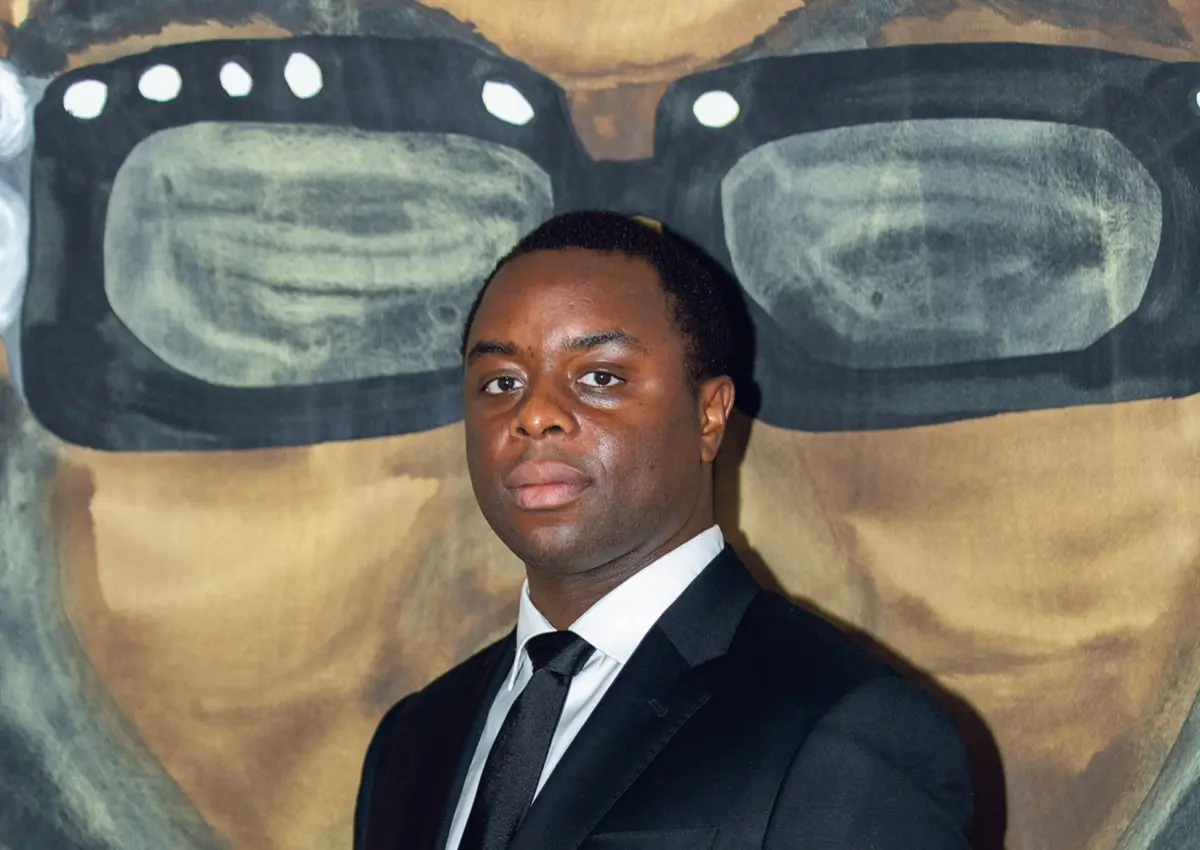
The contemporary art market thrives on relationships built on trust, prestige, and discretion. However, when the fragile ecosystem of gallery consignment breaks down, the financial and professional fallout for emerging artists can be devastating. Gabriel Kilongo, the founder and director of the Miami Beach–based gallery Jupiter, is currently navigating a deepening legal and reputational crisis. Over the past two years, Kilongo has been named in a series of lawsuits filed by artists and business entities alleging systemic nonpayment, withheld artworks, and severe property damage.
The most recent legal blow came in September, when rising painter Yirui Jia filed a lawsuit in the Supreme Court of the State of New York. Jia alleges that Kilongo withheld the vast majority of the proceeds from a series of high-profile sales, paying her a mere $2,000 out of a $42,000 sum owed. This suit represents just one node in a complex web of legal challenges confronting Jupiter and its director.
Despite Kilongo’s past pedigree—including an association with New York’s prestigious Mitchell-Innes & Nash gallery and steady participation in major international art fairs like Expo Chicago, Zona Maco, and Independent New York—his gallery’s operational stability is now under intense industry scrutiny. While Kilongo has defended his business practices by arguing that these proceedings involve distinct circumstances and should not be conflated into a singular narrative of wrongdoing, the mounting pile of legal complaints paints a troubling portrait of a dealer struggling under the weight of financial distress. This report examines the timeline of litigation, the specific financial claims made by artists, the broader market context, and the uncertain future facing Jupiter gallery.
Read Also
Detailed Chronology: A Timeline of Mounting Litigation
The legal challenges facing Gabriel Kilongo and Jupiter gallery have accumulated progressively over the last two years, shifting from private disputes to public court filings that have rattled the confidence of collectors and artists alike.
1. The Genesis: Jade Thacker’s 2025 Lawsuit
The legal troubles for Jupiter first burst into public view in 2025 when artist Jade Thacker filed a lawsuit against Kilongo and his gallery. Thacker alleged that she was owed a staggering $204,000 in connection with unsold artworks from a 2024 exhibition that had not been returned, alongside unpaid proceeds from a completed sale. Thacker’s legal action established a recurring pattern that would soon be echoed by other creators: works handed over to the gallery under standard consignment agreements seemingly vanishing into a financial black hole, accompanied by a failure to remit funds or return inventory. To date, Kilongo has not formally responded to Thacker’s lawsuit in court.
2. The East Village Dispute and Property Damage (February 2026)
In February 2026, the scope of the litigation expanded from unpaid commissions to physical damage of artwork. Location Incorporated, a New York-based entity operating out of the East Village, filed a lawsuit claiming that Jupiter gallery had inflicted approximately $1.6 million in structural and aesthetic damage to a sculpture exhibited at the Untitled Art fair in Miami Beach in 2024. While the court filing initially kept the artist and artwork anonymous, gallery records from Untitled 2024 indicate that Jupiter exhibited a major work by New York-based artist Izhar Patkin during that iteration of the fair. According to subsequent reports by art publication Urgent Matter, this particular lawsuit was ultimately dismissed and settled out of court.
3. Stephanie Pierce’s March 2026 Action
By March 2026, the legal pressure intensified further when artist Stephanie Pierce initiated legal proceedings against Kilongo. Mirroring the grievances brought forward by Thacker, Pierce alleged that Kilongo had withheld both money owed from works sold as far back as 2023 and the physical artworks themselves. Pierce sought $100,000 in damages.
Unlike previous silence, Kilongo mounted a direct defense in this instance. Operating without external counsel, Kilongo acted as his own legal representative, formally denying Pierce’s allegations. He asserted in court filings that payments relating to the disputed works had indeed been fulfilled and that the return of remaining unsold inventory was actively underway, with the majority already safely back in the artist’s possession.
4. Yirui Jia’s September 2026 Lawsuit
The most recent and high-stakes legal challenge arrived in September 2026, when young painter Yirui Jia filed her lawsuit in the Supreme Court of the State of New York. Jia, whose star has been on the rise following a celebrated solo exhibition at Jupiter’s Miami Beach location, claims that Kilongo owes her $40,000—the balance of a $42,000 total generated from the sale of five distinct paintings. To date, Jia has only received a fraction of the owed funds: $2,000.
Supporting Context & Metrics: Inside the Consignment Breakdown
The financial mechanics of Yirui Jia’s lawsuit offer a rare, transparent glimpse into the private ledgers of a mid-tier contemporary gallery operating under extreme fiscal strain.
The Sales Ledger and High-Profile Buyers
Attached to Jia’s lawsuit is a formal sales report produced on Jupiter’s letterhead. The document details the commercial success of Jia’s solo exhibition, noting that all five featured paintings successfully found buyers at price points ranging from modest early-career figures to substantial sums:
- Total Sales Volume: $42,000 across five paintings.
- Individual Valuations: Ranging from $2,000 to $32,000 per canvas.
- Notable Collectors: The sales report reveals that two of the paintings were acquired by Vancouver-based collector Bing Zhang. The remaining three high-value works were purchased by Bradley Chubb, the prominent NFL linebacker for the Buffalo Bills (who was traded from the Miami Dolphins earlier in the year).
Despite these lucrative placements with notable collectors and professional athletes, Jia alleges that the capital never reached her studio.
The "Tight Cash Flow" Defense
According to digital communications and text exchanges cited directly within Jia’s court filings, the artist repeatedly pressed Kilongo for her funds. In response, Kilongo offered written assurances but cited severe financial hurdles. In one quoted exchange, Kilongo excused the delays by stating he was "managing a very tight cash flow" and was actively "waiting for a few things to clear on the gallery’s end" before he could wire the remittance.
Despite these promises, the payments failed to materialize, prompting Jia’s legal representation to pursue formal litigation for breach of the signed consignment agreement.
Official Statements and Industry Fallout
The accumulation of four distinct lawsuits over a two-year period has triggered widespread industry discussion, drawing commentary from prominent figures within the art press and prompting defensive positioning from Kilongo himself.
Gabriel Kilongo’s Stance
When approached by ARTnews regarding Yirui Jia’s specific allegations, Kilongo declined to comment directly. However, addressing the broader cloud of litigation hanging over his enterprise, Kilongo issued a statement rejecting any attempt to knit the legal battles into a single pattern of predatory behavior or insolvency.
"These are distinct proceedings, involving different circumstances and procedural histories, and should not be presented as a single narrative of wrongdoing," Kilongo stated.
This defense seeks to compartmentalize each dispute—framing the damages claim, the delayed returns, and the unpaid consignments as isolated commercial friction rather than systemic operational collapse.
Kenny Schachter’s Revelations and Industry Reaction
The situation was further inflamed by art market commentator and artist Kenny Schachter, who published a series of columns in Artnet News. Schachter’s reports brought wider visibility to the dealer’s trials, noting that Jupiter gallery was administratively dissolved on September 25—precisely one day after Yirui Jia filed her lawsuit in New York.
Kilongo pushed back vigorously against these claims, informing ARTnews that reports of the gallery’s administrative dissolution were factually incorrect and "does not accurately reflect [the gallery’s] current standing."
Schachter’s columns also touched on turbulent personal and professional hurdles, alleging that Kilongo—who was born in the Democratic Republic of Congo and raised in Israel—had been briefly detained by Immigration and Customs Enforcement (ICE) before being released. While Schachter attributed this information to institutional leadership, independent journalistic verification by ARTnews could not establish a definitive connection, and federal tracking databases contained no accessible public record of such a detention.
Intriguingly, Schachter’s commentary carried personal weight. Schachter revealed that he had exhibited work with Jupiter as recently as 2025. While describing the initial exhibition experience in positive terms, Schachter echoed the frustrations of Jia, Thacker, and Pierce:
"I sold the majority of the works after the exhibition (which Gabriel encouraged), but struggled to get paid for the few the gallery did manage to place, even those stemming from my existing relationships."
Future Outlook: The Fate of Jupiter Gallery
As the legal battles grind through the New York and Florida court systems, the physical and commercial footprint of Jupiter gallery continues to contract.
In May, investigative reports from Urgent Matter revealed that Kilongo had surrendered his physical New York gallery space back to his landlord, agreeing to a $25,000 settlement to resolve real estate disputes. Meanwhile, the operational status of the Miami Beach flagship remains opaque. While public records and gallery databases indicate that Jupiter’s most recent physical exhibition—a two-person showcase featuring musician George Clinton and artist Gerasimos Floratos—concluded in Miami Beach in February, the gallery’s ongoing commercial viability is severely compromised.
Despite these mounting pressures, Kilongo has demonstrated remarkable persistence in maintaining a public profile within the art fair circuit. Even as lawsuits piled up, Jupiter continued to secure booths at prestigious international fairs, most recently appearing at the Independent New York art fair this past May.
For the contemporary art market, the case of Gabriel Kilongo and Jupiter gallery serves as a cautionary tale about the vulnerabilities inherent in artist-dealer relations. As young talents like Yirui Jia, Jade Thacker, and Stephanie Pierce fight to reclaim their earnings and inventory through the courts, the episode underscores the urgent need for greater financial transparency, stricter adherence to consignment ethics, and heightened due diligence within the upper echelons of the commercial art world. Whether Jupiter can weather this legal storm or will ultimately join the long list of defunct galleries remains to be seen as upcoming court dates approach.




Comments
Facebook App ID not configured. Please add it in the Customizer.